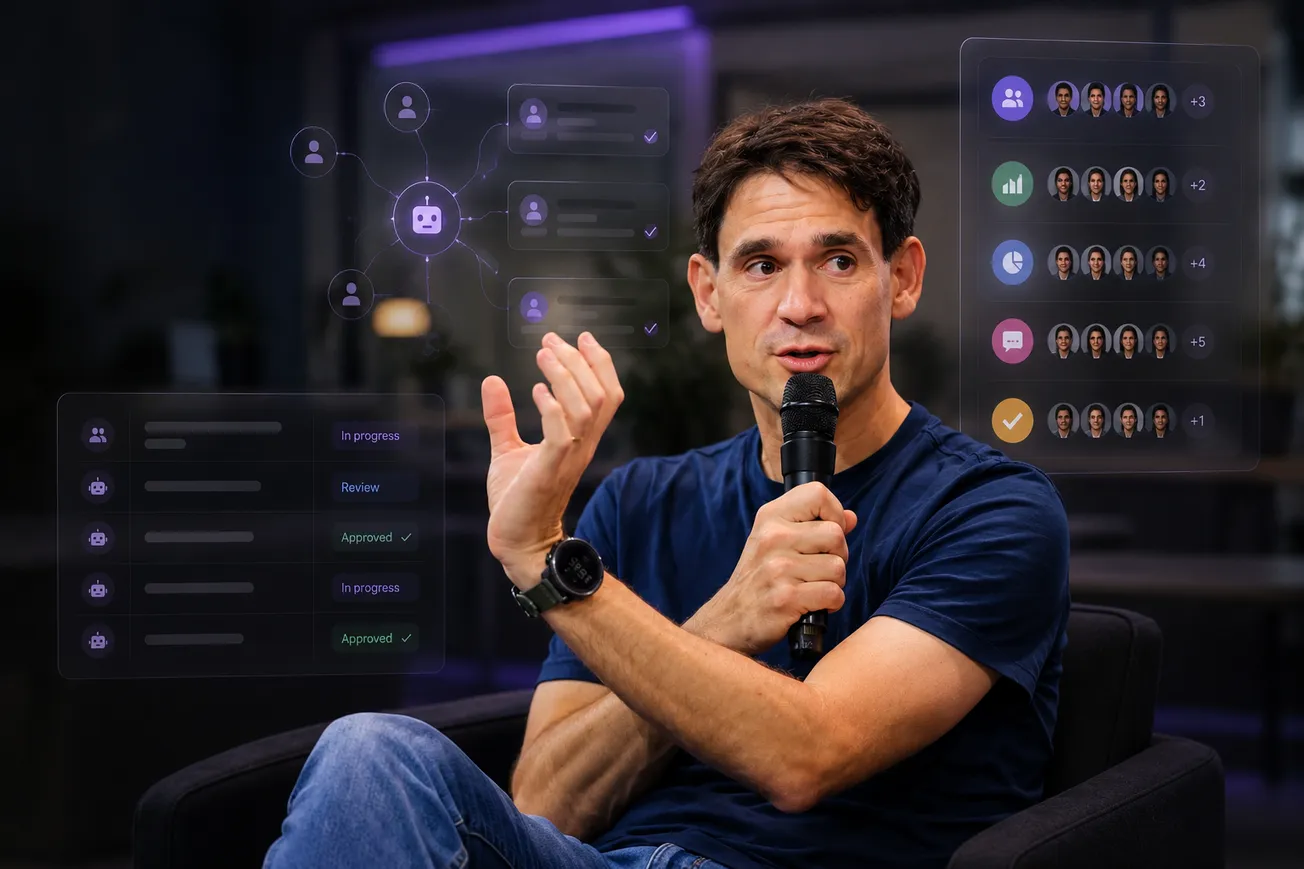
On Monday morning, an AI agent logs into a company's systems. It pulls sales figures from HubSpot, product updates from GitHub, and financial metrics from Snowflake. It prepares the weekly management presentation, then sends messages to eight different team leaders, asking them to review or update their respective sections.
By Tuesday lunchtime, the presentation is complete and waiting for the manager responsible for the meeting to sign off on it.
No one spent hours chasing colleagues for slides. The AI agent did the coordination.
This is no longer a concept or a research project. It is how Paris-based startup Dust says its work is already happening within its own company and increasingly within those of its customers.
While much of the enterprise AI conversation has focused on individual productivity tools, Dust is betting that the next stage will be less about helping one employee write faster and more about enabling teams of humans and AI agents to work together simultaneously.
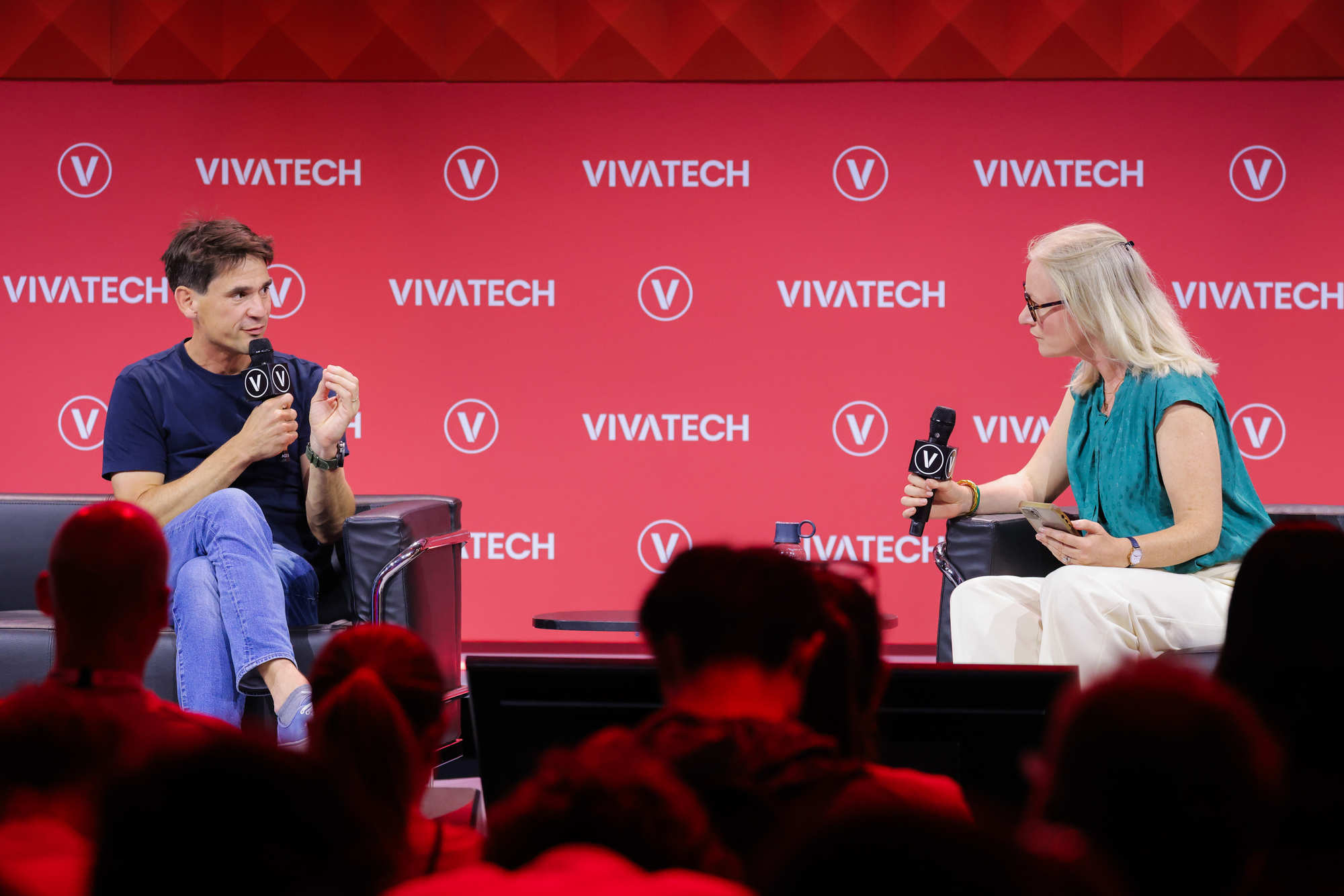
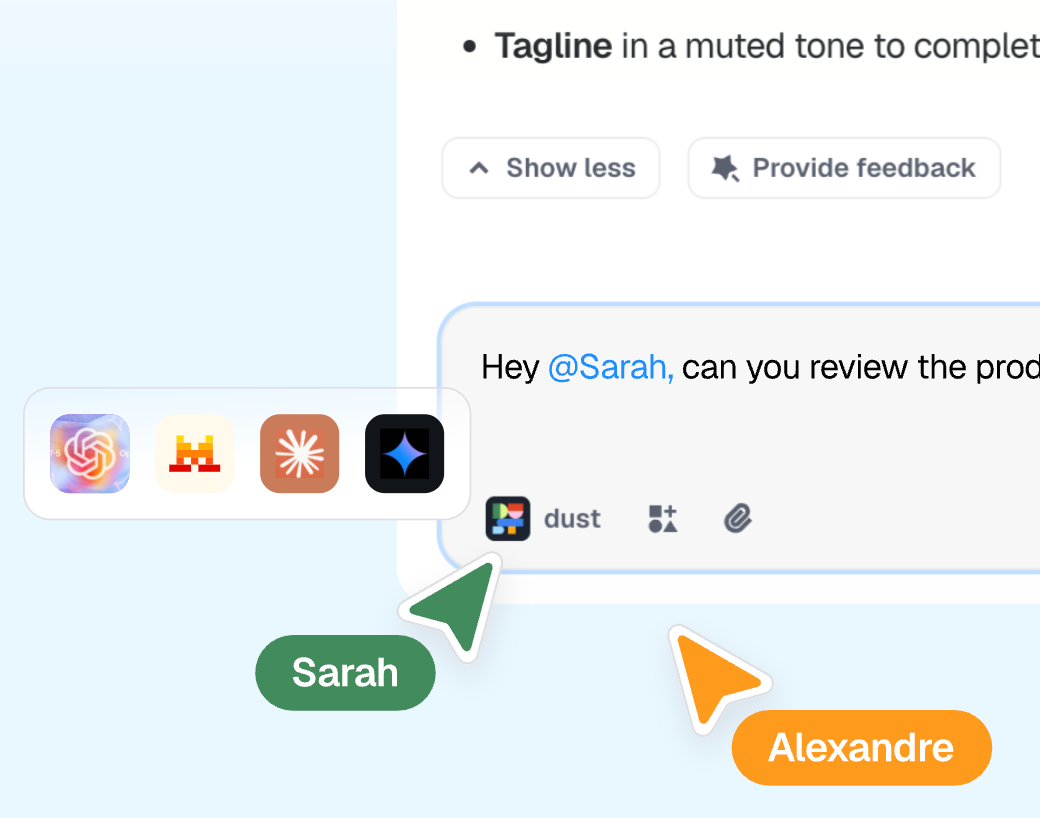
"We call it multiplayer AI," explained co-founder and CTO Stanislas Polu during a fireside chat at this year's Vivatech. "As agents take on tasks that last days or even weeks, you no longer collaborate with an agent by yourself. Those tasks are collaborative by nature, so multiple people need to steer multiple agents towards the same objective."
Building the layer between people and AI
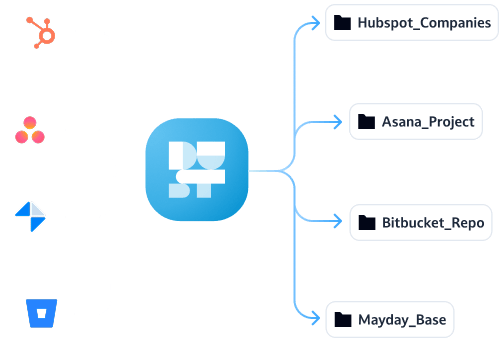
Dust sits above the growing ecosystem of foundation models. Rather than developing its own large language model, it provides companies with a platform where employees can deploy AI agents that connect to internal knowledge, business applications, and external models.
"The models are becoming incredibly capable," said Polu. "But for them to be useful inside companies, they need access to the company's infrastructure, and they need an intuitive product that lets people collaborate with them."
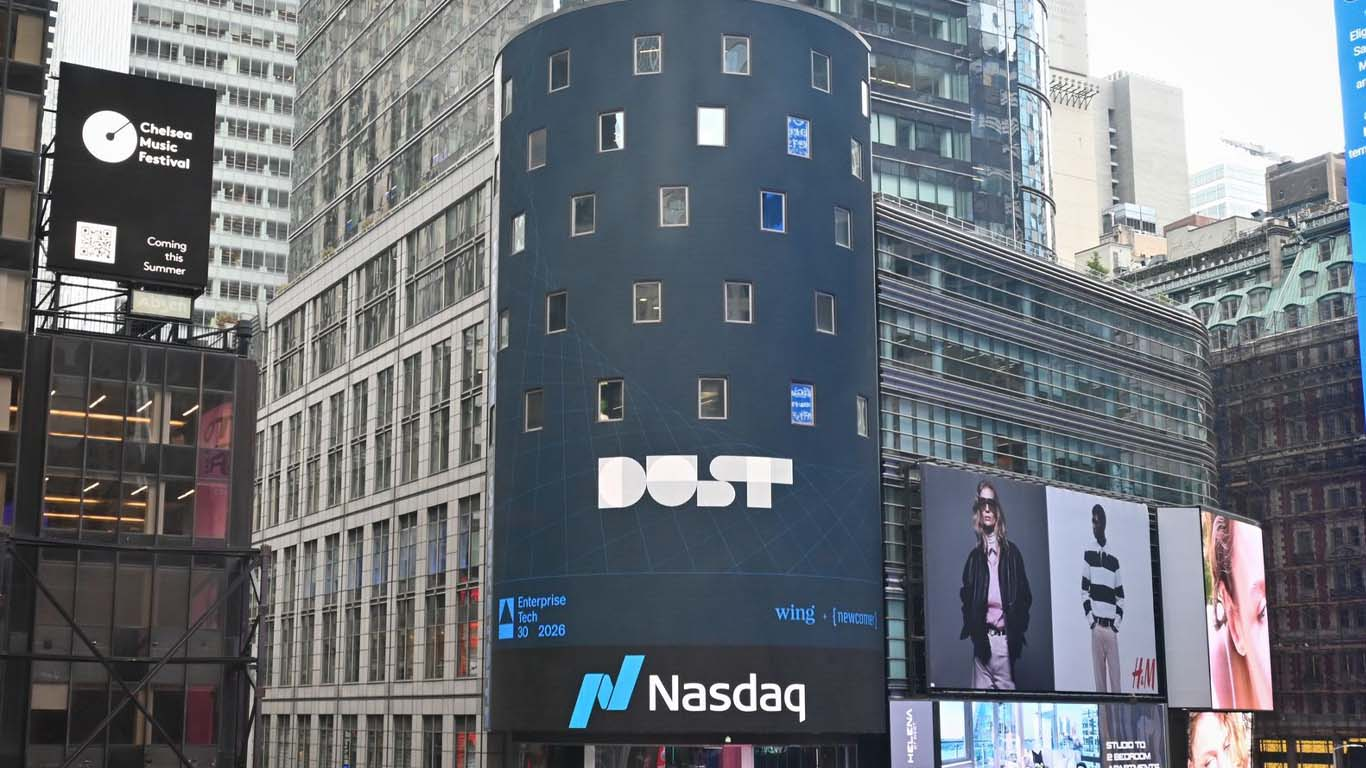
That philosophy has attracted growing interest from enterprises. In May, Dust announced a $40 million Series B led by Abstract, with participation from Sequoia, Snowflake Ventures, and Datadog Ventures. The company says its platform is now used by over 3,000 organizations, with employees collectively creating more than 300,000 AI agents. Customers include Doctolib, Persona, and Clay.
The funding will be used to accelerate what Dust describes as "multiplayer AI" - shared environments where humans and AI agents collaborate around the same projects, rather than employees each working with isolated assistants.
Beyond the chatbot
The distinction matters because many organizations are still deploying AI one employee at a time.
"Most companies today are stuck in single-player AI mode," Polu explained. Otherwise, it means that employees may each have access to an AI assistant, but knowledge, workflows, and outputs often remain fragmented across teams.
Dust's argument is that as AI agents become capable of executing increasingly complex work, the challenge shifts.
"The bottleneck shifts from generation to coordination."
Rather than producing a document or answering a question, an AI agent can manage an entire workflow, collecting information, assigning tasks, following up with colleagues and escalating decisions that require human judgment.
In that model, humans increasingly become supervisors, reviewers, and decision-makers rather than producers of every intermediate task.
The case for 'company sovereignty'
The rapid evolution of foundation models also raises another question: dependence. While governments often frame AI sovereignty in geopolitical terms, Polu argues that companies face their own version of the problem.
"We believe the first step of sovereignty is local to the enterprise," he stated. "Companies should have the freedom to switch between intelligence providers."
He compares today's AI landscape to buying electrical appliances that only function with one supplier's electricity.
"You want to buy your machines separately from your energy. Intelligence should work the same way."
That flexibility has become increasingly important as companies experiment with models from OpenAI, Anthropic, Mistral AI and others, each offering different strengths, costs and regulatory considerations.
A workplace that looks very different
If AI is changing workflows, it is also reshaping workplaces and jobs. For Polu, software development has accelerated the transition dramatically over the past year.
"We used to write most of the code ourselves," he explained. "Now we supervise, review and coach the models. We spend much less time actually coding."
Rather surprisingly, he argues this has increased collaboration between colleagues.
"When you spend less time writing code, you spend more time deciding what to build. That requires much more discussion between humans."
The implications extend beyond engineering. In a very near future, managers may increasingly coordinate teams of both humans and AI agents. Administrative work, reporting and internal coordination could become largely automated, leaving employees to focus on judgment, strategy and decision-making.
What does that mean for junior employees?
One of the biggest questions surrounding AI is how newcomers will learn if entry-level tasks become automated. Polu acknowledges the concern.
"What you increasingly value isn't simply someone who is dependable and fast," he pointed out. "You value ownership, judgment and the ability to decide what should be built."
Yet he has also witnessed AI dramatically lowering barriers for young people.
Recalling a recent internship at Dust, he describes a high-school student who built an entire game using AI tools despite having little programming experience.
"At the end of the week, we asked him to show us the code," Polu recalled. "He replied: 'The what?'"
This anecdote illustrates both the promise and uncertainty surrounding AI-native work. Future employees may become capable of creating sophisticated products, but long before they fully understand the technical systems underneath them.
'The times are daunting, not frightening'
Few people have watched enterprise AI evolve as closely as Polu.
Before founding Dust in 2023, he spent five years at Stripe, where he saw the company scale from around 180 employees to several thousand. He later joined OpenAI, spending three years working on the mathematical reasoning capabilities of language models before ChatGPT transformed public awareness of generative AI.
That experience has made him cautious about predicting where the technology will be in five years. When asked what he thinks agentic AI will look like in five years' time, he answered: "I can't project that far. Things are moving too fast."
What he was prepared to say is that today's ways of working may soon appear as outdated as those of previous industrial revolutions.
"The times are daunting," he said, "not frightening."
If Dust's vision proves correct, the next colleague joining many workplaces will not replace human workers. Instead, it may quietly take over the invisible internal coordination work that consumes so much of the working day, leaving people to focus on the decisions only they can make. For now.