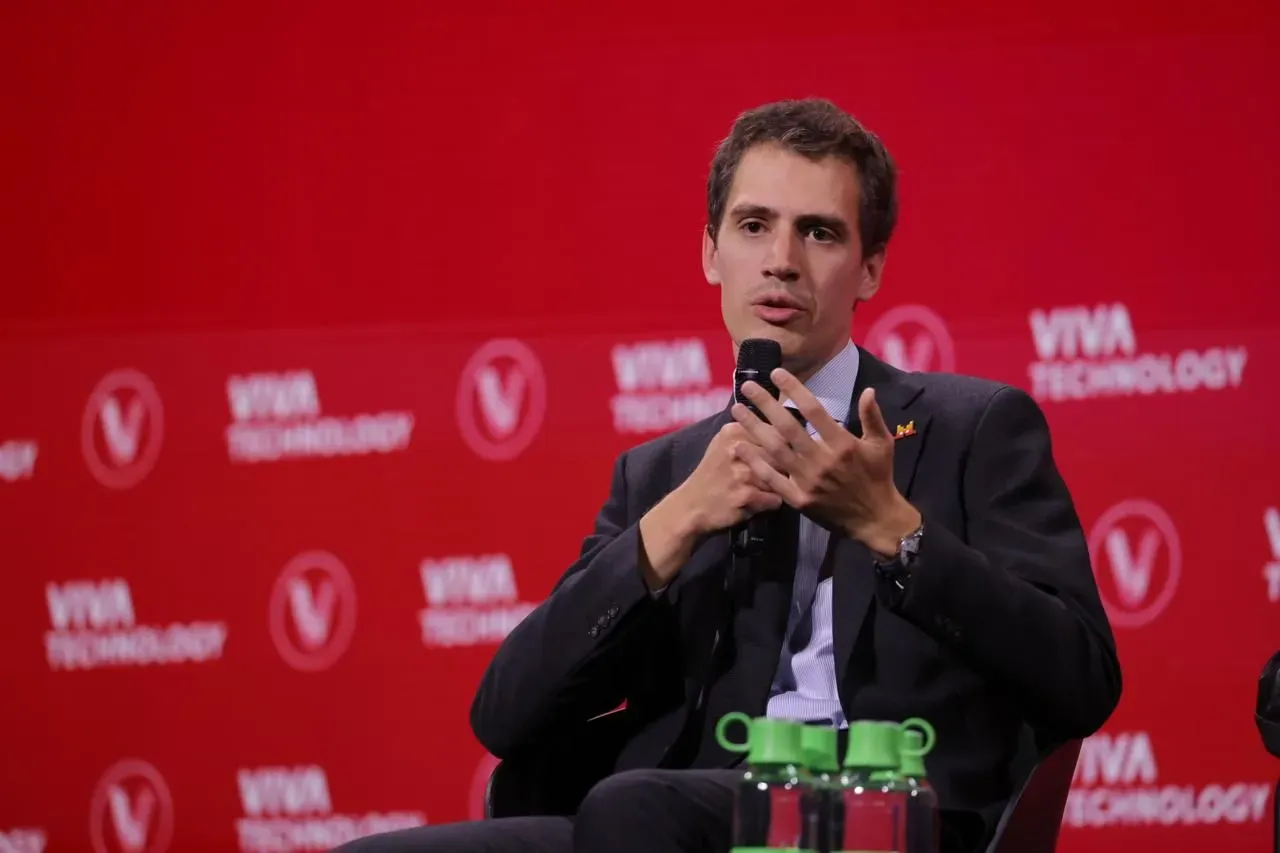
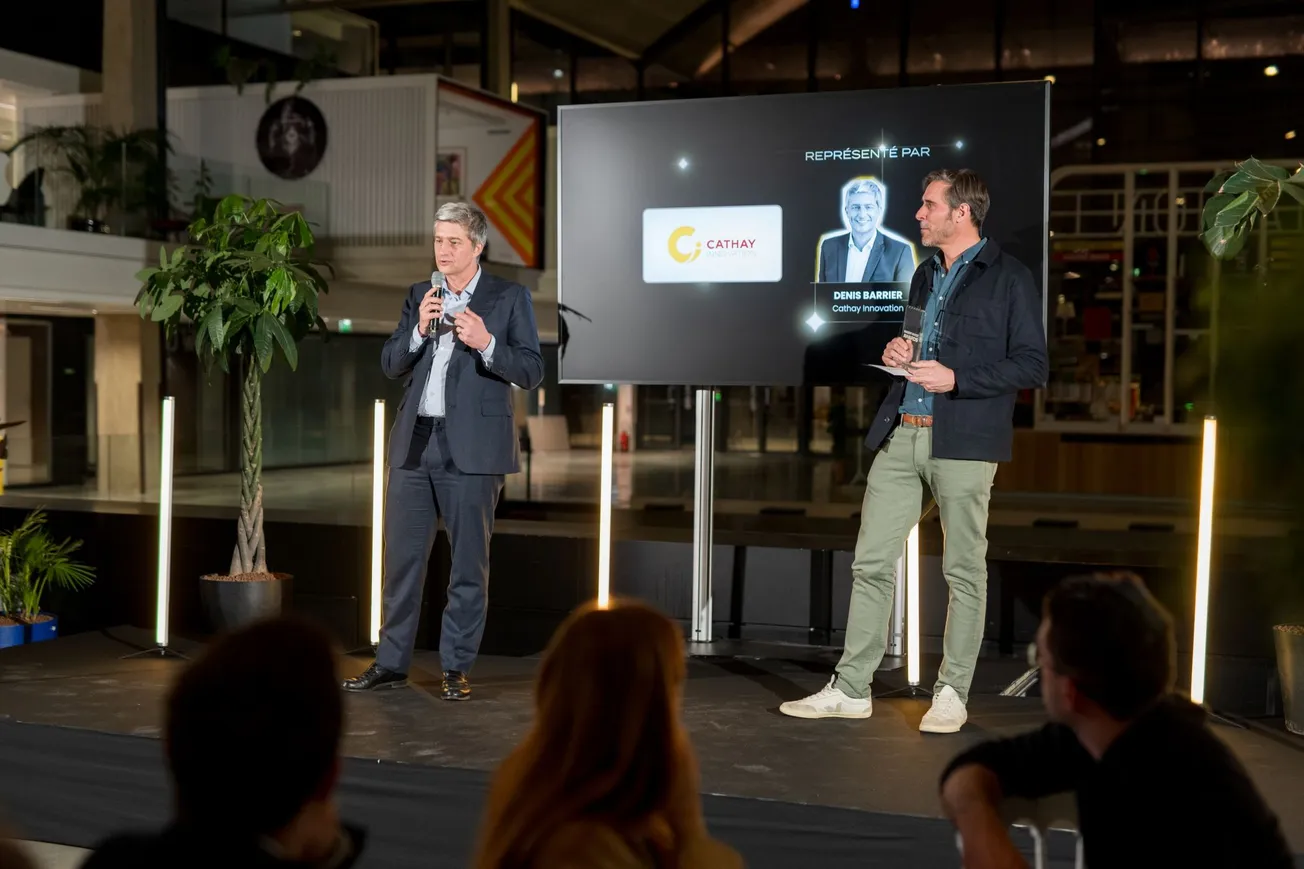
When I caught up with Denis Barrier last week, the Moonshot AI frenzy was entering its umpteenth news cycle, and the co-founder and CEO of Cathay Innovation sounded like a man enjoying being right.
The Paris-based firm announced its investment in Moonshot AI, the Beijing lab behind the Kimi models, a few weeks ago. After that came the release that turned a smart bet into a global talking point: K3, the model Moonshot had promised would match the best closed-source systems. “Kimi was telling us, ‘K3 will be practically on par,’” Barrier said. “They said, ‘We release in Q3.’ And in fact, they were really on par.”
The reaction was instant and loud. And in a blink, it seemed to turn the global discourse around AI, the Big Model labs, and open source on its head. “I was extremely surprised, because it was such a boom,” he said. “Kimi became the hottest company in the world of AI...It was like a Sputnik moment.”
For Cathay, the deal is a good advertisement for the firm’s distinct geography. It is headquartered in Paris, was co-founded with Chinese investor Mingpo Cai, runs teams across Europe, the US, and China, and closed the largest AI-dedicated fund to emerge from the European Union at $1 billion last year. Barrier spends much of his time in San Francisco. That triangulation, he argues, is what let Cathay see Kimi coming when most Western investors couldn’t.
The Long Wait
The firm’s history with Moonshot goes back to the company’s seed round in 2023, through an investor with close ties to the founding team. But knowing them early didn’t mean investing early. Barrier is blunt about why Cathay sat out the first wave of the LLM gold rush, in China or anywhere else.
“We are very present in China. When we started to do AI, we were in China to look at every company,” he said. “We saw a ton of companies coming. But sometimes in Europe, for the same thing, you have 10 companies. In China, you have 100.”
Writing checks into that crowd would have meant betting on everything and praying. Instead, Cathay tracked Moonshot’s releases and research for three years, waiting for evidence of separation. “We followed them, and we saw improving, improving,” Barrier said. “We had the feeling that technically it was really there. We invested because we believed it was the right moment. Those people will be leaders. People don’t know it, but we know they are the right ones.”
What tipped the balance was K2.5, released in January. According to Cathay’s own account of the deal, its investment committee needed ten minutes to reach a unanimous decision, and the firm has since added a second and third tranche. Bloomberg has reported Moonshot’s latest round values the company at nearly $20 billion.
“We enjoyed K2.5 very much, which was already close, but five times less expensive,” Barrier said. “We know architecture, so we were really impressed. We believed this brings really a solution, not only for this Chinese company, but for everybody.”
The Black Box Rebellion
The “for everybody” part is the thesis. In Barrier’s telling, the AI market of early 2026 was drifting toward a familiar and uncomfortable place: a handful of closed-model providers charging whatever the market would bear, while enterprise customers blew through annual AI budgets in months.
“It’s like somebody says, ‘Here is my black box. You pay like crazy,’” Barrier said. “People say, ‘I cannot use AI.’”
The anxiety wasn’t limited to price, and it wasn’t limited to Europe. “Clearly, people were thinking that AI is going to be owned by a few moguls, and they will do whatever they want with you,” he said.
He reaches for a company from Cathay’s own history to explain the alternative. One of the firm’s biggest early wins was Pinduoduo, the Chinese e-commerce giant built on group buying. “Remember Pinduoduo: social commerce for everybody,” he said. “Why not an AI company for everybody? Finally, that’s what worked the best for us.”
Skeptics of Chinese open-source models have argued they would never be adopted in the American market. Barrier’s rebuttal is usage data. “If you see OpenRouter, there are six times more Chinese tokens processed than US tokens,” he said. “Why? Because in the US, they use it a lot.”
Ten Times Faster
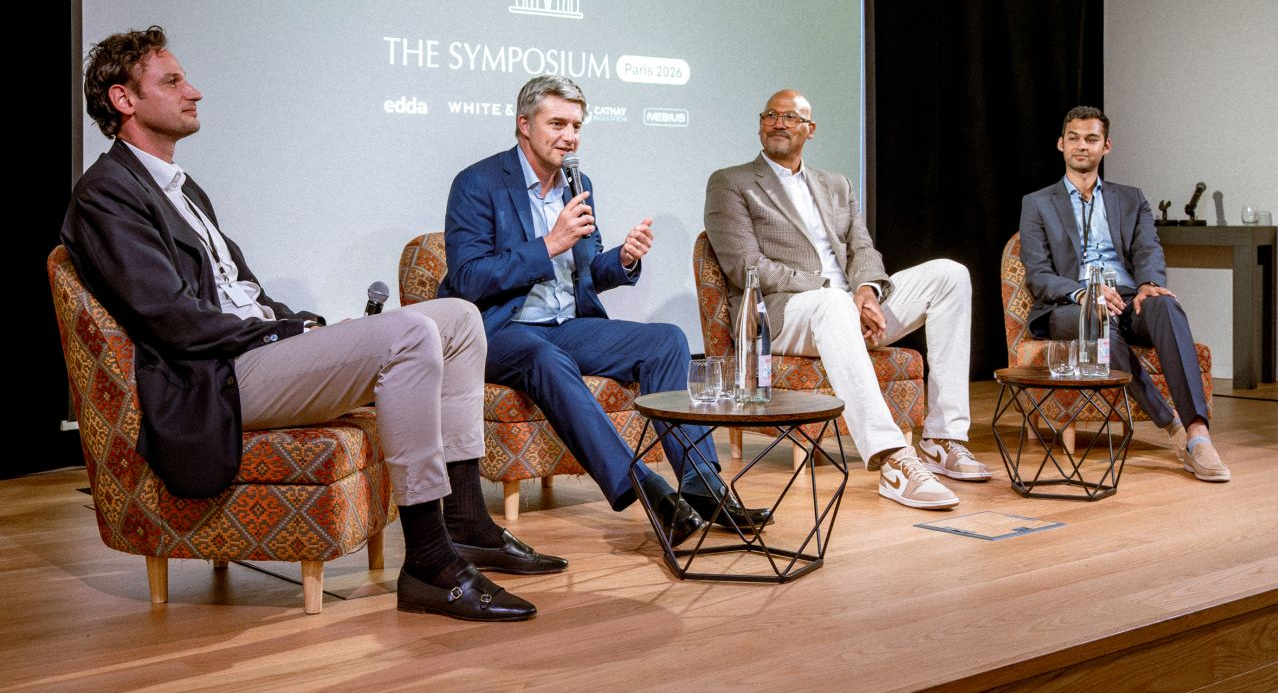
The Kimi conviction sits on top of a wider one: that AI has already answered the question that dogged Cathay’s Fund III when it launched. Back then, Barrier recalls, the objections were all about business models. Where’s the revenue? Where are the SaaS metrics?
Three years into the fund’s investment period, he has his answer. “In our portfolio, if we take the aggregated pure AI, the growth is more than a multiple of 10,” he said. “With SaaS, you would say, ‘Wow, if I add 50%, I’m good.’ Here it’s 1,000% growth for our portfolio in pure AI. AI as a business model is working. We see the growth.”
The catch: “When it works, it’s growing 10 times faster than it used to grow before.”
He has little patience for investors still relitigating the question. “For the one who is wondering if AI is working, if there is IRR, I would suggest to hurry up and to move forward,” he said.
He does see risk in the trillion-dollar infrastructure buildout. He locates it differently than the bubble-callers do. Demand, he insists, is not the problem. “If you look at Nvidia and the others, they are practically full on bookings in the next three years,” he said. The danger is congestion. There are too many players racing to build in the same places at the same time, with power, land, and construction timelines that can slip by years. “I think the problem may come in three, five years,” he said, for players whose balance sheets can’t absorb operational delays.
His historical reference point is the arrival of electricity, which took decades of false starts to transform industry. By comparison, he said, “here, in fact, was the fastest ramp-up ever. It works much faster than anything before.”
“When we spoke last time, 18 months ago, I was much more worried,” he said. “Now I am very, very optimistic.” His advice to those whiplashed by the daily discourse is disarmingly, well, French: “People are on their phone, reacting to headlines. Maybe they forget to go [to the countryside] and sit and think.”
The Lesson In The Basement
Toward the end of our conversation, I asked Barrier about lessons Kimi might offer for French and European startups and investors. Barrier had recently published an extended op-ed in the European Business Review under the headline:
Transforming Innovation Into the Next Big Thing: Europe Has the Ingredients. Not the Recipe."
The diagnosis goes like this: Europe has the capital and the research but lacks the architecture to turn them into industrial transformation. His model is planification, the state-coordinated planning under President Pompidou that produced the TGV and a nuclear base still supplying more than 70 percent of France's electricity. The prescriptions are specific. Shift corporate innovation spending from a 90/10 split favoring internal R&D toward 50/50 with startups and outside research. Build the data centers and energy capacity that AI will demand within five to seven years. Use public procurement to buy European where European exists. And replace what he calls "copy-paste" American venture capital with "strategic venture" sponsored by industry and the state, aimed at transforming specific sectors. The window is open, he warns in the essay's final line, and it won't stay that way for long.
Beyond that, Barrier told me he thinks Europe needs to reframe its pursuit of sovereignty differently. Waiting for a homegrown closed frontier lab is a fantasy while refusing everything foreign is self-harm. “The only way to have a sovereign AI is: you have your own data center, you use a lot of open source, and you do your own AI,” he said. “You master things...Cutting-edge open source is necessary for Europe’s sovereignty.”
That doesn’t mean picking a side in the US-China model war. “Europe really has a card to play,” he said. “They should not use only US models. They should use both and do their own soup.”
Cathay is already playing matchmaker. After closing the investment, the firm brought Moonshot’s president to Paris during the Raise Summit for a tour of meetings. “We saw a lot of industry leaders, to introduce what they do and what they could do,” Barrier said. “These leaders were pretty keen to say, ‘OK, we start to think this is a good idea.’”
Then there’s the cultural lesson from Moonshot, which succeeded not by outspending the American labs. It grew from 150 people to 400 in a matter of months, and its founder, Zhilin Yang, is not doing the conference circuit.
“Where is the founder of Moonshot? In the cellar,” Barrier said. “If you want to meet somebody like me who has money, if you want TV, if you want to speak with Chris: ‘I have no time for that.’ The only thing is, it’s open for everybody in the company who wants to run the algorithm better. You arrive, you’re just an intern, you have a tech problem? You can go see him.”
Compare that with certain tech figures. “Go in France, go somewhere. Look where our people are: look at them on the blog, look at them doing selfies, look at them on TV.”
When I joked that Yang presumably won’t be spending August on the beach in Nice, Barrier didn’t laugh. “You just focus every day, every day, every hour, doing the best model,” he said.
He doesn’t think this is a uniquely Chinese trait. He thinks France used to have it. “When France did the TGV, Concorde, nuclear, they were just on their mission,” he said. “It’s not about the capital. It’s a question of focus: what you decide to do, what are your priorities, and what you want to really achieve.”
And if Europe rediscovers that? “We can do Moonshot AI in Europe,” he said. “Period.”