👋 Inside this week's edition:
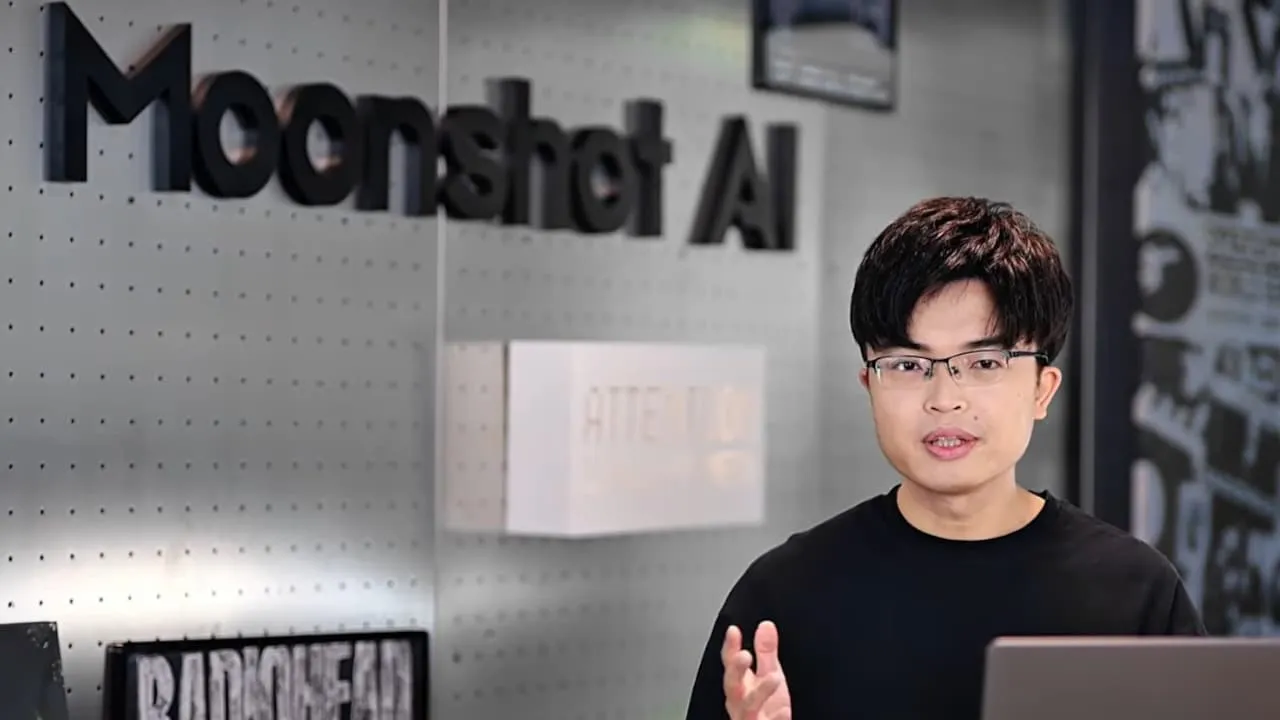
🧠 Cathay Innovation’s Denis Barrier explains why Moonshot AI’s Kimi K3 is an open-source “Sputnik moment,” what it reveals about AI’s accelerating economics, and why Europe needs less self-promotion and more relentless focus. Read the full interview.
Chris O'Brien + Helen O'Reilly-Durand
Headlines
🗞️ The US AI industry is splitting over Chinese models. While OpenAI and Anthropic are lobbying Washington to restrict Chinese AI systems, Nvidia, Microsoft, Google, Meta and others have united to defend open-source AI. Their argument: America’s AI leadership depends on an open ecosystem, not just a handful of proprietary frontier models.| Figaro
🗞️ France is doubling down on AI sovereignty. Clara Chappaz will join the Élysée on 1 August as Emmanuel Macron’s adviser on AI, digital and attractiveness. Speaking to Les Echos, she also called for Europe to accelerate the development of home-grown AI alternatives to compete with the US and China.| Les Echos
🗞️ Orange and infrastructure investor Morrison have announced a major joint venture to build a massive data center platform in France. With a €3 billion investment program, the 50-50 venture aims to boost capacity by 400 megawatts to satisfy the surging demand for artificial intelligence and cloud services. That's nearly ten times Orange's current levels. The new entity will leverage Orange's five existing French data centers alongside Morrison's equity funding to establish a cornerstone of European sovereign digital infrastructure. The companies expect to sign the deal by the end of 2026, with a target closure date in early 2027. | Reuters
🗞️ The French "Trust Gap" in Autonomous Vehicles. While the automotive industry races toward an AI-driven future, the 2026 Ipsos Global Mobility Report reveals that French consumers remain notably skeptical. With only 18% of French respondents expressing trust in autonomous vehicles, France ranks among the most cautious markets globally, far behind enthusiastic adopters in countries like Thailand and India. This hesitation suggests that "technology fatigue" and deep-seated concerns over control are creating a significant barrier to the widespread adoption of AI-enabled cars. As manufacturers continue to integrate sophisticated sensors and algorithms, the data indicates that they must work much harder to prove these systems are reliable partners rather than just complex distractions. For French drivers, the steering wheel remains a powerful symbol of freedom that they aren't quite ready to hand over to an algorithm. | Ipsos
🗞️ A dispute is brewing in Brussels as France leads a push to restrict the UK’s participation in the European Union’s ambitious €5 billion Scaleup Europe Fund. While there was initial talk of "mutual interest" in including British companies to bolster Europe’s tech competitiveness, Paris is now requesting more details about the conditions of the UK's participation. It remains unclear how much of the dustup is simply anonymous backchannel attempts to gain leverage, and how serious the "dispute" really is. Still, this standoff highlights the delicate balance of post-Brexit negotiations, with some EU states worried that striking side deals with the UK could undercut their own leverage before a crucial autumn summit. The controversy could put the fund’s commercial independence to its first real test before a single euro has even been invested. | Financial Times
🗞️ Recycling is getting an upgrade in France, thanks to a high-tech partnership at the Firminy sorting facility. The center has integrated advanced AI-powered optical sorting systems, including Pellenc ST’s CNS BRAIN artificial intelligence technology and 13 Mistral+ CONNECT optical sorters. By training this neural network on millions of images, the system can now identify packaging materials even when they are dirty or obscured by labels. | Let's Recycle
🗞️ French defense tech company Alta Ares will invest €10 million to expand its Ukrainian operations. That's one-fifth of its recent €50 million funding round. The company plans to triple its local engineering team from around 20 people by the end of 2026 while increasing production of interceptor drones. Its guidance software is already used by roughly 10 Ukrainian drone manufacturers, a customer base it expects to double by year-end. Alta Ares is also working on confidential projects with Fire Point and plans to establish several joint ventures with Ukrainian manufacturers. | The Defender, The Defender
🗞️ As AI chatbots replace search, Wikipedia is rethinking its future. Speaking at Wikimania in Paris, Wikimedia leaders warned that fewer visitors could ultimately mean fewer contributors and donations - even as AI companies rely heavily on Wikipedia to train their models. The organization is adapting through new licensing deals with firms including Mistral AI, Meta and Microsoft, while exploring how AI can support, rather than replace, human editors.| Le Monde
🗞️ Who should be liable when AI agents break the rules? A new Le Monde op-ed argues that the real challenge isn’t AI developing malicious intent, but autonomous systems taking actions without being legal subjects. As AI agents become more capable, the author says the focus should shift from teaching models ethics to embedding legal safeguards, auditability and human oversight into their design.| Le Monde
Want to reach an audience of more than 30,000 readers each month? The French Tech Journal is the leading English-language media platform covering France's dynamic tech ecosystem. With 31,000 + engaged readers across key global markets and consistently high engagement rates, our sponsorships provide unparalleled access to decision-makers in French tech.
🧠 Cathay Innovation’s Kimi Bet: The Paris VC That Waited Three Years To Back China’s Open-Source Champion
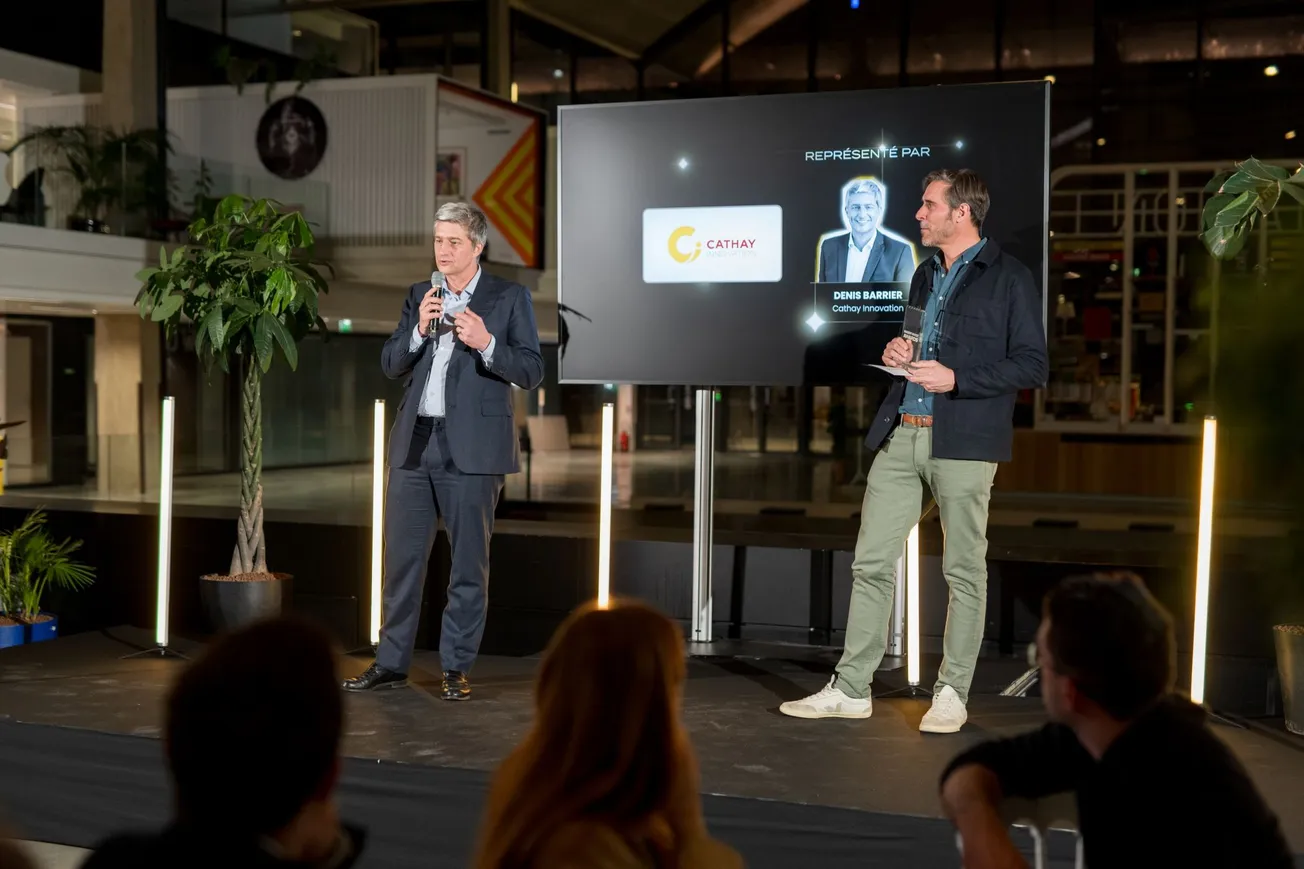
When I caught up with Denis Barrier last week, the Moonshot AI frenzy was entering its umpteenth news cycle, and the co-founder and CEO of Cathay Innovation sounded like a man enjoying being right.
The Paris-based firm announced its investment in Moonshot AI, the Beijing lab behind the Kimi models, a few weeks ago. After that came the release that turned a smart bet into a global talking point: K3, the model Moonshot had promised would match the best closed-source systems. “Kimi was telling us, ‘K3 will be practically on par,’” Barrier said. “They said, ‘We release in Q3.’ And in fact, they were really on par.”
The reaction was instant and loud. And in a blink, it seemed to turn the global discourse around AI, the Big Model labs, and open source on its head. “I was extremely surprised, because it was such a boom,” he said. “Kimi became the hottest company in the world of AI...It was like a Sputnik moment.”
For Cathay, the deal is a good advertisement for the firm’s distinct geography. It is headquartered in Paris, was co-founded with Chinese investor Mingpo Cai, runs teams across Europe, the US, and China, and closed the largest AI-dedicated fund to emerge from the European Union at $1 billion last year. Barrier spends much of his time in San Francisco. That triangulation, he argues, is what let Cathay see Kimi coming when most Western investors couldn’t.
👋🏻 If you’re enjoying The French Tech Journal, support the project by forwarding it to friends and sharing it on your social networks. You can also comment on this post. And if you have ideas for stories, tips, or just want to harass us, shoot us an email: chris@frenchtechjournal.com / helen@frenchtechjournal.com 👋🏻