
Throughout August, we’re revisiting eight long-form FTJ articles from the past year whose themes continue to resonate. From AI and deeptech to sovereignty, cybersecurity and global scale, they explore the ideas, companies and debates shaping French Tech. We hope you enjoy revisiting them with us.
We first published this article on the growth of defense tech in Europe and France back in April 2025
"Defense tech" broadly refers to areas such as surveillance & awareness (satellites, sensors, cybersecurity etc.), decision-making (battlefield AI), freedom of operations (drones, autonomous systems etc.) and mobility and infrastructure (EVs, propulsion, space etc.).
Update, August 2026: Since we first published this article, Europe’s Defense Tech ecosystem has moved from emerging sector to strategic priority. Venture funding has accelerated sharply: Dealroom and the NATO Innovation Fund report that European Defense, Security & Resilience startups raised a record $8.7 billion in 2025, up 55% year-on-year. Defense, Security & Resilience now accounts for 43% of European deep-tech VC, compared with 33% in 2024. (Nato Innovation Fund)
The policy landscape has also shifted dramatically. The EU’s €150 billion SAFE financing instrument is now in place as part of the broader €800 billion Readiness 2030/ReArm Europe push, while France has raised its 2026 defence budget to €57.1 billion and plans to reach €76.3 billion by 2030. New European cross-border programmes are also emerging, including a proposed €3.5–5 billion initiative covering drones and counter-drone systems. (European Commission)
The market outlook is strengthening too. Global Market Insights now estimates the global defense electronics market reached $182.5 billion in 2025 and will grow to $323.9 billion by 2035, implying a 6.1% CAGR - slightly ahead of the 5.8% growth rate it forecast when we originally published this article.
Yet the fundamental question raised by this article remains: can Europe turn this unprecedented flow of capital and political will into a genuinely competitive, sovereign Defense Tech industry - and, crucially, can it do so fast enough?
How France And Europe Are Mobilizing Defense Tech Startups
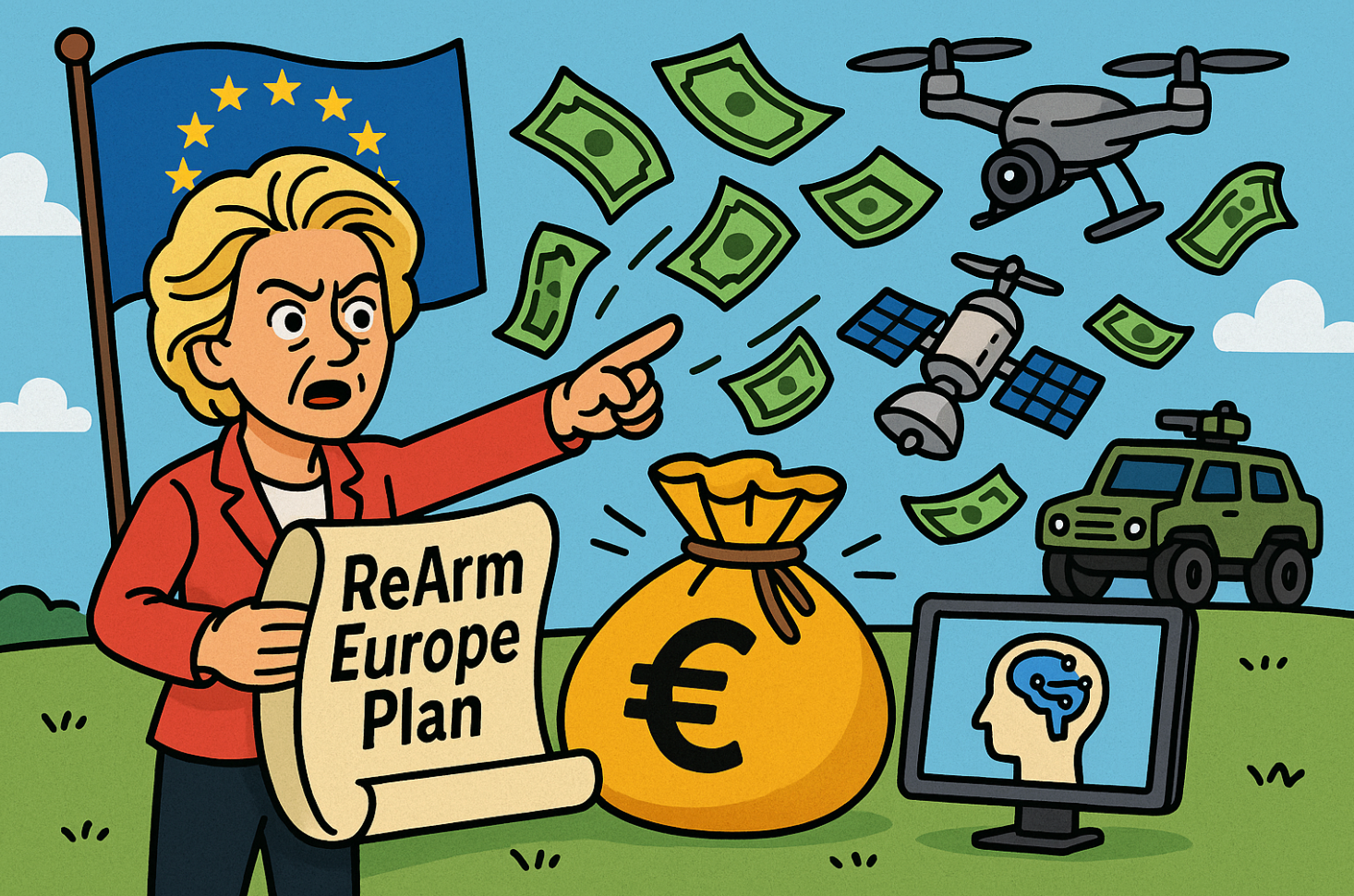
“We are living in the most momentous and dangerous of times,” EU Commission President Ursula von der Leyen warned in March 2025, as she unveiled the EU’s €800 billion ReArm Europe Plan. “The real question is whether Europe is prepared to act as decisively as the situation dictates - and whether Europe is ready and able to act with the speed and ambition that is needed.”
The plan is to catalyze a surge in defense investments across EU member states. The message is clear: in an era marked by persistent instability - from Russia’s ongoing aggression in Ukraine to shifting U.S. security commitments and escalating cyber threats - defense is no longer optional.
For Europe, and France in particular, the challenge isn’t whether to invest in sovereign innovation, but whether they can do it swiftly enough.
From Taboo to Tech Frontier
With geopolitical tensions rising and sovereignty now a buzzword, Defense Tech - long taboo in a French startup culture that favored software, consumer, and climate tech - is gaining traction.
According to Dealroom, in 2024, French VCs invested $773 million in defense, security, and resilience startups - a fivefold increase since 2020. Public funding is beginning to flow, and attitudes are shifting.
But is this momentum sufficient? In defense, speed isn’t just about a competitive edge; it’s a matter of national survival.
👋🏻 If you’re enjoying The French Tech Journal, support the project by forwarding it to friends and sharing it on your social networks. You can also comment on this post. And if you have ideas for stories, tips, or just want to harass us, shoot us an email: chris@frenchtechjournal.com / helen@frenchtechjournal.com 👋🏻