👋 Inside this week's edition:
🧠 Essential Summer Read #5: CEO Jérôme Lecat is rebuilding a profitable, founder-led storage company around agentic AI. He's canceling SaaS subscriptions, rewriting code reviews, and has just launched a new agentic platform that could expand the company's ambitions. Read it here.
Chris O'Brien + Helen O'Reilly-Durand

For today’s AI-native, data-driven startups, security is no longer optional. Customers expect it, investors demand it, and growth depends on it.
Learn how leading AI-powered companies—Granola, Clay, Factory, and more—prioritized trust from day one and used Vanta to turn security and compliance into a competitive advantage. From faster SOC 2 audits to six-figure savings and ISO 42001 adoption, see how these startups are building trust in the AI era.
Edito
The latest Mistral news has predictably triggered another round of Euro Doomer Porn.
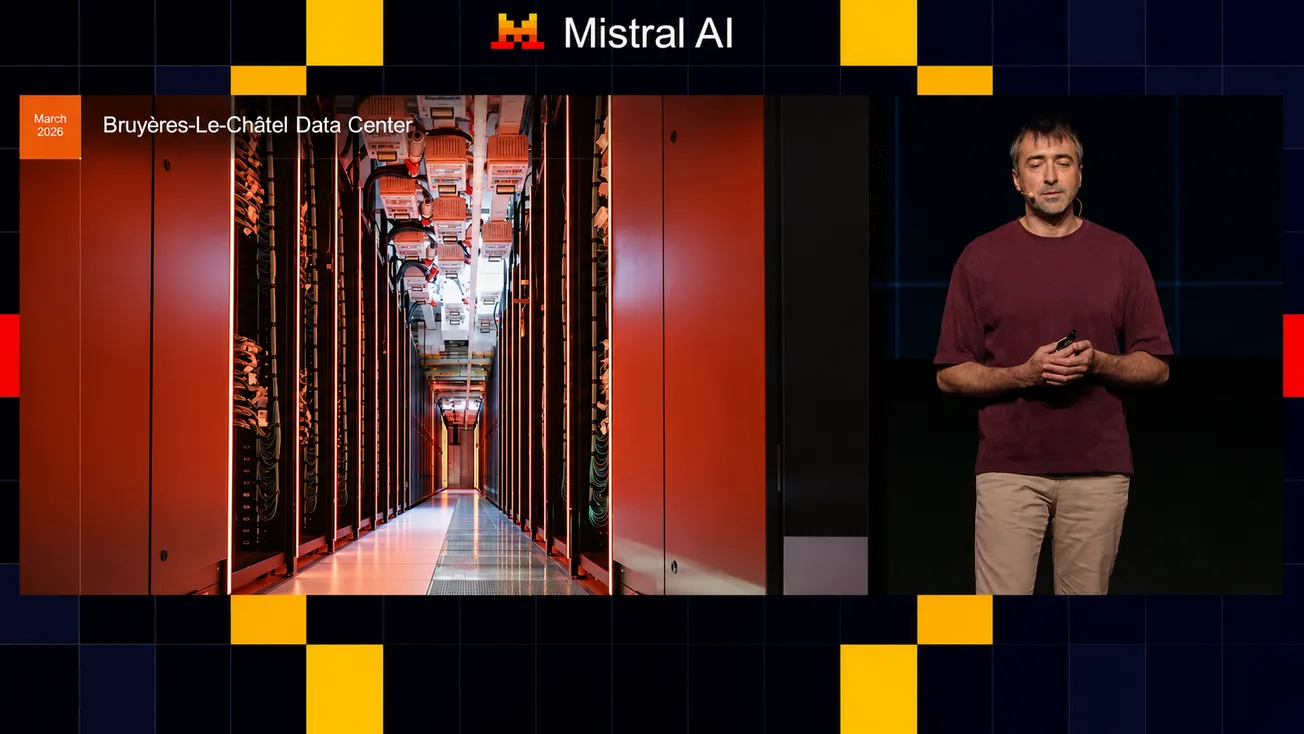
The company announced plans to build one gigawatt of compute across Europe by 2030. To do that, it is pooling multi-year commitments from ASML, CMA CGM, Capgemini, Amadeus, and Caisse des Dépôts through what it calls European Compute Units. As part of this push, it is giving customers more control over where inference happens and opening its platform to third-party open models, starting with Z.ai’s GLM-5.2.
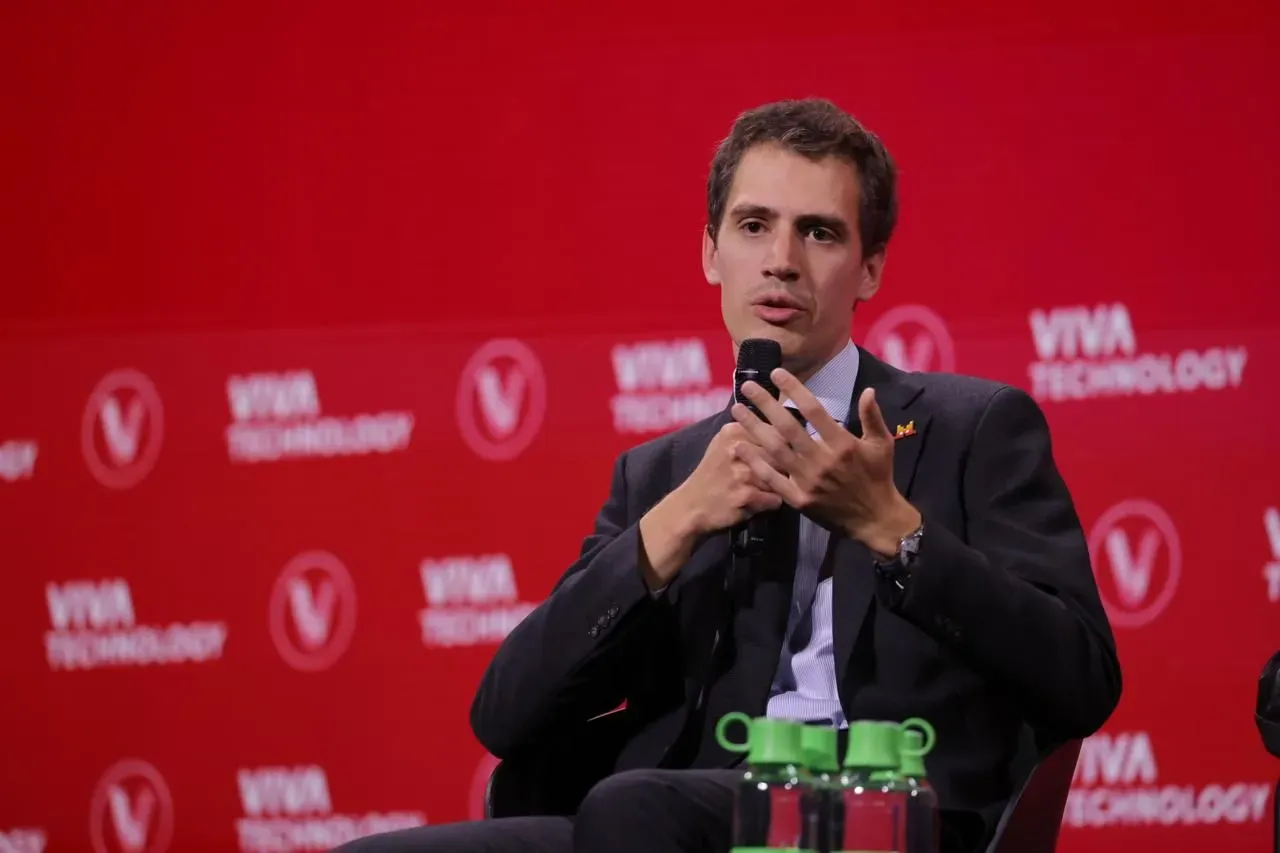
"When we spoke in June, the story was around how Mistral was building a full-stack AI offering," Timothée Lacroix, Mistral's co-founder and chief technology officer, told VentureBeat in an exclusive interview ahead of the announcement. "Today, the announcement is about strengthening one part of this infrastructure, which is the inference part."
The French government added a particularly blunt demand signal, with Budget Minister David Amiel confirming that the government will only hire “sovereign” AI providers such as Mistral, excluding OpenAI, according to Reuters.
Naturally, the reflexive interpretation across the interwebs and social media was that Mistral had conceded the frontier-model race and retreated into becoming a European cloud provider. That conclusion confuses a benchmark leaderboard with an entire industry.
Training frontier models and operating inference at scale may involve many of the same chips, but they are very different economic and infrastructure problems. Frontier training is concentrated, episodic and extraordinarily capital-intensive: assemble the biggest cluster possible, run the training cycle and then do it all over again for the next generation. Enterprise inference is continuous. It is about availability, latency, cost per task, regional controls, security and the ability to support thousands, or eventually millions, of production workflows.
Mistral therefore had to decide where to place scarce capital. Choosing to invest heavily in inference capacity and enterprise infrastructure does not necessarily mean giving up on model development. It may mean putting more capital behind the part of the stack where recurring demand, customer relationships, and operational control can compound.
This matters because model capability is only one variable in an agentic system. The harness matters. Context matters. Workflow integration matters. Permissions, memory, observability, and access to proprietary data matter. A more capable closed model that an enterprise is reluctant to connect deeply to its systems may deliver less value than a slightly weaker open model that can safely access the organization’s knowledge, tools, and processes.
The model is not the system of record. Increasingly, it is one component inside a larger execution environment.
That is why Mistral’s decision to support third-party models should not automatically be read as an admission of defeat. It is a bet that enterprises will use portfolios of models rather than pledge allegiance to one laboratory. Mistral itself now describes enterprise AI as an ensemble of capabilities, ranging from frontier reasoning to high-volume production and specialist systems. Most agentic workloads will not economically justify running the most expensive frontier model at every step. Companies will use frontier systems for the hardest planning and reasoning tasks, smaller models for repetitive execution, and specialist models for functions such as document processing, speech, or code.
The winning architecture will vary by company and by workload. The larger strategic opportunity may therefore be to become the trusted control plane through which enterprises select, deploy, and govern those models. Mistral is attempting to move from being simply a model provider to becoming that execution layer, effectively a European neocloud that combines models, compute, regional infrastructure, and deployment control.
The financing mechanism behind the buildout may be even more important than the headline capacity target. Mistral’s European Compute Units convert multi-year customer commitments into future access to infrastructure. In practical terms, the company is trying to turn large enterprises into anchor tenants whose contracted demand can support debt financing for data centers. That looks less like a conventional software subscription and more like the project-finance structures used for energy and other capital-intensive infrastructure.
This is potentially a promising model for Europe. Mistral has already used debt to finance its initial 44-megawatt facility near Paris, while Microsoft has separately made a multibillion-dollar commitment to use part of Mistral’s expanded European GPU capacity. Customer pre-commitments could make that financing playbook repeatable without requiring every new data center to be funded through another enormous venture round.
There are obvious caveats. One gigawatt will require investment measured in the tens of billions. Much of the capacity has not yet been built. Some of the anchor customers are already investors in Mistral or are connected to the French state, so these commitments are not the same as entirely independent market demand. Buyers are also taking delivery, pricing, and technology risk by committing to infrastructure years before it is available.
But none of that makes the structure meaningless. European AI companies have long faced a circular problem: lenders want contracted demand before financing infrastructure, while customers want infrastructure to exist before making long-term commitments. Mistral is attempting to break that loop.
By the way, when Cohere CEO Aidan Gomez was recently in Paris, he told a room full of journalists that such pre-purchase agreements were exactly what Europe needed to unlock more compute capacity. Considering that Gomez was a co-author of the original transformer paper, the dude perhaps knows a thing or two of which he speaks.
And this brings us to the more interesting question: Why does the frontier matter, and what does it cost to remain there?
The American AI bet involves a level of financial risk that many Europeans still underestimate. The speed at which AI infrastructure is consuming cash is remarkable. Alphabet spent $44.9bn on capital expenditure in the second quarter of 2026 and recorded negative quarterly free cash flow, although it remained strongly cash-generative over the preceding 12 months. Meta spent $31.08bn during the quarter and generated just $784m of free cash flow. Alphabet has taken out a century bond, a debt instrument that takes 100 years to pay back.
Oracle is the more alarming case. Its free cash flow turned negative, its reported debt reached $129.5bn, and it had signed roughly $260bn of data-center leases. S&P cut its credit rating to BBB-, one notch above junk. One of the world’s largest software companies is taking material balance-sheet risk to remain competitive in AI infrastructure.
The frontier race has planted a capital-intensity bomb inside businesses that were once celebrated for asset-light economics. Decades of software-era cash generation are being converted into chips, power contracts, data centers and long-duration financial obligations. Perhaps the returns will justify it. But there is still little evidence that every company spending at this scale will earn attractive returns on that capital.
The uncomfortable question is whether frontier leadership will prove durable enough to warrant the cost. Models are improving rapidly across multiple laboratories and jurisdictions. Techniques diffuse. Talent moves. Open models narrow gaps. Mistral’s decision to offer a Chinese open-weight model through European infrastructure is itself a reminder that the supply of capable intelligence is becoming more geographically and commercially diverse. Owning the best model at one moment does not automatically create an enduring monopoly.
Yet the American companies cannot easily step away from the race. They have already committed too much, and falling behind at the frontier could threaten their existing platforms. That creates its own momentum: every new investment makes the next investment harder to avoid.
Those economics also make Europe a critical competitive market. US companies need global utilization to justify their infrastructure, while Chinese providers are increasingly capable of competing through open models and international partnerships. Europe is wealthy, highly regulated, and still contestable. It is not a technological sideshow. It is one of the main battlegrounds over who will control the next generation of enterprise computing.
This is where sovereignty needs a more useful definition. Sovereignty does not mean technological autarky. Mistral still depends on Nvidia chips and is partnering deeply with Microsoft. The point is not to eliminate every foreign component. It is to preserve choice, negotiating leverage, deployment control and credible exit options. A European organization should be able to change models without surrendering its data architecture, workflows and institutional knowledge to a foreign provider.
The French government’s decision to favor sovereign providers will not by itself turn Mistral into a global champion. Government procurement can create complacency as easily as it can create scale. But it can also provide the anchor demand required to finance infrastructure, develop operational expertise and make a domestic ecosystem viable. In an infrastructure race, procurement is industrial policy.
Meanwhile, America’s AI companies are making an unprecedented financial bet without securing broad public legitimacy at home. Pew found that roughly two-thirds of Americans believe AI is advancing too quickly, while Ipsos found that US sentiment toward AI tilts negative and that Americans are among the most pessimistic populations about its effects on employment and the economy.
Does any of this mean Mistral will succeed? No. It still has to deliver the capacity it has promised, finance a buildout costing tens of billions, manage customer concentration, compete on price and performance, and continue producing models good enough to keep its platform relevant. Its dependence on American chips also places limits on how sovereign the stack can truly become.
But execution risk is not the same thing as strategic incoherence.
Mistral does not have to beat OpenAI, Anthropic or Google on every benchmark to build a valuable company. It has to provide the right combination of models, infrastructure, control and economics for European enterprises and governments. If it can combine open-model choice with regional compute, deep access to organizational context and a workable financing model, it may create something that frontier leadership alone does not guarantee: a trusted operating layer for enterprise AI.
The frontier matters. But it is not the whole game. Reflexively interpreting every European move outside the benchmark arms race as surrender, and every attempt to compete through infrastructure, deployment and sovereignty as proof that “Europe is cooked,” is pure nonsense.
Headlines
🗞️ As of August 2, the EU has entered the enforcement phase of its AI Act, giving the European Commission power to demand information, order safety tests and remove non-compliant frontier models from the market. France is particularly exposed because Mistral is expected to be the only European model provider covered by the toughest requirements. Businesses also face new transparency duties, with chatbots required to identify themselves and deepfakes clearly labeled. The European AI Office can now impose serious penalties, putting French organizations under pressure to comply quickly. Brussels’ big balancing act will be enforcing the rules firmly without hobbling the homegrown AI champions Europe is trying to build. | Commission AI Act enforcement, The Parliament Magazine
🗞️ France’s Constitutional Council has struck down a flagship plan to ban children under 15 from social media, ruling that the blanket restriction went too far in limiting freedom of expression. The judges said the law swept in platforms without proven risks, ignored differences in children’s maturity and family circumstances, and gave parents no way to opt out. They also flagged privacy concerns around age verification, arguing that the legislation lacked adequate safeguards. The door is still open to a narrower, more carefully targeted law. Emmanuel Macron’s government is already heading back to the drafting table. | Le Figaro
🗞️ Cybersecurity Overhaul and AI Funding. Following a sophisticated data breach impacting 678,000 taxpayers, the French government announced a new, AI-focused national cybersecurity strategy. Prime Minister Sébastien Lecornu has called an interministerial crisis meeting to address the attack and roll out a robust new digital governance model. The initiative includes a massive €200 million investment, with a key focus on enhancing the country's AI capabilities for ministerial security and defense. The attack served as a sobering reminder of how vital artificial intelligence has become not just for innovation, but for the fundamental protection of the state. | Azernews
🗞️ Nearly 300 French newspapers are taking Google to the country’s competition regulator over AI Overviews, arguing that the search feature uses their journalism without consent or fair payment. Their industry group, APIG, says Google sidestepped mandatory negotiations and may have breached commitments linked to a 2022 compensation deal. With regulator Arcom estimating that AI summaries could cut referral traffic to news sites by as much as 38%, publishers fear a painful hit to advertising revenue. They insist they are not fighting innovation. Instead, they simply want Google to share the value its AI products extract from original reporting.| VideoWeek, France24, The Next Web
🗞️ The French data protection authority, CNIL, has officially waded into the complex world of agentic AI. In a new exploratory note, the watchdog highlighted the unique privacy risks posed by systems that can autonomously coordinate sub-systems and process data from multiple sources. While the GDPR remains the guiding framework, the CNIL warns that these opaque, decentralized processing chains demand adapted implementation strategies to ensure human supervision and data control. This proactive step signals how European regulators are looking to keep pace with AI agents that act on our behalf. | Inside Privacy, Covington
🗞️ Healthcare giant Doctolib is diving deep into clinical AI research, recently kicking off a program that analyzes patient data to help spot risks and improve care pathways. While the platform insists the data is pseudonymized and held in the public interest, the move has caused a stir, with privacy watchdogs and the Ligue des droits de l'homme questioning the default enrollment of millions of patients. If you're a user and prefer to opt out, you'll need to go to your privacy settings. It’s a delicate balancing act for the French unicorn as it tries to push medical innovation forward while maintaining the trust of its massive user base. | Connexion France
🗞️ France is tightening the net on foreign investment to keep its sensitive tech sectors safe, officially lowering the review threshold for non-European investors from 25% down to 10%. With geopolitical tensions rising, Prime Minister Sébastien Lecornu signed a new decree to keep a closer eye on acquisitions in strategic areas, including AI, robotics, and semiconductors. The government wants to make sure French innovations stay securely in domestic hands while still welcoming foreign capital through a new, faster review process. It's a clear signal that protecting the national industrial crown jewels is a top priority as the race to lead in AI heats up. | Reuters
🗞️ French consulting giant Wavestone acquired Paris-based consultancy AI Builders. While the group reported a slightly bumpy start to the fiscal year, with a 2% revenue dip, it is making it clear that AI is the definitive growth driver moving forward. With AI-related projects now accounting for 22% of revenue—up from 17% last year—this €19.3 million deal is a strategic effort to capture the rapidly growing demand for AI implementation and governance expertise. By bringing a team of 50 AI specialists into the fold, Wavestone is looking to better serve large organizations struggling to scale their own transformations. | Wavestone
🗞️ Paris Saint-Germain is officially getting a high-tech upgrade, signing a major multiyear partnership to make Google Gemini the club’s new official AI assistant. It's a bold move that also sees Google Pixel become the team's official smartphone, with plans to use the hardware to capture content from the pitch to behind the scenes. Fans visiting the Parc des Princes can look forward to a dedicated "Google space" at the stadium, designed to showcase the latest AI innovations to guests and creators. | StadiumDB, Cybernews
🗞️ Microsoft is deepening its commitment to the French tech scene by establishing the Microsoft Open Innovation Center in Strasbourg. This new hub focuses on preserving cultural heritage and ensuring that European languages, often overlooked by mainstream AI models, have a voice in the digital economy. By partnering with cultural institutions to expand access to multilingual data, the center aims to make sure the next generation of AI reflects Europe's unique linguistic diversity. | Microsoft
🗞️ It turns out that blending high-quality journalism with artificial intelligence is a winning recipe for Le Monde’s English edition. The publication has officially broken even a full year ahead of its original five-year goal thanks to a clever combination of digital subscriptions and AI-assisted translation tools like DeepL and custom versions of ChatGPT. This strategy has allowed them to scale their international reach without the prohibitive costs that usually plague such ambitious ventures. | The Connexion
🗞️ Drones and Automotive Know-How. French automotive giant Valeo has teamed up with Harmattan AI to manufacture electric drone motors domestically, securing the supply chain against reliance on critical rare earths. By leveraging automotive manufacturing techniques, they aim to mass-produce these motors for civil and defense applications starting in early 2027. | Valeo
🗞️ High-Tech Political Interference. French politics just hit a new high-tech low, with former Prime Minister Gabriel Attal sounding the alarm over a Russian disinformation campaign. The plot reportedly involved circulating fake, AI-generated reports that mimicked major French news branding to discredit his presidential campaign and smear his policies. Attal warns this is just the beginning, signaling that as France heads toward the 2027 presidential election, we should expect more digital "interference" and fabricated content. | Andoula Agency
🗞️ Firefighting is getting a high-tech makeover in France, and it is not just about hoses and planes anymore. French emergency services are deploying AI-powered cameras, like those from companies such as Firetraking, to spot forest fires long before they become unmanageable. The goal is not to replace the heroes on the ground, but to give them the early warning needed to stay safe and efficient. Projects like the 'Condor' program, which tests solar-powered drones with AI and electro-optical cameras, are showing that technology is a vital sidekick in protecting forests. | Ratotapi
Other Headlines
🗞️ How to Make a Robot Better at Its Job? Give It Eyes. | Inbolt, a French start-up that sells robot vision systems, helped a Stellantis plant in Detroit become a top performer in the company. | The New York Times
🗞️ ‘I’m not here to be acquired’: Meet Nabla’s new CEO Brian Manning | Brian Manning, the newly appointed CEO of buzzy Parisian startup Nabla, which builds AI-powered tools for healthcare providers, has big shoes to fill. He is taking over the role from Nabla’s cofounder Alexandre Lebrun, who at the end of last year made the surprise announcement that he was stepping down as the company’s CEO to join AMI Labs, the world models startup launched by AI guru and long-time friend of Lebrun Yann LeCun. | Sifted
🗞️ French insurers move AI from pilots to the front line | French insurers are moving beyond the question of whether to use artificial intelligence and towards a more difficult one: how to make it work across the business without losing control over decisions. | Fintech Global
🧠 Essential Summer Reads #5: Scality's Long Bet – How The 15-Year-Old French Storage Company Is Rewiring Itself for the Agentic AI Era

Throughout August, we’re revisiting eight long-form FTJ articles from the past year whose themes continue to resonate. From AI and deeptech to sovereignty, cybersecurity and global scale, they explore the ideas, companies and debates shaping French Tech. We hope you enjoy revisiting them with us. We published this article on Scality in May.
CEO Jérôme Lecat stood before a roomful of journalists at Scality's Paris headquarters this week for an event that was part product launch, part reintroduction of the company he co-founded in 2009.
The product is a software platform that uses AI agents to manage enterprise data across four storage tiers, from ultra-fast flash to cold tape archives. However, the two years Scality spent developing it speaks to something larger: an established French tech company that is no longer a startup, reinventing itself for an industry being relentlessly remade by AI.
By the numbers, all is well at Scality, a company that became an early international success in the emerging French tech ecosystem. Scality has roughly 240 employees in 16 countries. It generates more than €50 million in annual revenue. Seventy-five percent of that revenue comes from outside France and is, according to Lecat, "highly profitable." Yet the accelerated transformation driven by generative and agentic AI is fundamentally changing customers' storage needs.
This puts Scality in an intriguing position, facing countless software incumbents. As AI rewrites the rules for how storage is built, sold, and operated, the company could be vulnerable. At the same time, if Scality can successfully adapt to the new agentic world with its latest products, the mid-sized company could potentially address larger markets beyond its core storage customers.
"Our ambition is bigger because we see what is possible," Lecat said. "If you walk into our office, we're like a young startup that has found something new and is just so eager to bring it to the world."
Want to reach an audience of more than 30,000 readers each month? The French Tech Journal is the leading English-language media platform covering France's dynamic tech ecosystem. With 31,000 + engaged readers across key global markets and consistently high engagement rates, our sponsorships provide unparalleled access to decision-makers in French tech.
☀️Sponsor Events☀️
📆 France Digitale Day | Paris | September 16 | The most exciting startup event in France and Europe taking place in Paris for its 14th edition. From across France and Europe, over 4500 founders, investors, and innovation leaders gather for the whole day to get inspired, discuss the latest trends in business, tech, and society, close (big) deals with new partners, network, raise funds with investors, and meet with your peers in a village-like venue in the heart of the French capital. This year, the CES will be back at FDDay for their CES Tech Trends, the first stop on the road to CES2027. | Get tickets
📆 Events 📆
📆 OpenAI Builder Lounge Paris | September 22 | Join OpenAI for an evening of hands-on building, live demos, and discussion in Paris, co-hosted with Photoroom. Hear how top teams approach building useful agents, see what is new with Codex, and work alongside local founders, CTOs, and engineers. | Request to join
📆 AI Meets Multi-Omics: Enabling Precision Medicine | Paris | October 15 | Institut Curie| Speaker: Nataa Prulj, Department of Life Science, Barcelona Supercomputing Center & ICREA (Barcelona, Spain) & Department of Computer Science, University College London (London, UK) | Information
👋🏻 If you’re enjoying The French Tech Journal, support the project by forwarding it to friends and sharing it on your social networks. You can also comment on this post. And if you have ideas for stories, tips, or just want to harass us, shoot us an email: chris@frenchtechjournal.com / helen@frenchtechjournal.com 👋🏻