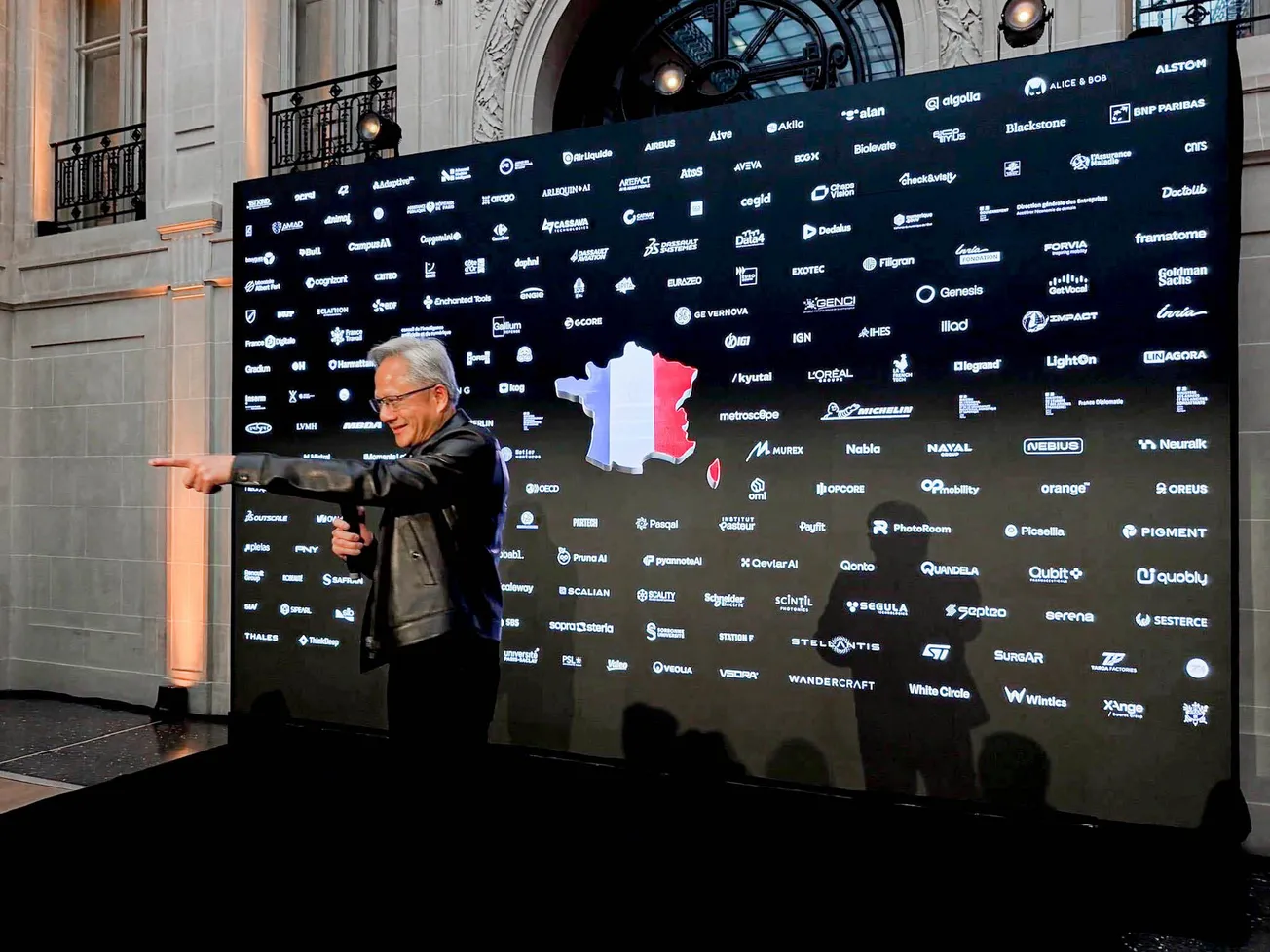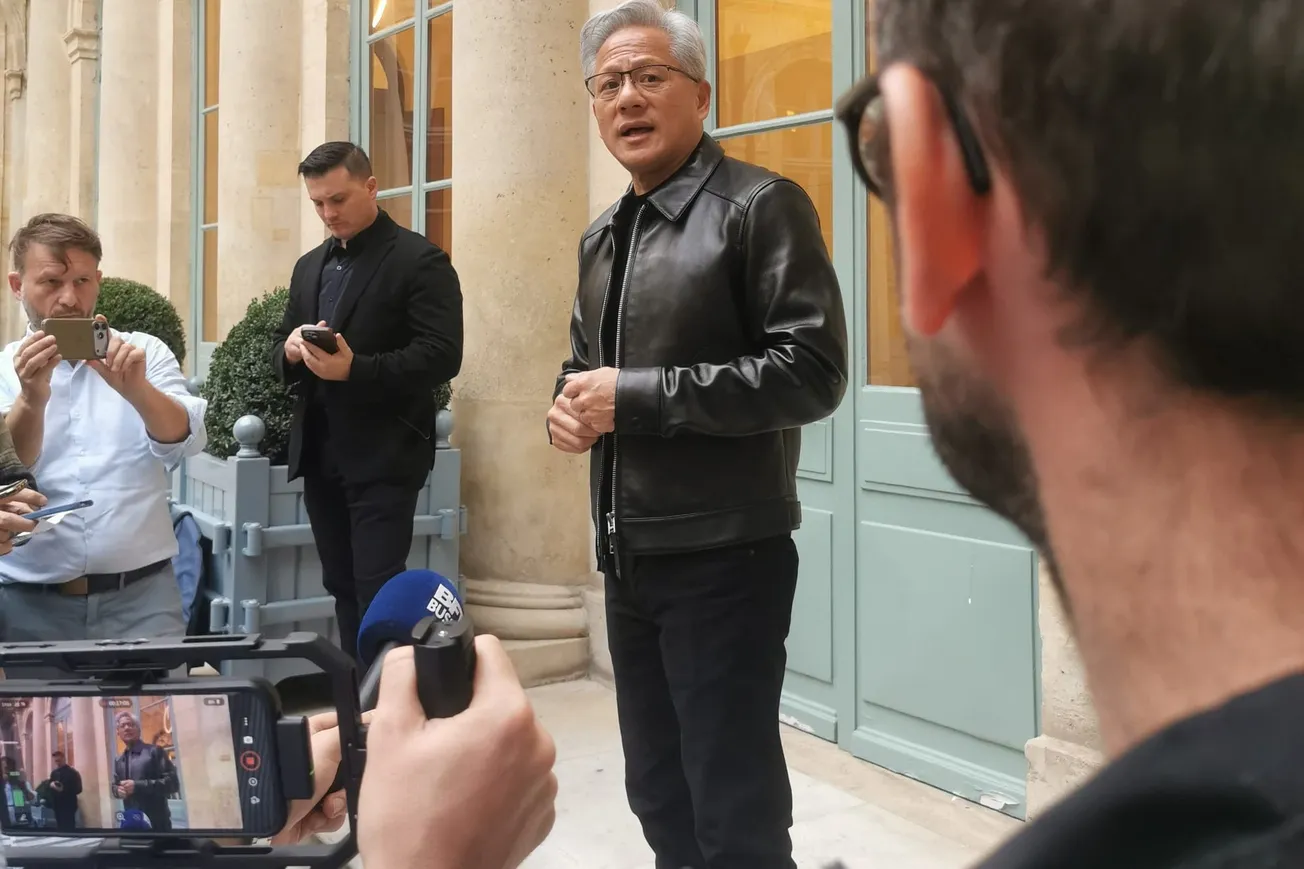
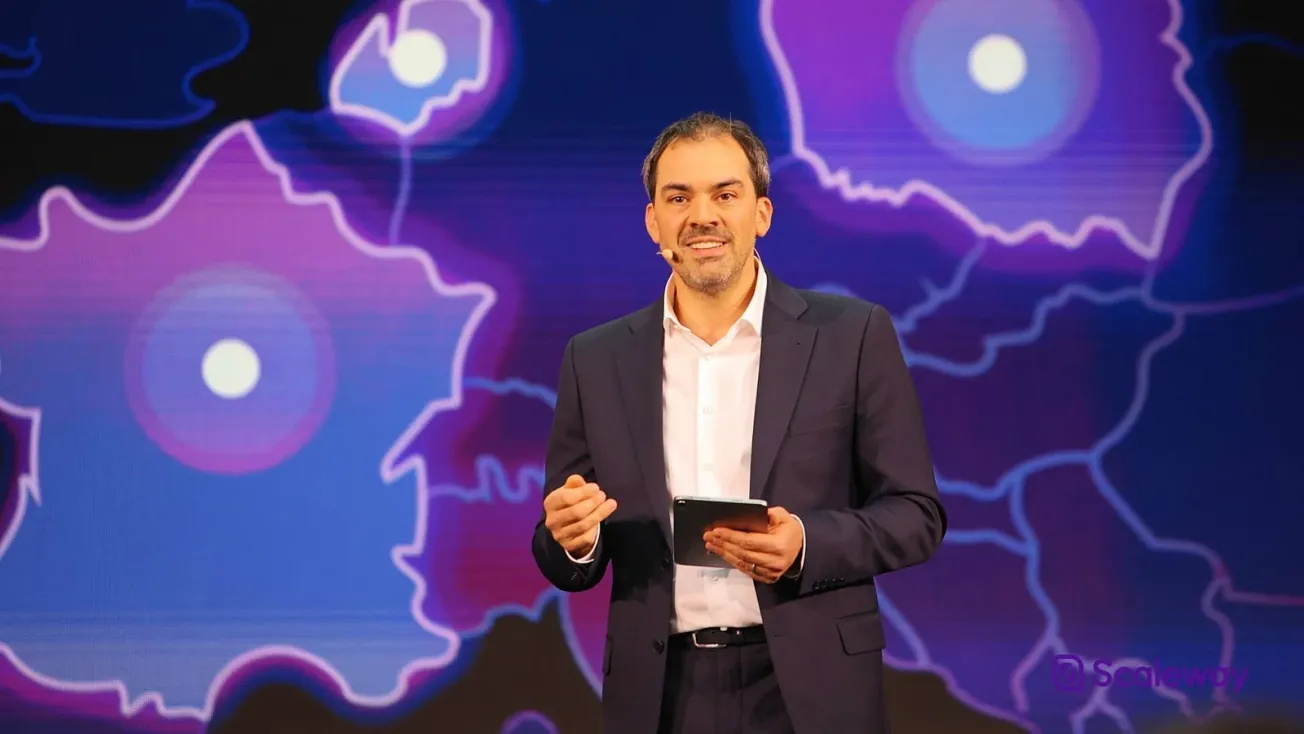
If you wanted to pick a good week to interview the CEO of a European sovereign cloud company, this was it. When I spoke with Scaleway's Damien Lucas at VivaTech, the company had just wrapped a rapid-fire series of announcements: new customers including LVMH, MAIF, Ouest-France, and ChapsVision, a European AI inference project built on French-designed chips, and a new quantum partner. And all of it landed amid a fresh wave of anxiety about Europe's dependence on American technology.
Lucas, for his part, is not anxious. He's in a hurry.
"Scaleway is a cloud provider, a European cloud provider," he told me when I asked for the elevator pitch. "Our value proposition is around independence from foreign technologies and immunity to extraterritorial laws, all that with a very price-competitive value proposition."
The market he's chasing is enormous and, by his numbers, almost entirely spoken for. Lucas puts the European cloud market at roughly €80 billion, with about 85% of it held by the three US hyperscalers: Google, Amazon, and Microsoft. "This is a situation we need to actually solve, and we need to rebalance those market shares, and that's one of the missions of Scaleway," he said.
The slow-motion wake-up call
Sovereignty has been a European talking point for as long as I've been covering this beat. What's changed, I asked Lucas, that has finally made it feel concrete?
His answer: a six-year accumulation of shocks. It started with COVID, "where Europe realized that a number of things were impossible," including manufacturing some of its own drugs. Then came the US Cloud Act. Then came the 2023 GPU crunch, when Nvidia's H100S were scarce and, in his telling, the allocation priorities of American hyperscalers were unmistakable. "It was clear for the US hyperscalers, it was America first, and Europe would come second," he said.
The most recent jolt, he argued, came just days before we spoke, pointing to the news that Anthropic's Fable model had been "shut off for all non-American" users. "It raises a question," he said. "We need to be more independent."
Megawatts to gigawatts, millions to billions
Whatever you think of the politics, the physics of AI have transformed the infrastructure business Scaleway operates in.
Data centers used to be built around rooms drawing 100 kilowatts, filled with a thousand servers. "Nowadays, it's not even one rack. One AI rack is about 100 kilowatts, even more," he said. "We're not building data centers for a megawatt; we're building data centers for a gigawatt, 1,000 times more." The money has followed the same curve: "It used to cost millions; it now costs billions. This is a total shift."
Ask him about the bottleneck holding Europe back from building at that scale, and he goes straight to demanding certainty. The magic word is "off-take": binding commitments to future usage that let a provider build with confidence. "This is really what enables us to build for purpose, because we know there's going to be customers on those capacities," he said.
The good news, from his viewpoint, is that public buyers are starting to deliver exactly that.
Scaleway was selected in April as one of four providers in the European Commission's Cloud III purchasing program, a €180 million framework giving EU institutions access to sovereign cloud services for up to six years. Lucas also cited France's Health Data Hub award and said the company is now waiting on the European AI Gigafactory tender.
The sovereignty checklist
Scaleway's own answer to the extraterritoriality question is straightforward. "We've decided on a very simple rule: we have no shareholders, direct or indirect, outside of the EU. We have no subsidiary outside of the EU, and we have no staff outside of the EU," Lucas said. "This way, it's pretty clear there is no way a foreign law can actually apply to Scaleway."
The second part is tech independence, meaning owning the software. "We've built our own software. We have a cloud stack that we've developed 100% in-house using open-source software. There is not a single license from VMware, Broadcom, Red Hat, IBM, Microsoft, whatever. We own our software."
He's candid about the remaining gap: "We don't have GPUs yet, and we purchase all our GPUs and CPUs from the US. This is a major dependency."
To that end, one of the week's headline announcements was a partnership with French chip designer VSORA (alongside ZML and the Région Île-de-France) to deploy a European AI inference offer built on VSORA's Jotunn8 processor. Scaleway has placed orders, Lucas said, and will run the chips in its data centers "as soon as they are ready."
The VivaTech haul
The VSORA deal was one piece of a busy announcement slate. The customer wins spanned insurance (MAIF), luxury (LVMH), media (Ouest-France), and data intelligence, where ChapsVision, fresh off cybersecurity contracts in Germany and France, chose Scaleway to host its Argonos platform. Odigo, Orasio, and the CHU de Montpellier also signed on.
Scaleway also showed the first results of its public-private research continuum with GENCI and the CNRS: RATP's Sillon, an open-source small language model trained with the startup Pleias on public computing resources, is now running inference on Scaleway to help the Paris transit operator's agents detect distress signals in passenger messages. And it added Quobly, the Grenoble-based silicon quantum startup, to its Quantum as a Service platform, with access to actual Quobly hardware planned by the end of 2026.
A year behind, not ten
I told Lucas I hear a lot of Euro-doomer sentiment these days, and asked whether his optimism was warranted. His case rests on timing. "If you look at what happened with the cloud, Europe was 10 years behind. Here we're just talking about a year," he said of AI. And the next fight looks even better: "What's the next revolution? Quantum. Look at the number of European startups in quantum, much more than American startups. So the next revolution is going to be European-driven."
He's not declaring victory. "I'm not sure we're yet at the right pace," he admitted, "but it's going in the right direction...That battle is not dead, it's not lost."
Watch our full interview here: