
Cyberattacks. AI hallucinations. Crypto assets. Executive liability. Ask most startup founders what keeps them awake at night, and insurance is unlikely to make the list.
“A founder doesn’t wake up in the morning thinking about insurance,” said Belem co-founder and CEO Ségolène Mouterde. “They’re thinking about raising money, hiring people, signing customers and shipping products.”
That, she argues, is precisely the problem.
The risks facing technology companies have evolved dramatically in recent years, while much of the insurance industry still relies on processes designed long before generative AI, ransomware and globally distributed teams became the norm.
According to French startup Belem, that’s leaving many businesses dangerously exposed.
The Paris-based company says that 95% of the tech companies it audits discover significant gaps in their insurance coverage, often believing they are adequately protected when they are not.
It’s a striking claim, and one that reflects a broader problem. While startups have embraced AI, cloud infrastructure and increasingly global business models, much of the insurance industry still operates with processes designed decades ago.
When technology moves faster than insurance
“The companies have changed. The risks have changed. Insurance hasn’t,” said Mouterde.
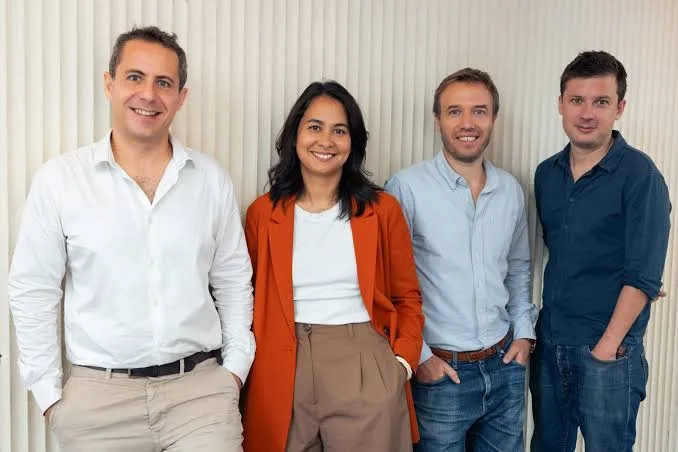
Founded in 2025 by Mouterde and serial insurtech entrepreneur Philippe Mangematin, Belem set out to rethink commercial insurance for technology companies from the ground up.
Rather than competing with insurers, the company acts as an independent broker, helping businesses identify risks, compare policies across multiple providers and secure coverage that better reflects how modern companies actually operate.
For Mouterde, the real product isn’t simply insurance. It’s helping founders understand the risks they’ve accumulated as their businesses evolve.
Its clients range from startups and scaleups to industrial SMEs, investment funds, and technology consultancies. Increasingly, they are operating internationally even if Belem itself remains focused on serving the French market.
That international expansion is changing the nature of the risks companies face. Alongside cyberattacks and executive liability, founders traveling to certain parts of the world may now require kidnap and ransom insurance - cover that would once have been associated almost exclusively with multinational corporations.
At the same time, cyber threats continue to accelerate.
“One insurer told me he had counted 110 cyberattacks since the beginning of the month,” Mouterde recalled, illustrating just how quickly the threat landscape is evolving.
Finding the holes before something breaks
One of Belem’s first steps with a new client is not to sell an insurance policy but to review the ones already in place.
That’s where the surprises begin. According to the company, the vast majority of the businesses it audits discover significant gaps in their insurance program.
For Mouterde, that figure isn’t a sign that founders are careless. Rather, it reflects how quickly technology companies evolve compared with the insurance policies they purchased months - or even years - earlier.
Founders launch in France, then hire employees abroad. They move customer data into the cloud, adopt generative AI tools, accept crypto payments, expand into new markets or sign increasingly complex commercial contracts. Each milestone changes a company’s risk profile, yet insurance is rarely revisited with the same frequency.
At the same time, the market itself has become increasingly specialized. Different insurers have developed expertise in different sectors, technologies, and risk categories, making it difficult for non-specialists to know whether they are adequately protected or are simply assuming they are.
“We want companies to be better protected, faster and at a lower cost,” she said.
Using AI to modernize brokerage - not replace expertise
Like many startups founded in the generative AI era, Belem positions artificial intelligence at the heart of its business. But unlike many AI pitches, the emphasis isn’t on replacing professionals.
Instead, the company has built proprietary AI agents to automate many of the administrative and analytical tasks that traditionally consume brokers’ time, from reviewing contracts to analyzing existing coverage and preparing risk assessments.
The goal, says Mouterde, is to free brokers to focus on advice while dramatically reducing the time required to deliver recommendations.
That matters in a sector where insurance placements can still take weeks.
Mouterde recalled one technology company that had spent months unsuccessfully searching for an appropriate cover before Belem secured a solution within 24 hours.
The founders credit this speed partly to AI and partly to the months they spent “underground,” working closely with insurers to understand the technical nuances of specialist products before automating many of their own internal processes.
Today, Belem works with around ten insurance partners, including major international providers, selecting policies according to sector expertise rather than relying on a single carrier.
Growing without venture capital
Perhaps unusually for a startup serving the technology ecosystem, Belem has no plans to announce a funding round.
The company says it has been profitable since launch and has grown to more than 200 clients without raising venture capital or building a large team. A chief of staff is expected to become its first full-time hire in the coming months.
That lean approach reflects the founders’ belief that AI allows young companies to scale differently from previous generations of startups, automating many operational tasks that once required sizeable back-office teams.
The company’s next challenge is less about fundraising than about building trust.
Insurance remains a relationship-driven business where reputation matters, particularly when advising founders on complex risks that often only become visible once something has gone wrong.
That partly explains the recent arrival of entrepreneur and podcast host Matthieu Stefani and producer Clémence Lepic as “Late Founders,” helping strengthen Belem’s presence within France’s entrepreneurial ecosystem as it looks to become a leading insurance broker for technology companies.
Belem’s ambition now extends well beyond finding better insurance policies. The company wants to build what Mouterde describes as a new generation of brokerage - one capable of evolving at the same pace as the companies it serves.
“The companies have changed. The risks have changed. Insurance hasn’t,” she said. “With AI, we have a unique opportunity to rethink this profession from the ground up.”