Quantum computing has made impressive scientific advances in recent years, but turning those breakthroughs into practical industrial machines remains a considerable challenge.
Today’s quantum computers are still largely experimental systems. Businesses can access processors remotely through cloud platforms such as IBM Quantum and Amazon Braket, but reliable, large-scale quantum computing remains some way off. No company has yet demonstrated a universal, fault-tolerant machine capable of performing complex calculations at scale without errors accumulating.
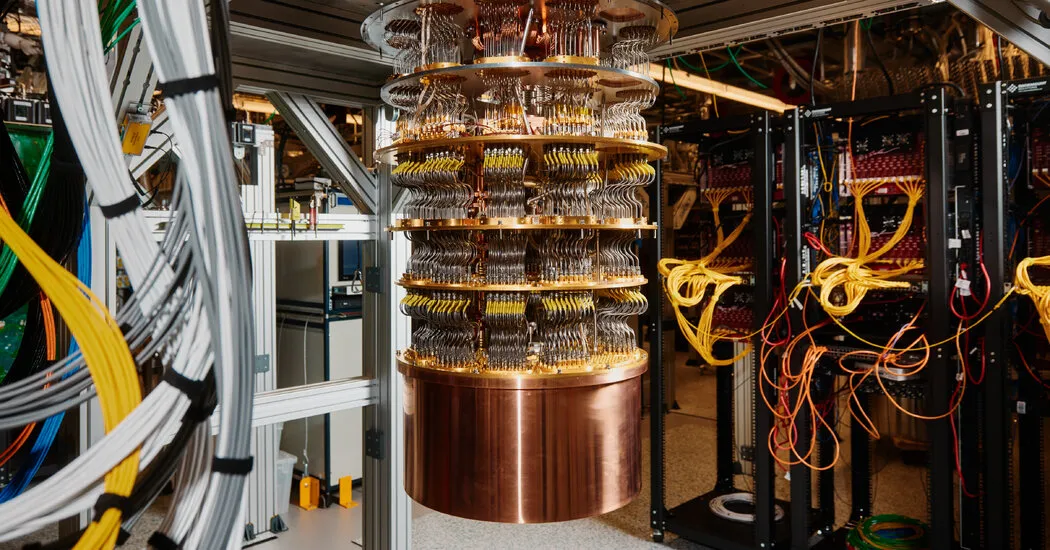
The hardware itself presents another obstacle. Many of today’s leading quantum architectures rely on superconducting circuits that require highly specialized infrastructure and temperatures close to absolute zero. Building and operating these systems is expensive, technically demanding and difficult to scale.
French startup Qluster - a spin-off from the Kastler Brossel Laboratory, a leading French research center in quantum physics - believes a different approach could help overcome some of these barriers.
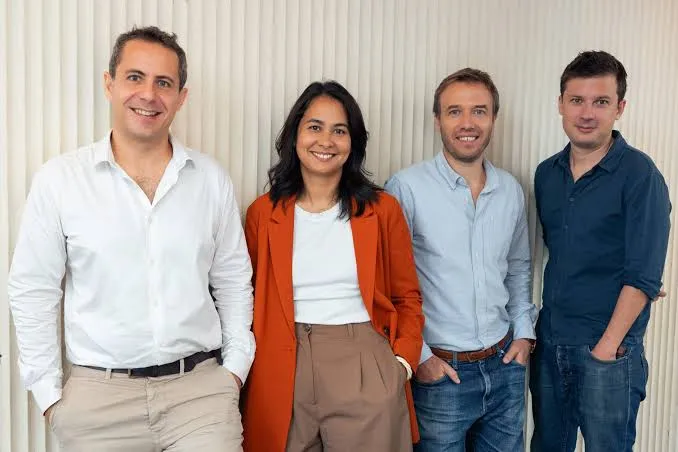
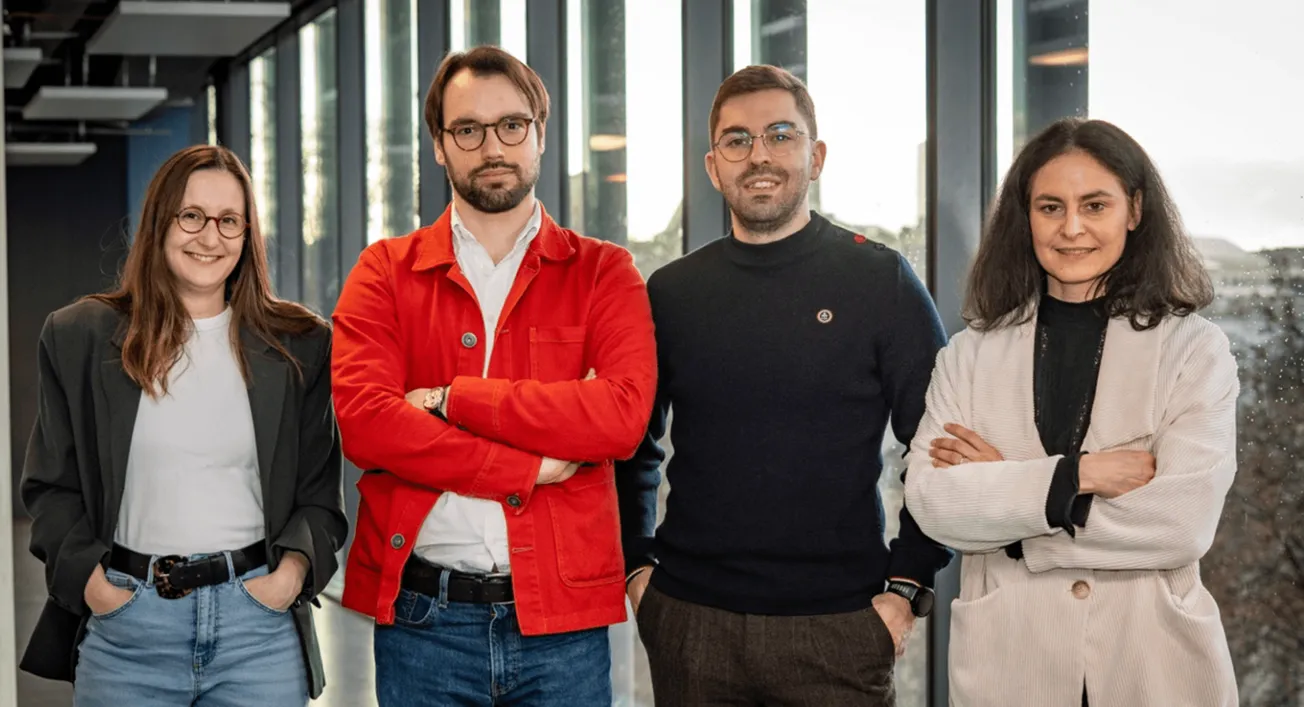
Founded just a few months ago by CEO David Fainsin, CTO Ambroise Boyer, COO Clarisse Thibault and CSO Valentina Parigi, the company has just raised €4.7 million in a pre-seed round led by specialist quantum investor Quantonation, to develop a new generation of quantum computers based on photonics - using light rather than superconducting circuits to process quantum information.
But Qluster isn’t just proposing a different type of qubit. It also wants to rethink how quantum computers are designed, putting industrial users' needs at the center of the architecture.
Replacing superconducting circuits with light
Quantum computers process information using quantum bits, or qubits. Unlike classical bits, which represent either a 0 or a 1, qubits can exploit quantum phenomena such as superposition and entanglement to perform certain calculations in ways that classical computers cannot efficiently replicate.
Most of the best-known quantum computing companies, including IBM and Google, have built their systems around superconducting qubits: microscopic metal electrical circuits etched onto a silicon or sapphire chip that must be maintained at extremely low temperatures to preserve their fragile quantum states.
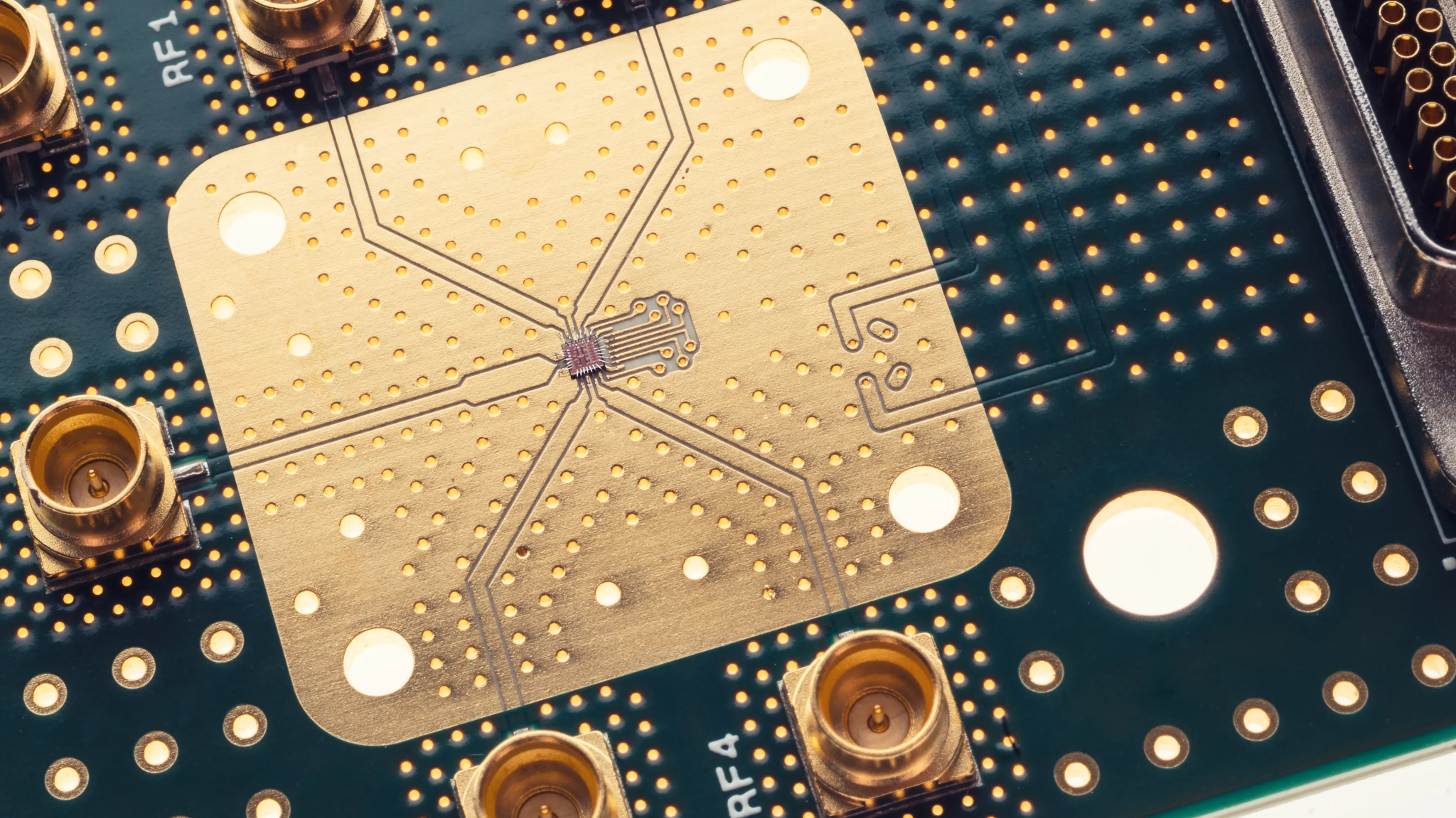
Qluster is taking a different route, using photons - particles of light - to carry quantum information.
Its technology is based on continuous-variable (CV) photonic quantum computing. Rather than encoding information in individual, discrete photon states, the approach uses continuous properties of light, such as its amplitude and phase.
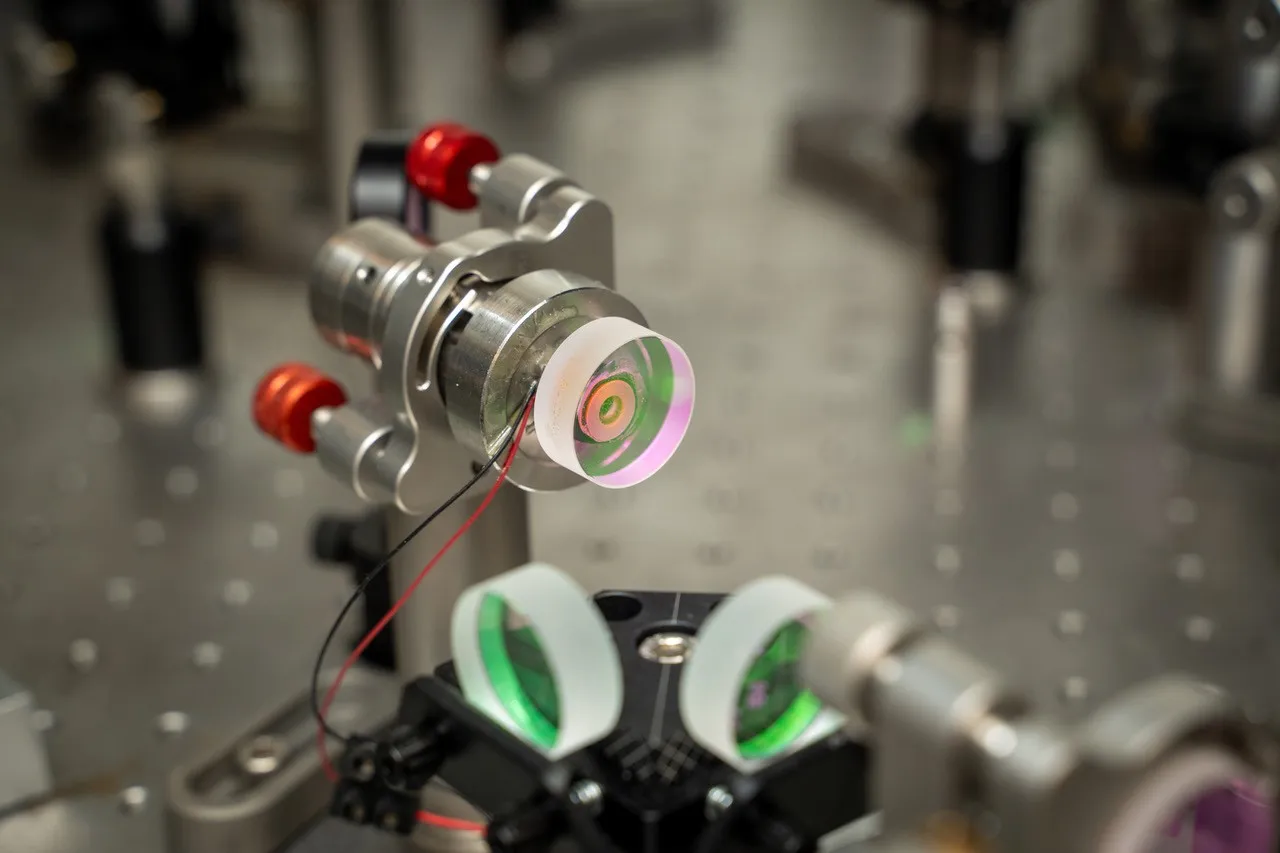
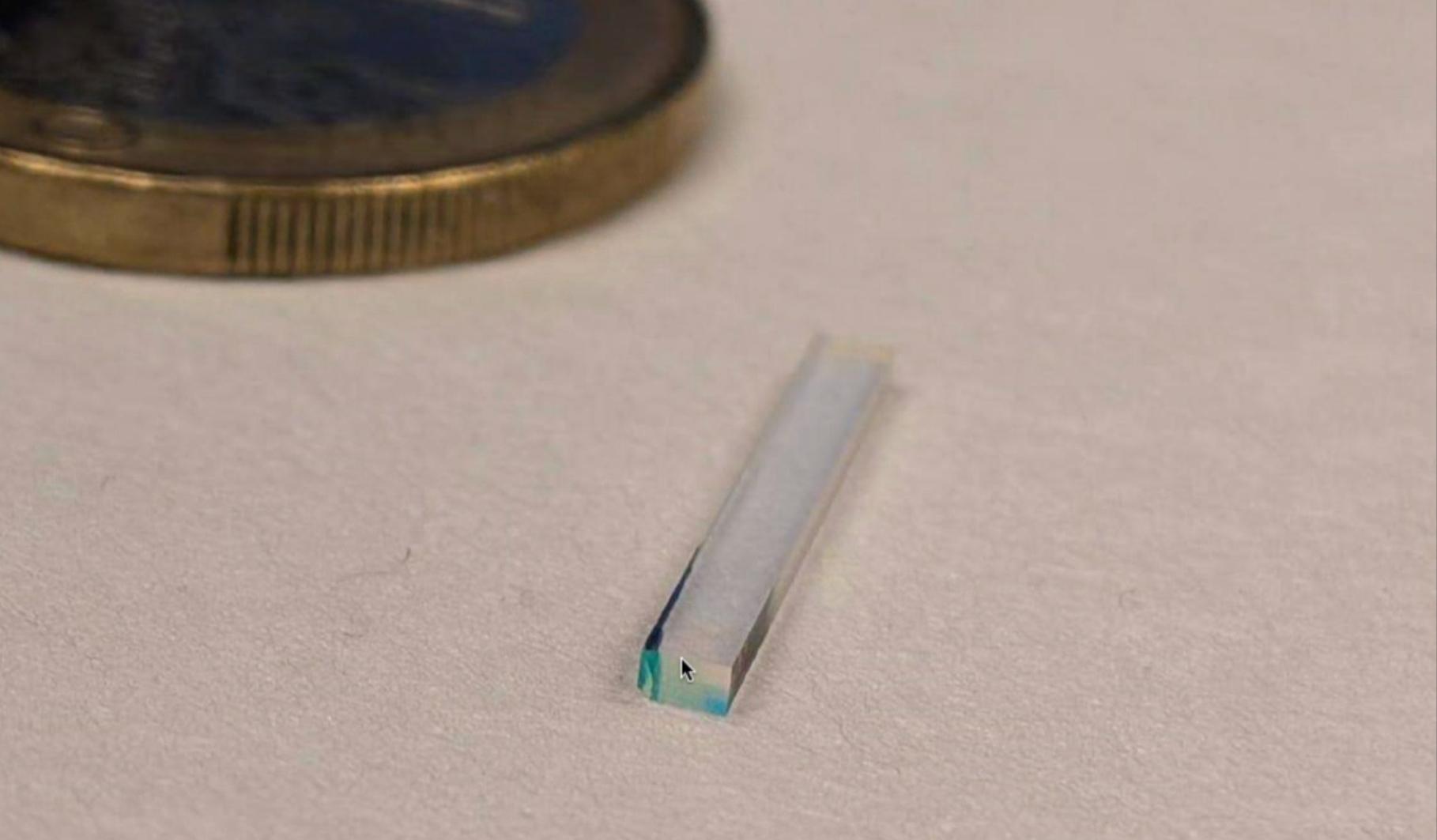
At the heart of the system is a process called squeezing. A laser is directed through a photonic waveguide chip containing a PPKTP (periodically poled potassium titanyl phosphate) crystal, a nonlinear optical material that generates squeezed states of light.
These states can then be combined to produce entangled quantum states known as cluster states, which provide the building blocks for performing quantum operations.
Why photons?
Qluster sees two important advantages in this approach.
Firstly, continuous-variable photonics makes it possible to entangle and manipulate large numbers of optical modes using relatively simple, established optical components. This could offer a more scalable route to building quantum processors.
Secondly, photons are far less susceptible to environmental disturbances than superconducting circuits and do not require the same cryogenic cooling infrastructure. This opens up the possibility of developing quantum systems that operate at room temperature, potentially simplifying their design, reducing energy requirements and lowering operating costs.
These are significant potential advantages, although building a reliable, fault-tolerant photonic quantum computer will still require substantial advances in areas such as detection, error correction and optical component performance.
An architecture-first approach
Photonics is only one part of Qluster’s proposition. The startup is also challenging the way quantum computers are traditionally designed.
Rather than focusing primarily on increasing the number of physical qubits, it wants to build architectures around the problems they are intended to solve.
The idea is to adapt the size, circuit depth and execution speed of a machine to the requirements of a particular application, rather than pursuing ever-larger systems in the hope that more qubits will automatically translate into greater computing power.
“We’re basically building the house from the outside in, instead of the inside out,” explained CEO David Fainsin.
The approach is not entirely new. Canadian company Xanadu and Japan’s OptQC are also developing photonic quantum computers, each with its own approach to architecture and scalability. Qluster believes, however, that combining continuous-variable photonics with an architecture-first philosophy offers an opportunity to develop machines specifically suited to industrial applications.
“We should be able to design computers on demand, adapting them to given industries and their needs,” Fainsin said.
For the pharmaceutical industry, for example, the potential is significant. Fainsin points to complex calculations that can currently take six months to complete, but which quantum computing could eventually reduce to just a few hours.
For businesses, this could eventually mean access to smaller, more energy-efficient quantum machines designed for specific computational challenges, rather than relying on the development of increasingly complex, universal quantum processors.
Building on Europe’s photonics expertise
Qluster also sees a strategic opportunity for Europe.
The region already has significant scientific and industrial expertise in photonics, integrated optical systems and semiconductor manufacturing. Rather than building an entirely new industrial ecosystem around quantum computing, the company wants to leverage these existing capabilities to accelerate the development and production of its machines.
It plans to work with specialists in integrated photonics and semiconductor manufacturing as it moves from laboratory research towards industrialization. Its longer-term ambition is to develop systems that can be integrated into existing data center infrastructure.
That could offer a more practical route to deployment, although considerable engineering challenges remain before photonic quantum computers can operate reliably at industrial scale.
“Our approach doesn’t eliminate the scientific and technological challenges that remain to be overcome in building a reliable quantum computer,” Fainsin stated
“However, we are convinced that it offers two major advantages: it builds on photonics, a field in which Europe has world-leading scientific and industrial expertise, and it offers particularly promising prospects for scalability.”
A decade-long roadmap
Qluster has set itself an ambitious roadmap, targeting its first intermediate-scale quantum computer by 2032, capable of performing initial industrial calculations.
The company is aiming for around 100 logical qubits at this stage. Logical qubits are particularly important because they incorporate error correction, combining multiple physical components to protect quantum information against errors.
By 2036, Qluster wants to scale its architecture to approximately 1,000 logical qubits, with the longer-term ambition of delivering a universal, fault-tolerant quantum computer.
Reaching these milestones will require much more than generating and entangling states of light. The company must develop reliable detectors and optical systems, improve the quality of its quantum operations, and implement effective error-correction mechanisms.
The roadmap is therefore ambitious, particularly given that the company is still at an early stage of development. Its immediate priority is to move beyond experimental validation of its underlying photonic technology and demonstrate that the different components can work together as a functioning quantum computing architecture.
€4.7m to move from research to development
The €4.7 million pre-seed round, led by Quantonation with participation from Quantum Launchpad and Bpifrance, will finance this next stage.
The funding will primarily go towards establishing a dedicated R&D laboratory, improving the performance of its photonic technology and expanding the team’s scientific and engineering capabilities.
Having already recruited an additional quantum computing specialist, the startup plans to make three further hires in the near term, with the longer-term ambition of building a team of around 15.
For Qluster, the challenge now is to turn a promising research foundation into a technology that can be manufactured, scaled and ultimately deployed by industry. Its €4.7 million round is an early step towards that ambition, with the company giving itself until 2032 to demonstrate its first industrially relevant machine.