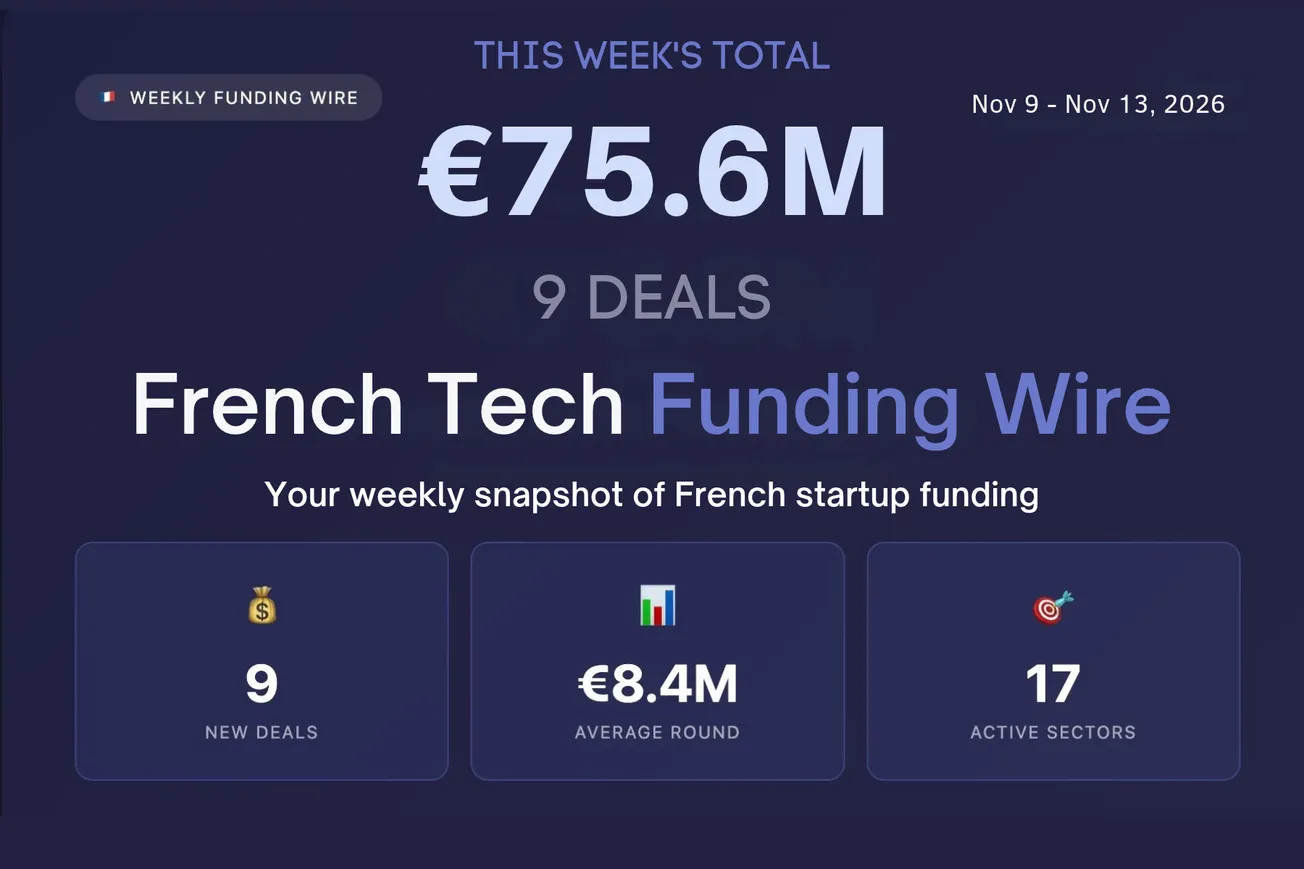
👋 Inside this week's edition:
👀 At its Paris AI summit, OVHcloud launched its own language model, 55 products, and an office suite. Founder Octave Klaba confirmed that 18 months of partnership talks with Mistral AI went nowhere, so the company went DIY. Much of what Klaba showed on Thursday resulted from several years of plotting, strategizing, buying, building, and designing. It was a process that at times seemed chaotic as he tried to knit together a string of failed startups to build his dream of a sovereign platform for France and Europe. We break down OVHcloud's vision and Klaba's AI ambitions.
Chris O'Brien + Helen O'Reilly-Durand
⚔️ C'est la Cyberguerre ! ⚔️
🛡️👊 France’s cyberattack wave has reached the post office, the banks, and even the supermarket freezer aisle. La Poste confirmed that a mid-September breach at Maileva, its business-mail subsidiary, exposed the names and postal addresses of 22 million people, roughly a third of France’s population. Many had never used Maileva themselves. They’d simply received mail from one of its clients, such as a hospital or social landlord. Paris prosecutors are investigating.
Then there was the attack that took the damage offline. France blamed a unit affiliated with Iran’s Revolutionary Guard for targeting refrigeration systems at more than 700 retail sites in October, sparking fires and spoiling food worth tens of millions of euros. Paris called it the first cyber campaign on French soil carried out purely for sabotage. In other cases, hackers siphoned more than €100 million from Crédit Mutuel Arkéa, and breaches hit both the CAF benefits agency and France Travail. France 24 reports that some analysts rank France as Europe’s most hacked country, a league table nobody was trying to win.
The breach that turned cybersecurity into a fight over the government’s competence hit the tax office. In August, the administration disclosed that data on 678,000 individuals and businesses had been compromised. It cut off the intruders’ access in late June but learned the scale of the theft only after the hackers went public.
Prime Minister Sébastien Lecornu convened a crisis meeting and ordered a security audit, while Socialist senators called for a parliamentary inquiry. The government acknowledged decades of accumulated technical debt, and Bruno Retailleau, the conservative presidential hopeful, seized on the breach to pitch a plan for a French “digital fortress.”
With the 2027 election approaching, the question of who can be trusted to protect taxpayers’ data has now officially become campaign material.| Le Figaro, France 24, French Government, France Info, Le Monde
Tech Talk
🧑⚖️⚖️ The Family’s legal saga has taken another turn. On November 3, the High Court of England and Wales sentenced the French startup incubator’s co-founder Oussama Ammar to 16 months in prison for breaching asset-freeze orders and knowingly making false financial statements. Among the expenses the judge flagged was a €2,631 two-night stay at the Grand-Hôtel du Cap-Ferrat, which didn’t pass muster as an everyday expense. The sentence concerns violations of court orders in a long-running dispute with companies tied to The Family, whose former associates accuse Ammar of diverting millions of euros, an allegation he denies. Ammar, who lives in Dubai and was represented by lawyers at the hearing, told Maddyness he plans to appeal. | Sifted
✈️🪖 Brevo founder Armand Thiberge is branching out from marketing software into a rather different kind of targeting. His French counter-drone startup, Stryx AI, has raised €7.7 million in its first funding round, co-led by Thiberge and Impala, billionaire Jacques Veyrat’s investment holding company, with both Delair co-founders also chipping in. The pitch is that stopping a drone that costs a few hundred euros shouldn’t require spending a small fortune. Stryx has already tested a prototype through a French defense innovation program and plans to open its first production line in France in early 2027. | Maddyness
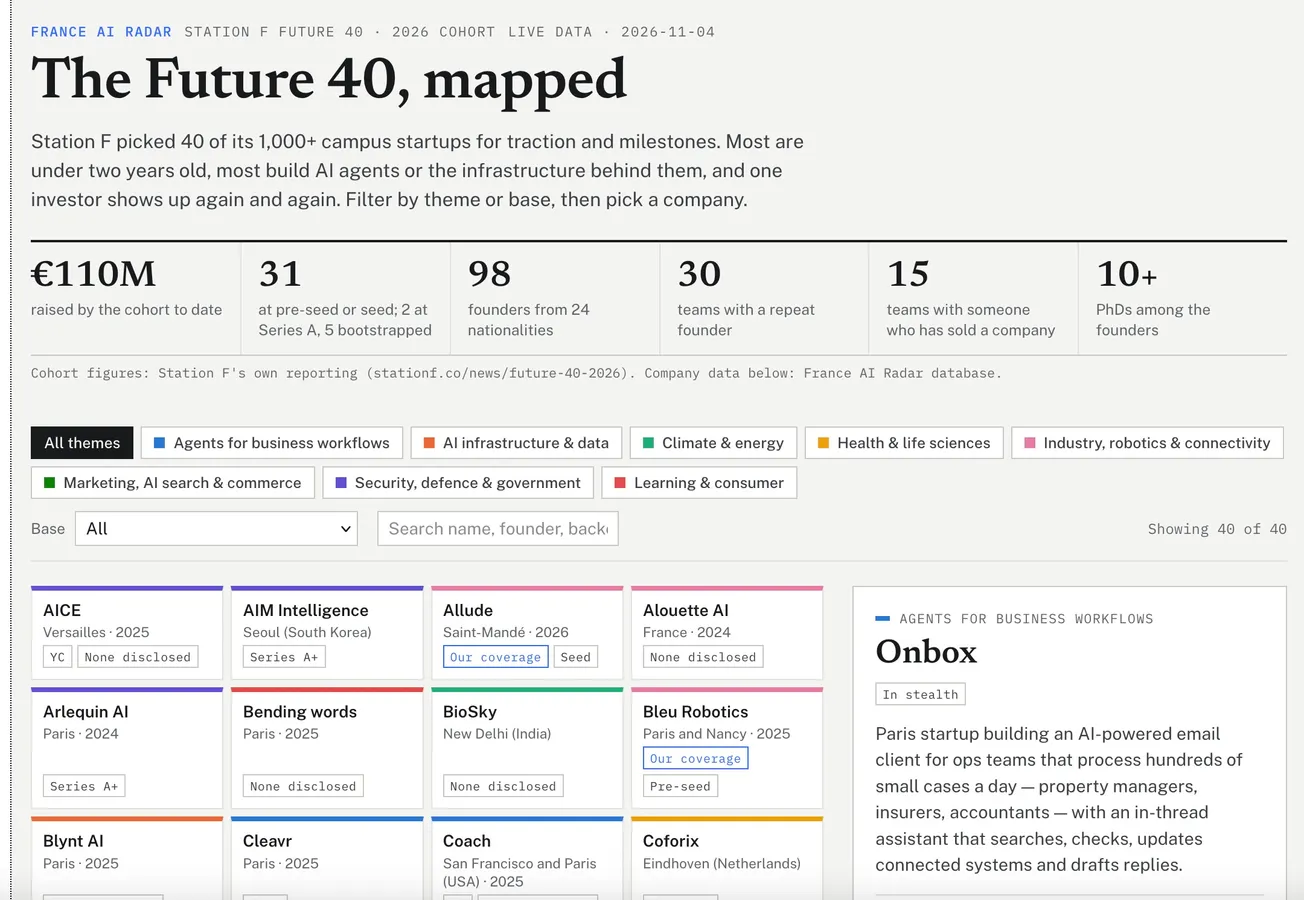
🕵️🗣️ Five years after selling Sketchfab to Epic Games, co-founders Cédric Pinson and Alban Denoyel are back with lepoly, a bootstrapped Paris startup coming out of stealth in public beta. The pair spent years making 3D models easy to publish and are now tackling the less glamorous problem of tracking them. Lepoly gives teams one place to organize, review, and share models in a browser, with tools to compare versions and leave comments directly on a model. Its AI-powered search can find assets by what they look like, handy when the file you need is called final_v7_really_final. The founders are also building APIs and an MCP server to give AI agents access to those libraries. | Twitter, France AI Radar
🏦🏷️ Nine years in, French fintech unicorn Qonto has the paperwork to match the “bank” in neobank. Its new banking license lets it take deposits directly and offer a wider range of loans, savings, and investment products to the 750,000 small businesses it serves across Europe. Qonto plans to start with fixed-term deposits in France and Germany, with invoice financing slated for five markets. The company says it has already lent more than €300 million through its PayLater installment product, and CEO Alexandre Prot expects lending to reach the billions over the next few years. As for an IPO, Prot says it could happen in a few years. | FF News
✊🤯 The campaigners who pitched EU Inc as Europe’s answer to Delaware are now asking Brussels to scrap the latest draft and start over. The proposal was meant to give startups a single company structure to incorporate, raise money, and expand across the bloc without navigating 27 national legal systems. But EU Inc and Startups for Europe, whose campaign has more than 26,000 backers, say member states have dropped a central company register and simpler insolvency rules while narrowing access to a common stock option scheme. They’re urging Commission President Ursula von der Leyen to bring back the original proposal before final negotiations, where they fear it could be watered down further. The whole point was to spare founders a patchwork of national rules, which makes it a little awkward that the latest draft leaves so much of that patchwork in place. | TechEU
🐱🤖 Mistral CEO Arthur Mensch brought a message to the EU’s first AI summit in Dublin: Europe can still compete with the US and China, but it needs to pick up the pace. He told leaders of the bloc’s 27 member states that Europe already has the talent and technology, and now needs more funding, tighter coordination, and faster decisions. In his view, what Europe does over the next two years will shape its place in AI for the next decade. AI pioneer Geoffrey Hinton was also on hand to discuss risks to cybersecurity, jobs, and human rights, while Estonia and Finland called for a joint EU response to serious AI incidents. No major decisions were expected from the informal summit, so for now, “act now” remains a talking point. | DW.com
✈️🏃 The Perpetual Motion Mensch Machine then went to Silicon Valley and wound up fielding questions about who might occupy the Élysée. Asked at a Semafor conference how Mistral would fare under a Marine Le Pen presidency, the CEO pushed back on the idea that the €21 billion-plus AI company was Emmanuel Macron’s personal project. He credited Macron’s support with helping Mistral grow and said he expected backing across party lines, though he suggested some presidential hopefuls could use a technical crash course. Mensch also pitched Mistral’s approach to sovereign AI, which lets customers build their own systems and retain control over how they run. As for an IPO, he said Mistral was getting ready and that Europe was the natural place to list, without giving a timetable beyond ruling out this year. | RTI
💸🤑 A lot of running around, but Mistral got a nice consolation prize. On Thursday, the company announced that its €3 billion Series D apparently still had room for another €100 million. That’s how much Deutsche Telekom’s investment arm, T.Capital, is putting into the French AI company, adding to a round reported closed in September. The investment follows the opening of Mistral’s Munich hub and lays the groundwork for a partnership pairing its AI models with Deutsche Telekom’s cloud infrastructure. The two companies want to sell German manufacturers and public institutions on a version of frontier AI that lets them keep control of their data and where it’s processed. Mistral is already working with the Technical University of Munich on AI models for car aerodynamics, so the German push comes with an actual wind tunnel. | EU Startups
💰💰 Meanwhile, in the Fun with Funds department, Orange Ventures and Sofinnova Partners announced a combined €975 million in new investment capital, just shy of a billion between them. Orange is putting another €250 million into its venture arm for 2027–2032, with €200 million earmarked for Europe and €50 million for Africa and the Middle East. Its European strategy still centers on Series A and B, with room for earlier bets in applied AI and cybersecurity that could feed into Orange’s own products. Sofinnova, meanwhile, closed its €725 million Crossover II fund to back about 15 late-stage biopharma and medtech companies, primarily in Europe. It’s a step up from its roughly €500 million first fund, giving Sofinnova more room to stick with companies through expensive late-stage trials and, in some cases, after they go public. | Orange, Biopharmadive
Olala! Octave Klaba Wants OVHcloud to Build Every Layer of AI
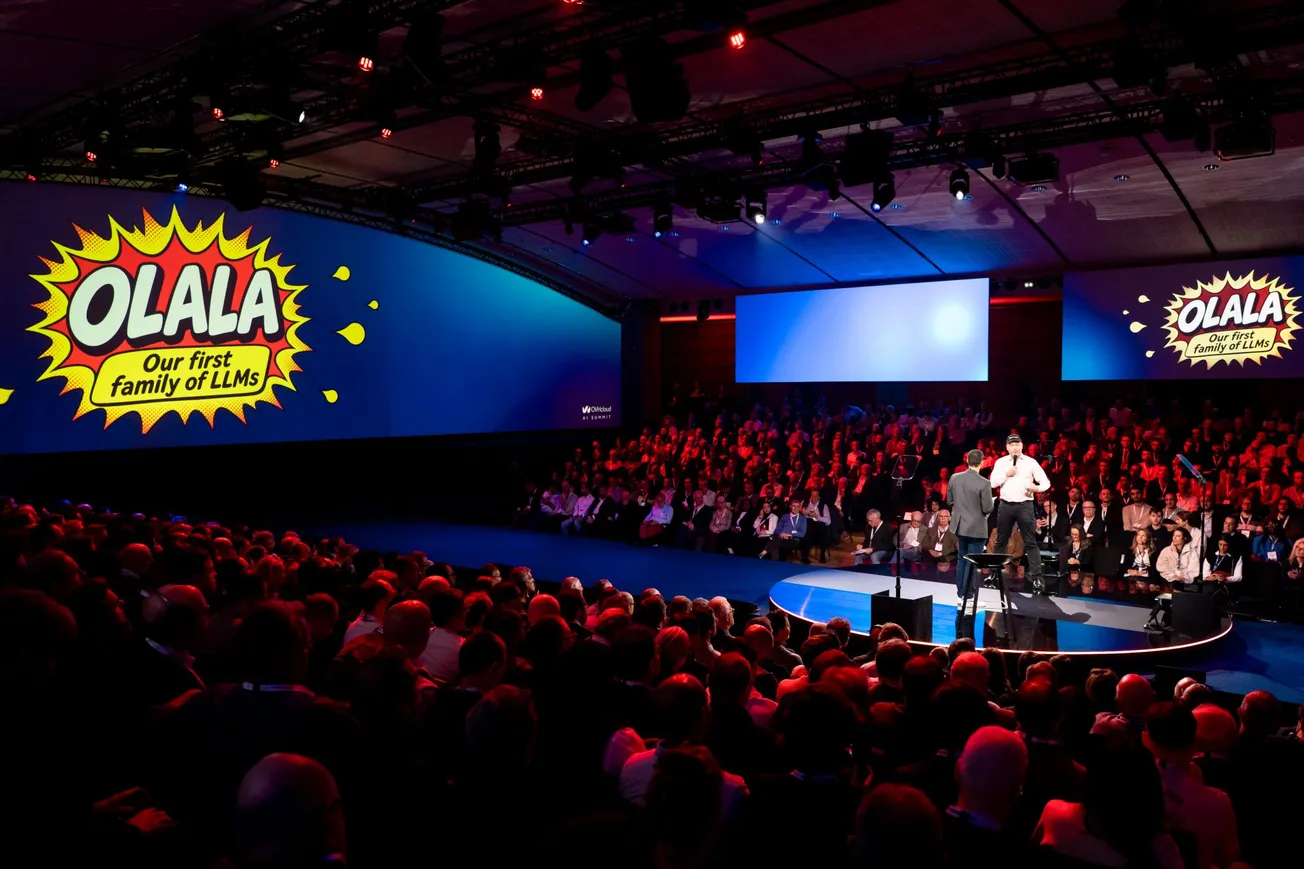
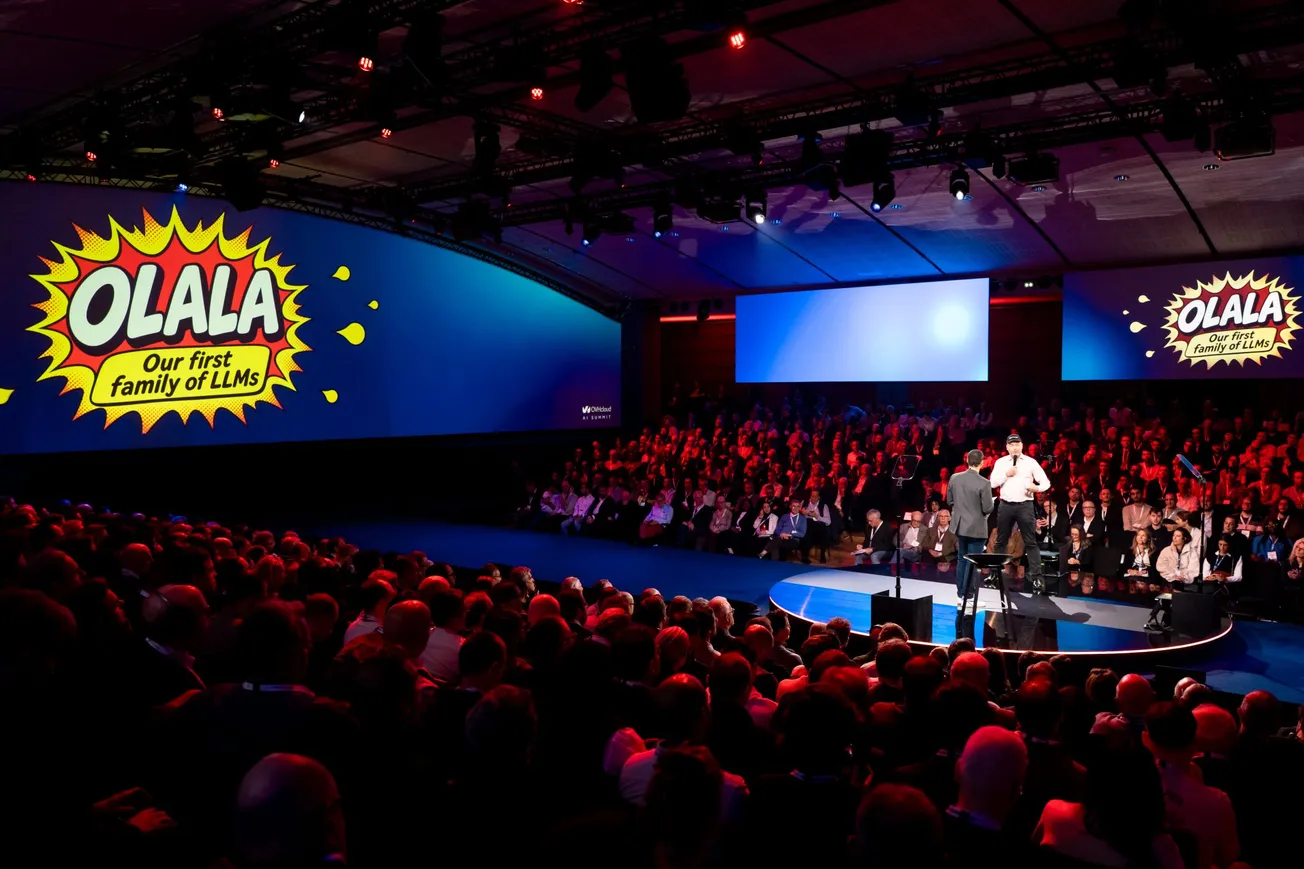
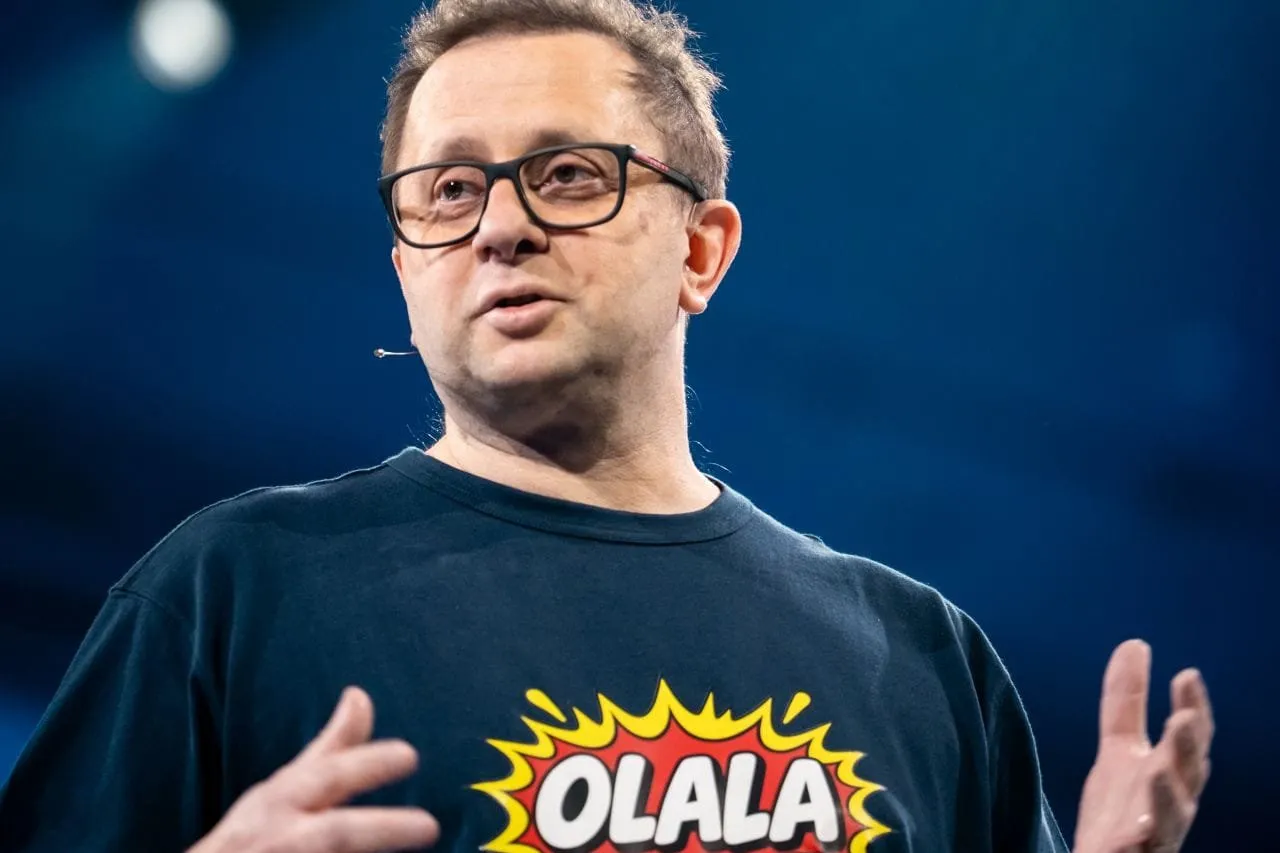
Octave Klaba knew the name would get a laugh. He had it printed on his chest. The founder of OVHcloud walked on stage at the Carrousel du Louvre on Thursday morning in a navy T-shirt with "OLALA" splashed across a red-and-yellow comic-book starburst. He announced the company's first home-built large language model, then stopped to quiz the room on what it was called.
"Yes, we really called it Olala," he said.
The crowd played along. There were more than 1,500 people in the hall, by the moderator's count, and plenty of them know OVH mainly as the place that rents them servers. Klaba spent the rest of his keynote describing a company that plans to do much more than that.
The opening video showed a glowing glass brick resting in an open hand, a nod to the red brick of Roubaix where Klaba started the company in 1999. OVH has already lived several lives since. Web hosting came first, then dedicated servers, then private and public cloud. The 13th edition of its annual conference, renamed this year the OVHcloud AI Summit, was his pitch for the next one. He brought 55 new products, room for tens of thousands of Nvidia chips, three research labs, an office suite, and that model with the silly name.
It was also Klaba's show in a way it hasn't been for a while. He took back the chief executive job in October 2025. Thirteen months on, the keynote sounded like his answer to anyone wondering what he came back to do.
"Artificial intelligence is putting us through a period that is both exciting and destabilizing," he said. "All the cards are on the table. And the game, as the Québécois say, we play it with vision and speed."
💸 Top Funding Deals 💸
📇 Company: Genesis AI
🏷️ Sectors: Artificial Intelligence, Robotics, DeepTech
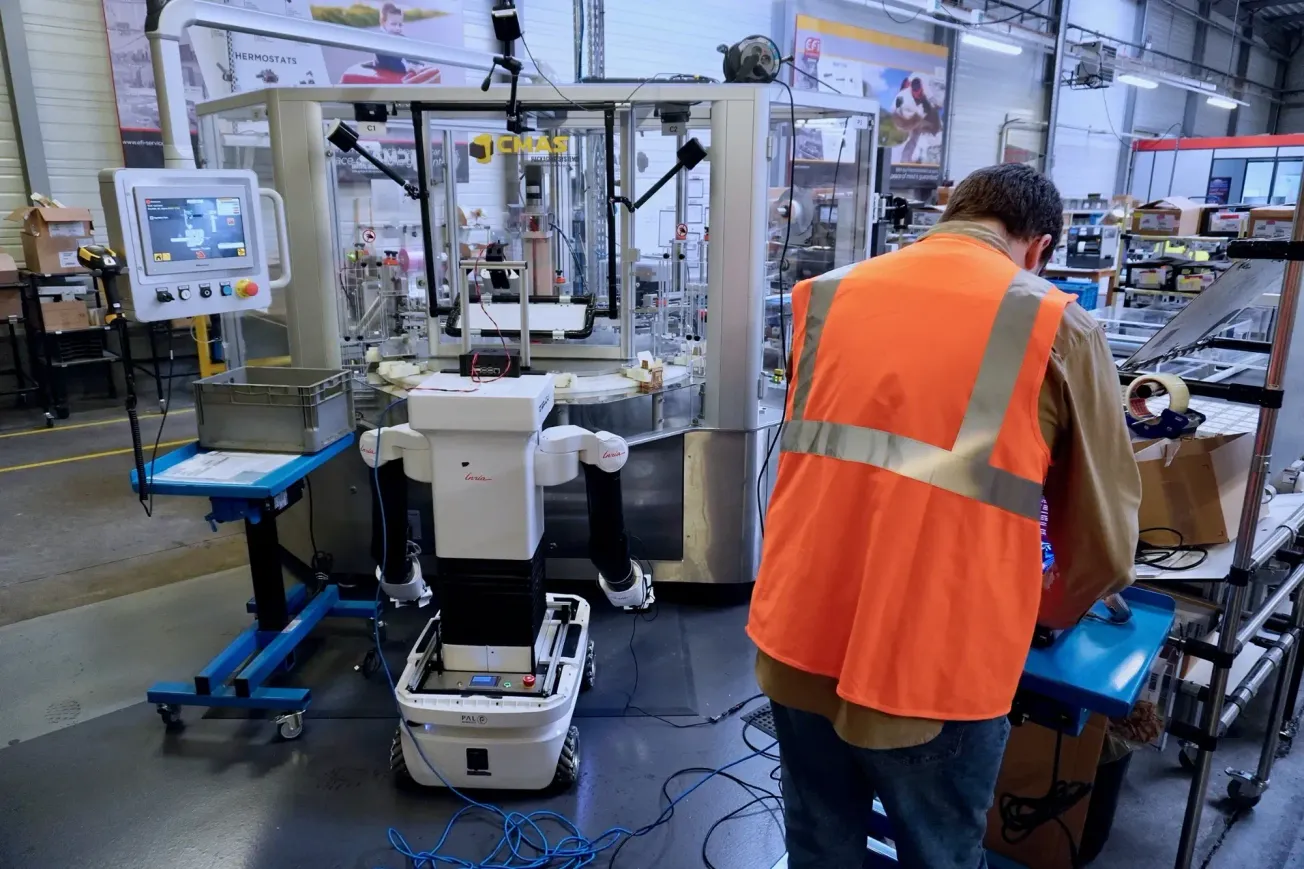
🔍 Description: Develops general-purpose robots capable of performing complex physical tasks across industrial environments. Its vertically integrated platform combines GENE, a robotics foundation model; Genesis World, a physics-based simulation platform; a robotic hand designed for human-like dexterity; and Eno, its flagship autonomous robot. Genesis trains its AI using human movement and tactile data collected through sensor-equipped gloves, combining real-world demonstrations with simulation to improve robotic manipulation and reliability.
💻 Website: https://genesis.ai/
📍 HQ City: Paris
🧗 Round: Series A.
💰 Amount Raised: €450 million
🏦 Investors: Premji Invest, Khosla Ventures, Eclipse, Durable Capital Partners, Bpifrance, HSG, NVIDIA, AMD Ventures, Zoom, Samsung Next, Business Angels, Eric Schmidt, Eric Yuan, Jerry Yang, Xavier Niel, Zach Kirkhorn
👨💼👩💼 Founders: Zhou Xian, Théophile Gervet
🗞️ News: November 17, 2026. French-American robotics startup Genesis AI raised $500M in Series A financing co-led by Premji Invest, Khosla Ventures, and Eclipse, valuing the company at $3.5B post-money. The investment will accelerate production and commercial deployment of Eno, its general-purpose robot designed for complex industrial tasks requiring human-like dexterity. Genesis is developing its entire technology stack in-house, including robotic hardware, AI foundation models, simulation software, and a data collection system that captures human hand movements and tactile feedback through sensor-equipped gloves. The company plans to expand deployment initially in manufacturing, logistics, and laboratories, with healthcare, hospitality, and consumer applications targeted later. Genesis reports producing approximately 30–40 Eno robots and conducting pilots with a small number of undisclosed customers. The financing will support large-scale AI training, improved manipulation capabilities, manufacturing expansion, and recruitment across AI research, robotics, and engineering. | Genesis AI, TechCrunch
📇 Company: HoloSolis
🏷️ Sectors: ClimateTech, DeepTech
🔍 Description: Developing a large-scale European manufacturing facility for photovoltaic cells and solar panels. Its planned gigafactory in Hambach, Moselle, will use TOPCon solar technology and target an annual production capacity of 5 GW, equivalent to approximately 10 million solar panels.
💻 Website: https://holosolis.com/
📍 HQ City: Paris
🧗 Round: Series A.
💰 Amount Raised: €15 million
🏦 Investors: Crédit Agricole, Calès Technologies, Forming, Ecolab
👨💼👩💼 Founders: EIT InnoEnergy, Groupe IDEC, TSE (corporate founders).
🗞️ News: November 16, 2026. French photovoltaic manufacturer HoloSolis finalized a Series A financing exceeding €15M, bringing four new investors into its capital as it advances plans for a major solar manufacturing facility in eastern France. The investment will support engineering studies, technical specifications, supplier selection, and prototype qualification ahead of construction. The factory aims to produce 5 GW of photovoltaic cells and modules annually and create approximately 2,000 jobs at full capacity. HoloSolis reports more than 30 GW of customer letters of intent and says it is preparing another capital raise to finance construction. | HoloSolis, pv magazine
👋🏻 If you’re enjoying The French Tech Journal, support the project by forwarding it to friends and sharing it on your social networks. You can also comment on this post. And if you have ideas for stories, tips, or just want to harass us, shoot us an email: chris@frenchtechjournal.com / helen@frenchtechjournal.com 👋🏻