
👋 Inside this week's edition:
👀 A few billion euros, 21 GW of requested grid capacity and a whole lot of ambition. France wants to become an AI infrastructure powerhouse – but between electricity bottlenecks, planning hurdles and local opposition, will all those data centers actually get built?
Chris O'Brien + Helen O'Reilly-Durand
Tech Talk
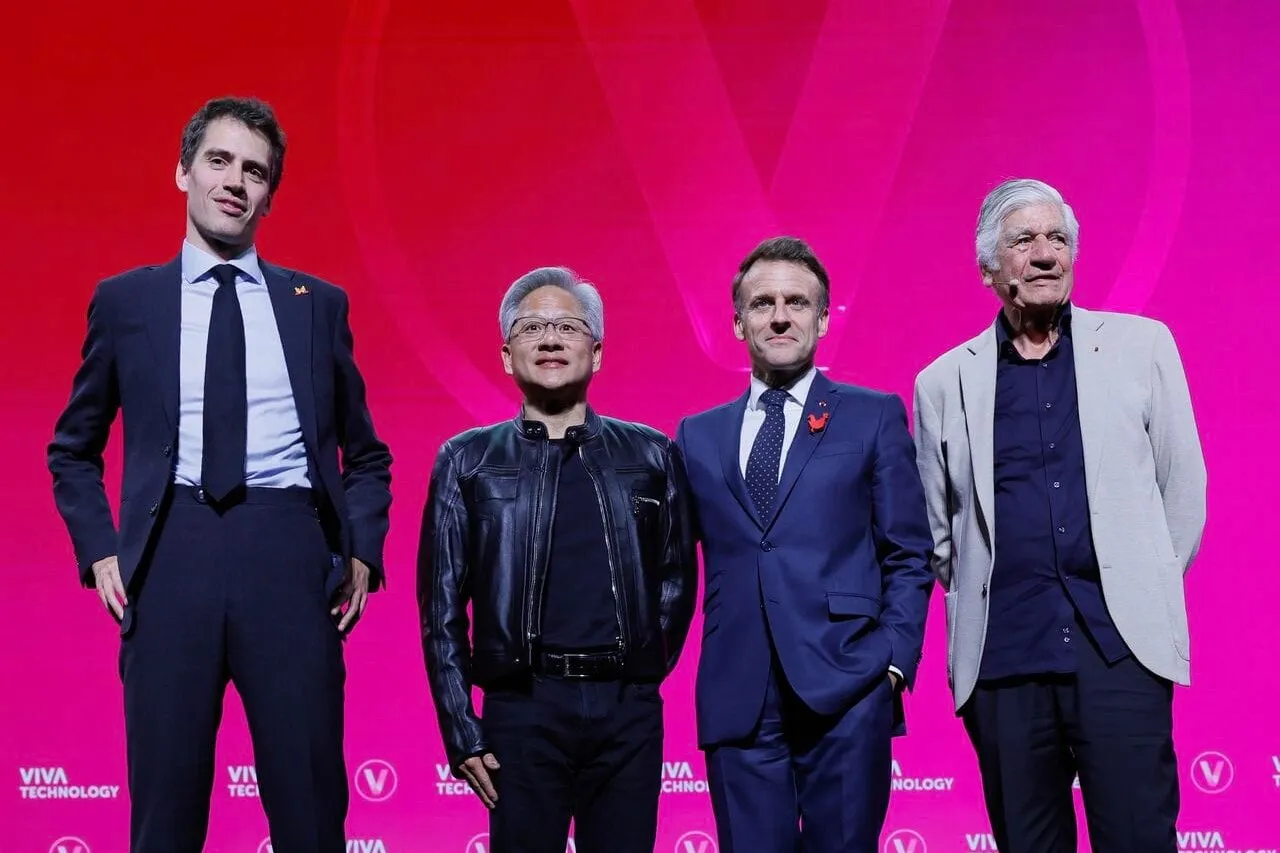
👋🫨 Jensen Huang has resigned as Nvidia’s CEO, ending a 33-year run at the company he co-founded after revelations about a relationship with a businesswoman whom US officials suspect of spying for China; the espionage allegations have not been publicly established. Nvidia’s board has named longtime CFO Colette Kress interim CEO and says customer commitments and product plans will continue without interruption.
For French tech, the leadership shake-up matters because Nvidia is much more than the company selling everyone the AI chips they desperately want. It has invested in French startups, partnered closely with Mistral AI, supplied computing infrastructure and worked with researchers including teams at Inria and CNRS. Huang also became a familiar presence alongside Emmanuel Macron as France pitched itself as an AI powerhouse. There’s no indication his departure will immediately change Nvidia’s French commitments, but a permanent successor could eventually rethink its investment and partnership priorities. France’s AI ambitions still depend heavily on Nvidia’s technology. As the leather jacket leaves the stage, La French Tech is hoping the chips and checks aren't going with it. | NVIDIA Announces CEO Transition
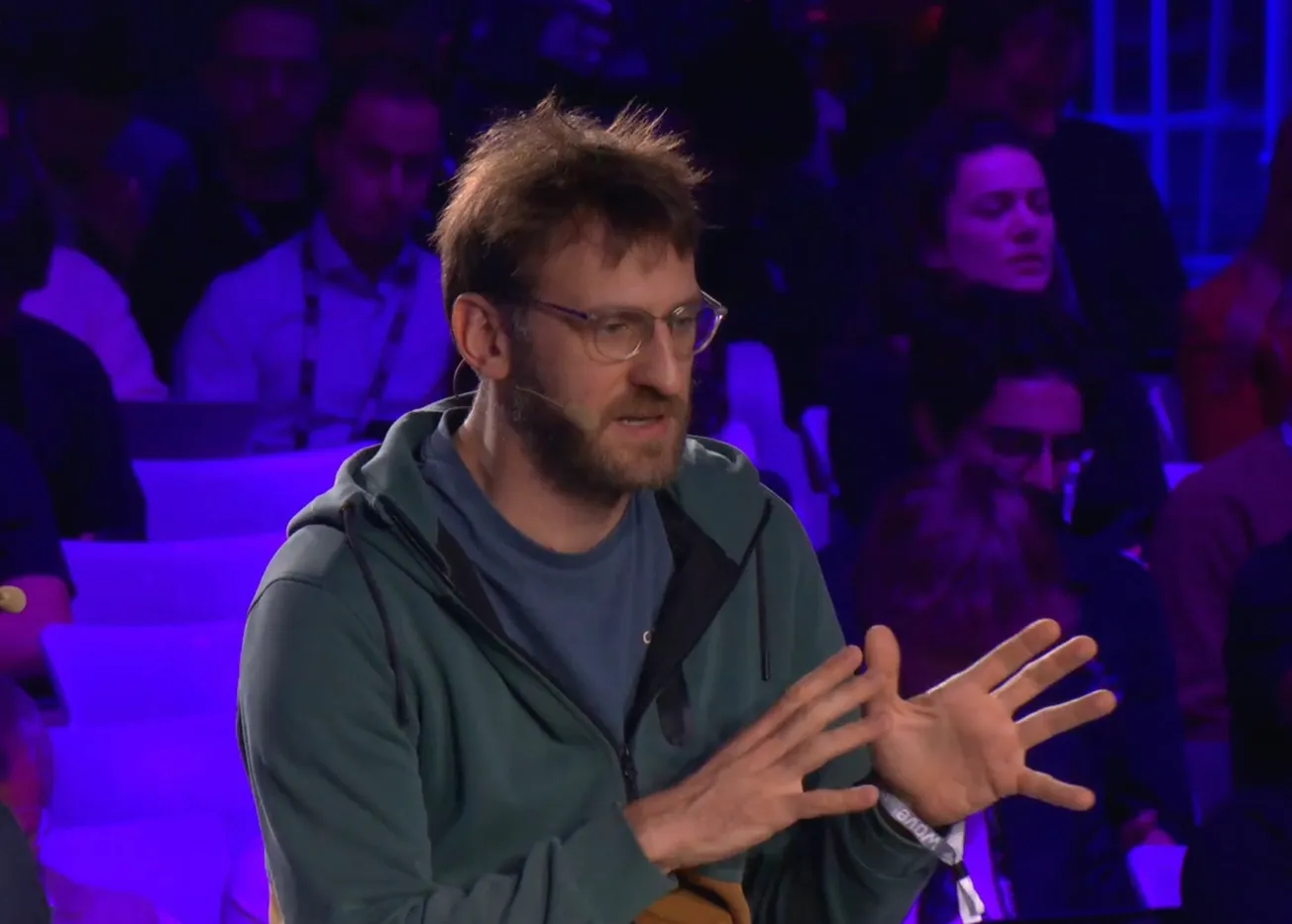
🧑⚕️🇨🇦 French health insurance startup Alan has gone live in a fourth country, adding Canada to its operations in France, Belgium and Spain. While the first three markets get a full-blown brand campaign, Canada is starting with an organic social teaser. Meanwhile, CEO Jean-Charles Samuelian has shared his vision for the company of the future: AI agents that weigh in on decisions, update a collective company brain, and eventually make some calls themselves while everyone sleeps. | Twitter, Twitter
☢️🔌 French nuclear startup Calogena has landed a €40 million EU grant to support its first commercial small modular reactor, planned for Pierrelatte in southern France. Its CAL30 reactor is designed to provide low-carbon heat to a district heating network, with enough capacity for around 20,000 homes. The company is targeting a 2032 launch and says the award is the first European grant specifically supporting construction of a commercial SMR facility. The grant is separate from the company’s earlier financing, and the reactor still needs construction authorization. | EU-Startups
💼🛒 French e-commerce unicorn Mirakl has appointed former Sitecore CEO and SAP executive Steve Stathis Tzikakis as co-CEO alongside co-founder Philippe Corrot. Tzikakis will oversee sales, marketing, finance, partnerships and HR, while Corrot keeps strategy, product, technology and customer success. Fellow co-founder Adrien Nussenbaum, who stepped back from operations earlier this year, becomes board chair. The leadership shuffle comes after Mirakl reached profitability and ended 2025 with $218 million in annual recurring revenue, up 23%. With Mirakl also pushing into AI-powered commerce, the company is betting that two CEOs are better than one. Again. | Maddyness
🪓✂️ Meta has launched a voluntary departure plan in France that could affect around 100 employees—nearly a third of its roughly 350-person workforce in the country. The plan forms part of a global restructuring as Mark Zuckerberg redirects resources toward the company’s AI ambitions. Meta cut around 8,000 jobs worldwide in the spring and said it would scrap plans to hire 6,000 people while moving another 7,000 into AI-related roles. The company is also pouring money into chips, data centers, and power plants. | FirstPost
🔒⛔ A French expert commission has called for consumer AI systems to undergo independent, multidisciplinary assessments before they hit the market, as part of a broader push to protect users from the technology’s risks. Its 18 recommendations include tighter limits on overly flattering or humanlike chatbots, stronger protections for minors, and AI education from an early age. The report also warns that companies could eventually profit from users’ emotions and psychological profiles—a potential successor to the attention economy that sounds like an ad executive’s dream. Separately, President Emmanuel Macron says he has secured commitments from political leaders, AI labs and researchers to improve independent model testing, share serious incident alerts and hold developers accountable. | Elysée, Twitter
🤑🇫🇮 French payment fraud prevention startup Trustpair was acquired by Finnish invoice management company Basware for between $200 million and $300 million in cash, according to a report—a detail left out of the companies’ August announcement. Founded in Paris in 2017, Trustpair has raised €25 million and is now profitable, with 120 employees and customers including Google and ExxonMobil. CEO Baptiste Collot credits the company’s US expansion with helping it scale and says its years of fraud data are paying off as it develops AI tools. Trustpair will operate as an independent subsidiary, gaining access to Basware’s 6,500 customers worldwide. For once, a French Tech exit came with a substantial price tag—and eventually, someone even told us what it was. | Les Echos
France’s Data Center Ambitions: Can it Turn AI Infrastructure Opportunity into Reality?
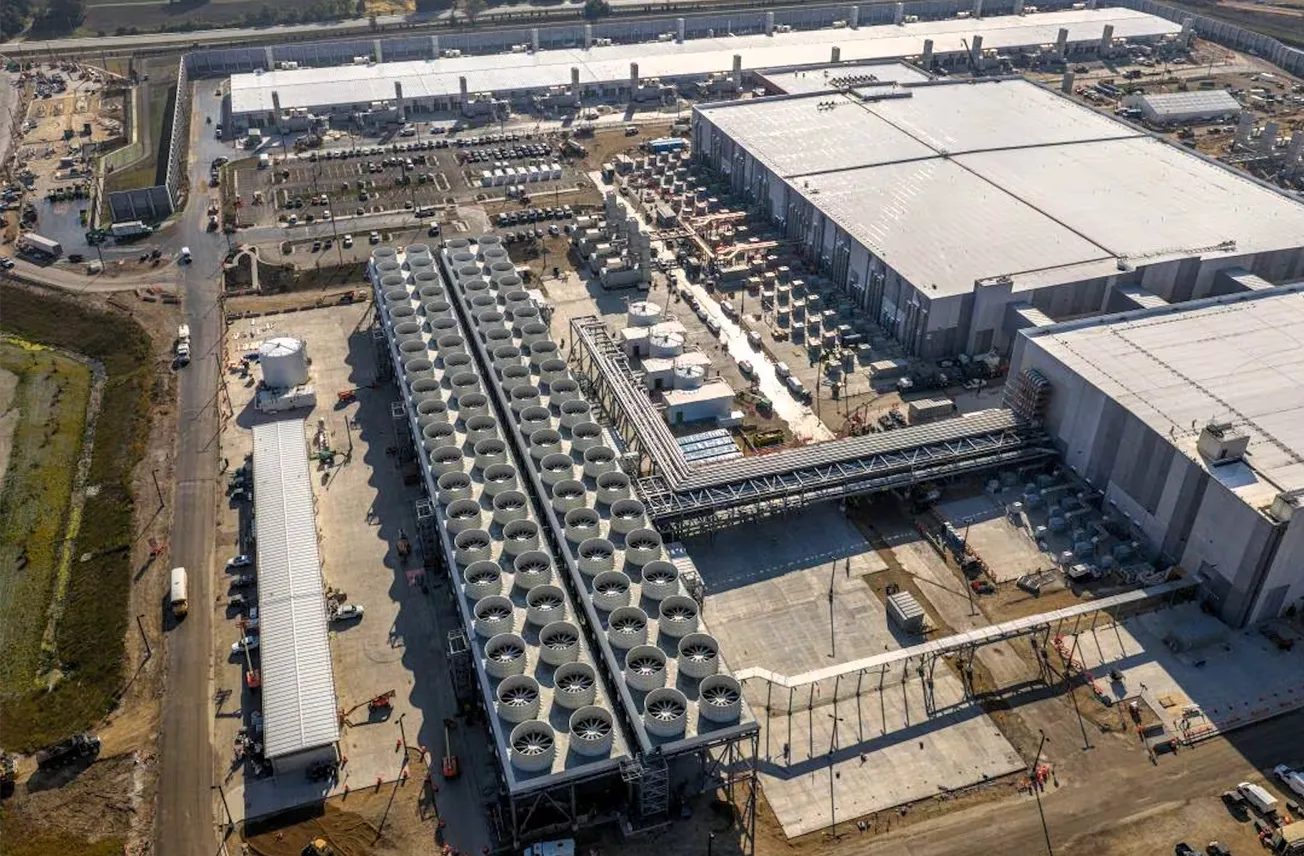
In 2010, when commercial cloud computing was still in its infancy, American technology companies were already laying the foundations of today’s digital infrastructure.
Sixteen years on and Europe’s dependence on US technology has deepened rather than diminished. US hyperscalers now control around 70% of the European cloud market, according to Synergy Research Group, while domestic providers account for just 15%.
For years, this dependence attracted relatively little attention beyond a circle of critics. But today’s geopolitical climate has changed the equation. The 2018 US CLOUD Act, which allows US authorities to compel American service providers to disclose data under their control, even when stored overseas, has added to concerns about Europe’s digital sovereignty.
Meanwhile, the rapid development of AI is driving demand for computing capacity on an unprecedented scale. Together, these developments have brought data centers - the physical infrastructure underpinning cloud computing, digital services, and AI - firmly into the geopolitical and economic spotlight.
The question for Europe is no longer simply who controls its data, but where the infrastructure needed to store and process it will be built.
💸 Top Funding Deals 💸
📇 Company: Orakl Oncology
🏷️ Sectors: TechBio, Artificial Intelligence, Biotechnology
🔍 Description: Develops an AI-powered platform that predicts how cancer drugs will perform in clinical trials using virtual patient models. Spun out of the Gustave Roussy cancer research institute, the company grows tumor organoids from real patient cells, tests them against drugs, and combines the results with genomic, molecular, and clinical data to train predictive AI models. Its technology helps pharmaceutical companies identify promising drug candidates, select patient populations, and reduce clinical development risks.
💻 Website: https://www.orakl-oncology.com/
📍 HQ City: Villejuifa
🧗 Round: Series A
💰 Amount Raised: €30 million
🏦 Investors: Norrsken VC, Singular, InfraVia Capital Partners, Serena, Teampact Ventures, Bpifrance, Plug and Play, Verve Ventures, Speedinvest, HCVC. Norrsken
👨💼👩💼 Founders: Fanny Jaulin, Gustave Ronteix, Diane-Laure Pagès
🗞️ News: November 12, 2026. French TechBio startup Orakl Oncology raised $34M in a Series A co-led by Norrsken VC and Singular to expand its AI platform for predicting cancer drug efficacy before clinical trials. The company combines laboratory-grown tumor organoids derived from real patients with molecular and clinical data to create virtual patient cohorts that can be used to test experimental treatments. Orakl claims its technology achieved 90% accuracy in retrospectively predicting outcomes across 40 published oncology clinical trials, although the result has not been independently established. The financing will support a fivefold expansion in data generation, development of models for lung and gastric cancers alongside its existing colorectal and pancreatic cancer work, and the establishment of teams in the United States and United Kingdom. The company also aims to deploy its predictive technology across more than 10 drug-development programs and expand its capabilities for identifying new therapeutic targets. | Sifted, Norrsken VC
📇 Company: Gama (Gama Space)
🏷️ Sectors: SpaceTech, DeepTech, Aerospace
🔍 Description: Develops large deployable structures and power systems for commercial satellites. Its Wing platform combines foldable solar arrays, power management, optional battery storage, and control software. The company uses high-volume silicon solar cells to reduce costs and shorten manufacturing lead times compared with conventional satellite solar panels.
💻 Website: https://www.gamaspace.com/
📍 HQ City: Ivry-sur-Seine
🧗 Round: Seed.
💰 Amount Raised: €15 million
🏦 Investors: Transition, Planet A, Draper Associates, Manta Ray
👨💼👩💼 Founders: Andrew Nutter, Louis de Gouyon Matignon, Thibaud Elzière
🗞️ News: November 12, 2026. French space technology company Gama raised €15M in seed funding to industrialize its Wing deployable solar arrays for satellites. Originally focused on solar-sail propulsion, Gama has pivoted toward supplying power systems for commercial satellite constellations. The funding will finance its first Wing production line in Ivry-sur-Seine, expand in-house testing capabilities, and support approximately 60 new hires, adding to its existing 30-person team. Gama is developing solar arrays using mass-produced silicon cells rather than the more expensive specialist cells traditionally used in space. The company has secured a partnership with U.S. satellite manufacturer Eclipse Space, with its first demonstration unit scheduled for summer 2027. | Tech Funding News
📇 Company: triPica
🏷️ Sectors: SaaS, Energy, Mobility, Artificial Intelligence
🔍 Description: Develops cloud-based customer management and billing software for energy suppliers and telecom operators. Its platform combines CRM, subscriptions, billing, payments, and customer service, enabling utilities to introduce dynamic electricity tariffs, solar self-consumption plans, and EV charging services without replacing multiple legacy systems.
💻 Website: https://www.tripica.com
📍 HQ City: Paris
🧗 Round: Growth Equity
💰 Amount Raised: €12.4 million
🏦 Investors: TiLT Capital Partners
👨💼👩💼 Founders: Mathieu Horn, Walid Bounar, Christophe Ruzé
🗞️ News: November 10, 2026. Paris-based software company triPica secured €12.4M from TiLT Capital Partners to accelerate European expansion, particularly in Germany and Italy, and integrate AI into its billing and customer service software. Originally developed for telecommunications, triPica is increasingly targeting energy suppliers looking to modernize billing infrastructure and introduce flexible pricing models. The company counts German utility Enercity among its customers and also serves telecom operators including Digicel and CelcomDigi. The financing will support product development, international sales and marketing, and expansion of its partner ecosystem. | Tech.eu, Tech Funding News
👋🏻 If you’re enjoying The French Tech Journal, support the project by forwarding it to friends and sharing it on your social networks. You can also comment on this post. And if you have ideas for stories, tips, or just want to harass us, shoot us an email: chris@frenchtechjournal.com / helen@frenchtechjournal.com 👋🏻