While Tesla and Elon Musk get relentless hype for their humanoid Optimus, which was first announced in 2021, the robot has yet to be actually produced in any meaningful numbers, let alone actually deployed.
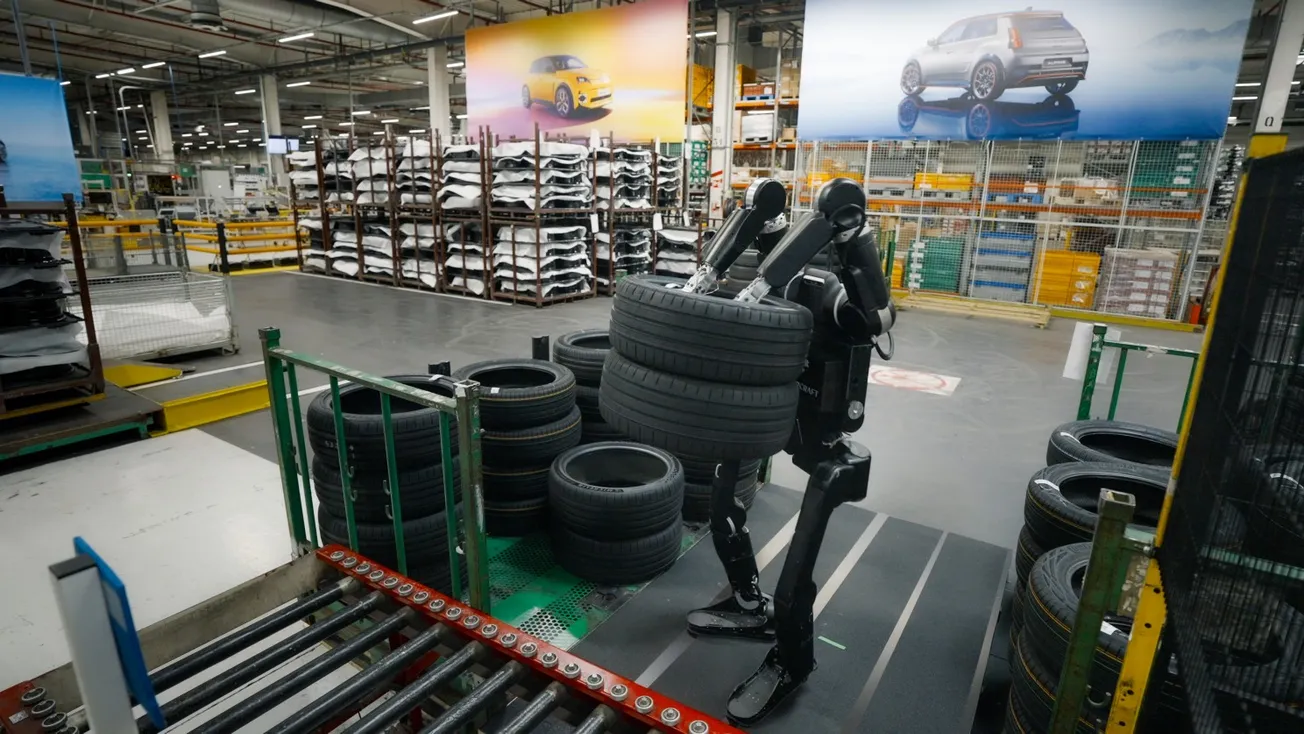
Which makes what happened this week at Renault's Douai factory in northern France all the more notable. A group of journalists watched a humanoid robot named Calvin, made by Wandercraft, lean over a cart of tires, lift two 25-kilogram tires, carry them across the factory floor, and deposit them onto a conveyor belt. Then it repeated the process. Four tires per minute.
While the global robotics industry remains captivated by demonstrations and dancing robots, Paris-based Wandercraft has crossed into something far more important: deployment.
Wandercraft was founded more than a decade ago to build exoskeletons to help disabled patients walk. The company is still pursuing that business, increasingly in the U.S. But the Renault demonstration reveals a company that has expanded beyond its roots as a medical robotics startup and looks increasingly like an industrial robotics platform.
As the company pursues multiple business lines, rumors are swirling that it is close to raising another round of funding to pursue these ambitions. In this Special Investors' Report, we reviewed the company's public filings to analyze its structure and recent statements for clues about the state of its business and its growth projections.
The key investment question is no longer: Can Wandercraft build a humanoid robot?
The real question is: Can Wandercraft become Europe's first globally significant humanoid robotics platform company?