
Every year, the world's largest consumer brands spend millions trying to better understand their customers.
They commission surveys, organize focus groups, test packaging designs, and evaluate advertising campaigns. The resulting reports frequently shape major commercial decisions, then disappear into shared drives, forgotten PowerPoint presentations, and research repositories.
A few years later, another team asks many of the same questions all over again. Stravito believes the problem isn't a lack of consumer insights. It's that companies can't find them.
"There is a lot of information that companies already have but don't know they have," said the Franco-Swedish CEO and co-founder, Thor Olof Philogène. "AI is only as good as the data it uses."
Founded in 2018 by four entrepreneurs with backgrounds in market research and technology, the SaaS startup has built a platform that helps large organizations search, organize, and interact with their existing market intelligence using generative AI.
Today, the company operates as a hybrid-remote team with small offices in Europe and North America, serving more than 100 enterprise customers in both regions with around 120 employees. It made the Financial Times' FT1000 list of Europe's fastest-growing companies.
Turning forgotten research into business intelligence
For decades, companies have accumulated enormous amounts of customer knowledge: qualitative interviews, consumer surveys, product testing, packaging evaluations and regional market studies.
That research cost millions of euros. Yet much of it remains inaccessible to the people who could use it.
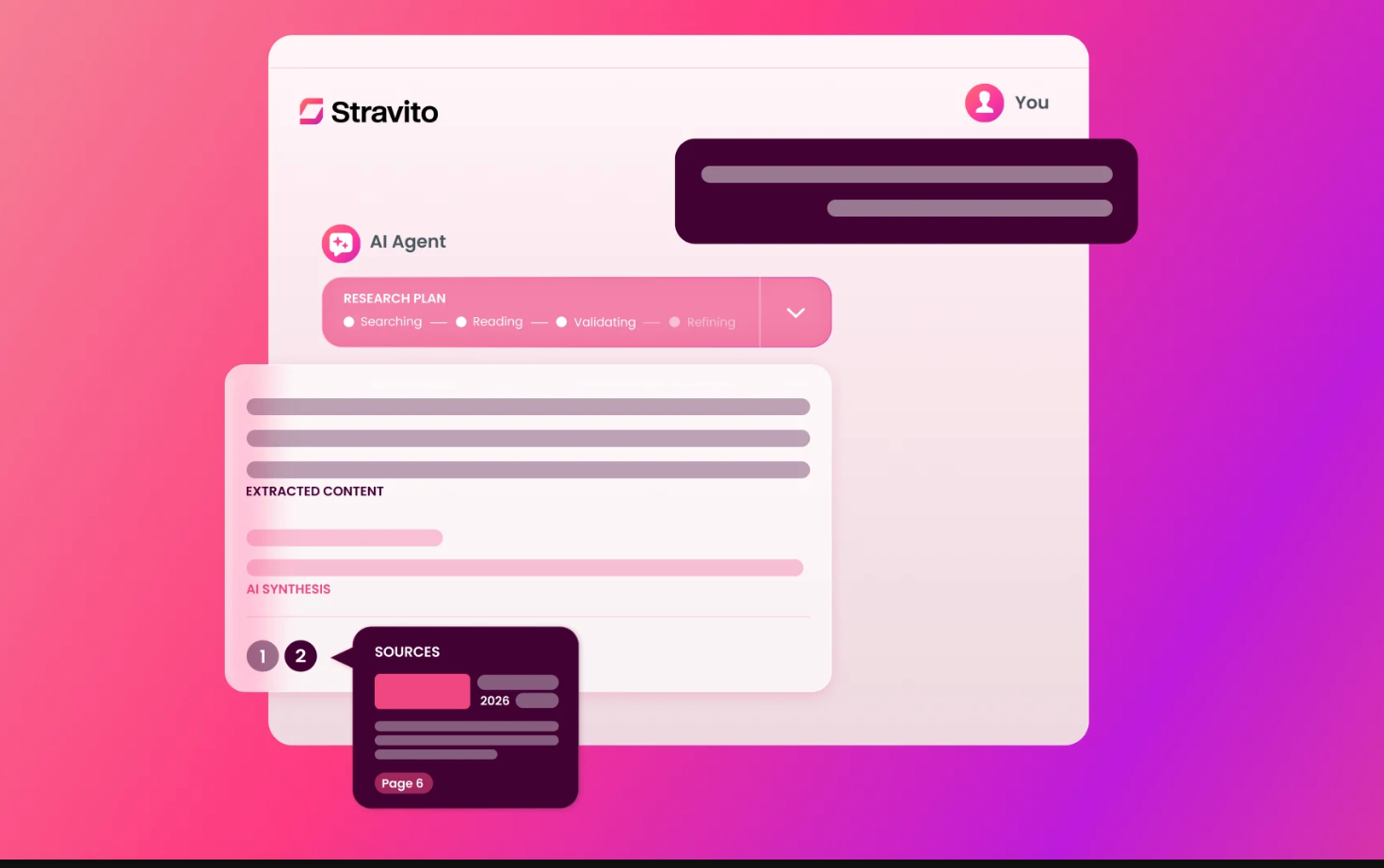
Stravito's tech lets employees ask questions in natural language and retrieve answers grounded in their company's own research, without spending hours digging through folders or requesting reports from internal insights teams.
The platform searches the organization's proprietary knowledge rather than the public internet, surfacing years of consumer insights in seconds. Its value proposition is as much about organizational memory as artificial intelligence.
As language models become commoditized, Philogène believes the real competitive advantage is helping companies use the information they already own, which competitors can never access.
"The valuable intelligence companies need is already inside the company," Philogène said. "Companies just need to be able to access it."
Beyond search: testing ideas before commissioning new research
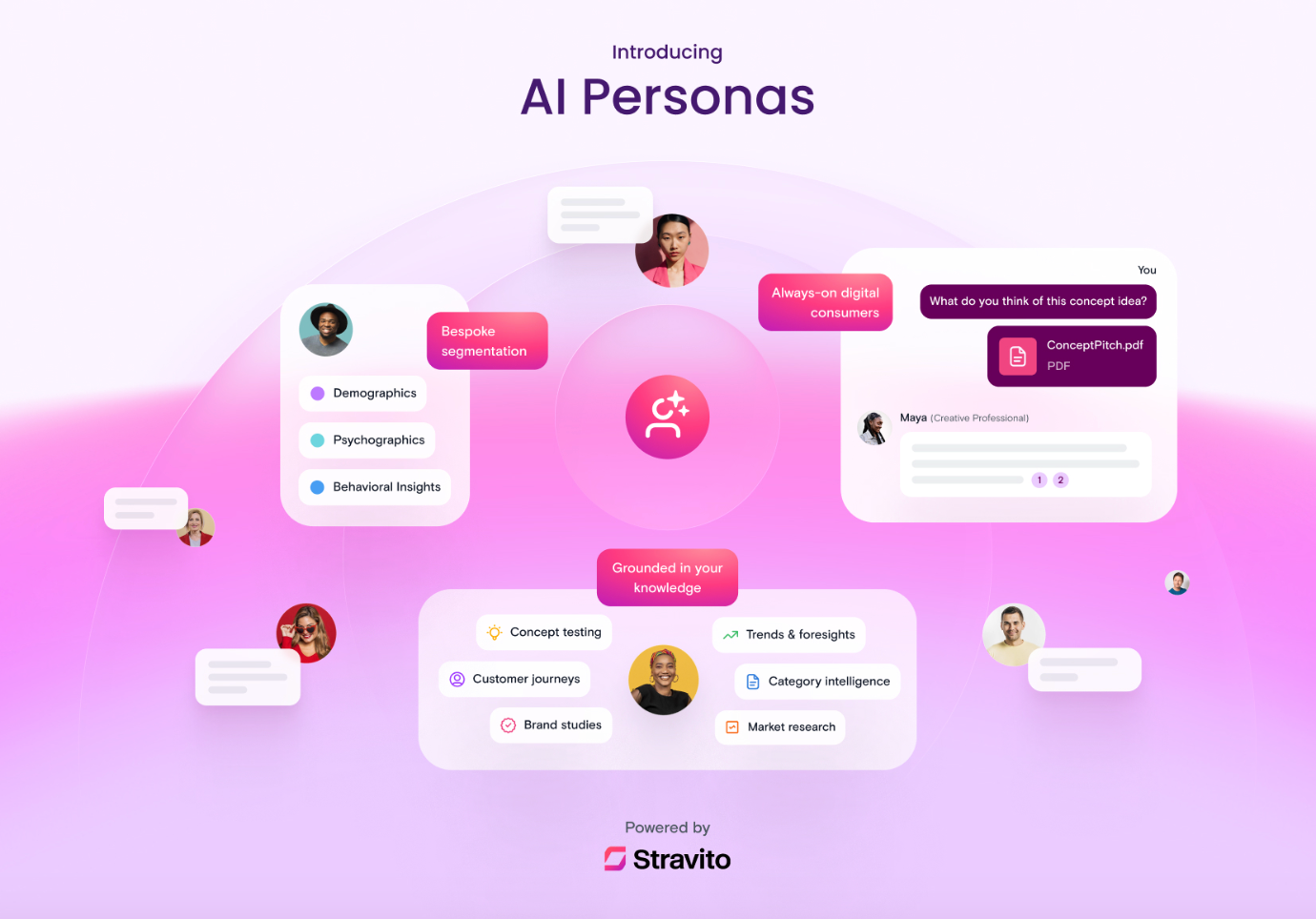
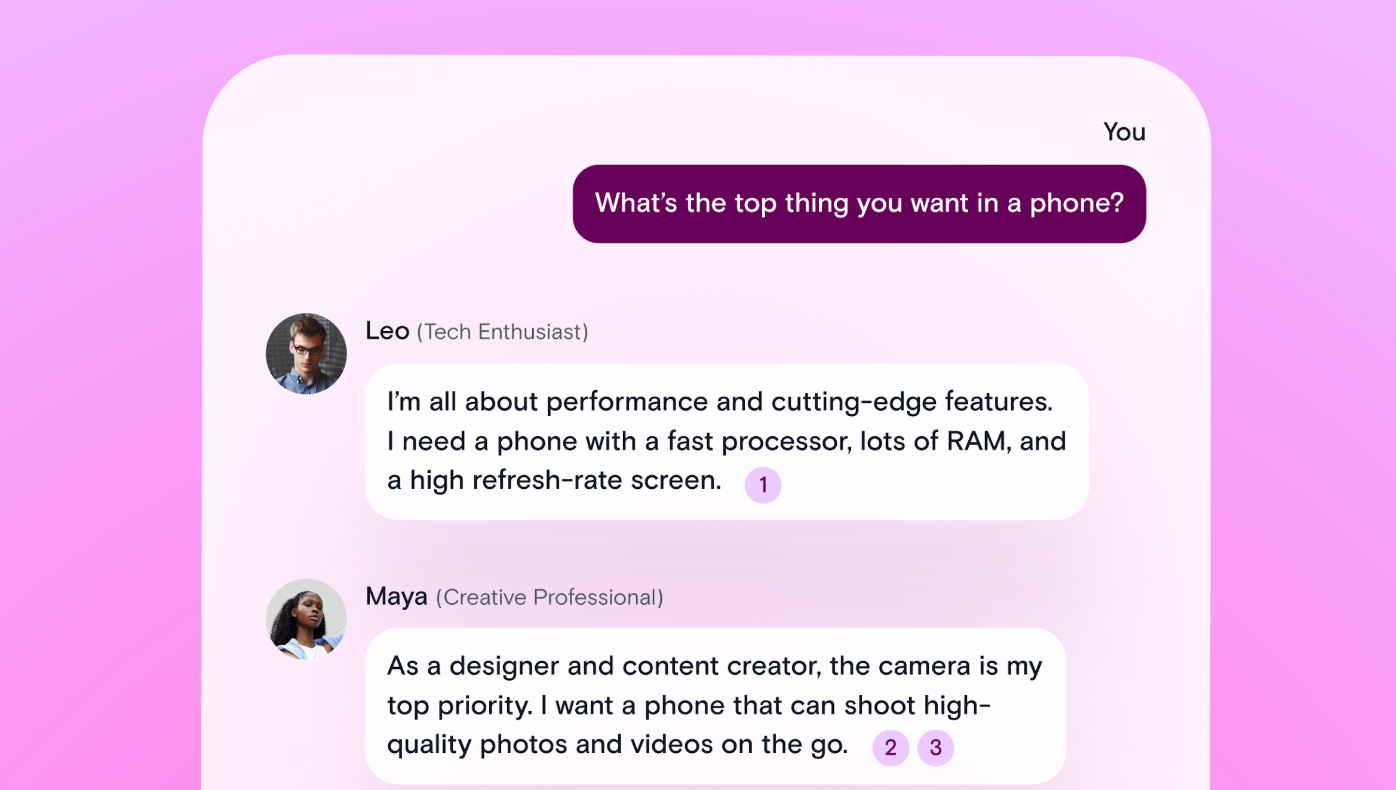
Finding existing research is only the first step in Stravito's vision. The company's latest features let businesses create AI personas built from their own historical consumer research. Marketing teams can then pressure-test early-stage ideas, such as packaging concepts, product positioning, or advertising messages, before deciding whether additional research is required.
The company cites Lavazza as one example: the Italian coffee brand evaluates packaging concepts using AI personas grounded in its existing consumer insights.
The objective is not to replace real consumer groups, Philogène stresses, but to help companies get more out of the research they already have and identify earlier when genuinely new research is needed.
If successful, the approach could change not whether companies conduct market research, but when they conduct it, and how effectively they build on previous work.
Building AI that businesses can trust
As generative AI becomes embedded in enterprise workflows, accuracy and explainability are becoming as important as speed. Philogène argues that businesses need AI systems that don't just produce answers but explain where those answers come from.
General-purpose AI assistants commonly operate as "black boxes." Stravito says every one of its responses, by contrast, can be traced back to the underlying research and supporting evidence. The company calls this a "glass-box" approach: users can see the reasoning behind a recommendation, and the system says so when the available evidence is too thin to support one, rather than producing an overconfident conclusion.
"If you run a global business, getting a fast answer is good but being able to actually trust an AI is key," Philogène said. "Every time you get an answer, we'll explain it. If we don't have the answer to something, we'll say so. That in itself is an insight. If we challenge our customers, they necessarily want a trail and a defensible answer."
That transparency matters most for multinationals, where the marketing and product decisions riding on these recommendations carry real money.
Measuring the impact
Stravito argues that the biggest gains come less from the technology itself than from cutting the time employees spend hunting for information and redoing work that already exists.
According to a Forrester Total Economic Impact study commissioned by Stravito, a composite customer would see a 254% return on investment and €3.44 million in present-value benefits, with payback in under six months. In the same model, time spent responding to information requests fell by 75%, and time spent searching for information by 70%.
Those figures rest on Forrester's modeling methodology rather than independently audited customer-wide results, but they still give a sense of the scale of inefficiency Stravito is targeting.
The next frontier for enterprise AI
For much of the past three years, the AI conversation has centered on increasingly powerful foundation models.
But as these technologies mature, attention is shifting toward something more valuable: the proprietary knowledge that exists inside organizations and nowhere else. For Stravito, that, rather than bigger models, is where the next wave of enterprise AI will be won.
The company has no immediate plans to raise again. Instead, it is focused on expanding within existing enterprise customers while building new AI features.
Philogène believes AI could eventually become a permanent representative of the customer inside every strategic discussion.
Business schools have long encouraged executives to leave an empty chair in meetings as a reminder to consider the customer's perspective. AI, he suggests, could make that symbolic exercise tangible by giving decision-makers instant access to decades of consumer knowledge.
If companies begin consulting the insights they've already gathered before commissioning another study, the first question they ask may no longer be "What do our customers think?" — but "What do we already know?"