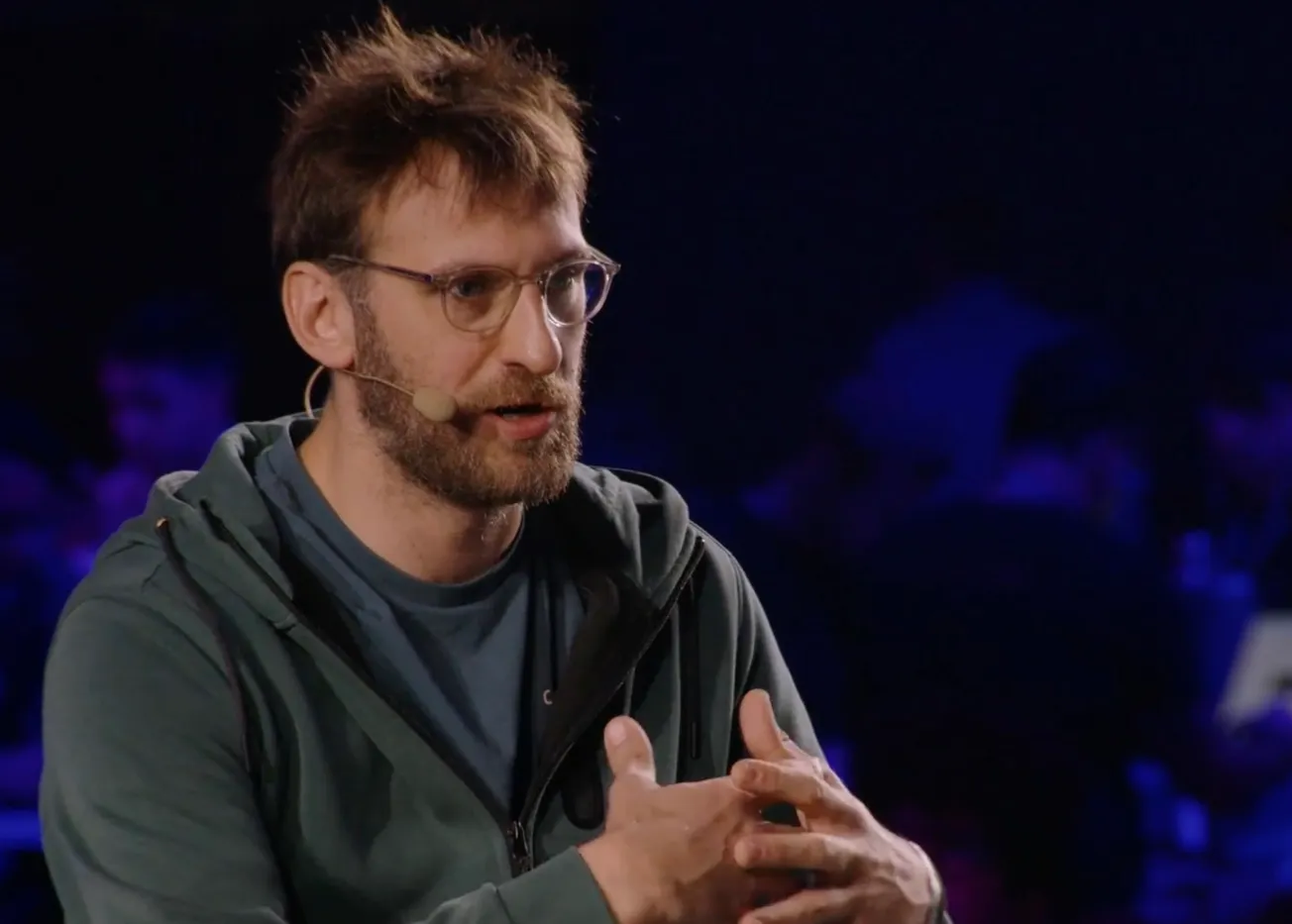
Aire has spent much of its short life in stealth. But at a tech conference in Turin last week, Aire co-founder Gabriel Synnaeve spoke on a panel and pulled back the curtain, just a bit, on what the company is cooking up.
“We’re doing autonomous AI research agents and really serving it as a product,” he said at Wave by Vento’s “From minds to matters” panel on October 8. He added that the goal is to “empower everybody to train their own AI models.”
That is a more concrete public description of Aire than the company has offered so far. But it came in a handful of remarks during a short panel. Still, it offered a glimpse of the ambition and the problems the founders think matter, even if it leaves plenty of basic questions unanswered.
Synnaeve described Aire’s work in the context of AI for science, pointing to demand for models used in areas such as protein design and computational fluid dynamics. The company wants to automate the process of training those models “from the data to the scaling laws to delivering a model that is qualified,” he said. Aire is also using its own product to develop the specialized models and infrastructure the work requires.
That sounds like a research-and-development platform, not simply a general-purpose chatbot or a single model. Still, it represents perhaps the most extensive public remarks by anyone associated with the company since a July report by Sifted sniffed out Aire's existence.
To recap: Aire is a new stealth AI startup with deep roots at OpenAI and Meta that is aiming to make a very big entrance. It's officially incorporated in the U.S. as Flops & Friends, Inc., and its subsidiary is registered in France as FLOPS & FRIENDS.
According to Sifted, Aire is seeking $400 million in Seed funding at a reported valuation of around $2 billion to build an "AI scientist" that can automate R&D for enterprise customers across fields ranging from biology and physics to finance.
If the raise succeeds, Aire would join a growing wave of heavily funded AI labs betting that the next frontier for AI is accelerating scientific discovery rather than simply boosting office productivity.