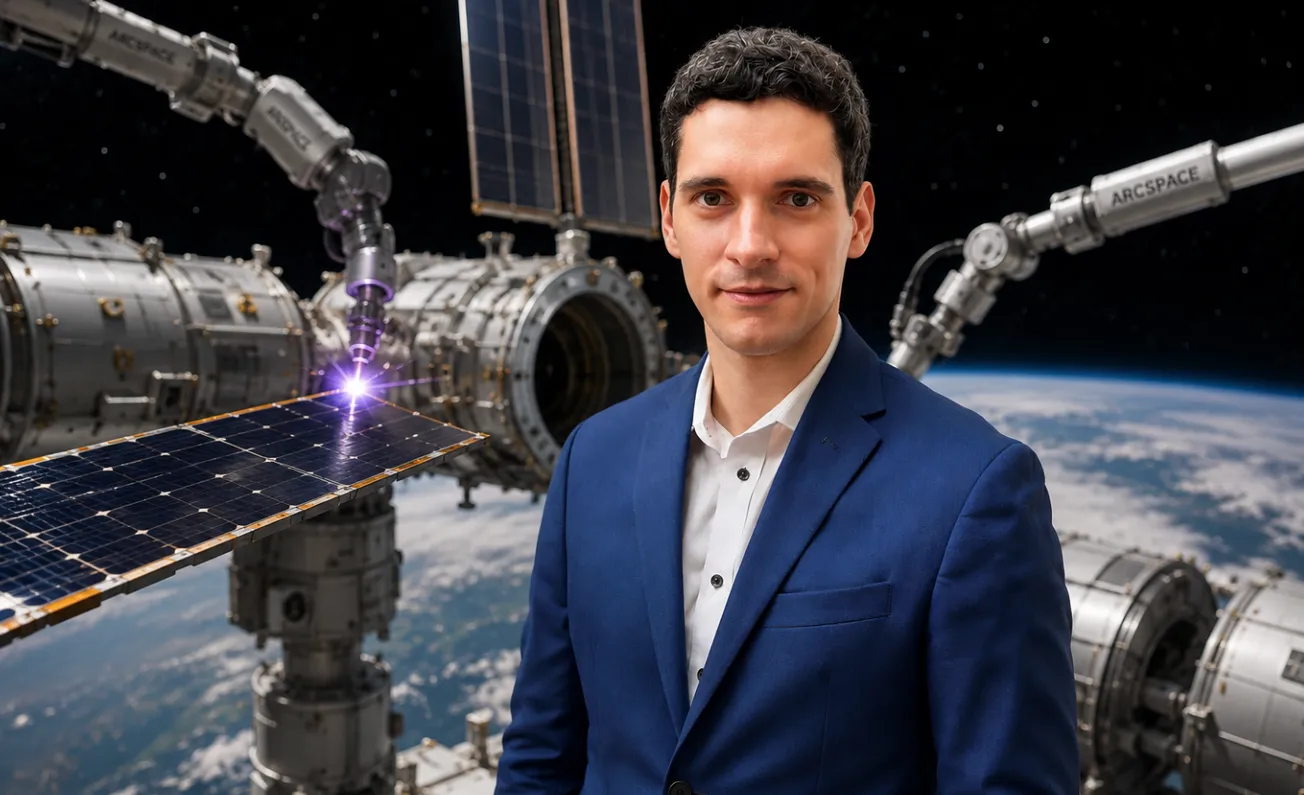
ArcSpace is working on a problem that sounds almost mundane by space-industry standards: how to weld metal once you are already in orbit.
The French startup, founded in 2022 by Guillaume Mohara and Adam Abdin, has developed a compact electron-beam system designed to join and cut metal in space. It has raised more than €2 million in a round led by Czech VC firm DEPO Ventures, with SCE Freiraum Ventures, IRDI Capital Investissement and a French business angels network also participating.
ArcSpace plans to use the funding to prepare an orbital demonstration in 2027. But the company is building toward a market that, in its biggest form, barely exists yet.
Why aren't we welding in space?
Mohara, ArcSpace's CEO and CTO, began thinking about the problem several years before starting the company.
Electron-beam welding is not new. The process has been used in industrial manufacturing for decades because it can make extremely precise welds. On Earth, however, it generally requires a vacuum chamber and the systems needed to create and maintain that environment.
In orbit, the vacuum is already there.
"98% of what you see in the room is actually auxiliary systems that you don't need in space," Mohara said.
That led him to a fairly practical engineering question: how much of an electron-beam welding system could be removed if the machine were designed from the start to operate outside Earth's atmosphere?
Around 2019 and 2020, Mohara began taking the idea to companies including Airbus, Thales and Mitsubishi. He said the reaction was encouraging, but not enough to turn the concept into an immediate industrial project. The companies had other priorities and long development cycles.
"They said they had other important stuff to do over the next eight to ten years," he said.
Mohara eventually concluded that if he wanted to see whether the idea could work, he would have to build the company himself. That's something he said he had never previously imagined doing.
Don't wait for the space station
The eventual opportunity ArcSpace is chasing is much bigger than satellite repair. Mohara believes welding and cutting could become basic tools for assembling large structures in orbit.
For now, most space hardware still has to survive the constraints of the launch vehicle. Satellites, stations and other structures are designed around what can fit inside a rocket fairing, then launched either fully assembled or in a limited number of modules.
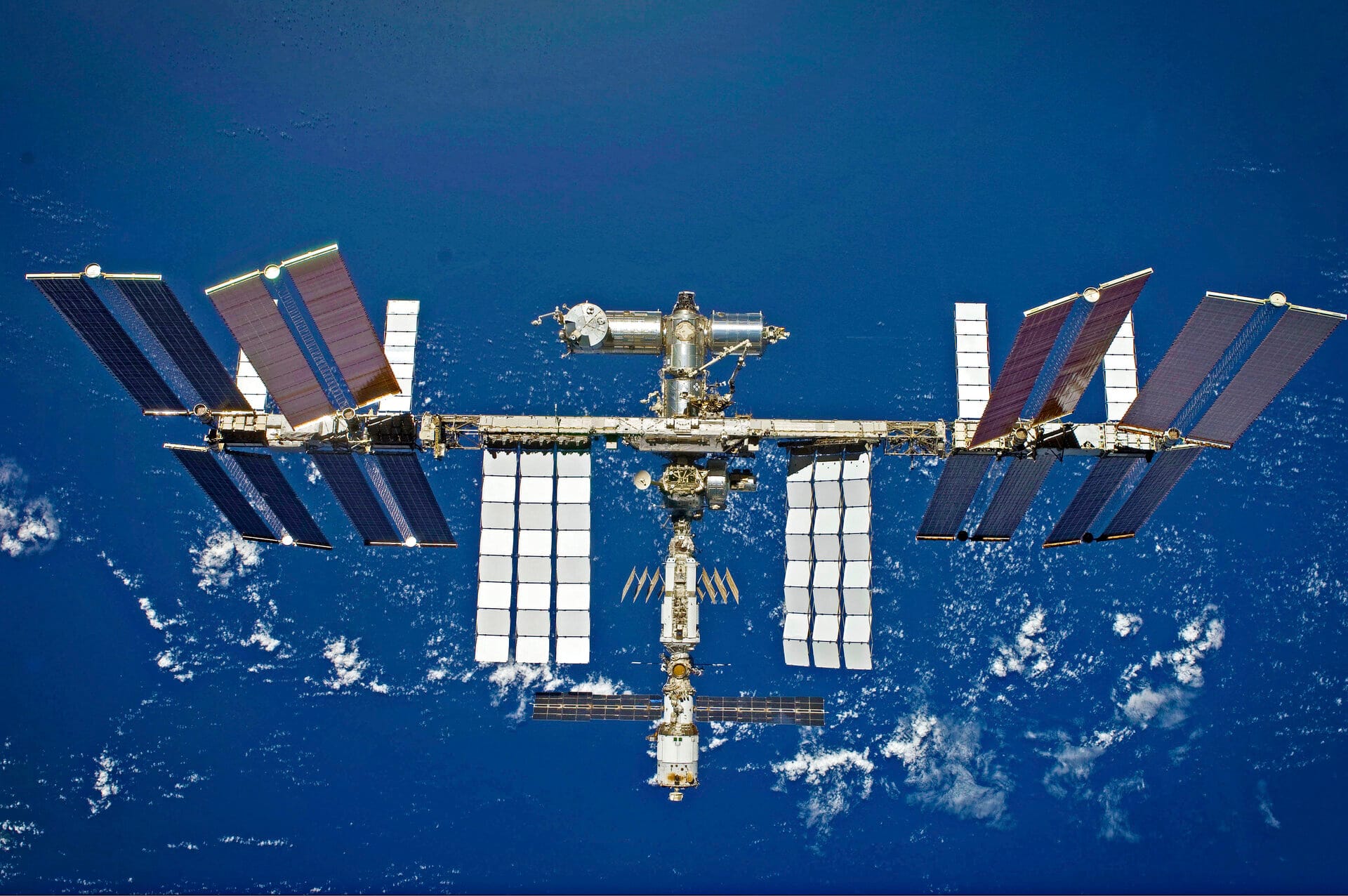
The International Space Station, for example, required dozens of launches and years of assembly. If components could be packed more efficiently for launch and then joined permanently once they reached orbit, engineers would have more freedom over the size and shape of what they build.
"If I gave you a technology that allowed you to fit tiles in space, you could stack them very neatly on the rocket fairing and then, once you arrive in space, build a shelf that is twice the size of your rocket," Mohara said.
That could eventually matter for commercial space stations, lunar infrastructure, large solar arrays and manufacturing facilities.
Eventually is the operative word. Those markets are still years away, and in some cases perhaps decades. ArcSpace therefore looked for a use case customers need sooner.
Step one: fix the satellites
The company has built a three-stage roadmap. Step one is in-orbit servicing, and that market already exists.
Satellites run out of fuel, malfunction, or reach the end of their useful lives. As space junk grows, more servicing spacecraft are being developed to extend satellite lives or deorbit them. But there's an obvious problem: many of the satellites they need to capture were never designed to be serviced. There is no convenient handle and no standardized gripping interface.
ArcSpace's solution is to use its welding technology to attach an interface plate directly to an exposed metallic surface. That creates a connection without requiring the target satellite to have been designed for servicing. The whole process is automated. Mohara compared it to "how do you refuel or mend a car when it's moving?"
That is ArcSpace's first market, and the stepping stone to everything that follows.

Step two: build things in orbit
The same technology can then move beyond repair to antennas, solar arrays and other spacecraft subsystems. Instead of launching a spacecraft with everything already assembled, operators could send up components and join them once they're in orbit.
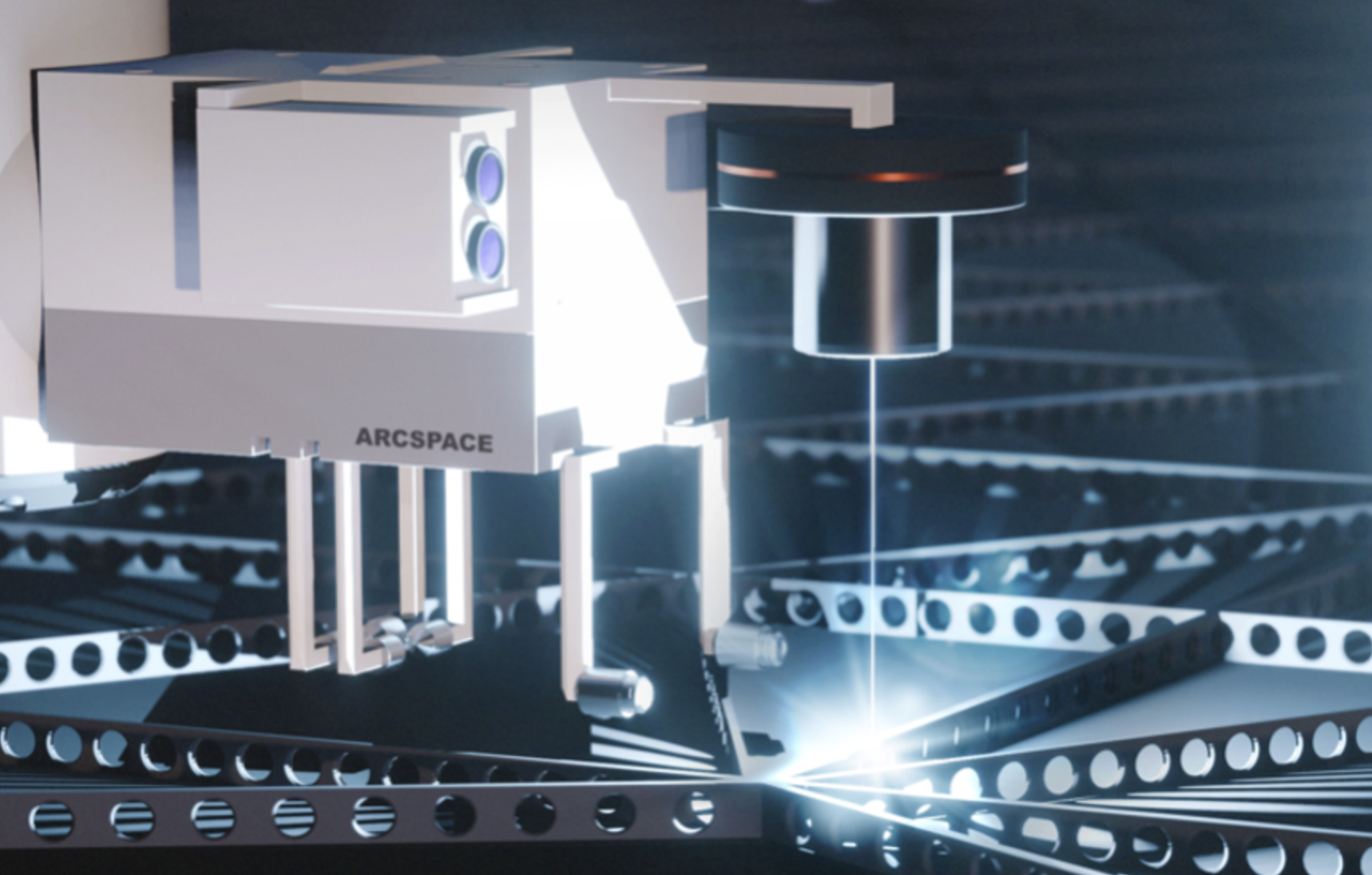
ArcSpace says it has identified almost 100 potential applications for joining and cutting in space. And the tool itself is unusually versatile. Its electron beam can either melt and join material or vaporize it quickly enough to cut through it. The company doesn't need one machine for welding and another for cutting.
"It's the same tool," Mohara said. "You just change a parameter."
The system has a compact power-management unit and battery and can currently deliver around 100 seconds of welding without recharging. ArcSpace plans to demonstrate that capability autonomously in orbit in 2027.
Step three: build space itself
The third step is the biggest and the furthest away. ArcSpace wants its technology to eventually support the construction of large space stations, lunar infrastructure, and other structures that would be difficult or impossible to launch fully assembled.
Mohara estimates that market could be more than 20 years away. That raises the hardest question in ArcSpace's strategy: how do you build a deep-tech company today around a market that may not properly exist until tomorrow?
Sell the first use case
ArcSpace spent roughly 18 months talking to around 30 space companies, asking a simple question: If you could join and cut materials in space, what would you actually do with it?
The answers produced dozens of potential applications, including satellite capture and controlling the reentry of obsolete spacecraft. That customer discovery helped the company find its first market instead of betting everything on its final one.
"We understand our technology and what the client wants and the business opportunity for ourselves," Mohara said.
It also helped convince investors. Space is expensive, and many of its biggest opportunities have long development timelines. ArcSpace has therefore relied partly on institutional support while developing its technology. National and European institutions currently account for around €200,000 of its annual revenue, with commercial development work beginning to grow.
The company is now working with commercial space players including Exotrail and Infinite Orbits. The new funding will take its flight hardware towards qualification and the planned 2027 demonstration, with the aim of reaching full technology readiness by the end of that year.
The Bosch of space
ArcSpace wants to build the tools everyone else uses to build spacecraft. Mohara compares it to Bosch: a company whose technology ends up scattered throughout an industry rather than necessarily appearing on the finished product.
"We want to be the invisible tool suppliers for all space projects," he said.
Today, ArcSpace is a tiny welding and cutting system with seven employees. By the end of this year, Mohara hopes to grow the team to ten. In 20 years or so, Mohara imagines a very different picture: commercial stations in orbit, regular missions to the Moon and infrastructure being built rather than simply launched. If that happens, ArcSpace wants its tools to be there, joining, cutting, repairing and assembling the pieces.
The space economy may be heading somewhere extraordinary. ArcSpace's bet is that getting there starts with something ordinary: the ability to build things once you've left Earth.
"The big dream is to be the supplier of orbital tools for every space infrastructure project. In 20 years, if there are commercial stations in orbit and spacecraft traveling regularly to the Moon, we want our tools to be inside them. If it's bigger than a small truck, we want to help build it," he said. "That's our space."