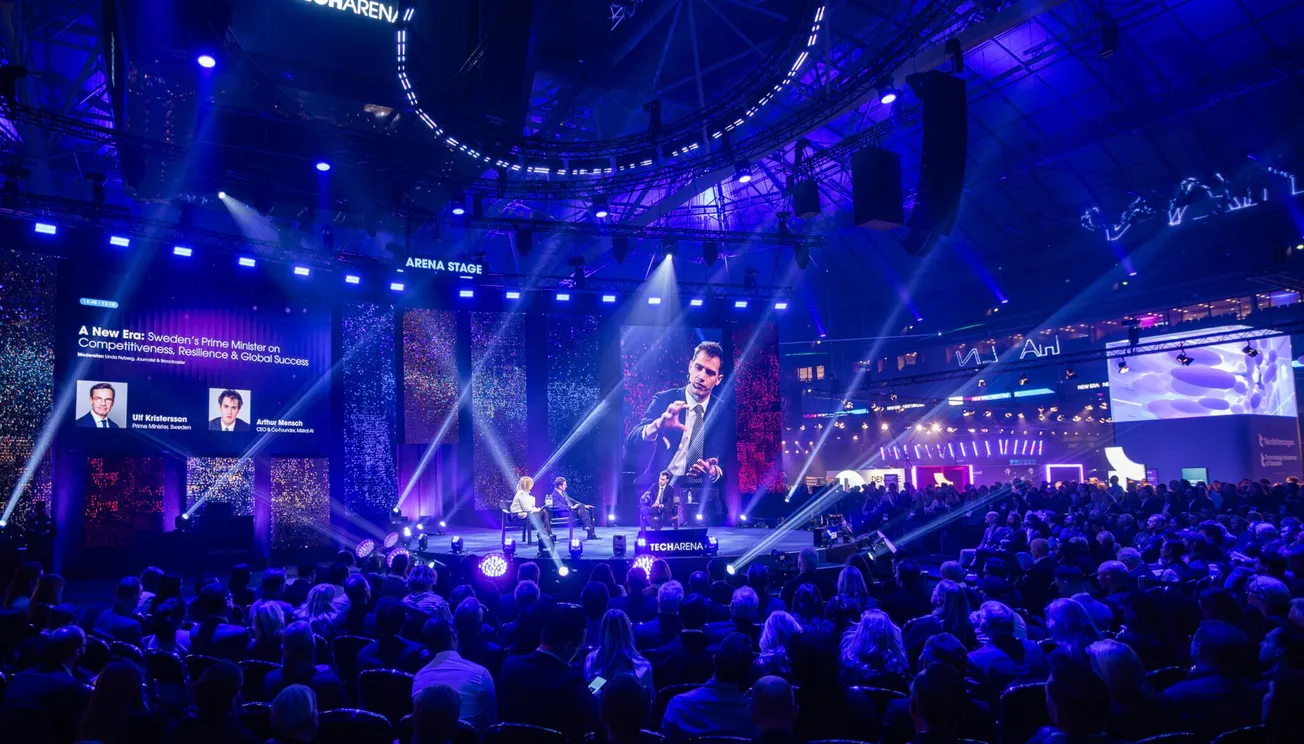
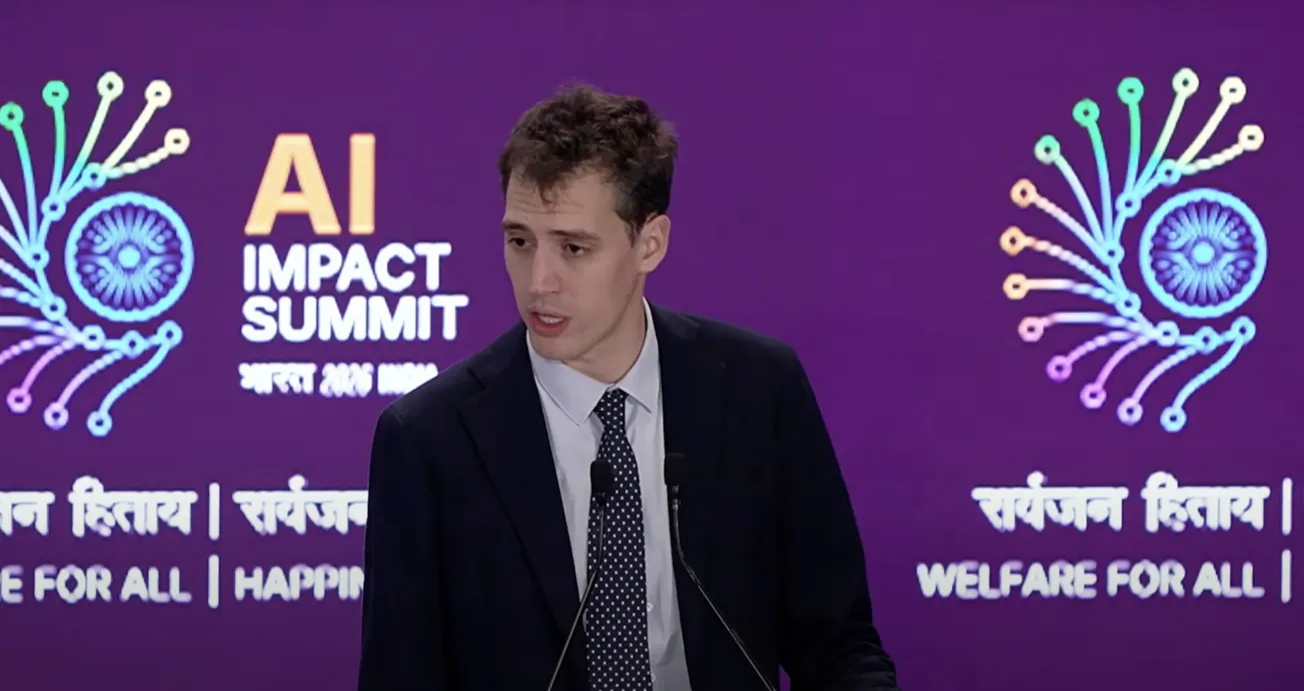
Mistral AI co-founder and CEO Arthur Mensch delivered a pointed keynote at the India AI Impact Summit, equal parts manifesto and wake-up call.
His core message: The world is sleepwalking toward a dangerous concentration of power in AI, and that the time to change course is now.
"I'm the co-founder of Mistral AI, but I'm also someone who believes that AI should be a tool for empowerment and not for dominance," Mensch said. "While others may speak about scale or speed, I want to talk about something a bit more fundamental, which is who is in control of AI deployment, who benefits from it, and how we can ensure that it serves the many and not the few?"
It was a bold opening, and Mensch didn't let up. With AI poised to generate "multiple digits of the GDP" in the coming years, he argued that countries and companies need to own their AI infrastructure — not rent it from a handful of tech giants. "We need to ensure that everyone that runs AI workloads actually have access to the turn on and turn off button," he said, warning against dependence "on external providers that can actually turn off that button."
For Mensch, the antidote to this concentration is open source. He framed it not as some radical disruption but as the natural continuation of how technology has always advanced. "Human advancements have always been built on top of sharing knowledge, of openly collaborating on science, on transparency, and on collective work," he said. "Open source is not a radical idea. It is what has actually allowed us to build the cloud infrastructure that we rely on today. It is what has allowed us to build a secure Internet."
He drew a sharp line in the AI landscape: on one side, companies like Mistral working to compress the world's knowledge into open models available to everyone; on the other, "a few large private corporations that actually use them as leverage against their users."
Much of the speech focused on practical impact. Mensch stressed that AI is "not about replacing humans" but "about giving them a way to delegate many of their tasks." He pointed to Mistral's work in public services and healthcare in France, including helping unemployed people find jobs more quickly. And he made a passionate case for multilingual AI, especially relevant in a country like India with its 22 official languages.
But Mensch's most urgent warnings came when he zoomed out to the global stage. "We are at risk today in the world," he said. "We don't want to be in a world where three or four enormous companies actually own the deployment and the making of AI, actually own access to information" — and, critically — "actually own the infrastructure itself."
The stakes, he argued, go beyond business. "AI is going to change pretty profoundly the way the economy is being run in the next few years," he said. "In order for the equilibrium to remain sustainable and stable, we need to ban excessive leverage."
Mensch had kind words for India's approach to the challenge, calling the country "a leader in betting on self-reliance" and noting that "a quarter of our researchers are actually Indians." He painted an optimistic picture of India's potential to become "a global hub for innovation" by controlling its own AI destiny.
For governments, his advice was blunt: "You need to invest in AI infrastructure that you own," and "prioritize investment in local talent." For businesses, the message was equally direct: "The same way you train unique employees, you will need to train unique AI agents."
Perhaps the most striking part of the speech was Mensch's description of how fast things are moving. "We've gone from a place where chatbots were actually pretty amusing two years ago to a world where now we can delegate tasks over multiple hours and actually have an army of AI delegates that can do a lot of things on our behalf," he said. The flip side? "The people who are not catching that wave are going to be left behind."
He closed with a choice. "Will it be a tool of dominance, or will it be a force for empowering people? Will it deepen divides, or will it bridge them?" For Mensch, the answer is clear, but only if the world acts together.
"Let's build it together," he said.