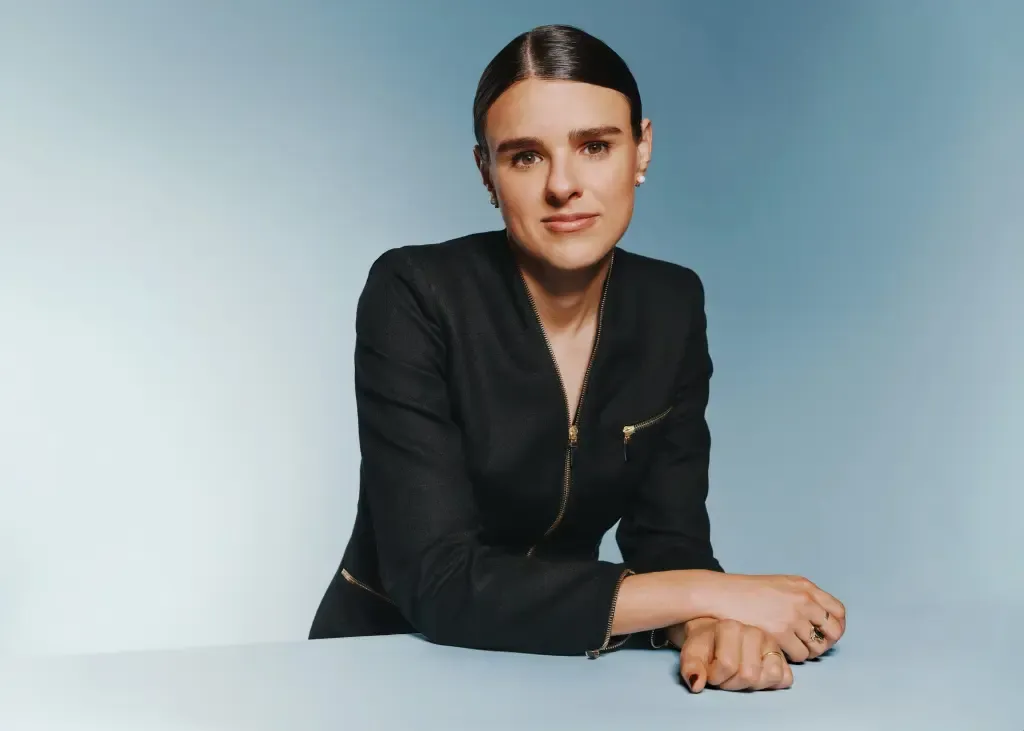
François Bitouzet is Managing Director of Viva Technology in Paris, leading one of the world’s top tech and startup events. A former executive at PublicisLive, Voyages-sncf.com, and WISE, he specializes in innovation, communications, and global brand strategy.
European business leaders walked into 2026 more confident about technology than at any point in recent memory. According to VivaTech's third annual Tech Confidence Barometer, conducted by OpinionWay across 1,524 executives in seven countries, the overall confidence index for new technologies has climbed to 89 out of 100, up two points from the year before.
But the same survey that documents this optimism also exposes its soft underbelly. While 9 out of 10 leaders trust AI, 4 out of 10 acknowledge having shared sensitive company information with tools they do not fully trust. This highlights the gap between how much European leaders rely on technology and the growing questions of sovereignty and transparency.
Confidence is broad — and shallow on risk
The bullish signals are real. Some 88% of respondents say their perception of technology's strategic role has improved, and 94% believe innovation can address society's most pressing challenges. On AI specifically, 83% are confident that investment can be developed in a controlled way; only 17% fear a speculative bubble. Workforce anxiety, often the counterweight to automation enthusiasm, is muted: 92% expect headcount to hold steady over the next twelve months.
Yet the barometer's most striking number runs counter to that composure. While 89% of leaders endorse using AI to guide strategic decisions, 39% concede they have shared company data with AI tools whose reliability they could not verify. That proportion barely moves across countries, sectors or company sizes. That consistency points to a structural problem rather than a national quirk.
The pattern is familiar to anyone who has watched enterprise software adoption outrun enterprise security. Adoption is a decision a single executive can make in an afternoon. Governance is an organizational discipline that takes quarters to build. In 2026, the barometer suggests, European companies are running the first without the second.
A transatlantic split over where technology comes from
If AI governance is the survey's quiet warning, digital sovereignty is its loud one. The geographic origin of a technology supplier has become a live factor in procurement. And the data reveals a clear fault line between continental Europe and the Anglosphere.
Across the sample, 92% of executives say they would prefer a technology partner of the same nationality, and 47% now treat that as a decisive criterion rather than a tie-breaker. The conviction is sharpest in English-speaking markets: 57% of executives in the United States and the United Kingdom call national origin a dealbreaker, a harder line than most EU member states take. The Netherlands is a notable European exception.
For founders selling across borders, the implication is uncomfortable but clear. "Where are you based?" is no longer a due diligence footnote. It is increasingly a qualifying question.
France and Germany: same goal, different playbooks
Nowhere is the sovereignty conversation more consequential than in Europe's two largest economies. The barometer shows them pursuing it through markedly different strategies.
Germany is buying its way forward. German AI budgets are up 28 points on 2024, cybersecurity spending up 19 points year-on-year, and the share of German executives reporting an improved view of technology's strategic role has jumped to 82%, from 68% two years ago. It is a broad, capital-intensive acceleration.
France is taking a narrower path. Rather than chasing across-the-board spending growth, French leaders are concentrating on existing strengths, most notably positioning France as a European champion in robotic process automation. It is a specialization play rather than a volume play.
The two approaches converge at an important point. Executives in both countries now place more trust in European-scale technology solutions — 63% in France, 61% in Germany — than in purely national ones.
In Germany, only 40% still favor a strictly national option. After years in which "sovereignty" often meant "national," the barometer captures the term being quietly redefined at a continental scale.
Where the 2026 budgets are actually going
Beneath the strategic narrative, the survey offers a concrete map of spending. Cybersecurity remains the most widely funded category, while cloud adoption in France lags far behind the global benchmark.
| Technology | Global | France |
|---|---|---|
| Cybersecurity | 82% | 81% |
| Artificial Intelligence | 76% | 65% |
| 5G | 73% | 71% |
| Cloud Computing | 72% | 49% |
| IoT | 54% | 40% |
The forward-looking picture is dominated by AI, but the intensity of planned spending varies sharply by category.
| Technology | Planning Increase | Planning Significant Increase |
|---|---|---|
| AI | 87% | 53% |
| Robotic Process Automation | 80% | 36% |
| Cybersecurity | 77% | 42% |
| Quantum Computing | 76% | 45% |
The takeaway for founders and investors
For the investors and operators who make up much of France's tech ecosystem, the 2026 barometer carries two actionable signals. The first is a market opening: the 39% data-governance blind spot is, in plain terms, unmet demand for trustworthy, auditable AI tooling, and a credibility advantage for vendors who can prove provenance and reliability.
The second is a go-to-market reality: in a market where nearly half of buyers treat supplier nationality as decisive, "European-built" is shifting from marketing line to commercial moat. The companies that internalize both governance as a feature and sovereignty as a default are best positioned for the next 12 months.
The full VivaTech 2026 Confidence Barometer is available from VivaTech. VivaTech's tenth edition takes place in Paris, 17–20 June 2026, with Germany as Country of the Year.