

Healthtech startup Aphasix is targeting a largely overlooked segment of post-stroke care: aphasia rehabilitation.
Aphasia is a condition that impairs the ability to communicate and affects roughly 30% of stroke survivors, around 12 million people. However, the condition is complex and remains largely misunderstood. It varies widely in severity and form, and recovery can take years – if it happens at all.
Access to consistent, structured support remains limited, particularly beyond clinical environments. As a result, treatment is inconsistent, and progress is hard to measure.
The consequences are profound. Beyond the clinical challenge, aphasia often leads to social isolation, loss of independence, and long-term psychological impact. For many patients, the recovery journey becomes fragmented and opaque, leaving them caught between intensive clinical care and a lack of tools to continue progress at home.
Aphasix's founders believe they can change that. Founded by Matthieu and Carole Rinville alongside Pierre de Linage, Aphasix is developing a digital platform designed to support patients living with aphasia. The platform combines AI-driven exercises with real-time progress tracking, giving patients structured daily practice while allowing therapists to follow outcomes and tailor treatment remotely.
“You wake up one day after a stroke and can no longer communicate,” said co-founder Matthieu Rinville. “It’s profoundly destabilizing.”
A personal trigger
The team's understanding of these issues is more than just academic or theoretical.
The idea behind Aphasix emerged four years ago when de Linage, a close friend of the couple who was at that time working in healthcare R&D, suffered a stroke
He spent six months in a care center and intensive rehabilitation, sometimes attending speech therapy sessions three times a day. He returned home to a stark reality: there were no tools with which he could continue his recovery independently.
“At one point, Pierre’s speech therapist went on holiday and told him: ‘See you in a month.’ He asked for tools to continue working on his speech recovery and was told there were none,” Carole Rinville said.
This moment became the turning point.
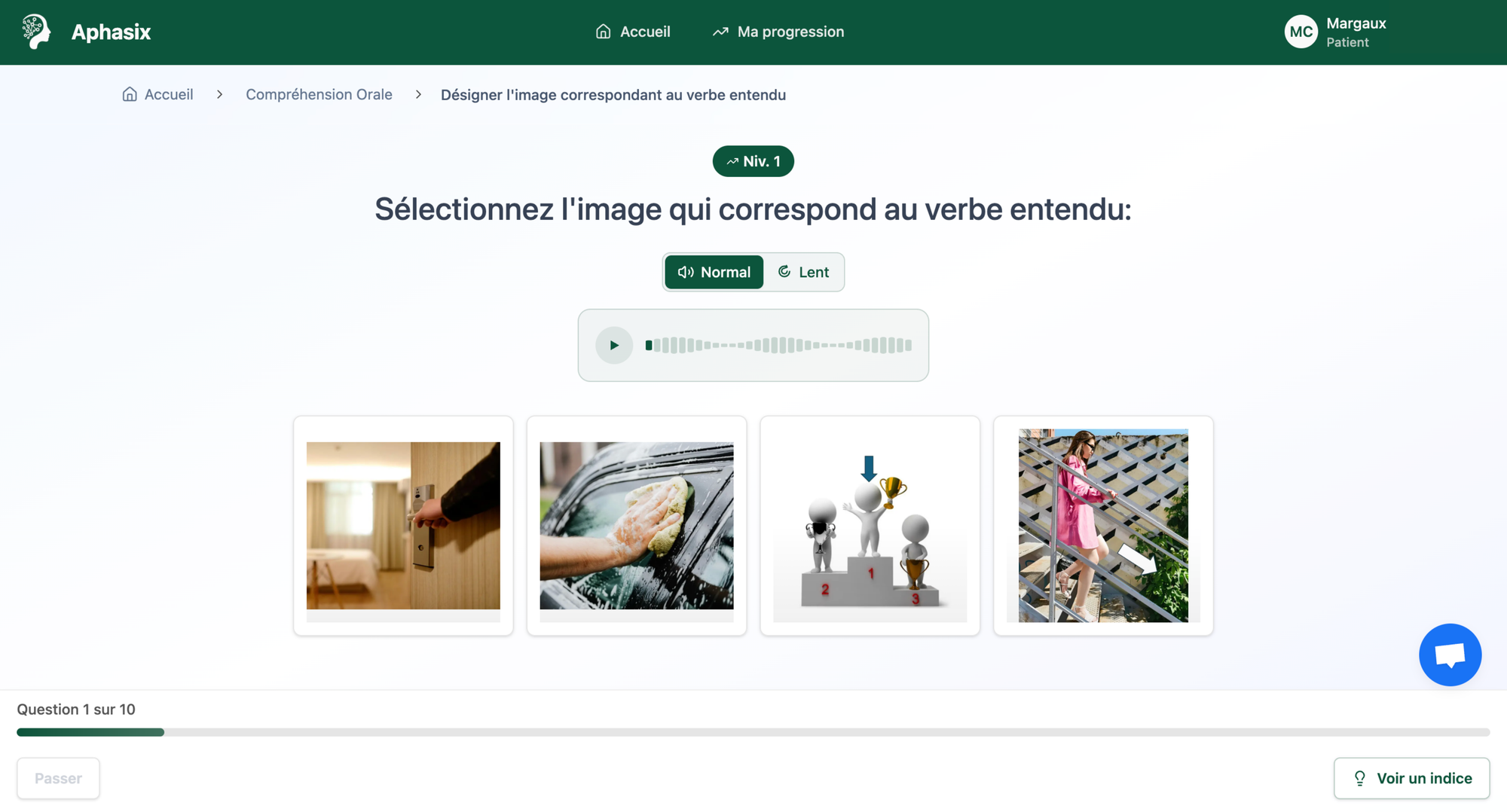
Initially, Pierre’s idea was simple: digitize speech therapy exercises so that he could continue his rehabilitation during his orthophonist's absence. But the idea quickly evolved into something more ambitious: a continuous rehabilitation platform between sessions, designed with both patients and speech therapists in mind.
Turning rehabilitation into data
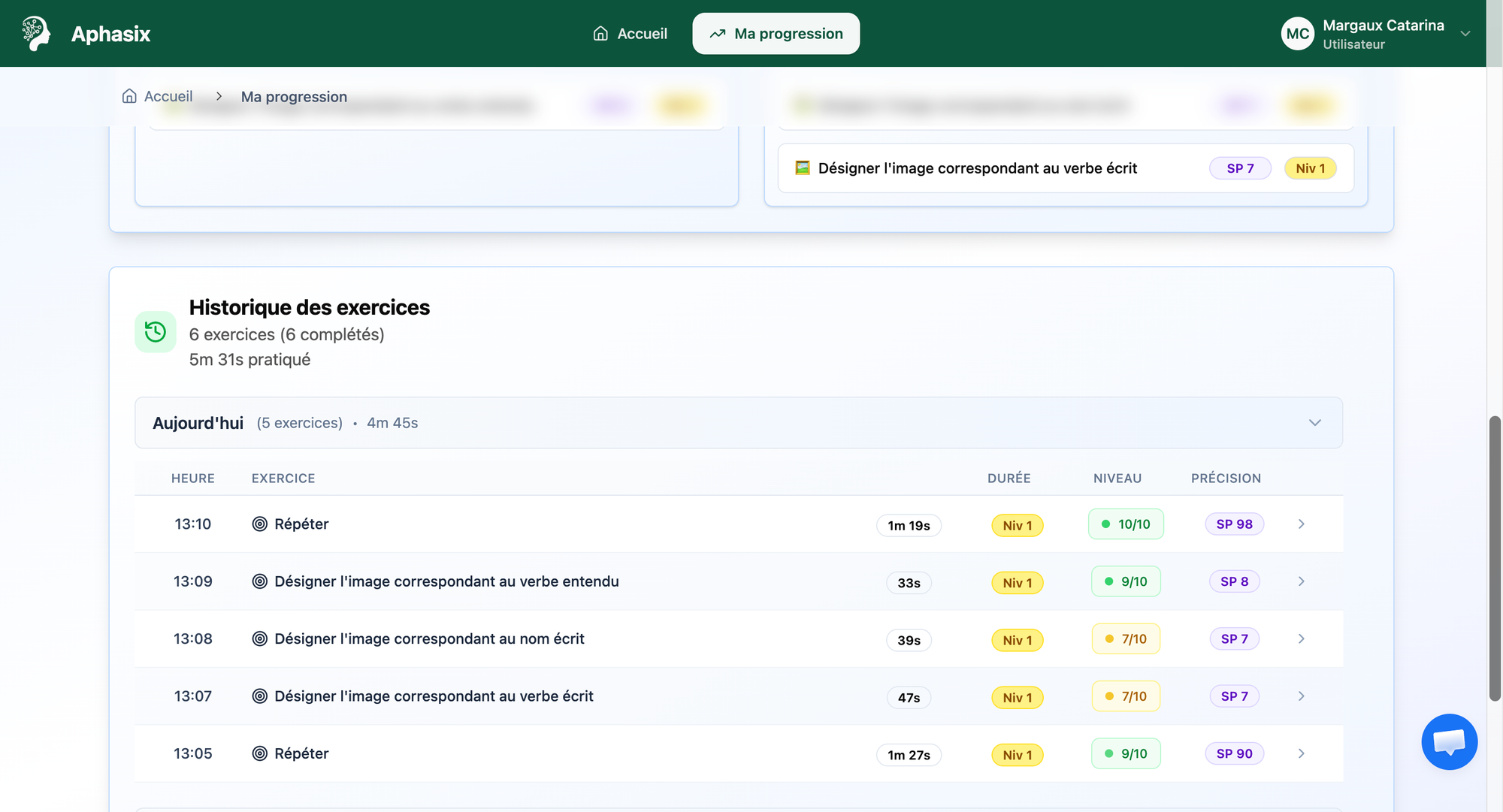
Aphasix's platform combines AI with neuroscience to bring structure to a largely manual and subjective process.
Today, rehabilitation plans are created manually by speech therapists and often lack clear measurement. Patients may work for years with limited visibility on their progress.
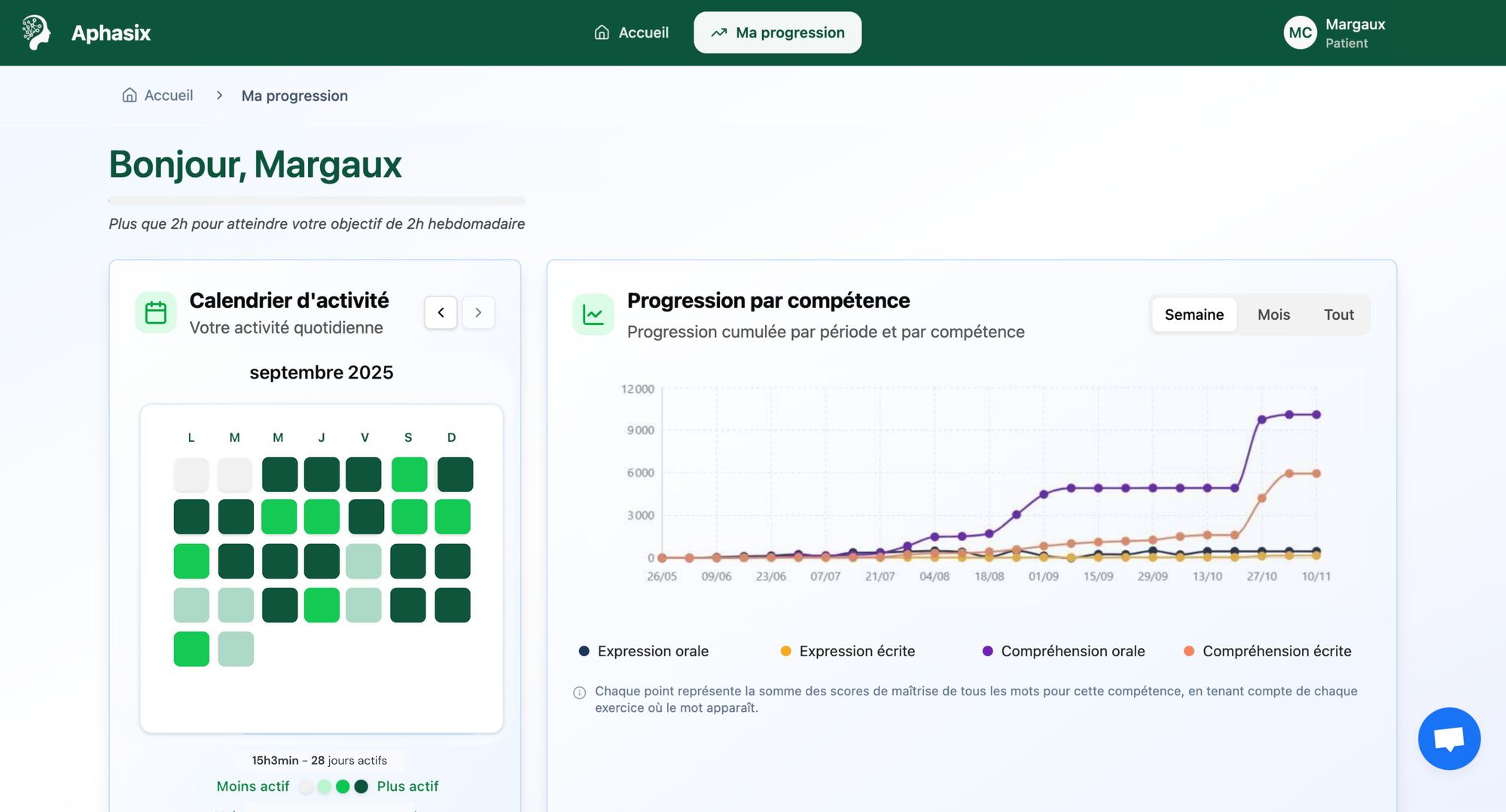
Aphasix changes that by analyzing response times, error patterns, use of prompts, and session frequency.
After each session, patients receive a structured report that tracks progress and provides personalized recommendations.
Therapists can also access a dashboard to monitor their patients remotely, adjust exercises, and provide guidance, creating a more continuous care loop.
From digital tool to personalized therapy
The next step for Aphasix is deeper personalization.
The company is developing proprietary algorithms to cluster patient profiles based on demographic and behavioral data, enabling tailored rehabilitation pathways.
“We want to move from a digital platform to a truly personalized one,” Matthieu Rinville said.
This includes tackling one of the biggest technical challenges: speech recognition for aphasic patients, which standard models struggle to handle.
Early traction and strong engagement from therapists
From the start, Aphasix chose a different approach from many healthtech startups: co-building with medical professionals.
The team spent eight months working closely with speech therapists, neurologists, and neuroscientists, including collaborators from leading hospitals such as Percy and Kremlin-Bicêtre.
“We’re not looking to replace speech therapists,” Carole Rinville pointed out. “The idea is to partner with them and provide them with a tool that benefits both them and their patients.”
This positioning is key. While other solutions have attempted to automate or bypass care, Aphasix focuses on augmenting it by giving therapists visibility over patient progress and enabling more structured follow-up.
Despite launching only in November 2025, Aphasix has already seen rapid adoption with over 500 patients and 500 speech therapists onboarded and using the platform. Unexpectedly, therapists have been highly engaged.
“We didn’t expect such enthusiasm from speech therapists as well," Matthieu Rinville added. "It’s become a real collaboration.”
Aphasix operates on a B2C SaaS model, with patients paying €19/month for access, while the platform remains free for speech therapists.
The company also integrates a donation system, allowing 10–12% of users to use the platform for free.
Their free-for-therapists model enables orthophonists to explore the platform, provide feedback, and ultimately become platform ambassadors. At the same time, Aphasix is exploring B2B partnerships with rehabilitation centers and care homes through licensing models.
Funding a long-term ambition
To support initial R&D, the company raised €1 million in early funding last November from business angels. It is now preparing a new funding round, alongside potential debt financing, to accelerate development, particularly in AI and personalization.
Rather than targeting traditional VCs immediately, the team is prioritizing engaged investors aligned with the project’s long-term vision.
"We're really looking for investors who will buy into our long-term vision and want to get involved," explained Matthieu Rinville.
A long road to reimbursement
Like many digital health solutions in France, Aphasix faces a complex regulatory path.
Clinical validation and reimbursement could take several years, with a roadmap pointing toward potential reimbursement by 2030.
In the meantime, the company is working with hospitals and research institutions to structure clinical studies and validate its impact.
More than a product: a societal mission
Beyond technology, Aphasix positions itself as tackling a broader societal issue.
“Aphasia is still largely invisible,” Carole Rinville explained. “People don’t understand it, and patients often become isolated.”
The ambition is to make aphasia a treatable, visible condition and eventually expand into other neurological disorders. “We want patients to say: ‘I was able to speak again thanks to Aphasix and my own commitment," she said.
In the coming months, Asphasix will focus on finalising a fully mature platform, improving engagement through reminders and usage features and scaling adoption before accelerating acquisition.
In the long term, Aphasix aims to become a reference in aphasia rehabilitation by combining AI, clinical expertise, and patient-driven care.
“We’re just at the beginning,” Matthieu Rinville said, “But the need is massive, and now, finally, the technology is ready.”