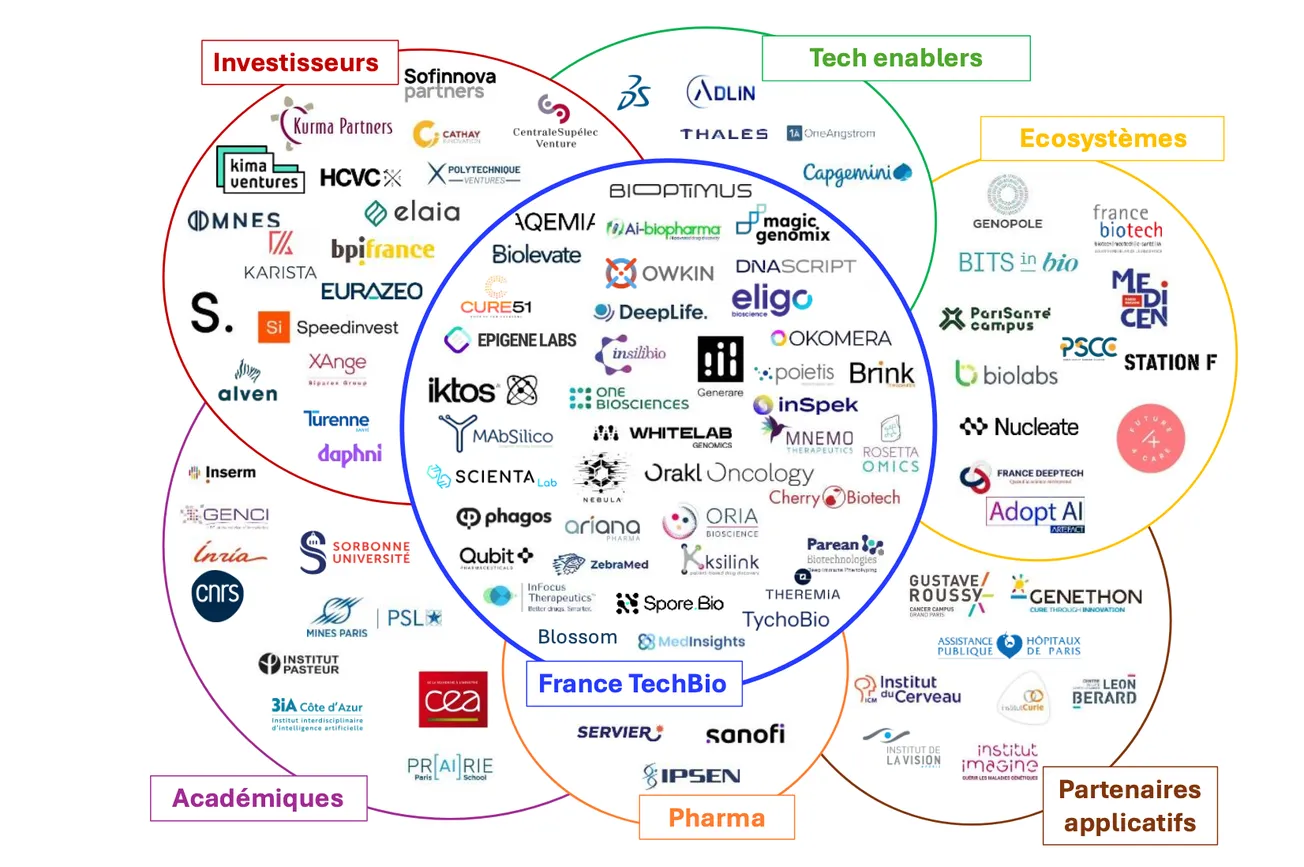
France's TechBio ecosystem is having a moment. In just under a year, the number of identified TechBio companies in the country has nearly doubled, jumping from 22 to 40 startups and scale-ups, according to a new report by the TechBio France Commission.
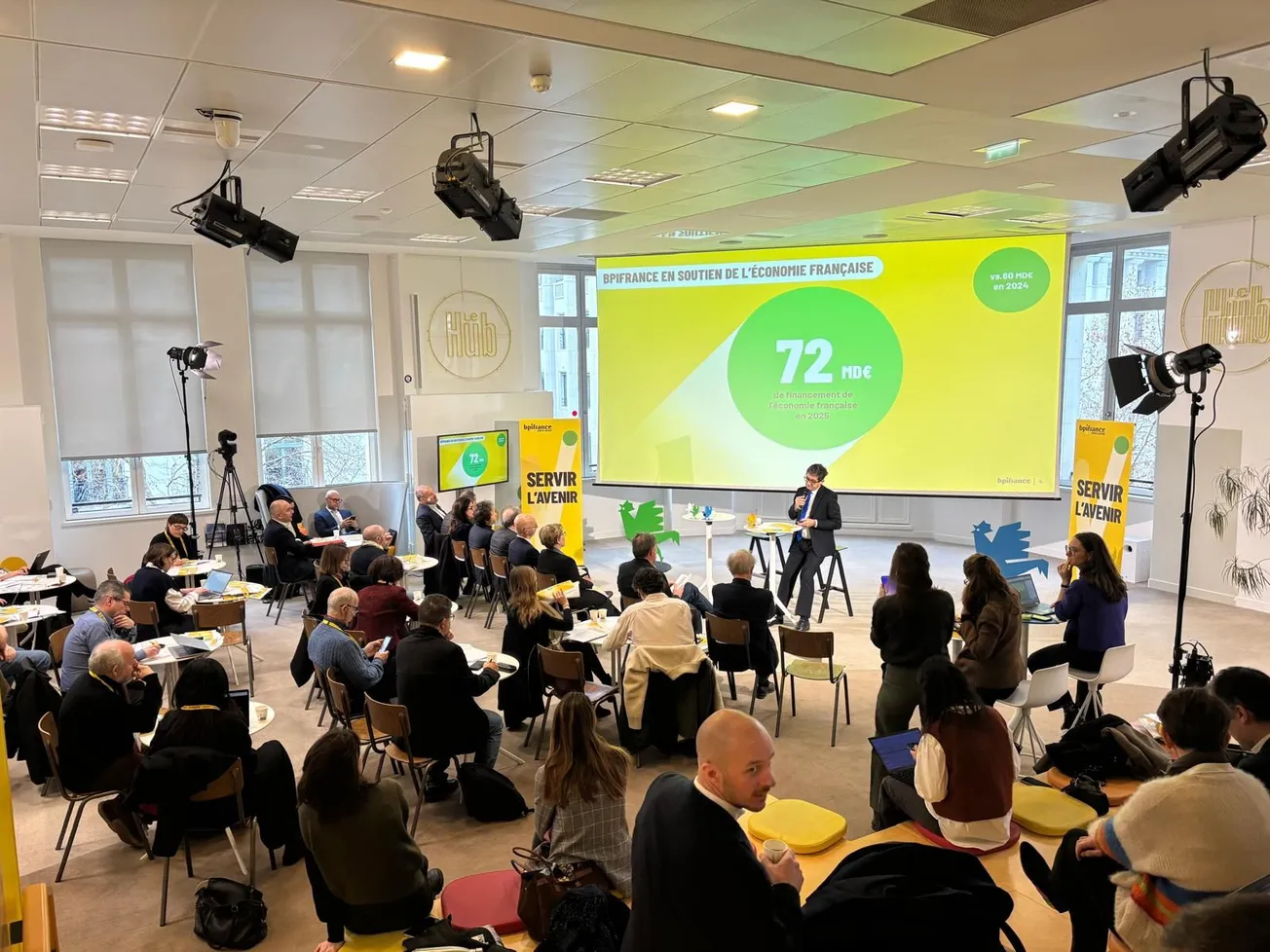
The report was released on Thursday at the second edition of the TechBio France Conference held at the Future4Care office in Paris.

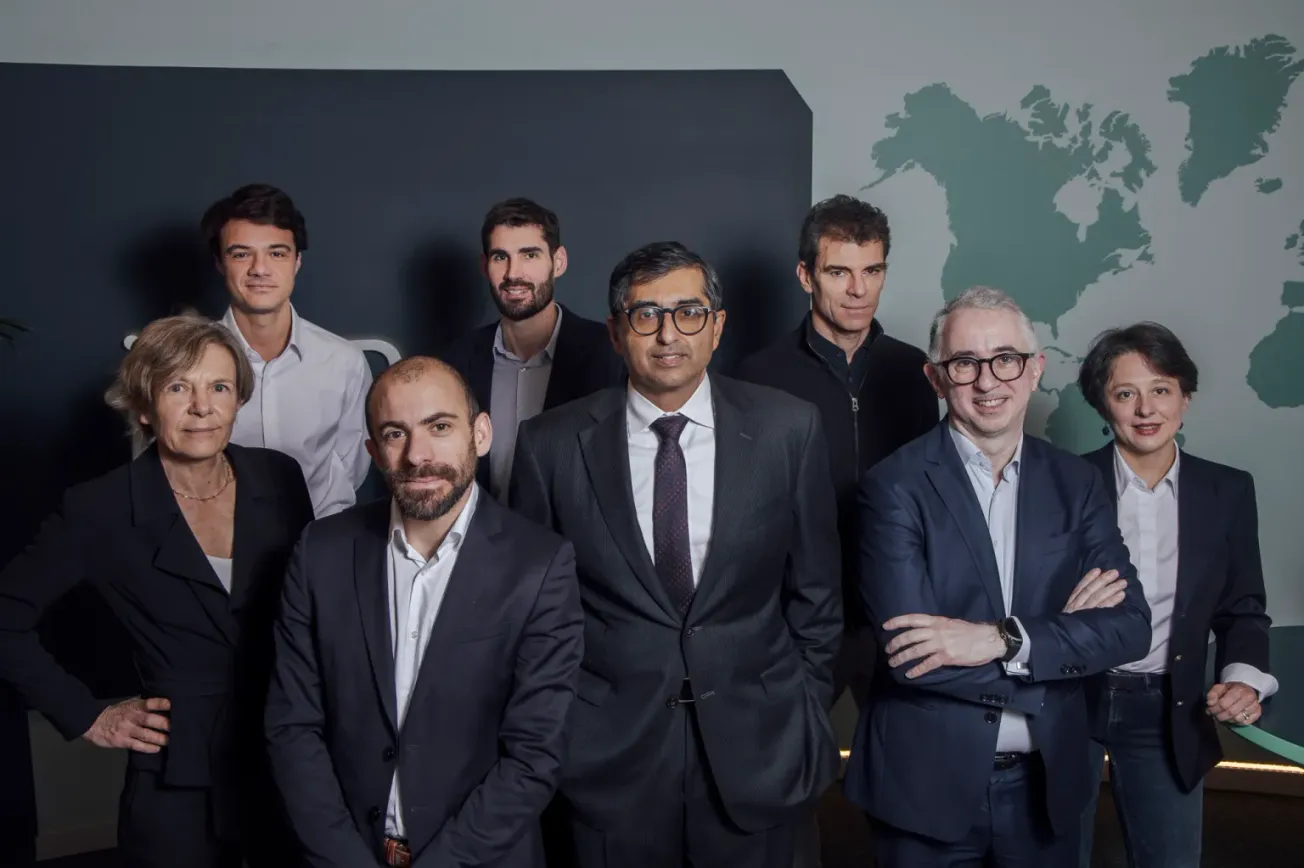
The Commission was formed just last year in partnership by France Biotech and France Deeptech to provide greater identity and structure to an emerging sector. The report represents the most comprehensive attempt yet to define, map, and structure what has become one of the most dynamic segments of the French health innovation landscape.
So what exactly is a TechBio? The commission has landed on a clear definition: it's a company where advanced technology—whether artificial intelligence, computational modeling, experimental automation, robotics, or biological data engineering—serves as the primary engine of scientific value creation. The technology isn't a support function; it's the foundational brick.

This distinguishes TechBio from traditional biotech companies, where value primarily comes from biological innovation like a molecule or therapy, and from "tech enablers" that develop generic technologies without direct applications to living systems.
"The distinction doesn't exclude a TechBio from developing its own therapeutic pipeline," the report notes. "It's always the structuring role of technology that determines whether a company belongs to the TechBio category."
Government Recognition Accelerates
The timing couldn't be better for French TechBio startups seeking visibility. Six companies from the sector made it into the 2025 cohort of French Tech 2030, the government's flagship program for breakthrough technology companies: Biolevate, Generare, Iktos, Qubit, Spore Bio, and WhiteLab Genomics. These startups are spread across AI, quantum computing, and robotics categories.
Meanwhile, two TechBio players—Aqemia and Bioptimus—earned spots in the French Tech Next 120, the more established tier of the government's startup support ecosystem.
The recognition extends beyond French borders. Iktos and Scienta Lab were selected as laureates of the European Innovation Council Accelerator in 2025, while Zebramed, Blossom, and Nebula won prizes at Bpifrance's prestigious i-Lab innovation competition. Other companies picked up honors from Station F's Future40 program and AWS's Generative AI Accelerator.
Money Is Flowing Selectively
Despite a tighter funding environment across European tech, French TechBio companies have continued to attract capital:
- Spore Bio raised €22 million to industrialize its microbiological detection technology.
- One Bioscience closed a €15 million Series A for its personalized medicine platform and single-cell diagnostics.
- Orakl Oncology secured €11 million to develop tumor avatars for clinical trials.
- Brink Therapeutics attracted €3.5 million for its immuno-oncology approaches.
The deals illustrate both the sector's vitality and investor appetite for companies that can demonstrate clear technological differentiation in drug discovery and healthcare R&D.
Academic Firepower
One of France's key advantages, according to the report, lies in its exceptional academic ecosystem. The country combines world-class expertise in mathematics, AI, and biology with research laboratories developing cutting-edge technological approaches.
Major institutions contributing to the TechBio talent pipeline include the CEA, Inria, CNRS, Inserm, Mines Paris-PSL, Institut Pasteur, and Sorbonne Université. The report highlights specific research groups pushing TechBio approaches, from structural bioinformatics at Institut Pasteur to computational biology at Mines Paris.
France also benefits from democratized access to high-performance computing through national infrastructure like GENCI, which provides startups with the processing power needed to crunch massive biological datasets.
Hospital partners, including Institut Curie, Gustave Roussy, Institut du Cerveau, and Généthon, serve as crucial data providers and application development partners for TechBio companies.
The Competition Challenge
But France isn't operating in a vacuum. The report warns that intense international competition—particularly from the United States, where TechBio investment levels dwarf those in Europe—poses a strategic challenge.
"France must strengthen its financing capabilities, data access, and technological infrastructure to avoid strategic dependence and capture the value created by its innovations," the commission argues.
The solution, according to the report, involves building bridges with global TechBio communities. The commission has already established connections with organizations like Nucleate and Bits in Bio, which animate dynamic TechBio communities in the US and Europe. Links with TechBio UK, led by the BioIndustry Association, are also developing.
What Comes Next
The commission, co-coordinated by WhiteLab Genomics and Scienta Lab, plans to continue its structuring work in 2026. Priorities include consolidating the TechBio definition and mapping, strengthening ties with public and private partners, and supporting the development of what it calls "TechBio champions" capable of competing on a global scale.
For an ecosystem that barely had a name two years ago, that's an ambitious agenda. But with government recognition growing, academic support deepening, and capital still finding its way to the most promising players, French TechBio argues that the sector has the fundamental elements in place to claim a place in the global race to reinvent drug discovery and healthcare R&D.