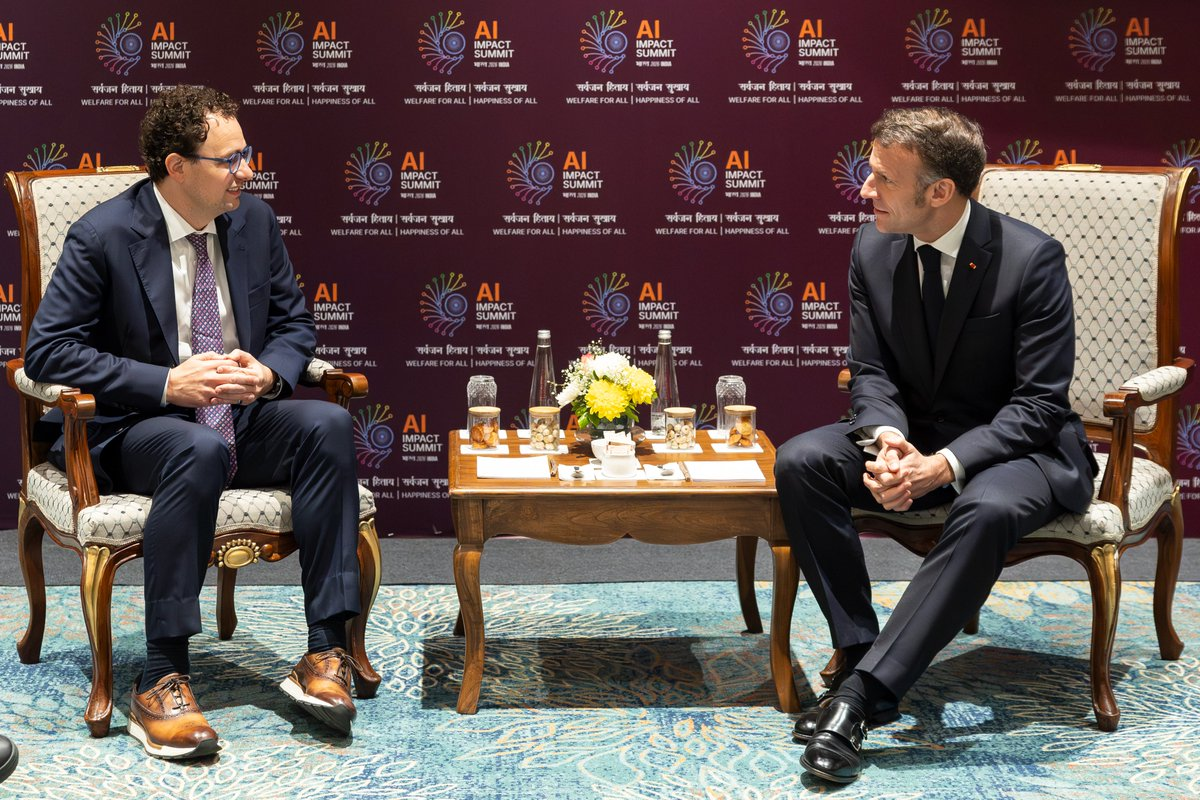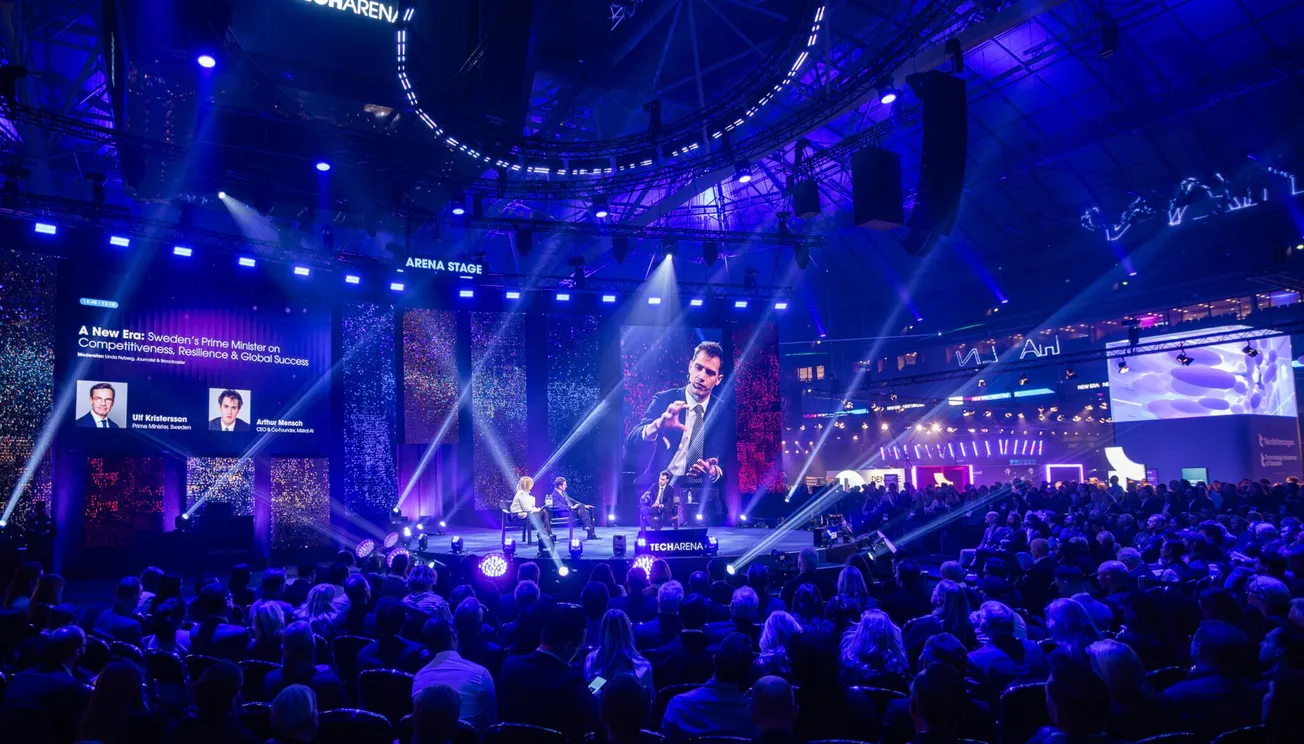
Emmanuel Macron arrived in New Delhi this week with a story, a warning, and a vision.
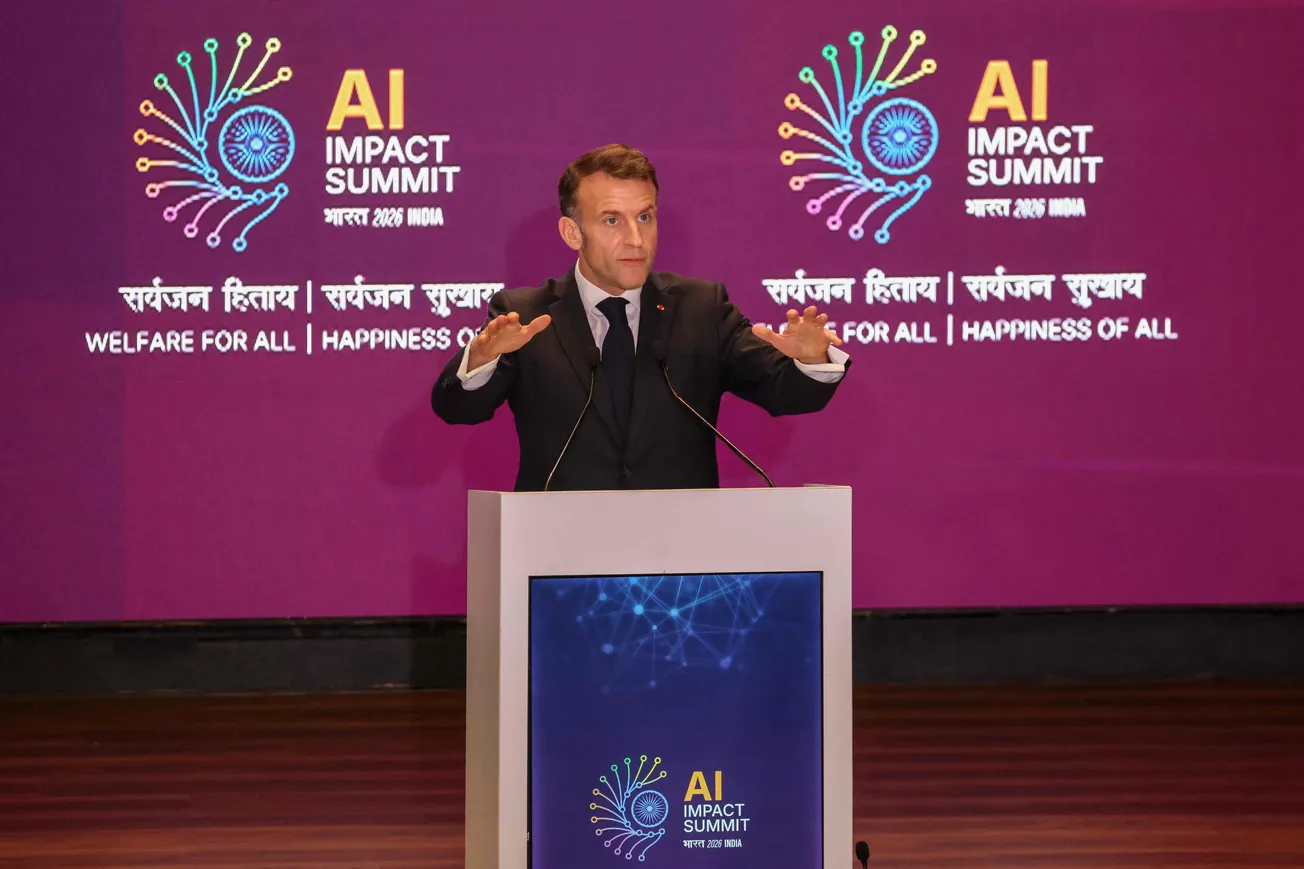
Speaking at the AI Impact Summit 2026, a follow-up to last year's AI Action Summit co-hosted by France and India in Paris, the French president used his keynote address to argue that the global AI race doesn't have to be a two-horse contest between Washington and Beijing.
And he made clear that France and India intend to prove it by opening with a parable.
"Ten years ago, a street vendor in Mumbai could not open a bank account, no address, no papers, no access," Macron told the packed hall. "And today, the same vendor accepts payments on his phone instantly, instantly for free from anyone in the country. That is not just a tech story, that is a civilization story."
It was a deliberate choice of opener, a way of grounding an often abstract debate about technology and progress in something human.
However, it was also part of a multi-day, multi-part charm offensive by the president and the French business and tech delegation to tighten the bilateral embrace with the Indian tech giant at a moment when sovereignty is at the top of the agenda, and traditional alliances with historic partners such as the U.S. have become suspect.
To that end, while the summit brought together global governments and business leaders, it also served as the launchpad for the India-France Year of Innovation 2026, a year-long bilateral program that both governments describe as focused on turning "ideas into impact."
First announced during Macron's 2024 state visit to India, the initiative spans six major domains: AI and digital technologies, aerospace, sustainable development and energy transition, cultural and creative industries, and health and agri-food. The year will feature a series of high-impact collaborations in India and France spanning diverse sectors with the ambition of connecting startups, academic institutions, research bodies, and industry on both sides.
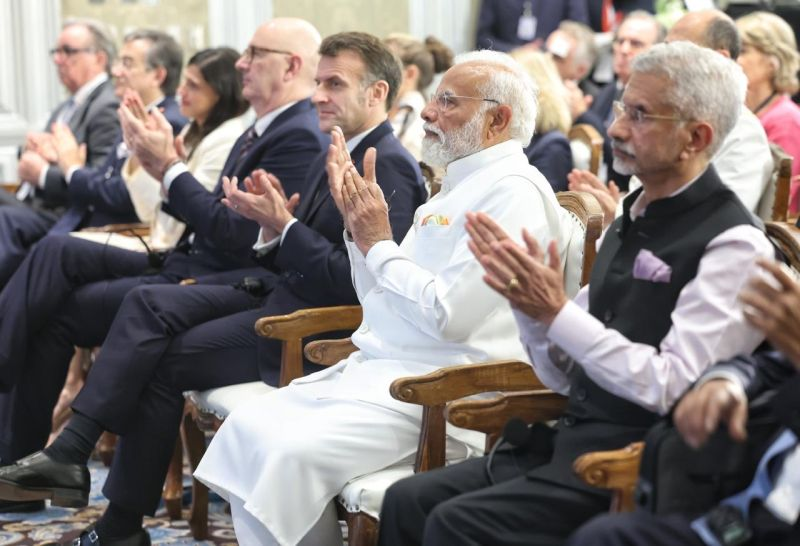
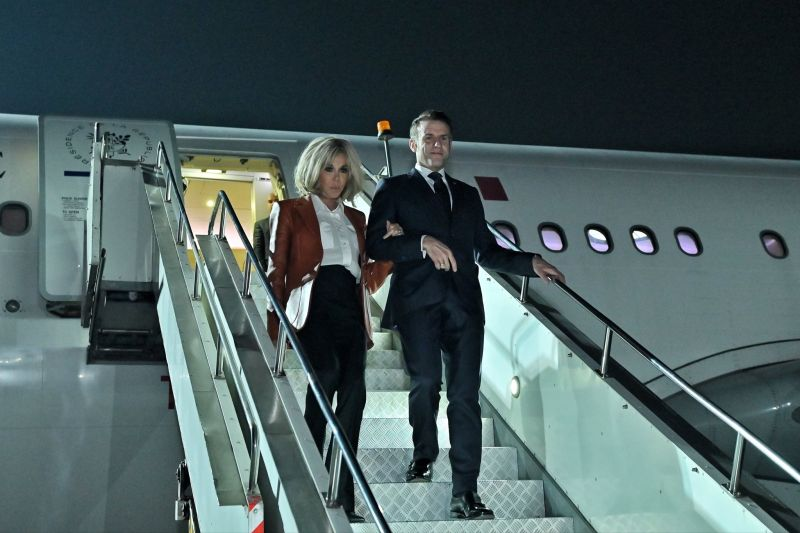
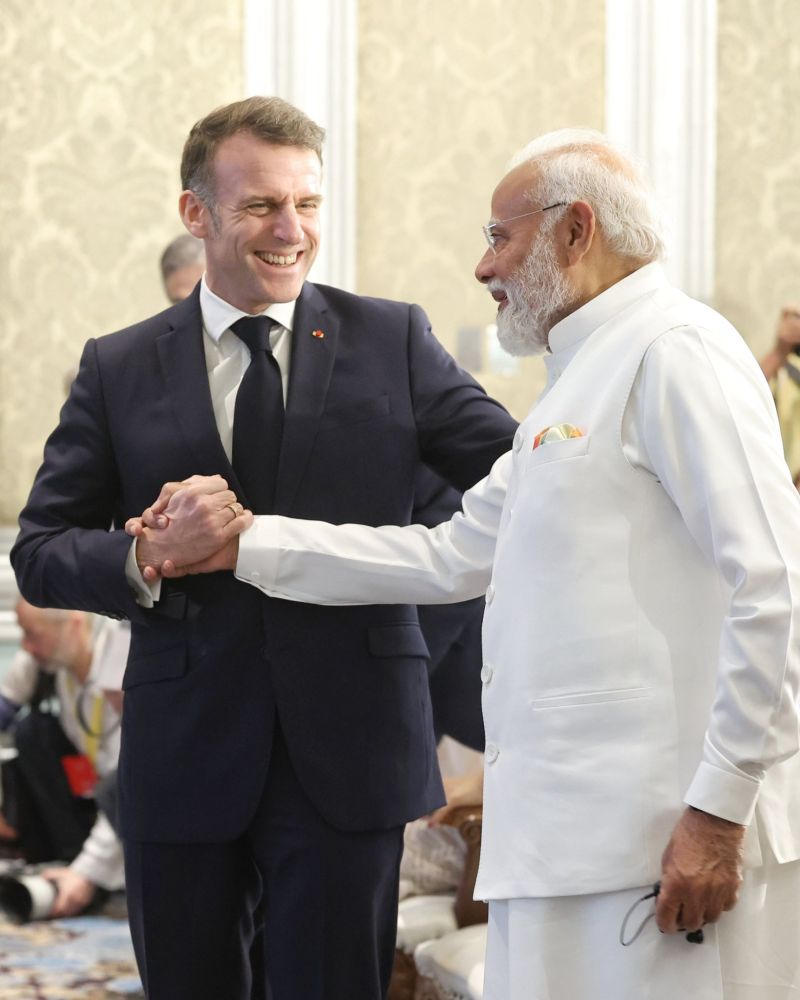
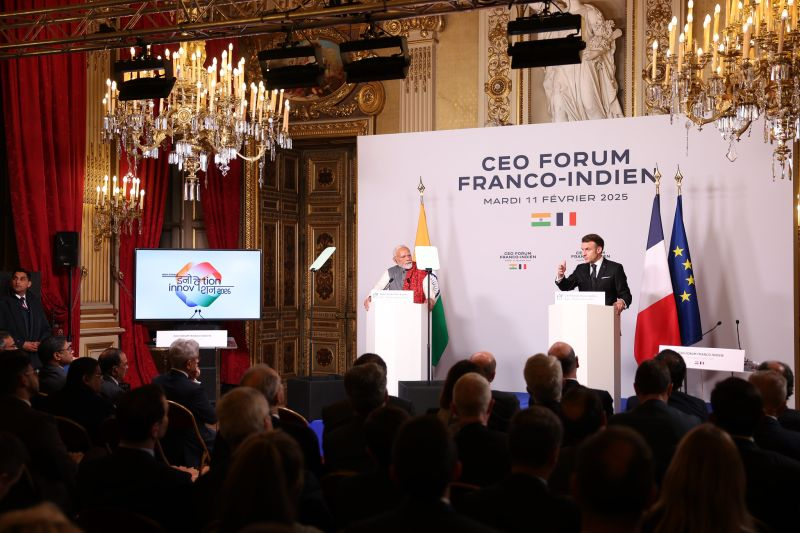
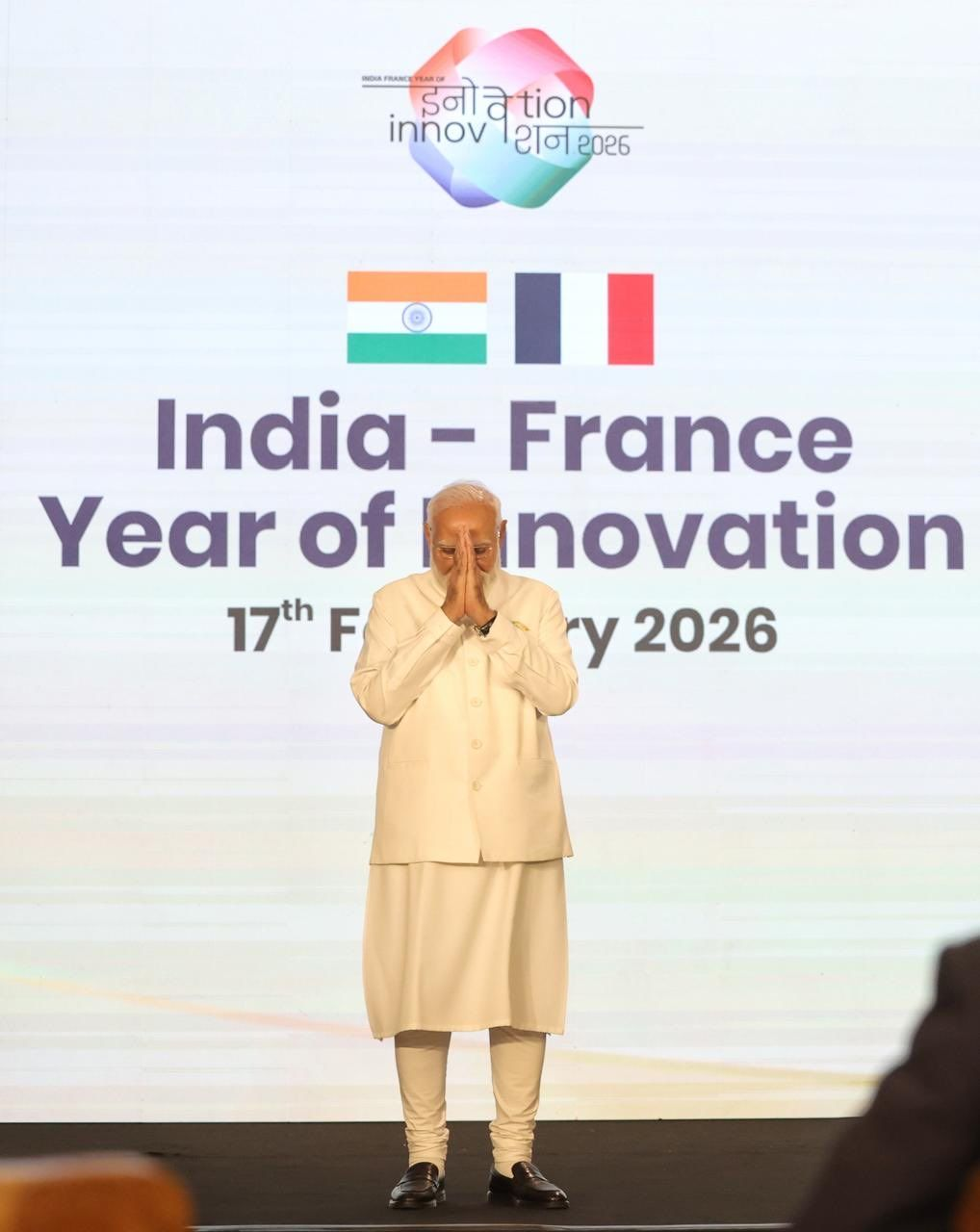
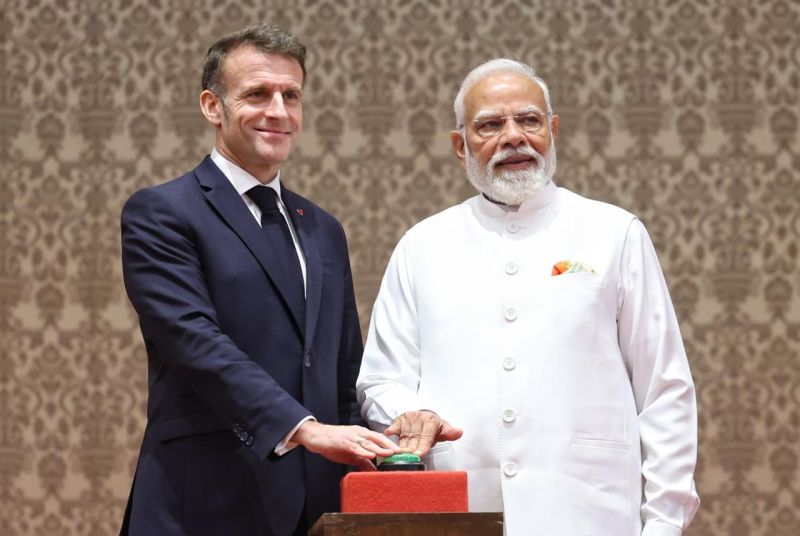
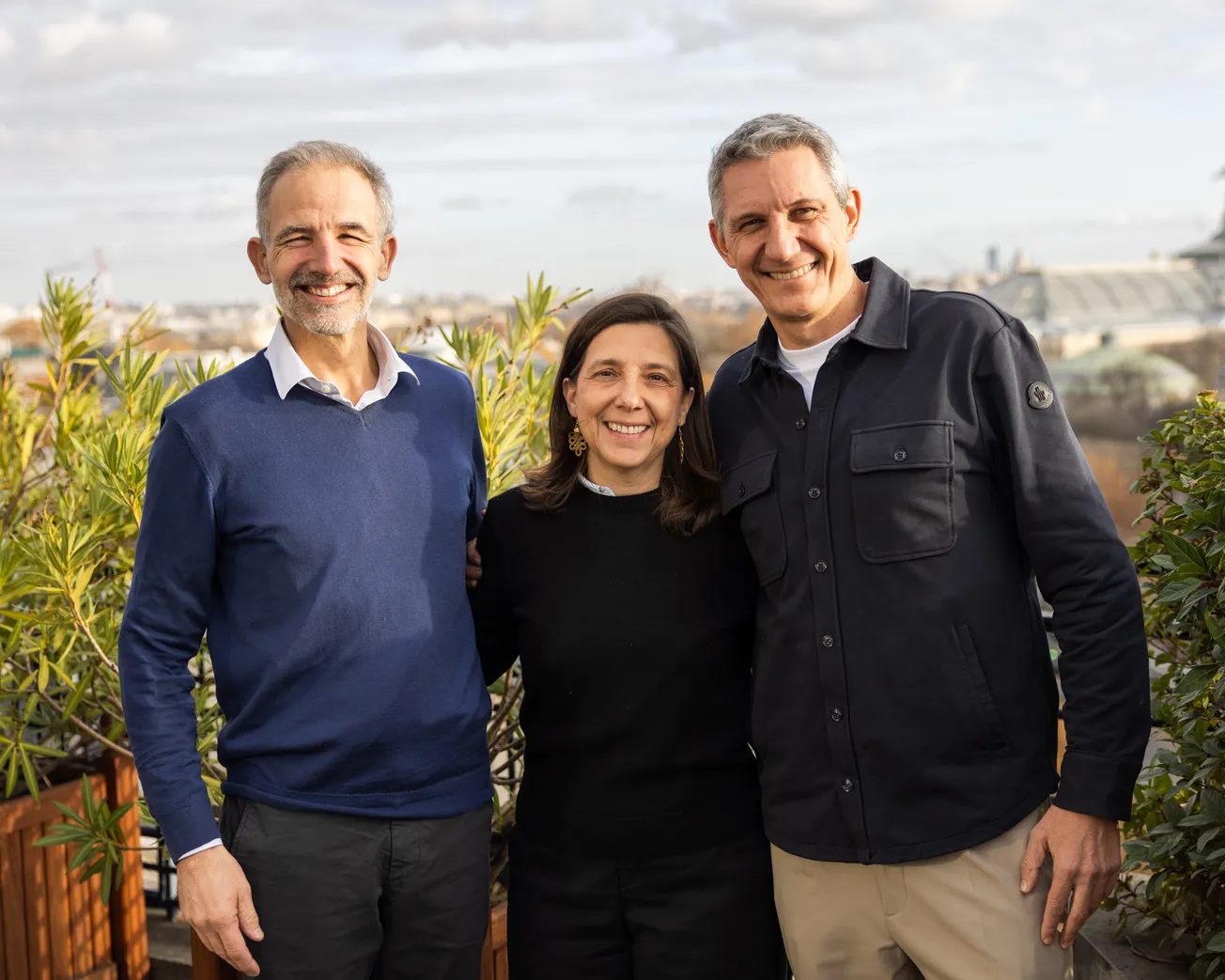
Photos by French Embassy in India via LinkedIn
Flagship projects include a Franco-Indian Campus for Training and Professional Skills Development in Aeronautics, AI-powered healthcare research bringing together institutions from both countries, and cross-sector work on hydrogen, electric vehicles, and the circular economy. Think of it as the bilateral relationship's to-do list for 2026: ambitious, specific, and, if the mood in New Delhi is anything to go by, backed by genuine political will on both sides.
That's because a year on from the Paris summit, Macron said, the landscape had shifted dramatically.
"The US announced Stargate. China launched DeepSeek. AI has become a major field of strategic competition, and big tech has gotten even bigger. Hegemony from any quarter is not a fatality," he said. "There is a path for innovation, independence, and strategic autonomy, and this path, I'm convinced, is one that countries like France and India must take together."
The meat of the speech was a detailed tour of what that path looks like in practice.
On infrastructure, Macron pointed to France's record of AI investment, which is part of its €54 billion France 2030 innovation program and "powered by our decarbonated nuclear energy." He noted that last year, France exported 90 terawatt-hours of low-carbon energy, a significant competitive advantage for building data centers at scale.
On AI models, he celebrated both nations' different but complementary approaches: India's "granular and smart" small language models designed to run on smartphones; Europe's "sovereign and scaled" large language models, including Paris-born Mistral AI, now valued at €12 billion.
"India chose granular and smart, and Europe chose sovereign and scaled," he said. "But both chose independence, and both were right."
On talent, he pointed to India's 500,000-strong developer community, the second largest in the world, and France's own push, doubling the number of AI scientists and engineers in training. He also flagged an ambitious bet on quantum computing, with four French companies working across four different technologies, calling it part of an ambition "to make Europe a quantum power."
The two countries are not just talking.
open-source translation tool for A joint statement issued by both governments formalized a raft of concrete commitments. Most significantly, Modi and Macron agreed to elevate relations to a "Special Global Strategic Partnership," a deliberate upgrade in diplomatic language designed to signal that this is a relationship built for the long haul. The statement described the move as reflecting "the growing ambitions and vision shared by the two leaders on the India-France relationship, to act as a force for global good."
On AI specifically, the joint statement reaffirmed "their commitment towards a secure and trustworthy AI serving people, public interest, planet and the progress of our peoples," while also endorsing "democratizing AI resources through openness and bridging the global AI divide as important principles."
They also announced an open-source translation tool for Macron's itinerary and France's delegation stretched far beyond just the main New Delhi conference hall to include stops in Mumbai and Bangalore, with visits to universities, business centers, and research institutes.Indian languages and dialects, reflecting Macron's point in his speech that "AI that doesn't understand dialects is not AI for all."
One of the more pointed moments of Macron's speech came when he took a gentle swipe at Europe's reputation as a regulatory killjoy:
"Opposite to what some misinformed friends have been saying, Europe is not blindly focused on regulation. Europe is a space for innovation and investment, but it is a safe space, and safe spaces win in the long run."
He closed the keynote where he began — with the Mumbai street vendor — and drew a direct line to the present moment.
"Today, some say AI is a game only the biggest can play, that you need $400 billion to be in the race, that nothing can exist between the two blocks," he said. "India, France, Europe, together with our partners… might have a different way." The money race matters, he conceded, but "the outcomes and the real value creation for our population is even more." The old world, he concluded, says you compete or you lose. "The new world says you connect or you fall behind."
Beyond the Summit
Macron's itinerary and France's delegation stretched far beyond just the main New Delhi conference hall to include stops in Mumbai and Bangalore, with visits to universities, business centers, and research institutes.
That included a high-level stop at the All India Institute of Medical Sciences (AIIMS), one of India's most prestigious research hospitals, for what both sides described as a session aimed at "structuring the scientific partnerships of tomorrow" between the two countries.
The highlight of the visit was the inauguration of the Franco-Indian Centre for AI in Global Health by President Macron, a joint initiative of AIIMS, Sorbonne University, and the Paris Brain Institute. The center will be in a new 5,000-square-foot building on the AIIMS-Delhi campus.
Researchers on both sides have already been working together for two to three years on AI-assisted diagnosis of Parkinson's disease, ophthalmic disorders, and neuromodulation, and the center is designed to formalise and scale that collaboration. "The vision is to combine AIIMS's clinical and research expertise with the AI capabilities of French institutions to strengthen early detection and diagnosis of complex diseases, particularly neurodegenerative disorders," said Dr. S Senthil Kumaran, professor at AIIMS-Delhi's Department of Nuclear Magnetic Resonance, in a statement.
Crucially, the center is designed not just as a bilateral project between two flagship institutions but also as a connective hub for the broader 20-campus AIIMS network across India, providing French partners with a potential pipeline into one of the world's largest clinical research ecosystems. One of the more striking applied goals is the development of portable, low-field MRI systems that could be deployed to district hospitals or mounted on mobile units for rural areas.
During Macron's keynote and at events on the sidelines, the French delegation also pursued one of Macron's most personal themes: protecting children in the age of AI. Macron used the summit stage to push hard for a new international coalition to protect minors from AI and social media harms, making it one of France's G7 presidency priorities.
"There is no reason our children should be exposed online to what is legally forbidden in the real world," he said, describing his push to ban social networks for under-15s in France and inviting India to join what he called "a new coalition of willings in order to protect our children and teenagers." He added, "Protecting our children is not regulation. It is civilization."
At a dedicated event organized at the French president's request, Anne Le Hénanff, Minister in charge of Artificial Intelligence and Digital Technology, launched an international call for scientific contributions to help shape recommendations on child safety in the era of generative AI.
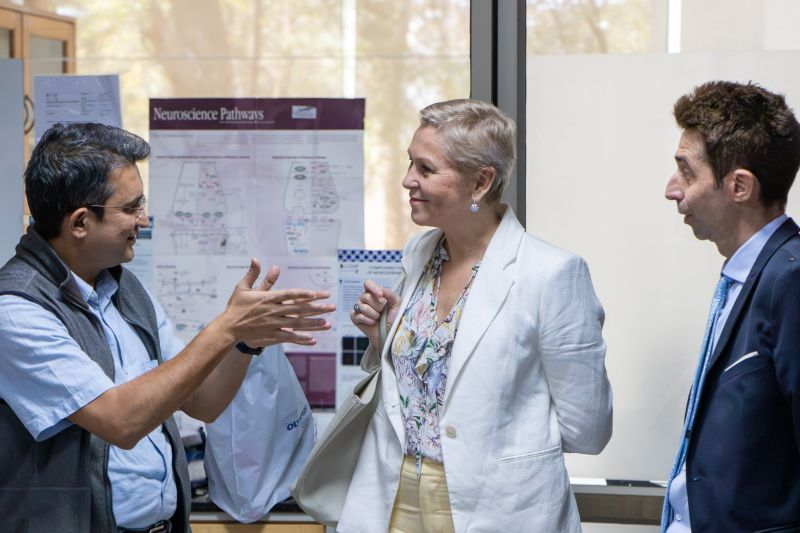
The initiative calls for the creation of a dedicated expert commission to assess the risks of generative AI to the general public. The scientific findings will feed directly into France's G7 presidency agenda, with Clara Chappaz, France's Ambassador for AI and Digital Affairs, coordinating the process alongside the commission.
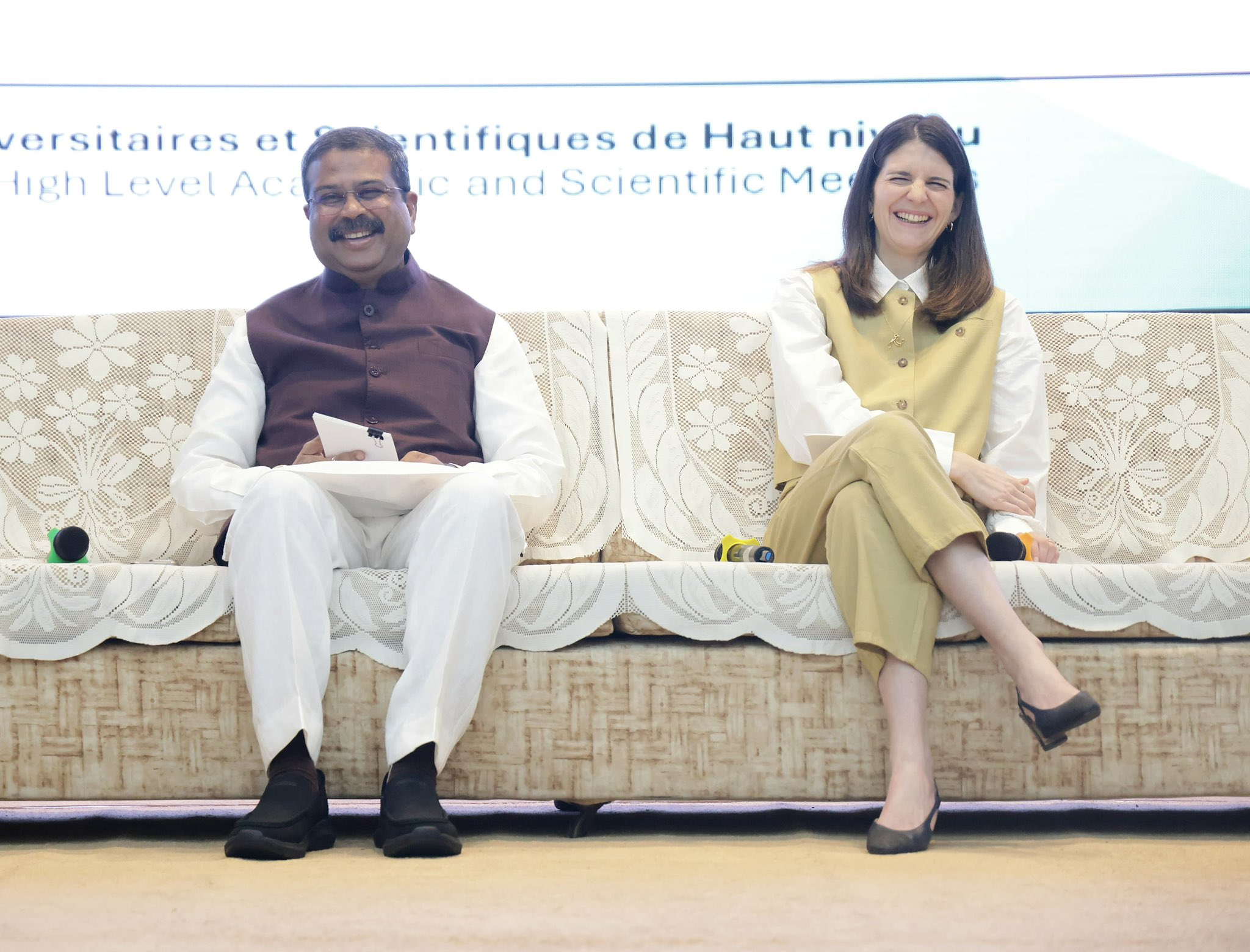
On the education front, France's ESSEC Business School also used the occasion of Macron's visit to officially open a new hub in Mumbai, its third international outpost after London and New York. The new campus is designed to deepen ties with Indian academic institutions, local businesses, and its alumni network in the country.
The school simultaneously announced a double-degree programme with IIM Bangalore, allowing students to earn both ESSEC's Master in Management and IIM Bangalore's MBA, as well as expanded student mobility initiatives with the Indian School of Business.
The Mumbai hub also serves as the anchor for a broader collaboration with engineering school CentraleSupélec, whose joint "STEM-B" programs — combining business and scientific expertise — are positioned as a direct response to what both institutions see as the skills India's industries will need most in the years ahead.
Let's Make A Deal
The summit wasn't just a talking shop for heads of state. It was also a deal-making moment for French startups, with La French Tech mission and Business France using the occasion to announce a flurry of new India partnerships.
The most high-profile was H Company, the Paris-based AI startup founded in 2024 that has raised $220 million from investors including Accel, AWS, Eric Schmidt, and Bernard Arnault.
Macron personally name-checked the partnership in his keynote: H Company is teaming up with Bangalore's St. John's Research Institute, a hospital that sees between 2,000 and 3,000 patients a day, to deploy what the company calls "virtual humanoids," AI agents that can execute computer-based tasks autonomously, from scheduling nursing staff to managing absences and reallocating teams.
The pitch: today, 50-60% of hospital staff time is spent on repetitive computer tasks. H Company wants to claw that time back for patient care. "Our objective is to significantly reduce this burden, free human potential and lay the foundations for a new generation of systems capable of operating autonomously, securely and at scale," said CEO Gautier Cloix in a statement. Data stays within the hospital and is processed locally, a detail that matters in a healthcare context.
The summit week also saw French defence and technology giant Thales announce the launch of Thales Research & Technology India in Bengaluru, making India the fifth country, alongside France, the UK, Canada, and Singapore, to host one of the company's global corporate research laboratories.
The center, embedded within Thales's existing Engineering Competence Centre in Bengaluru, will focus on real-time embedded software, edge computing, and embedded AI, with a dedicated team of researchers including Master's and PhD scholars, and a mandate to collaborate with startups, academic institutions, and industry partners.
Thales, which has been present in India since 1953 and invests more than €4 billion annually in R&D globally, framed the launch explicitly around the India-France Year of Innovation 2026 and its commitment to what it called "Make in India, Innovate in India, Export from India."
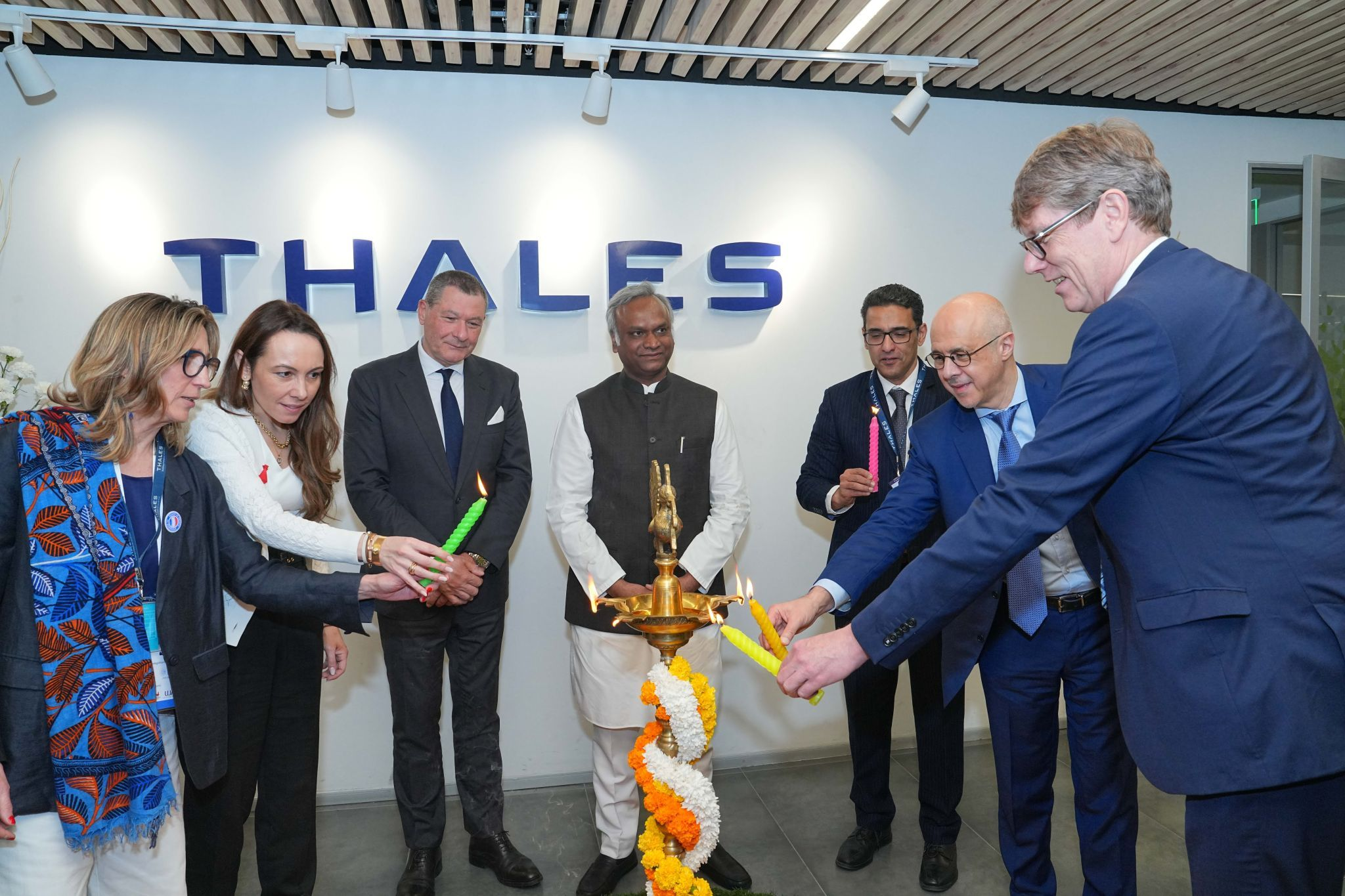
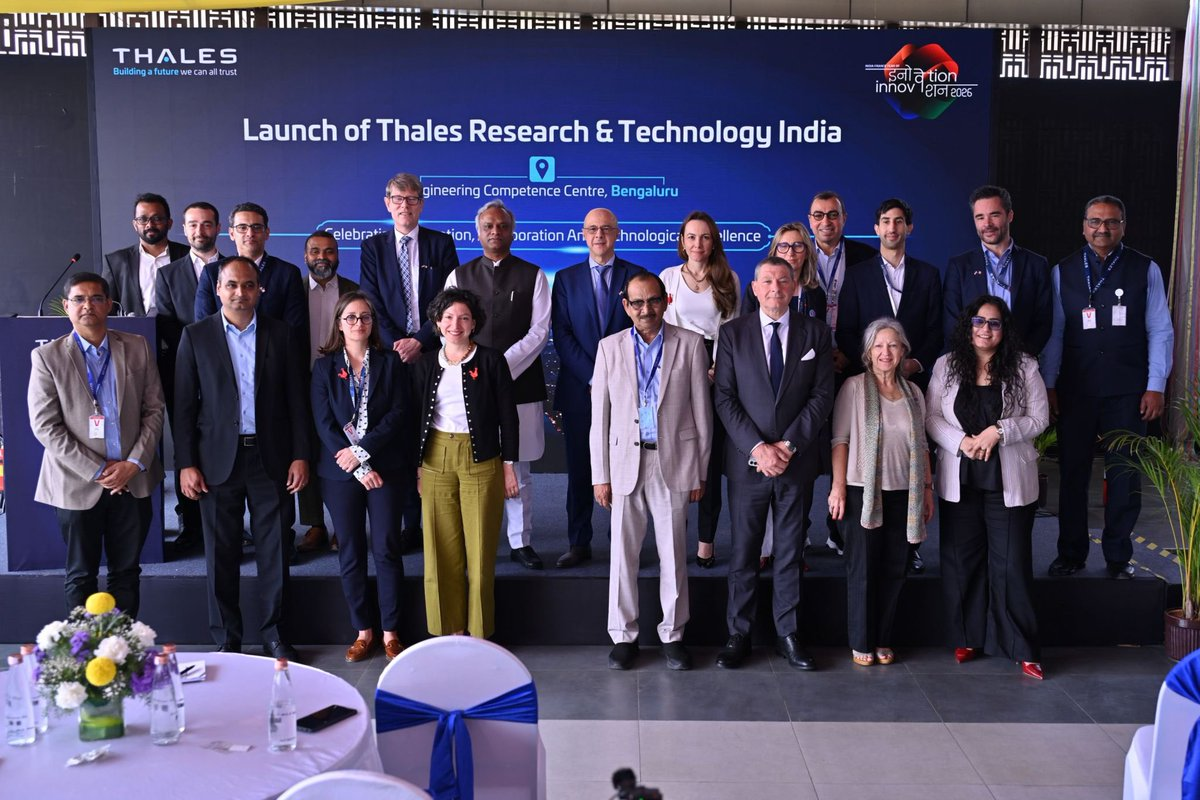
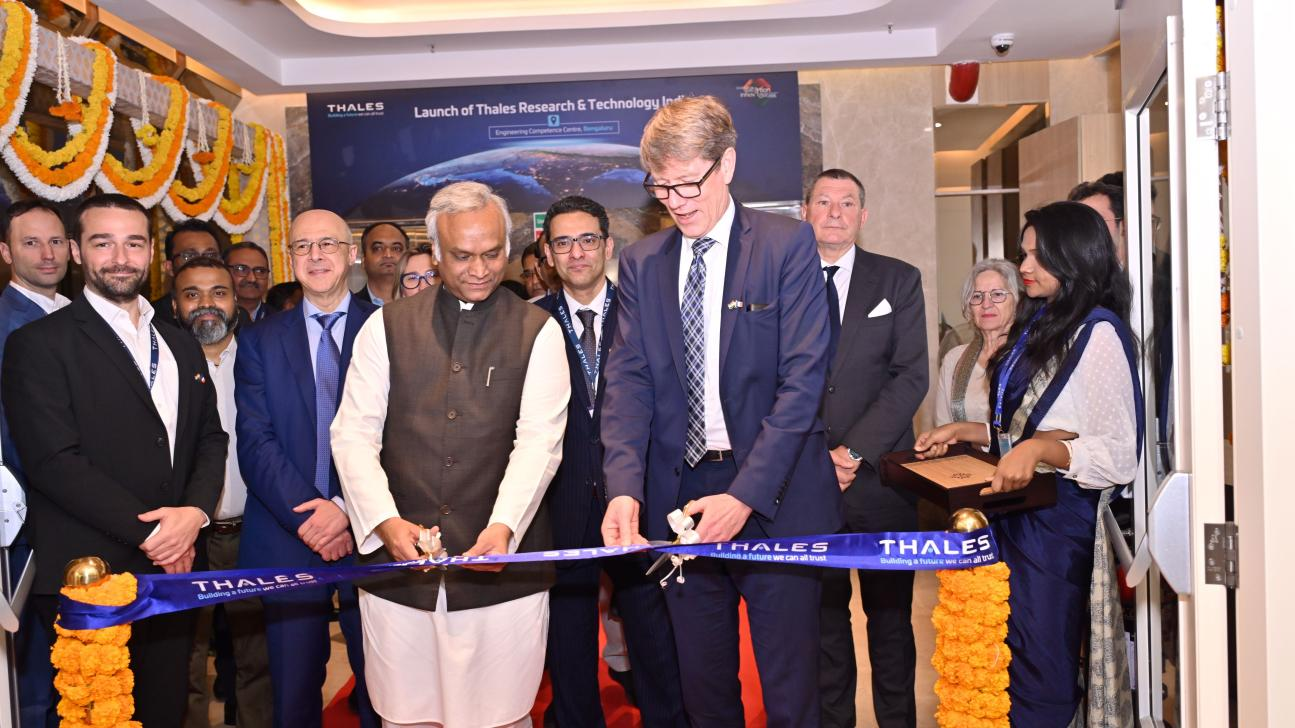
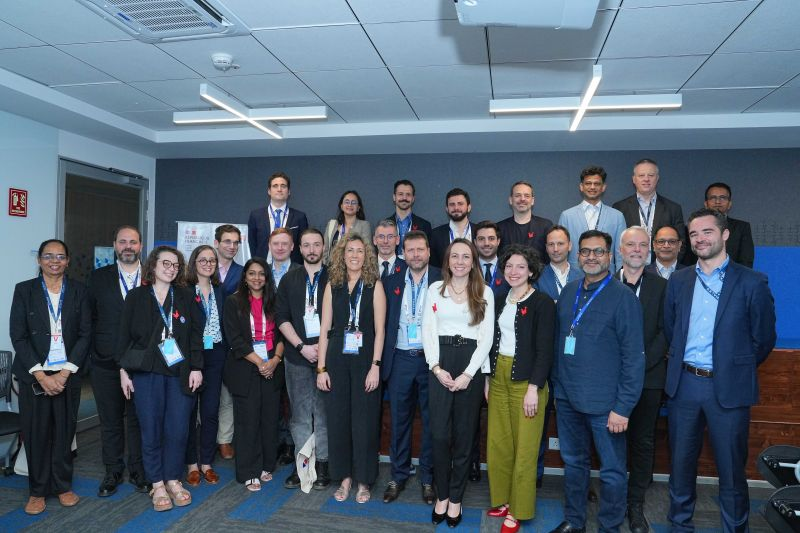
Photos via La French Tech page on LinkedIn and Thales PR
Beyond health, the French Tech showcase in India spanned several sectors. Cybersecurity firm Sekoia.io (French Tech 120) announced a strategic partnership with Indian cybersecurity leader Sibersentinel to protect critical national infrastructure using AI. Mobility startup Dessia Technologies (French Tech 2030) signed an MoU with GT Solve, an Indian engineering specialist for new mobility, to accelerate vehicle design.
And in a nod to the bilateral relationship's space angle, Exotrail (French Tech 120) and Skynopy (French Tech 2030) both formalized strategic partnerships with Indian national champions, positioning themselves as players in India's fast-growing space sector.
Meanwhile, airship logistics company Flying Whales (Next 40) partnered with Indian logistics leader TCI to deploy its low-carbon heavy transport solution in what it described as its third global hub.
The deal flow was the product of deliberate groundwork.
Ahead of the Delhi summit, La French Tech India and Team France Export gathered French and Indian quantum and AI companies at the French Consulate in Bangalore, where Minister Le Hénanff oversaw exchanges that organizers described as illustrating "the strong complementarity between our two ecosystems — on one hand, recognized French technological solutions; on the other, a unique market and scalability."
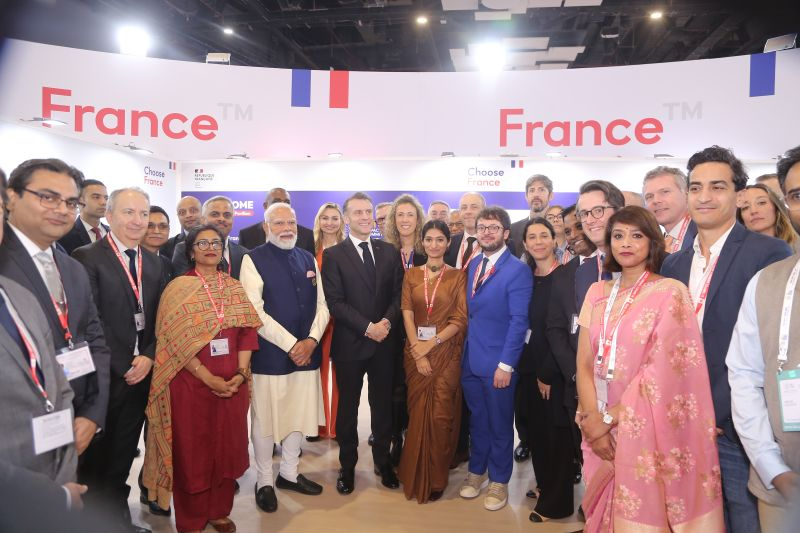
President Macron also met with Alexandr Wang, Chief AI Officer at Meta:
Emmanuel Macron on Twitter: "Constructive exchanges with@alexandr_wangof Meta at the Delhi AI Summit. We discussed the opportunities offered by France: talent, research and data centres. In two words: choose France! We also reviewed the measures to protect the youngest users on social networks, in particular the one I am championing to ban access for those under 15. Good news: Meta intends to move forward with us."
Alexandr Wang on Twitter: "Thank you President Macron for a constructive dialogue. Our FAIR office in Paris has been an important part of our AI efforts, and we’re excited to keep building there. France continues to have much to offer for the development of AI and I look forward to continuing to work with you on it and to better understand your specific youth proposal."
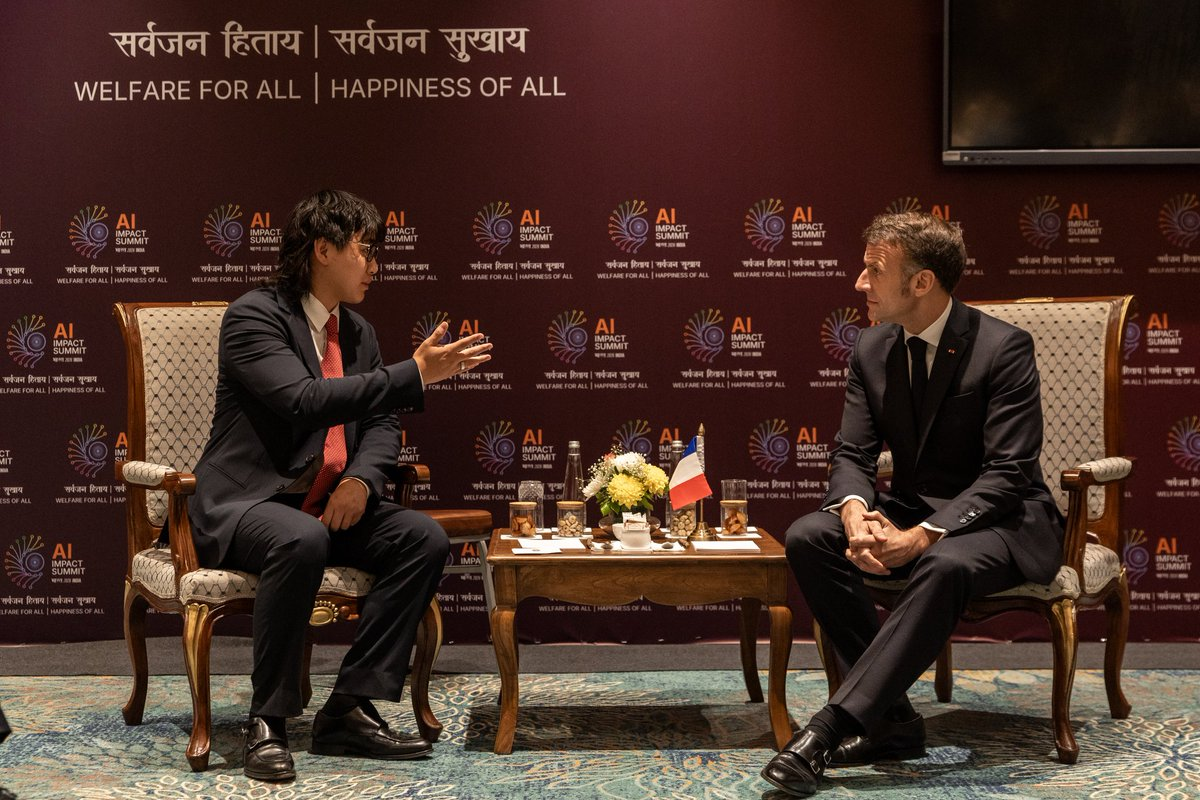
Macron met with Anthtropic CEO Dario Amodei.
Macron on Twitter: "With@DarioAmodei from Anthropic, we share the same ambition: to create an environment conducive to the emergence of a safe and beneficial artificial intelligence for all. Help, but never harm, as Claude would say. See you at Choose France and then at the G7!"