
Edito: France AI in 2026
Welcome back to French Techland, where we're getting ready for another year of AI-palooza...at least until the bubble pops...

As we plug back in, here are some of the major themes we expect to be following this year...
1. France’s AI strategy intensifies
France continues to push an expansive national strategy for artificial intelligence, reinforcing its long-term, multi-phase plan under France 2030 and broader strategic vision for digital sovereignty. This includes strengthening AI research, building computing infrastructure, supporting AI startups, and institutionalizing frameworks for trustworthy, high-impact AI.
2. Governance & regulatory context shaping 2026
Alongside strategy, ongoing discussions revolve around governance, data quality, and industrial adoption norms, with AI increasingly framed as part of broader debates on digital sovereignty, ethical standards, and economic competitiveness in Europe.
3. Mistral AI remains a headline French AI champion
Mistral AI continues to be one of France’s most-watched AI companies in 2026. The firm has grown rapidly, with significant deployments of its LLMs (e.g., the Mistral model family) and an increasingly prominent role in Europe’s competitive AI landscape. It accounted for a massive chunk of the venture capital raised in France last year. Can it continue to compete on the global stage?
4. Broader AI startup landscape continues to expand
Even if the broader French funding landscape is soft, the French AI scene is frothy. International players continue to open offices in Paris to tap into the local talent pool, and late last year, several high-profile startups came out of stealth, including UMA Robotics and Gradium.
5. The Silicon Valley Siren Song
For all the success in France, a big theme in 2025 was the growing conventional wisdom that founders should be in Silicon Valley and San Francisco to launch and scale their AI startups. Several French VCs opened offices there as well. Will that accelerate in 2026?
6. AI adoption transitions to operational maturity
In 2026, AI in France is still an emerging technology. The government and others want to urgently see companies go further, to move beyond pilots and proof-of-concept to strategic deployment governed by compliance and data quality standards. Startup founders often complain that French corporates are slow to adopt new tech, and cite that as a key reason for relocating to the U.S. Policymakers worry about big enterprises remaining competitive.
But for now, in this edition:
🧠 Europe and France enter 2026 facing a transatlantic AI fracture with the U.S. The most recent schism revolves around Elon Musk's X platform, which has been spewing hate speech, conspiracy theories, and now, nude deepfakes. Efforts to crack down have been met with retaliation by the U.S. government. The fundamental question in 2026: Can Europe enforce its regulatory vision when the world's most powerful technology companies are headquartered in a country whose government now treats European regulation as hostile action?
🧠 Microsoft has given a Golden Ticket to 15 new startups to its GenAI startup studio in Paris. Let's see who they are.
Chris O'Brien + Helen O'Reilly-Durand

ISO 27001 is the gold standard for information security—but getting certified can feel like navigating a maze. That’s why Vanta has created a straightforward ISO 27001 Compliance Checklist to help you cut through the complexity and take action with confidence. Whether you're starting from scratch or refining your existing program, this resource lays out exactly what you need to do—step by step.
Headlines
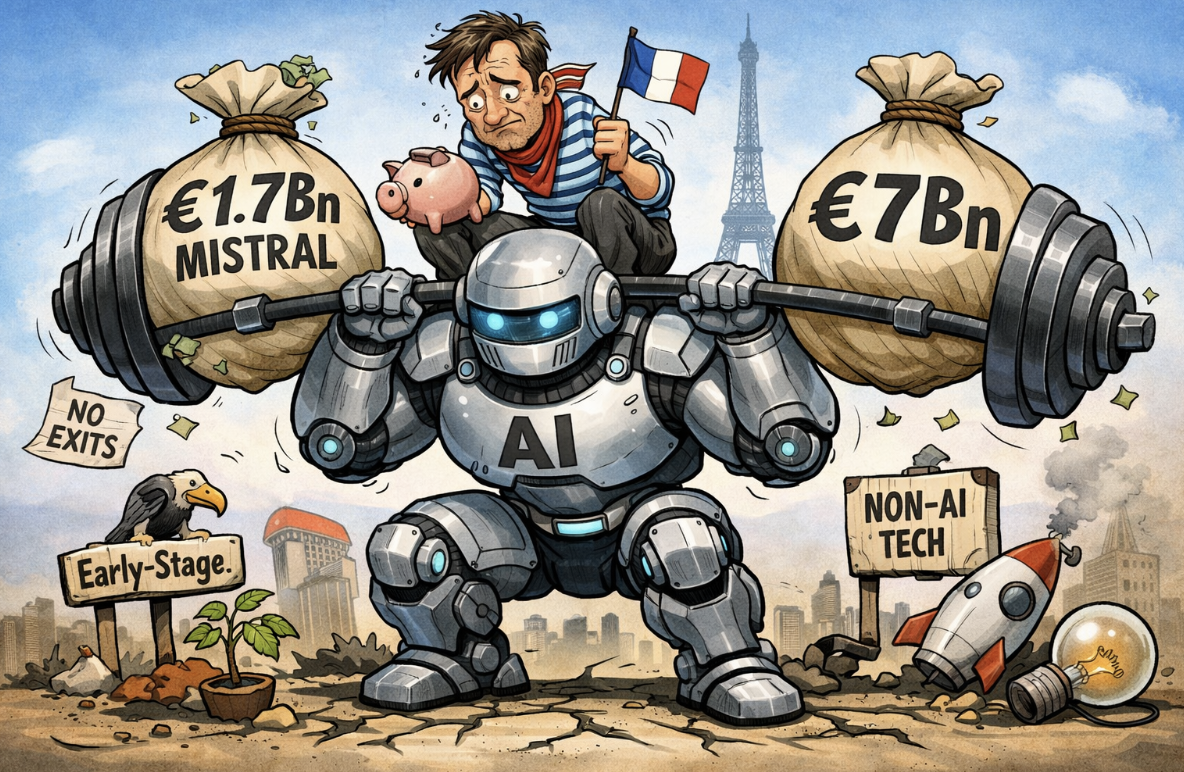
🗞️ French Tech Raised €7bn in 2025...But AI Did the Heavy Lifting. After two bruising years, French startup funding finally stabilized in 2025 at around €6.8bn, roughly flat year on year. Scratch the surface, though, and the picture looks more fragile. Remove Mistral AI’s €1.7bn mega-round, and total funding drops closer to €5.1bn. The result is an ecosystem still reliant on a handful of outsized AI deals. Early-stage rounds remain under pressure, exits are scarce, and non-AI sectors continue to struggle. Stability, yes, but powered less by broad recovery than by a concentrated AI bet. | Maddyness
🗞️ Luc Julia Exits Renault. Another AI Heavyweight is on the Move. The French-American AI pioneer behind Siri and Renault’s AI strategy is leaving the carmaker after nearly five years. Recruited in 2021, Julia helped deliver “Reno,” an LLM-powered in-car assistant rolled out across several EV models. His departure follows a reorganization under Renault’s new leadership, which has integrated innovation into engineering. A vocal critic of generative AI hype, Julia has long championed pragmatic, use-case-driven AI. After Yann LeCun’s exit from Meta, another AI elder is clearly gearing up for what’s next.| Maddyness, Les Echos
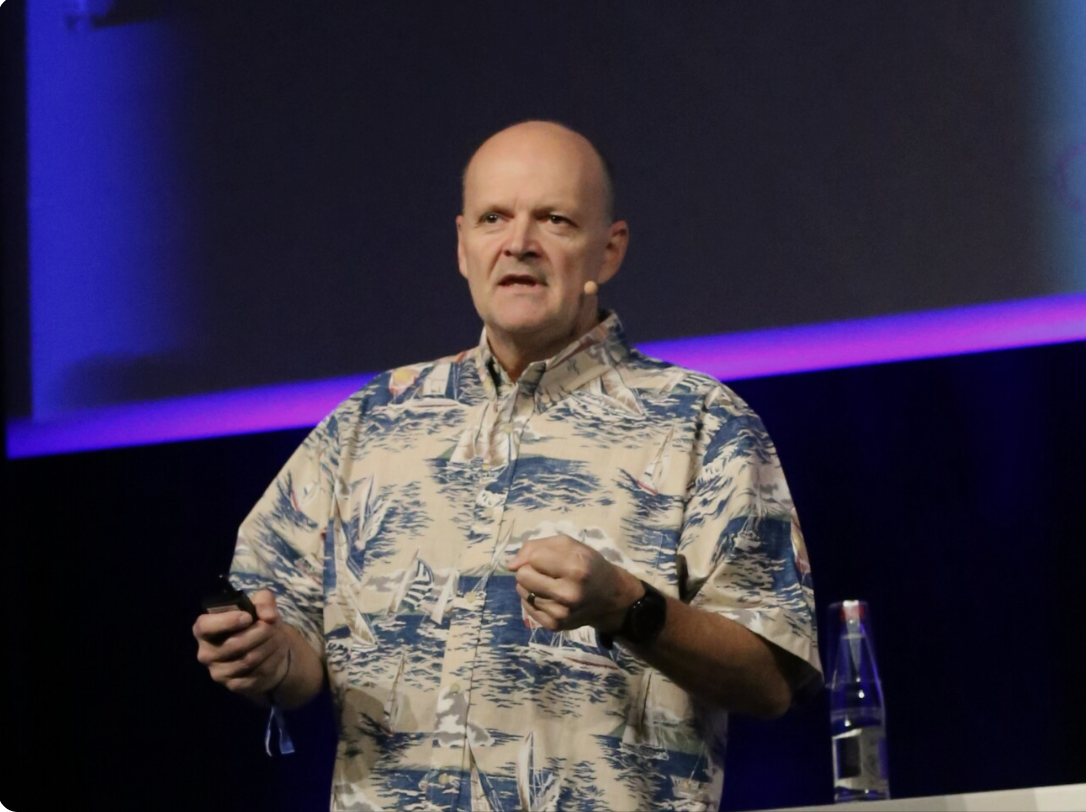
🗞️ Speaking of Yann LeCun, the former Meta’s former chief AI scientist, got tongues wagging thanks to a profile in the Financial Times that included some barbed words for the previous company's AI strategy and leadership, calling its new chief AI officer, 29-year-old Alexander Wang, “young” and “inexperienced.” While acknowledging that Wang “learns fast,” LeCun questioned his lack of research background and warned that he may not understand what attracts or repels top AI researchers. He also claimed Meta CEO Mark Zuckerberg lost confidence in the entire generative AI organization after allegations that the company gamed benchmarks to boost the performance of its Llama 4 model, effectively sidelining key teams. As a result, LeCun predicted a growing talent exodus, saying many researchers have already left and more are likely to follow. He criticized Meta for prioritizing “safe and proved” ideas over bold innovation, arguing that this risk-averse approach will cause the company to fall behind competitors. In his most provocative remark, LeCun said large language models are “basically a dead end” for achieving AI superintelligence, openly challenging the dominant industry narrative. | Financial Times
🗞️ AI Glasses Take Off at CES 2026. After years of testing, smart glasses are poised for a breakthrough, with Meta and Google expecting up to 10 million units sold globally. Equipped with AI assistants, cameras, and audio features, these devices promise convenience and a fresh wave of privacy headaches, as the GAFAM get an even closer look at everyday life. | Les Echos
🗞️ AI Sites Sweep France: A Quarter of the Population Visits Them Monthly. According to Médiamétrie, AI-generated sites now attract 15,7 million unique visitors per month — nearly a quarter of the French online population. From content farms to fake-news hubs, these “GenAI” sites are siphoning traffic and ad revenue from traditional media, often outranking real outlets on Google Discover. At the same time, readers mostly notice in short bursts of scrolling. | Les Echos
Other Headlines
🗞️ Google’s Fabien Curto Millet: “The Only Good News on the Economic Horizon Is AI” | Fabien Curto Millet is Google’s Chief Economist. The French-Spanish expert oversees a unit responsible for a wide range of analyses — from global macroeconomic fluctuations to shifting regulatory environments — to help the tech giant make the best decisions. Unsurprisingly, artificial intelligence and its impact on the economy currently keep him occupied “from A.M. to P.M.” | Le Figaro
🗞️ Can Paris be the next unicorn haven? Station F, Europe’s largest incubator, thinks so. | Parisian startup incubator Station F embodies President Emmanuel Macron’s stated ambition for the country to drive innovation and inspire an overlooked class of business leaders: entrepreneurs. | IBM Think
ICYMI
🗞️ Gradium Wants To Make Voice The New Operating System for AI |The Paris startup, spun out of research lab Kyutai, just emerged from stealth with a $60M seed round to become the global foundation layer for real-time voice interactions. | The French Tech Journal
🗞️ How HyprView Is Using Photonics And AI To Bring Cancer Diagnostics Into the Light | Thanks to developments in AI, photonics is stepping out of the lab and into the clinic. HyprView uses light to uncover the invisible biology inside tumors - information microscopes miss entirely - opening the door to faster, smarter, and far more predictive cancer diagnostics. | The French Tech Journal
🧠 Europe's AI Reckoning: Caught Between Regulation, Rivalry, and Risk

As 2026 begins, France and the European Union find themselves at the center of a perfect storm, facing diplomatic confrontation with Washington, urgent safety crises, and mounting questions about whether their regulatory approach can survive first contact with geopolitical reality.
🧠 Microsoft Unveils 15 GenAI Studio Winners Accelerating Push to Build France’s Next AI Champions
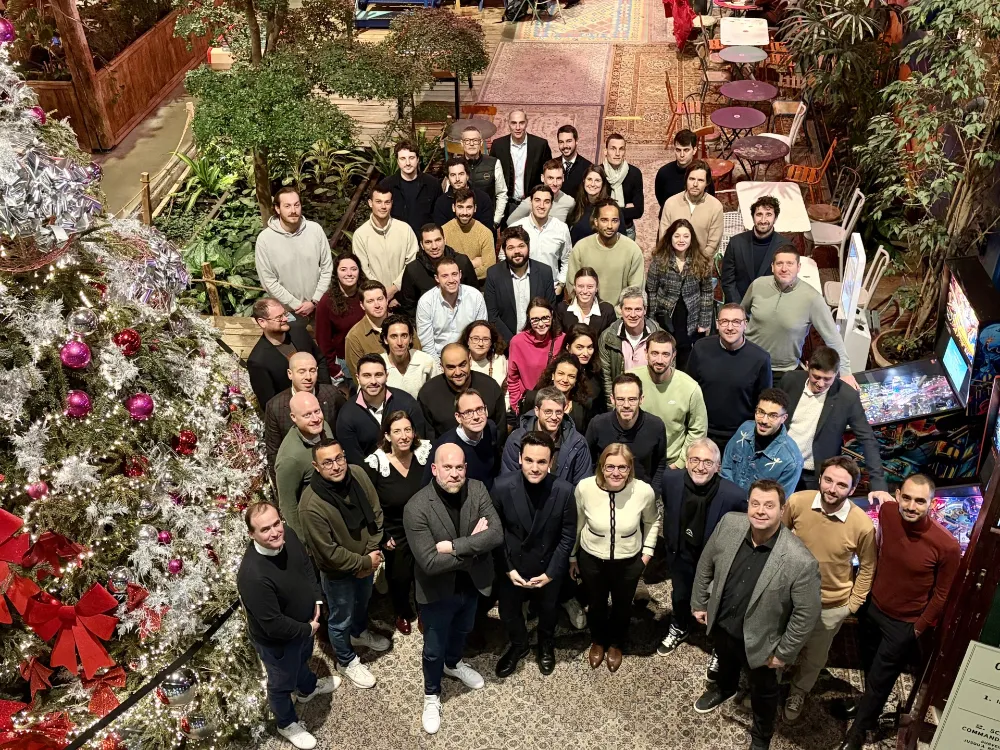
Selected from 180+ applicants, 15 French startups join Microsoft’s GenAI Studio for four months of intensive support, up to $350K in Azure credits, and backing from partners like Mistral AI, NVIDIA, GitHub, and ENGIE.
Want to reach an audience of more than 30,000 readers each month? The French Tech Journal is the leading English-language media platform covering France's dynamic tech ecosystem. With 31,000 + engaged readers across key global markets and consistently high engagement rates, our sponsorships provide unparalleled access to decision-makers in French tech.
👋🏻 If you’re enjoying The French Tech Journal, support the project by forwarding it to friends and sharing it on your social networks. You can also comment on this post. And if you have ideas for stories, tips, or just want to harass us, shoot us an email: [email protected] / [email protected] 👋🏻