In this edition:
🧠 UMA, a Paris-based robotics startup founded by veterans from Tesla, Google DeepMind, Hugging Face, and other AI leaders, just emerged from stealth with the bold mission of building general-purpose mobile and humanoid robots designed for real-world work. The team argues that Europe’s industrial strength, aging workforce, and skilled talent pool make it the ideal place to lead the next era of autonomous machines, challenging Silicon Valley and Asian giants. Backed by high-profile investors and aiming for industrial pilot programs as early as 2026, UMA’s audacious bet is to turn advanced AI into physical autonomy at scale. We dive deep into the founders' technical background, their vision, and the challenges they face.
Chris O'Brien + Helen O'Reilly-Durand

ISO 27001 is the gold standard for information security—but getting certified can feel like navigating a maze. That’s why Vanta has created a straightforward ISO 27001 Compliance Checklist to help you cut through the complexity and take action with confidence. Whether you're starting from scratch or refining your existing program, this resource lays out exactly what you need to do—step by step.
Headlines
🗞️ LightOn, Europe’s would-be sovereign GenAI champion, has trimmed its FY 2025 ARR ambitions to around €2 million (Yes, million, not billion), blaming the global GPU shortage, which is the modern AI economy’s equivalent of running out of electricity. Demand for secure, on-prem and “sovereign” AI is booming, the company says, but customers can’t deploy fast enough because there simply aren’t enough high-end graphics cards to go around. In response, LightOn has rolled out workarounds: alternative GPUs, hybrid architectures, and a very on-message partnership with French GPU provider Oreus to keep data sovereign and regulators calm. Still, hardware delays mean slower contract signings, pushing profitability back to late 2026 and quietly nuking earlier EBITDA hopes. | LightOn filing
🗞️ France’s defense apparatus is going all-in on AI, handing Airbus Defence and Space a framework contract worth up to €50 million to inject machine intelligence into weapons systems, networks, and cyber defenses. Officially, this is about “sovereignty” and avoiding reliance on foreign tech; unofficially, it’s an admission that modern warfare now runs on algorithms that can digest oceans of sensor data faster than any human ever could. The first test case is maritime surveillance, where AI will fuse satellite and naval data in near real time, with intelligence and cybersecurity next in line. Again, the message is that it's very, very important to maintain sovereignty when it comes to defense and security... | Airbus PR, Reuters
🗞️ Palantir has quietly but firmly re-upped its contract with France’s domestic intelligence agency, DGSI, locking in another three years of algorithmic partnership that’s now approaching the decade mark. (But wait, I thought you, just said that sovereignty...oh, never mind...) Paris is still leaning on Palantir’s data-fusion and AI platforms for counterterrorism and large-scale security operations, including the 2024 Olympics. The company, riding a 142% stock surge and eye-watering margins, frames the deal as sovereignty-friendly, even as a US firm remains embedded at the heart of French intelligence workflows. M'kay. | Investing.com
🗞️ Oracle’s AI Dream Hits Reality Check and Drags Markets With It. Just three months after Wall Street went all-in on Oracle’s AI-fueled growth story, investors hit the brakes. The enterprise tech giant slid more than 7% after posting quarterly revenues below expectations, triggering knock-on effects across Asian markets. Following the Oracle trend, shares of AI infrastructure darlings Broadcom and CoreWeave also slid again as investors balk at the eye-watering cost of powering the AI boom. Oracle alone plans to spend $50B on capex this year, sits on $248B in long-term data-center lease commitments, and has lost 46% of its market value since September amid growing debt fears. Broadcom, despite forecasting $8.2B in quarterly AI chip sales, warned margins will take a hit, while CoreWeave is down over 60% from its June peak. AI demand is still exploding, but markets are no longer blindly cheering the balance sheets required to sustain it. | CNBC, Les Échos
🗞️ Deepfakes, Troll Farms and Election Season: France Becomes Prime Real Estate for AI-Powered Disinformation. With municipal and presidential elections looming, France is seeing a surge in coordinated fake-news campaigns, with many linked to Russia and turbocharged by AI. According to NewsGuard, 53 false narratives have already been identified this year, including 30 tied to the “Matriochka” operation impersonating French media and 18 linked to Storm-1516, a Russian influence network. From fabricated presidential scandals to viral absurdities, the scale is growing fast, while France’s response remains cautious, if not timid. | Les Échos
🗞️ The French government is rolling out a new “price alert” system in spring 2026 to hunt down absurd price gaps in public procurement because, hey, apparently someone just noticed that €230 billion a year is real money. The plan: let public buyers flag overpriced items in real time, force central purchasing bodies to align prices, and save a targeted €850 million in 2026. To make this work at scale, the state plans to lean on AI to scan tenders, compare like-for-like products, and spot anomalies faster than any human buyer ever could. Add a dose of “Buy European” digital sovereignty (there's that magic word again!), name-checking Mistral and, well, what's not to love? | Le Parisien
🗞️ From Founder Exodus to Palantir Playbook: H Reloads to Become France’s B2B AI Heavyweight. Six months after appointing former Palantir France boss Gautier Cloix, H Company is staging a comeback following a turbulent 2024 marked by a $220M raise, founder departures, and a CEO ouster mid-VivaTech. Now flanked by ex-Palantir operators and DeepMind alumni, the startup is betting on “deployed engineers” and low-cost AI agents dubbed “androids” that can use software like humans. With 80 staff across Paris, London, and New York (and headcount set to double), early wins like FDJ, and the U.S. firmly in its sights, H is shifting from chaos to go-to-market mode and aiming squarely at global B2B AI dominance. | Maddyness
🗞️ Microsoft Tells French Companies to Stop Talking AI and Start Shipping. Speaking at the BE 5.0 trade show in Mulhouse, Eneric Lopez, head of AI at Microsoft France, kicked off the group’s nationwide “AI Tour de France,” part of a €4B investment plan unveiled in 2024. The goal: push French firms from experimentation to execution, back 2,500 local startups, and train one million people in AI by 2027. As generative AI reshapes jobs and workflows, Microsoft is positioning itself as both catalyst and coach — urging French businesses to move fast or risk falling behind. | Le Journal des Entreprises
🗞️ And finally, a story of how one French company decided to zag while everyone zigged this holiday AI season. While brands everywhere are stuffing their Christmas ads with shiny generative AI, France’s Intermarché went radically off-trend: it hired humans to make an animated table. And the internet swooned. Its two-minute animated fable about a father who eases his son's fear of a stuffed wolf he receives as a present by telling him the story of a misunderstood wolf. Cut to an animated sequence hand-crafted by Illogic Studios with zero AI shortcuts. The mini-feature has racked up tens of millions of views and glowing praise worldwide.

The timing is brutal for Big Tech: as Coca-Cola and McDonald’s retreat from “creepy” AI-generated holiday spots, this very analog ad is being hailed as proof that emotion still beats automation. Artists, unsurprisingly, are cheering the message that real stories come from time, craft, and people, and not prompts. In an age obsessed with AI efficiency, a year-long, human-made production turns out to be the most viral commercial of all. | EuroNews
ICYMI
🗞️ Gradium Wants To Make Voice The New Operating System for AI |The Paris startup, spun out of research lab Kyutai, just emerged from stealth with a $60M seed round to become the global foundation layer for real-time voice interactions. | The French Tech Journal
🗞️ How HyprView Is Using Photonics And AI To Bring Cancer Diagnostics Into the Light | Thanks to developments in AI, photonics is stepping out of the lab and into the clinic. HyprView uses light to uncover the invisible biology inside tumors - information microscopes miss entirely - opening the door to faster, smarter, and far more predictive cancer diagnostics. | The French Tech Journal
🗞️ Ex-Doctolib Team Deploys AI Agents To Fix France's Dysfunctional Dental System | La Fraise recently raised €3.2M to boost the nation's low quote acceptance rate by using AI to create greater transparency for recommended procedures. | The French Tech Journal
🧠 From Tesla to Paris: UMA's Audacious Bet on European Robotics
When Remi Cadene announced the launch of UMA earlier this month, his phone started buzzing with messages from former colleagues in California. "Even my friends in Silicon Valley were messaging me seeing UMA over the news," he recalled during a recent appearance at the aiPulse conference in Paris. "Incredible, and I'm grateful for all the support, all the energy, and all the visibility worldwide."
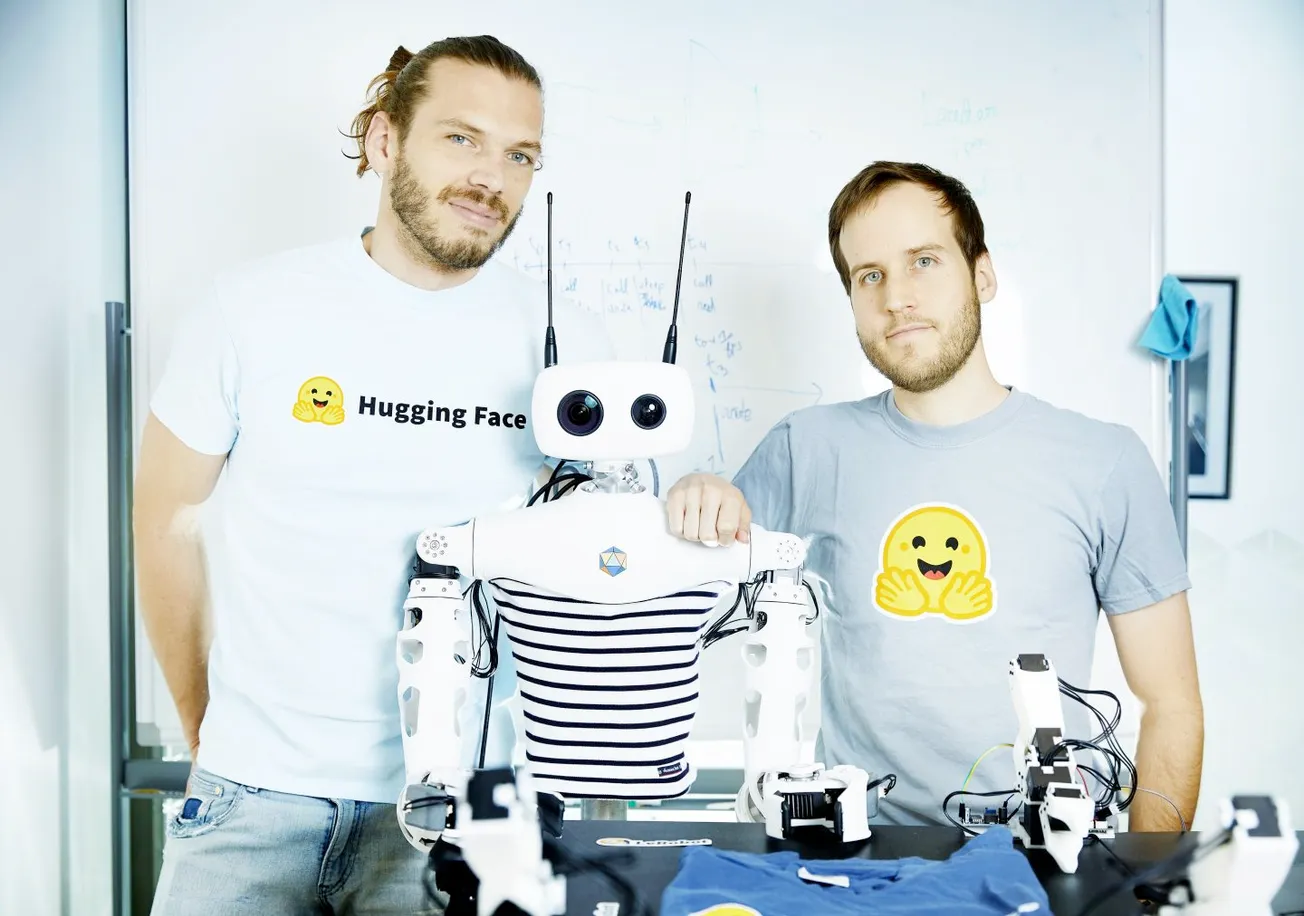
All of this attention is hardly surprising. Cadene spent several years at Tesla helping develop the AI systems behind Autopilot and the company's humanoid robot, Optimus. More recently, he worked at Hugging Face, where he led the development of LeRobot, an open-source library that has become essential infrastructure for robotics worldwide.
Now he has taken all that experience and planted it firmly in European soil, launching what he believes will be the next great robotics company.
UMA (Universal Mechanical Assistant) emerged from stealth on December 1st with Cadene and three other co-founders, a team that one humanoid robotics news site dubbed "The European Robotics 'Supergroup'." They are backed by an impressive roster of investors, including Greycroft, Relentless, and Unity Growth, alongside AI luminaries such as Yann LeCun, Olivier Pomel, and Thomas Wolf.
Cadene believes that Europe is the ideal place to establish a humanoid robotics company, offering both talent and opportunities.
"We are convinced that Europe is the best market for this new technology, and that's something that not a lot of people are aware of," he said at the conference. The argument rests on demographics and industrial structure: "In Europe, we have a historic industrial network. So we are a lot of companies in the industry, and we have very highly qualified people, but an aging society. So there is a critical need for automation, and it's on the mind of all the C-levels in major companies doing business in Europe."
Want to reach an audience of more than 30,000 readers each month? The French Tech Journal is the leading English-language media platform covering France's dynamic tech ecosystem. With 31,000 + engaged readers across key global markets and consistently high engagement rates, our sponsorships provide unparalleled access to decision-makers in French tech.
AI Funding News
📇 Company: GetMint
🔍 Description: Platform SaaS dedicated to helping companies measure, understand, and optimize how they appear in AI-generated answers across major LLMs (ChatGPT, Google AI Overview, Gemini, Claude, Perplexity, etc.). GetMint enables brands to map their AI visibility, analyze recommendation drivers, and deploy actionable plans to strengthen their presence in conversational search.
💻 Website: GetMint
📍 HQ City: Paris
🧗 Round: Pre-seed
💰 Amount Raised: €4M
🏦 Investors: Founders Future (lead), 50 Partners, Kima Ventures, Clover, Better Angle, and several strategic Business Angels
👨💼👩💼 Founders: Joan Burkovic, Matthieu Poitrimolt, Emmanuel Costa
🗞️ News: GetMint raises €4M to become the leading platform for enterprise visibility and SEO within AI models, accelerating product development and go-to-market in France and internationally.
📇 Company: Keria (formerly Cézam)
🔍 Description: Bordeaux-based AI startup building a sovereign, end-to-end platform that automates and objectifies mortgage credit risk analysis. Keria’s proprietary algorithms extract, structure, and evaluate financial data from heterogeneous documents, reducing bias, strengthening compliance, and accelerating credit decisions for banks, brokers, and regulated real-estate professionals.
💻 Website: Keria
📍 HQ City: Bordeaux
🧗 Round: Seed
💰 Amount Raised: €1.5M
🏦 Investors: Xplore by Épopée Gestion, Newfund, Fabien Bréget, Bpifrance
👨💼👩💼 Founders: Emilie de Marne (Founder & CEO)
🗞️ News: Keria raises €1.5M to scale its sovereign AI infrastructure, triple headcount, expand into Europe in 2026, and extend its platform beyond mortgage credit to broader banking and real-estate workflows. | Les Echos
👋🏻 If you’re enjoying The French Tech Journal, support the project by forwarding it to friends and sharing it on your social networks. You can also comment on this post. And if you have ideas for stories, tips, or just want to harass us, shoot us an email: [email protected] / [email protected] 👋🏻