🧠 Europe has the talent, the research, and the ideas to lead in AI, but not yet the scale. In this no-nonsense interview, JFD founder Delphine Remy-Boutang explains why regulation alone won’t save Europe, and why “scale or die” is now the only game in town. –
Chris O'Brien + Helen O'Reilly-Durand
🟡✨ The Big AI Bonanza
Howdy, dear readers.
February in Paris can mean only one thing: artificial intelligence. (What, you were thinking, love? romance? Please. Such analog notions are so 2024.) No, if this month now has a theme, it's AI. And the nation celebrates with AI barometers, ecosystem mappings, closed-door briefings, buzzy conferences at startup campuses, exclusive dinners where the AI hoity-toity can hobnob at the Élysée, and the pending India Impact AI Summit opening in New Delhi on February 16. President Macron will be among those traveling to the big AI hoedown next week.
The conversations this year come with an added splash of existential anxiety as the accelerated pace of AI development made things extra spicy. Is Europe doomed? Is the world doomed? Is this the greatest opportunity of our lifetimes? How do we stop AI? How do we win AI? Is that coffee free?
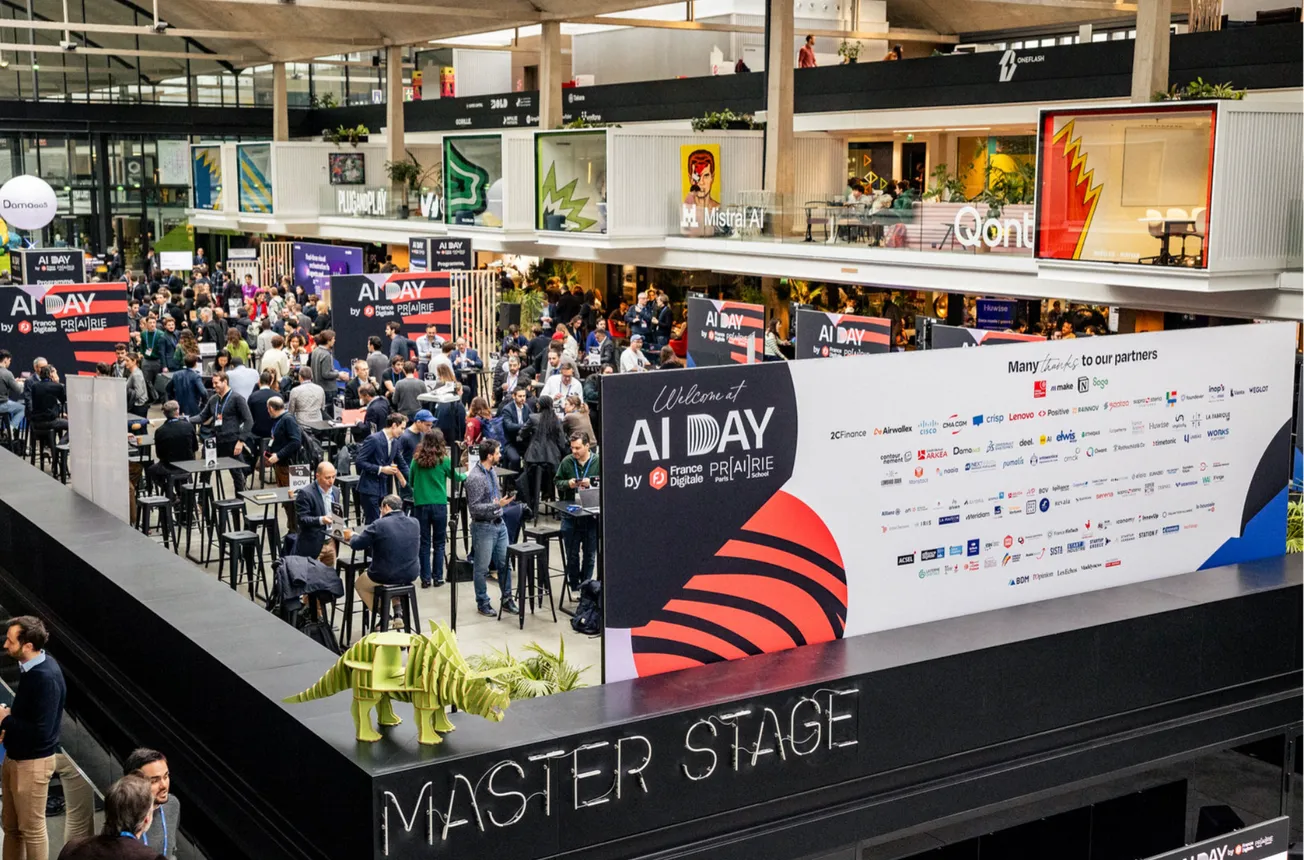
Ground zero for the Great French AI Rodeo this week was Station F, where France Digitale organized its 10th annual AI Day with the PR[AI]RIE AI cluster. The event took place almost a year to the day after Paris’ big AI summit last year that drew world leaders and corporate big shots to the nation.
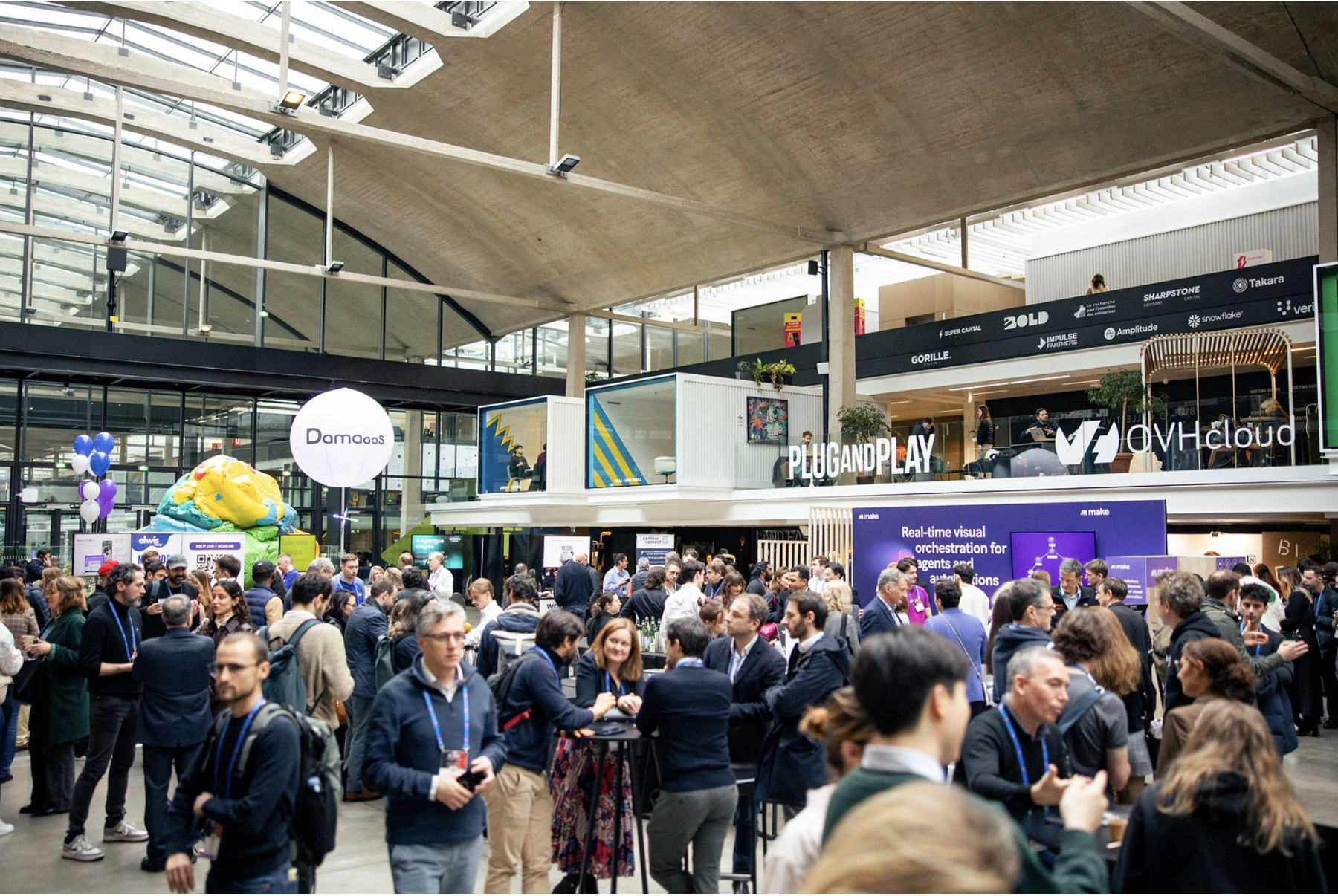
Chris moderated a panel that included one of the lead organizers of the Paris summit, Anne Bouverot, Co-Chair of France’s AI & Digital Council. Joining them was Business France captain Pascal Cagni and Zebox's Frédéric Guilleux. They opened by reflecting on progress made since the summit, including €109 billion in public and private commitments to AI spending, the announcement of several high-profile AI startups, a renewed focus on sovereignty, and recognition of France's and Europe's immense talent and potential.
The big challenges emphasized by both Bouverot and Cagni: big Corporates. While some progress has been made in digital transformation, it remains woefully inadequate. The pair were fairly blunt. AI represents a kind of last chance: If Europe's biggest companies don't seize this opportunity to reinvent themselves, the region risks falling permanently behind.
The day also offered a glimpse further down the road, with Yann LeCun outlining a future of AI systems and robots capable of understanding real-world, real-time environments. In conversations on the sidelines, he hinted that this shift from abstract intelligence to situated, embodied AI may move from theory to practice sooner than we think, with more to come in the months ahead.
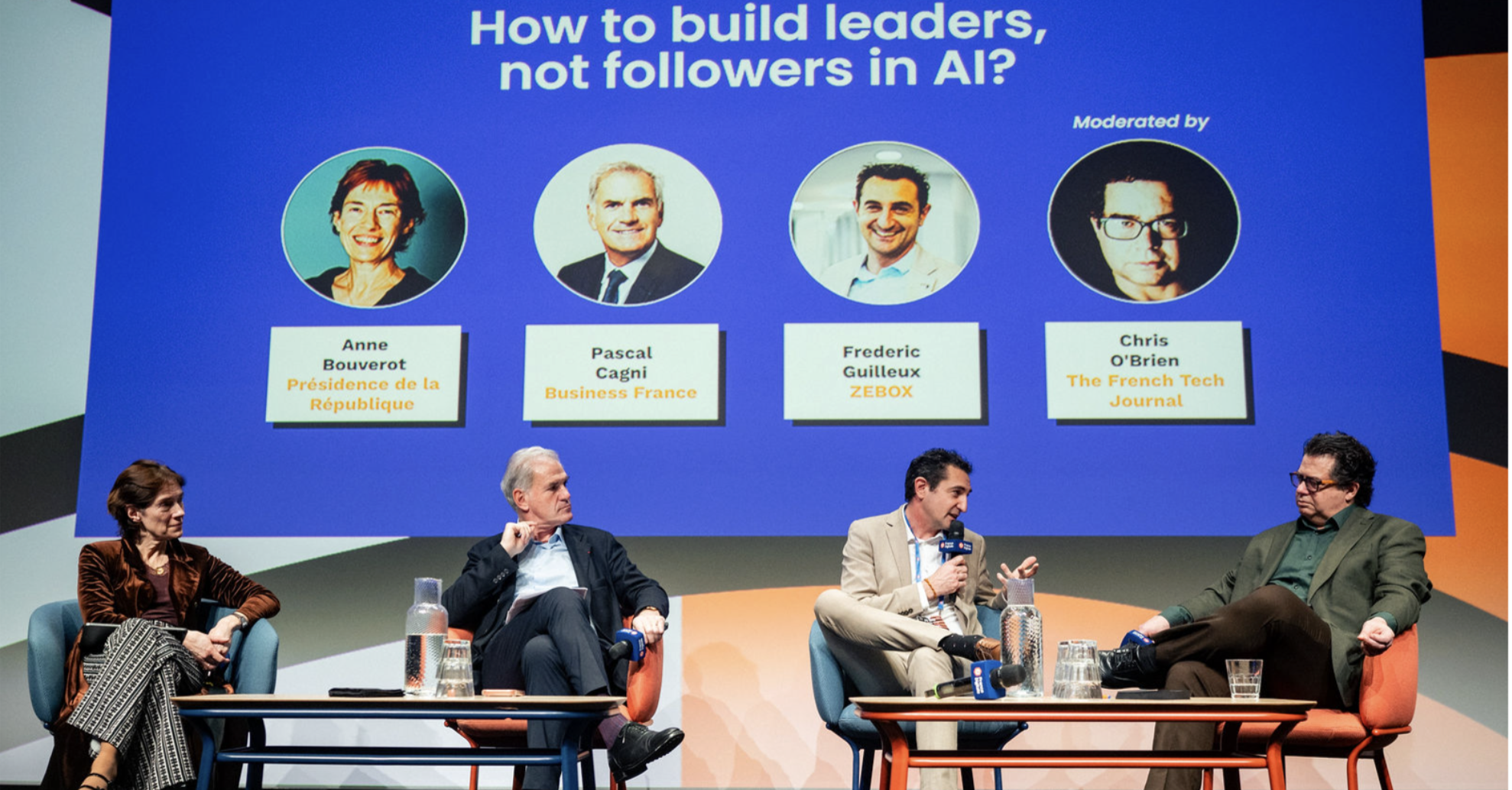
On perhaps one of the most operational panels of the day, Helen moderated a discussion on moving from individual AI hacks to scalable workflows, with leaders from Notion, Foundever, and Ontomantics. The takeaway was blunt: AI fails less because of the models and their complexity, and more because organisations don’t redesign workflows, incentives, and accountability early enough. Prompting is easy. Installing scalable AI Operations is hard and unavoidable.
📿 The Big AI Day Roundup
As part of AI festivities, there have been announcements aplenty. Here now are a few of the tastiest morsels...
🥩 In a closed-door briefing with the tech press, Station F leaders announced the launch of F/ai, a new program designed to create the next generation of global AI champions, and to do so at a very early stage.
The program targets AI-native, early-stage founders only, selected strictly by recommendation. Out of 70–100 applicants, just 20 startups have already been chosen, most less than 12 months old, 80% led by repeat founders, many with prior exits, PhDs on the team, and 75% already through pre-seed. Several are either already hitting or aim to hit €1m in revenue within six months. Backed by a dense network of major AI players, including big US tech names, F/ai offers financing, top-tier mentors, privileged partnerships, and a powerful go-to-market engine.
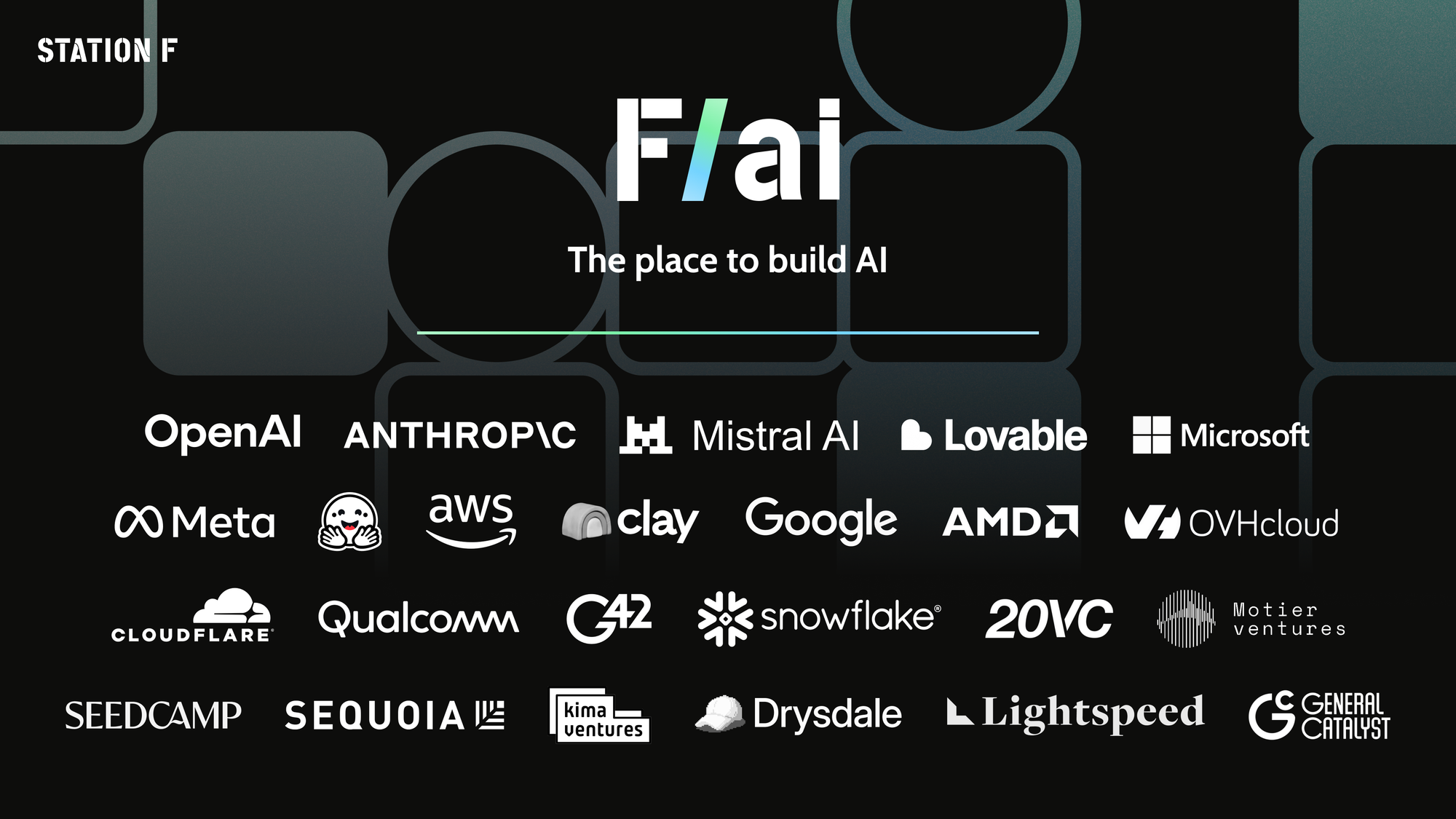
Founders can submit a wish list of corporate intros, with up to five warm connections to accelerate distribution. The three-month core program can extend to 18 months, with three batches per year (batch two kicks off in September), positioning Station F as an 8,000-startup-strong global launchpad rather than just a European hub. With cohorts spanning the US, UK, Germany, Pakistan, and five French startups, and C-level speaker sessions featuring names like Andrew Bosworth (CTO, Meta), Station F Combinator wants Paris to be the home of the next generation of global AI champions.
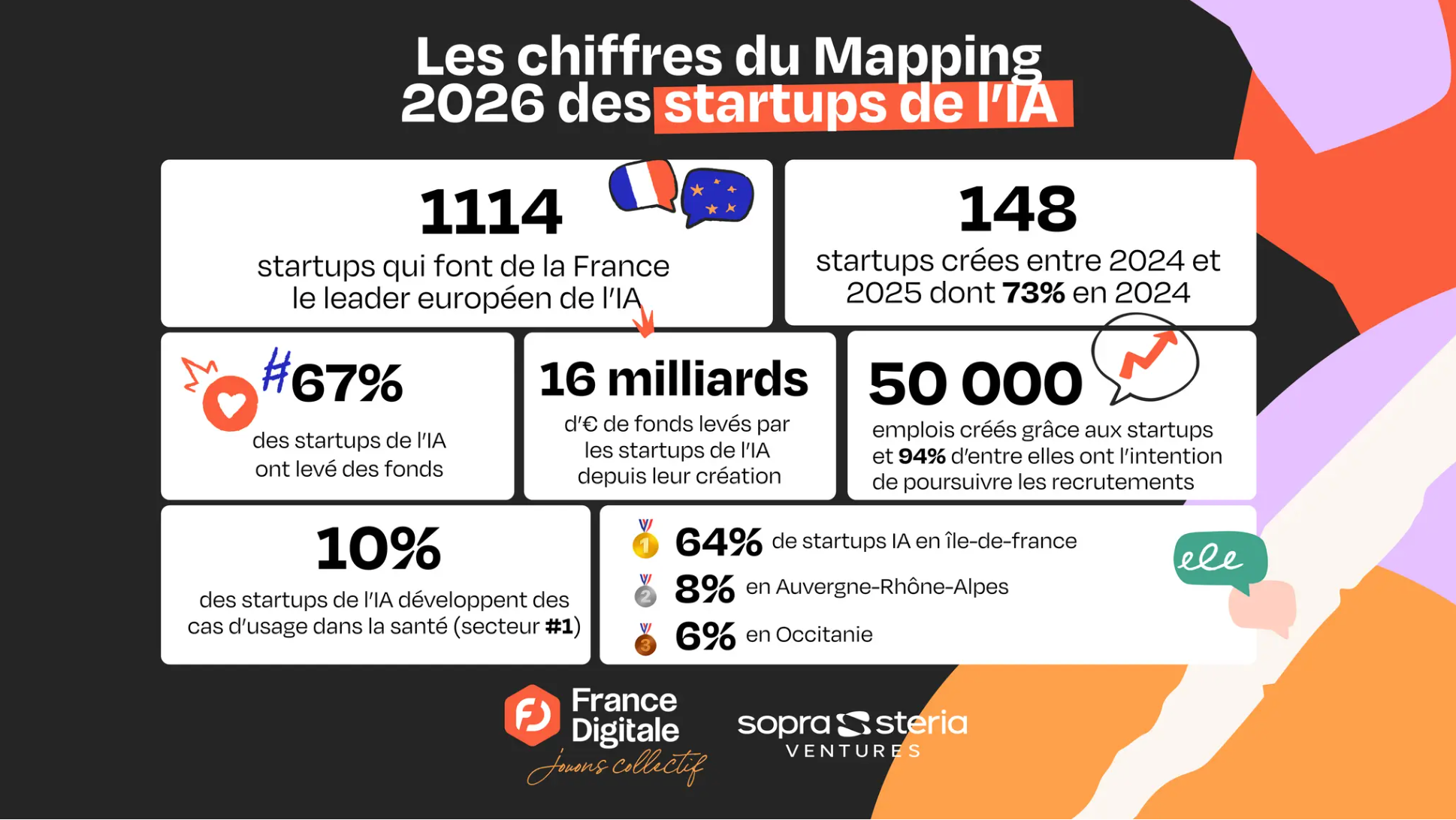
🥩 France Digitale released its new AI Mapping that counts 1,114 AI startups, more than any other European country, with nearly €16bn raised, 45,000 jobs created, and AI solutions firmly embedded across health, industry, finance, marketing, and the public sector. What stood out this year isn’t just scale, but maturity: GenAI is now mainstream, data quality has become a strategic bottleneck, and agentic, task-specific AI is quietly moving from demos into day-to-day operations. The message echoed across panels and corridors alike: the French AI ecosystem is no longer asking whether AI works but how fast it can scale, industrialize, and secure real access to markets. | Mapping here (in French)
🥩 The Direction générale des Entreprises (DGE) and La French Tech Mission announced the first 10 companies picked to be part of the new France Legaltech program, to give extra support to this emerging sector. Among those selected: Dastra, Pappers, Tomorro, Ordalie, Lexbase, and Gino LegalTech.
🥩 To cap off AI Day, the conversation quite literally moved up the food chain. Last night, around the Élysée table, Emmanuel Macron hosted a closed-door AI dinner bringing together some of the most influential figures of the French tech ecosystem, from Frédéric Mazzella to Jean-Charles Samuelian, alongside founders of Gleamer, Owkin, Mirakl, Nabla, Aqemia, and mucho más. Add a few industrial heavyweights, policymakers, and economists, and you get a very French mix of power, capital, and code. (Or no code, or vibe code, as the case may be these days...) | Maddyness
Headlines
No AI-filled week would be complete without a barometer or two...
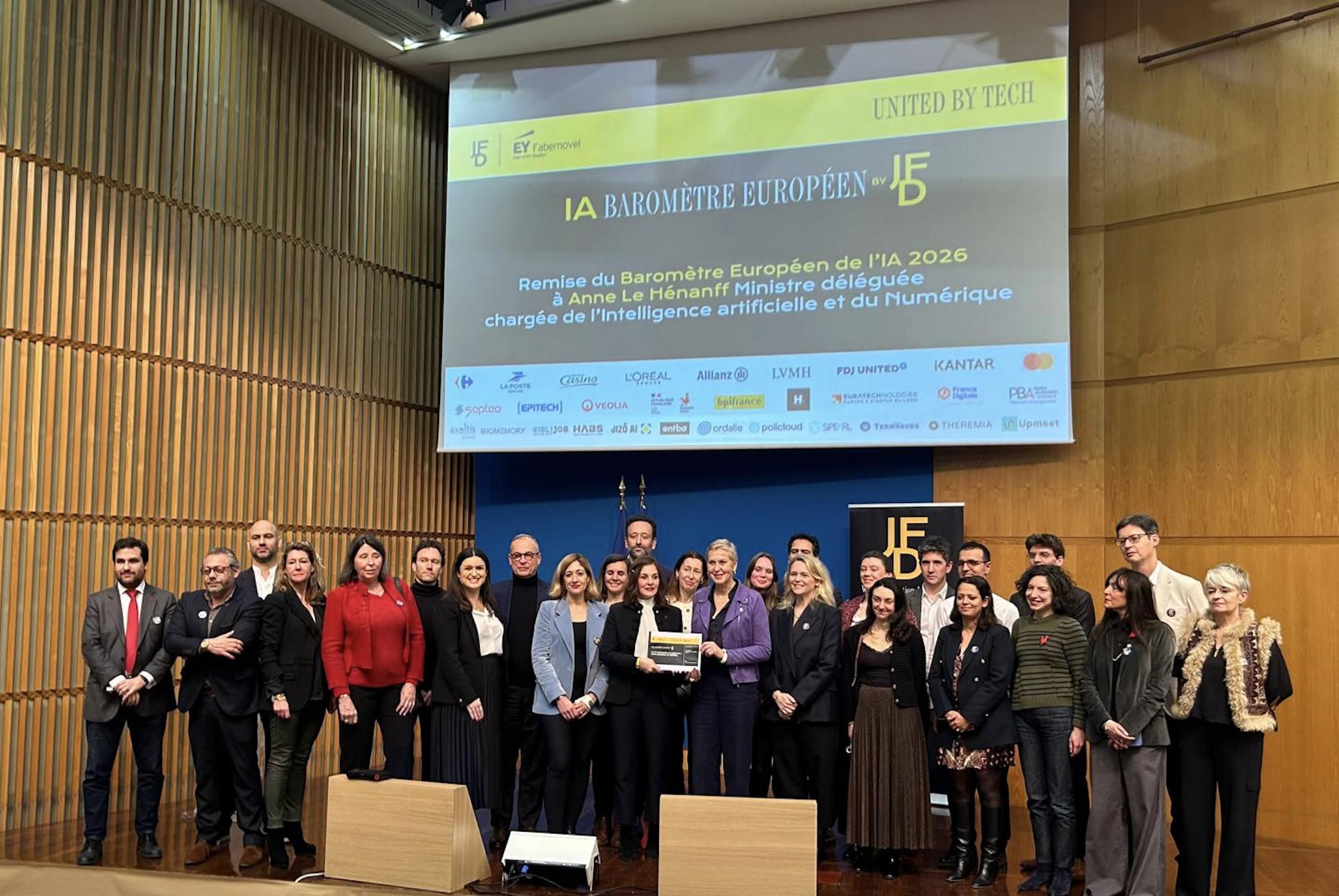
🗞️ The JFD/EY Fabernovel European AI Barometer delivered a sobering reality check. Yes, Europe has world-class AI talent, strong academic leadership, and founders who want to stay. But sovereignty won’t come from declarations alone. The barometer’s headline ambition echoed the calls made by Cagni and Bouverot: Getting large European corporates to buy European AI solutions up to just 9% of all purchases within two years. That rather modest goal landed awkwardly in a room obsessed with strategic autonomy. As Minister Anne Le Hénaff bluntly put it at the presentation in Bercy: without real private-sector demand, sovereignty remains theoretical. The message from JFD was clear: AI leadership won’t be regulated into existence. It has to be purchased, partnered, and scaled by Europe’s own champions. | For the lowdown, check out the European AI barometer and our interview with JFD Founder and CEO Delphine Remy-Boutang.
🗞️ Generative AI adoption in France is officially “fulgurant.” According to Crédoc’s latest Digital Barometer, nearly half of French people now use generative AI, a jump of 15 points in just one year, matching the speed of adoption seen in the US. Among 18–24 year-olds, usage hits a staggering 85%, with AI now preferred over search engines for homework, writing, coding, and content creation. But there’s a catch: the age gap is exploding. While AI is second nature to the young, only 15% of over-70s use it, turning generative AI into the country’s newest digital divide. | 20 Minutes
🗞️ But when it comes to the public sector, GenAI adoption is not so "fulgurant." France may have written the playbook on “trustworthy AI,” but when it comes to actually using GenAI in public services, it’s mostly stuck in pilot purgatory. The country ranks near the bottom of a new global index among 10 countries, with adoption patchy, tools scarce, and just 27% of public servants saying their organization has invested in AI, according to the report by the Public First for the Center for Data Innovation, sponsored by Google.
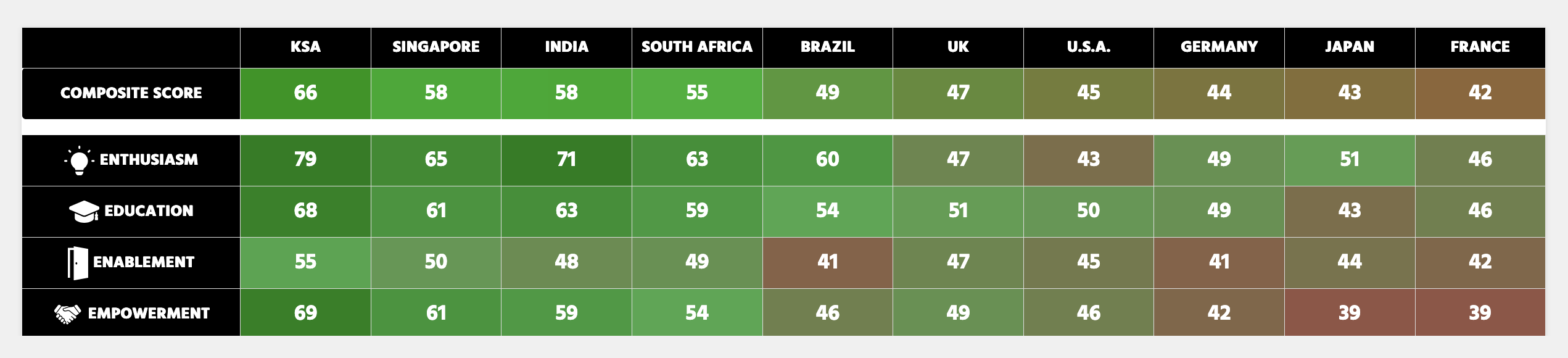
Nearly one in three officials thinks nothing they do could be done by AI, and 45% have never used it at work, which is… not exactly a hotbed of experimentation. Add in fuzzy guidance, minimal training (two-thirds report getting none), and a compliance maze that makes everyone nervous, and you get a self-reinforcing cycle of low use and low enthusiasm. | Public First for the Center for Data Innovation, Euronews
🗞️ Still, adoption of GenAI does not apparently equal love. If you were hoping the French were starry-eyed about an AI-powered tomorrow…not quite. According to a new Ifop survey, 71% say the prospect of a future with more AI in their daily lives is inquiétante, versus just 29% who find it promising. And this general mood tracks with a broader sense that we’re living through decline rather than progress: 57% see today’s world as a period of regression, compared with only 18% who see progress. Younger respondents are noticeably more upbeat (43–45% of under-35s find AI promising), but the optimism drops off sharply with age. In other words, France isn’t anti-future. It’s just deeply suspicious of it. AI may be billed as the next big leap forward, but for most French people, it currently feels less like “Black Mirror” in a good way and more like… well, just “Black Mirror.” | Ifop
🗞️ Cortex House: AI hits Montmartre. A stone’s throw from the Sacré-Cœur, Cortex House is set to become Paris’ new AI hub. Spanning 11,000 m² over six floors, it will host 1,900+ workstations, events, workshops, and an incubator for pre-seed and seed startups. Founded by Albin Serviant with Daphni’s team and ex-WeWork’s Romain Allouch, it’s backed by a who’s who of French Tech, including Owkin, Back Market, Probabl, and more. Think less coworking, more “Maison de l’IA”, a year-round playground for innovation, collaboration, and AI excellence in the heart of Paris’ 18th arrondissement. | Maddyness
🗞️ AI goes bedside: The Alliance Santé IA is bringing AI into hospitals for real. Led by CHU Montpellier and Adlin Science, the €18M, 3-year project turns messy medical data into tools that speed research, ease admin, and improve care while keeping data in-house. Already tested at the hospital, it’s designed to scale nationwide with a team of 40+ full-time contributors and PhDs. | Les Echos
🗞️ Crypto kidnappings push French bosses to hide their addresses. Since last August, French company leaders have been able to anonymize their personal addresses on official docs like Kbis, a response to a recent wave of kidnappings and attempted kidnappings targeting entrepreneurs. So far, 40,000 requests have been processed, with another 50,000 handled by the INPI. The measure doesn’t erase the data — authorities still have access — but it’s a small shield in an era where personal info spreads fast, even onto the dark web. | Les Echos
ICYMI
🗞️ Europe's AI Reckoning: Caught Between Regulation, Rivalry, and Risk | As 2026 begins, France and the European Union find themselves at the center of a perfect storm, facing diplomatic confrontation with Washington, urgent safety crises, and mounting questions about whether their regulatory approach can survive first contact with geopolitical reality. | The French Tech Journal
🗞️ From Tesla to Paris: UMA's Audacious Bet on European Robotics | A new French startup believes Europe—not Silicon Valley—is the best place to build the robots of tomorrow. | The French Tech Journal
🗞️ Gradium Wants To Make Voice The New Operating System for AI | The Paris startup, spun out of research lab Kyutai, just emerged from stealth with a $60M seed round to become the global foundation layer for real-time voice interactions. | The French Tech Journal
🗞️ How HyprView Is Using Photonics And AI To Bring Cancer Diagnostics Into the Light | Thanks to developments in AI, photonics is stepping out of the lab and into the clinic. HyprView uses light to uncover the invisible biology inside tumors - information microscopes miss entirely - opening the door to faster, smarter, and far more predictive cancer diagnostics. | The French Tech Journal
🧠 The AI Barometer Decoded: Delphine Remy‑Boutang on Why Europe Must Scale. Now.

Founder & CEO of JFD, Delphine Remy‑Boutang, doesn’t mince her words. Europe has the talent, the research, and the ideas. What it lacks is scale and contracts.
Founded in 2012, JFD is a growth accelerator that connects innovative entrepreneurs, corporate leaders, and investors with one goal: turning European innovation into real business and industrial scale.
Ahead of the presentation of JFD’s 2026 European AI Barometer at Bercy, we sat down with her for a fast-paced, no-nonsense conversation about regulation, sovereignty, the myth of ‘small is beautiful’, and why 2026 is Europe’s make-or-break year.
Want to reach an audience of more than 30,000 readers each month? The French Tech Journal is the leading English-language media platform covering France's dynamic tech ecosystem. With 31,000 + engaged readers across key global markets and consistently high engagement rates, our sponsorships provide unparalleled access to decision-makers in French tech.
🗣️ Announcements 🗣️
🚀 €1M AI Challenge for Space Data Innovation | Apply by March 9 | The Île-de-France Region and CNES officially launch a €1 million AI Challenge to accelerate innovation at the intersection of artificial intelligence and space data. Continuing the Region’s AI Challenge series started in 2019, this initiative aims to foster future national champions and strengthen France’s technological and economic sovereignty. Two tracks are open: (1) AI-powered applications leveraging satellite data for use cases such as security, energy, environment, and risk management; and (2) advanced vision-language models for automatic interpretation of high- and very-high-resolution satellite imagery. CNES will provide data, technical expertise, and project oversight. | Apply via the Île-de-France Region platform: Challenge AI for Space
🚀 National AI Mapping | Deadline February 15 | Hub France IA is launching a second invitation to startups, SMEs, and innovative companies located outside of Paris to join the 2026 national map of French artificial intelligence. This sixth edition, launched once before, aims to provide an accurate snapshot of the AI ecosystem across the country, highlighting the diversity of regional dynamics. More than 700 AI stakeholders are already listed. Interested regional gems can still apply now until February 15, 2026. | Registration link
📆 Events 📆
📆 World AI Cannes Festival (WAICF) | February 12 and 13 | Palais des Festivals et des Congrès de Cannes | With more than 10,000 expected participants, 320 international speakers, and 180 exhibitors, the WAICF is the European event dedicated to the innovations and strategic challenges of artificial intelligence. | Buy tickets
📆 Paris Hardware Meetup | The New Defense Stack | February 17 | Join Paris-area hardware builders — founders, engineers, designers, and investors — for talks and community networking focused on defense hardware and physical product innovation at Hexa (eFounders) in Paris. Speakers include leaders from Harmattan AI, Helsing, Landroval, and more, with structured talks followed by open mic and networking. | Request to join
📆 Neurons and Peppers #3 | February 18 | Paris | The state-of-the-art AI research meetup in Paris hosted by Neurons and Peppers by datacraft, focused on deep technical sessions such as domain-specific modeling and retrieval-augmented generation benchmarking, followed by community networking, talks, and food & drinks. | Request to Join
📆 AI in Higher Education Summit 2026 | March 17–18 | ESCP Business School | Paris | Artificial intelligence is transforming universities at every level — from classrooms to research labs and administrative offices. The AI in Higher Education Summit 2026 in Paris will bring together academics, innovators, and policy-makers to discuss one central question: How should higher education evolve in an AI-driven world? This international event is the place to exchange ideas, showcase innovations, and shape the roadmap for universities in the age of AI. | Pre-Registration
📆 OpenText Summit Paris 2026 | April 15 | Palais Brongniart | AI is everywhere and full of promise — but without contextualized data, governance, and security, AI fails. Join OpenText Summit Paris 2026 to discover how to unlock the intelligence of your enterprise data and activate AI with confidence. Expect visionary keynotes, French customer success stories, real-world use cases, in-depth small-group sessions, live demos, expert meetings, and peer networking. Explore the latest innovations in content management, cybersecurity, service management, business networks, and more — and learn how to deploy responsible, compliant AI with full control and freedom of choice. | Register
📆 RAISE Summit 2026 | July 8–9, 2026 | Carrousel du Louvre, Paris | Join one of Europe’s most influential AI gatherings bringing together thousands of builders, investors, executives, and innovators to shape the future of artificial intelligence. Learn from global leaders through keynotes, panels, workshops, a hackathon, startup competitions, and high-impact networking — all curated to accelerate AI strategy, investment, and real-world deployment across industries. | Tickets
👋🏻 If you’re enjoying The French Tech Journal, support the project by forwarding it to friends and sharing it on your social networks. You can also comment on this post. And if you have ideas for stories, tips, or just want to harass us, shoot us an email: [email protected] / [email protected] 👋🏻