For decades, cancer diagnosis has relied on tumor-testing techniques that would be recognizable to a 19th-century pathologist. Clinicians still reach for the same H&E (Hematoxylin and Eosin) staining protocol, the same glass slides, and the same optical microscopes.
Cancer has evolved. The tools designed to understand it haven’t kept pace.
HyprView, a Caen-based deeptech startup, was founded in 2022 by spectroscopy specialist François Auvray. He was joined in 2024 by former Googler and health-tech operator Victor Outters. They believe the future of oncology rests on a simple idea: every tumor emits far more information than current diagnostics know how to capture.
Their mission is to literally shine a light on the hidden biology inside every tumor and use AI to make sense of it.
“Traditional pathology examines cell morphology, not behavior. That’s a crucial difference,” Outters explained. “Two tumors may look identical under a microscope, yet respond entirely differently to treatment.”

Why Cancer Diagnosis Needed a Serious Upgrade
This blind spot fuels diagnostic errors, mis-stratification, late recognition of treatment resistance, and suboptimal therapy choices.
Auvray discovered this gap almost by accident during his postgraduate research in spectroscopy (the study of how light interacts with biological tissue). By illuminating biopsy samples with specific wavelengths, he noticed that biochemical signatures invisible to the microscope suddenly became measurable.
These optical “fingerprints” correlated strongly with aggressiveness, metastatic potential, and treatment response. The implication was clear: light was revealing cancer cell behavior, not just structure.
Auvray decided to leave academia and bring this technology into clinical reality. He founded HyprView in 2022, originally as a hardware-as-a-service concept for labs. But after partnering with oncologist Laurent Poulain, the scope of the opportunity expanded dramatically.
The thesis emerged: If you can measure more, you can predict more.

From Research Gadget to Clinical Engine
Auvray and Poulain realized that while most diagnostics focus on cell shapes and organisation, photonics could quantify function, metabolism, biochemistry, and micro-architecture.
“In 2023, François and Laurent launched a first test project on ovarian cancer PARP inhibitors,” Outters recalled. “The results were promising. They decided they needed a partner to help with the business side. That’s when I came in.”
Outters, who spent nearly a decade at Google Health helping deeptech companies scale, immediately saw what made HyprView different: The ability to generate unique, high-signal biological data that no conventional imaging system could replicate.
“That’s the difference between clever engineering and actual clinical value,” he said.

Under the Hood: Light as a Diagnostic Tool
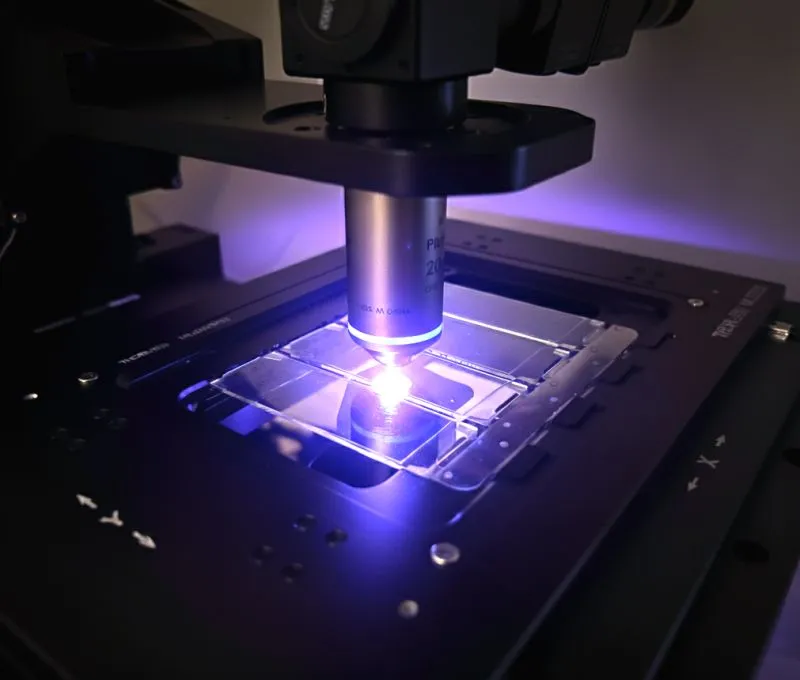
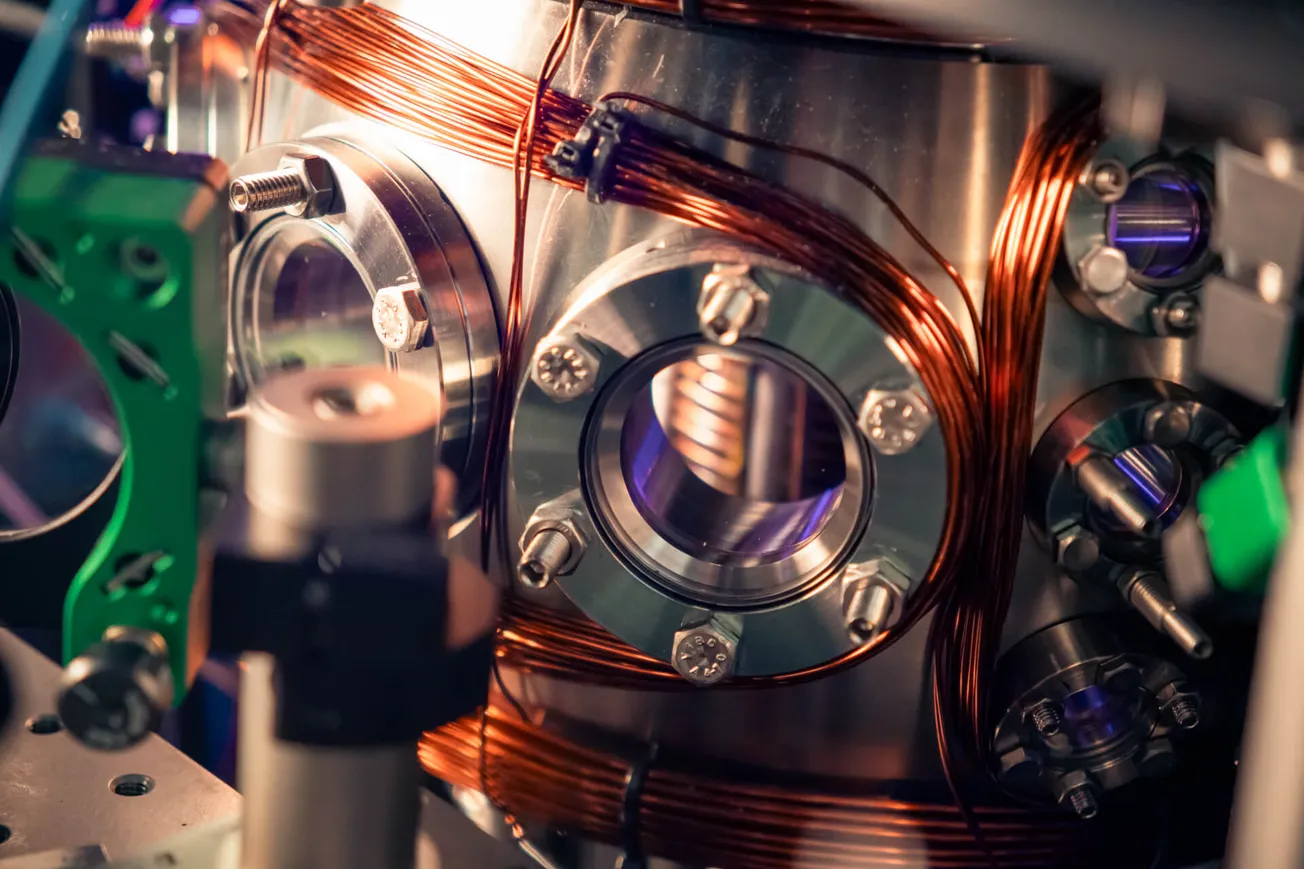
HyprView’s scanner analyses standard glass biopsy slides using a stack of photonic techniques. Each beam uses different wavelengths, energies, and optical interactions to reveal specific biological properties. Among the signatures it can detect:
- Autofluorescence — molecules inside cells that naturally emit light, exposing metabolic patterns.
- Collagen fibre architecture — how tumors reshape the extracellular matrix.
- Enzymatic activity — clues about proliferation and resistance pathways.
- Scattering and reflectance patterns — indicators of tissue heterogeneity and organization.
Each biopsy yields 14 distinct photonic images, many containing patterns imperceptible to the human eye.
“We are only able to understand around 20% of the data our machine generates,” Outters said. “80% is completely non-interpretable without machine learning.”
HyprView uses a high-performance vision model (ResNet) to decode these spectral and structural signatures and map them against clinical outcomes. The output is a predictive readout that can evaluate cancer cells and anticipate how they will behave.

One Lab, National Reach, Pay As You Go Testing
Scaling in healthcare is notoriously slow unless you do it in the United States.
“We’re planning to scale directly to the US because of time to market and market receptivity,” Outters said, “Companies like ours can scale much faster there. We will enter the European market from the States.”
The reason for this seemingly counterintuitive approach lies in the LDT (Laboratory Developed Test) pathway, which allows a diagnostic test to be commercialized from a single certified lab without needing full regulatory (FDA) approval at launch. Retrospective samples – biopsies from patients whose outcomes are already known – can be used to validate the tests.
“In Europe, you need both retrospective and prospective validation,” Outters explained. “If you want to predict a medical event that might happen five years from now, you literally have to wait five years. For a startup, that’s just not possible.”
HyprView’s most important scaling lever will come from the infrastructure around it, not the hardware itself. Rather than installing machines in hospitals one by one, the company plans to deploy its test nationally through large private U.S. laboratory networks, partnering with players like Labcorp or Quest.
If HyprView is validated as an LDT, a single centralized laboratory would become the company’s commercial engine. The process is intentionally simple:
- hospitals and clinics mail their biopsy slides
- HyprView scans and analyses them
- results return within 48 hours
No need for hundreds of on-site instruments. No need for a sprawling field-sales force. Just one high-throughput lab delivering nationwide coverage.
“It's the same model used by leading AI diagnostics companies such as Artera. We would exist in one central lab, and all samples would be tested from there,” Outters emphasized. "The machine will do the work, and the results will be checked and signed off by a doctor. The pricing model is per test, similar to a blood test. Scanning takes one to two hours, and AI just a few minutes. Patients should receive results in two days at most.”
A Small Team Building a Big Clinical Engine
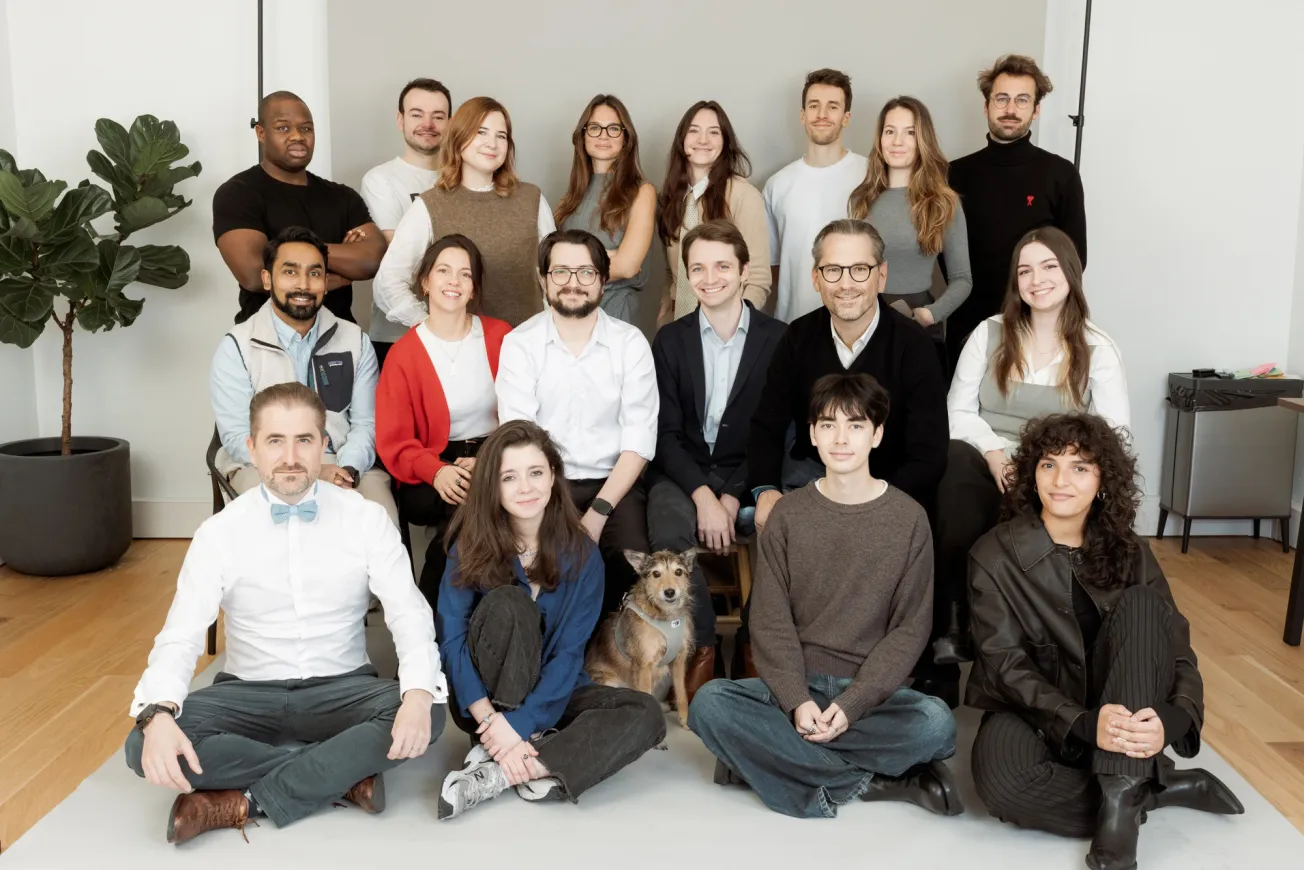
HyprView may be only five people, but it has gathered deeptech traction at unusual speed.
Its €1.4 million pre-seed round included backing from Jean-Philippe Vert (Bioptimus), Franck Le Ouay (Lifen), and Dasteria (Julien Dassault’s fund), alongside other well-known “deep tech mafia” (as Outters refers to them) such as John Gridley and Natasha Rostovtseva, support that signaled scientific credibility.
“These investors don’t fund nice ideas,” Outters said. “They fund scientifically unavoidable ones.”
Thanks to its partnership with cancer research center Centre François Baclesse, the company has already integrated 200 ovarian cancer samples and 200 small-lung nodule samples, and it is preparing new clinical collaborations with establishments like the Institut Curie and Lille CHU.
HyprView is currently executing what Outters calls its “multi-cancer validation roadmap,” expanding the platform’s predictive performance to lung cancer plus two additional tumor types.
“We want to stay lean until the POC is locked across multiple cancers,” he explained.
Once that milestone is reached, HyprView will raise a €5–10M seed round to perfect its US laboratory-ready platform and launch its first commercial tests.
A Complete Diagnostic Operating System for Cancer Tissue
HyprView’s long-term ambition stretches far beyond a single test. What the team is building begins to look less like a diagnostic add-on and more like a foundational operating system for tissue analysis.
“Why stop at one readout,” Outters asked, “when the same platform can replace multiple instruments and give clinicians everything in one place?”
The goal is to create a unified system capable of:
- digital staining
- mutation detection
- metabolic profiling
- risk prediction for resistance, metastasis, and recurrence
- and even general-purpose computational pathology
Put simply: a single photonic platform that replaces dozens of specialized machines.

If other companies are exploring adjacent ideas, they are still using traditional H&E slides by scanning them to obtain detailed pictures and then running them through AI.
"They are not producing any new chemical or biological info," Outters said. "All of our competitors are fighting on this same ground and competing on the number of samples they have scanned. It's the only argument they have.
HyprView, by contrast, is not competing on volume of images. It is generating entirely new layers of biological signals, physics-driven, high-density, and impossible to reproduce with conventional imaging techniques.
In a field where everyone is racing to analyze prettier pictures, HyprView is building a world where the picture itself becomes secondary, and the underlying biology takes center stage.
“We want clinicians to have a complete picture, not just what the tumor looks like, but what it’s planning to do next," Outters said. "A diagnostic tool that doesn’t just see cancer…but anticipates its next move."