👋 Inside this week's edition:
👀 He grew up obsessed with the fictional gentleman thief Arsène Lupin. He skipped engineering school, hacked the Fortune 500 for fun, and got hired full-time at 18. Now Roni Carta has $5.9M in funding from 20VC and Seedcamp to build Depi, a platform that detects software supply chain attacks before they happen. It spotted the worm that hit Mistral AI 25 days early. Roni tells us his tale.
Chris O'Brien + Helen O'Reilly-Durand
Tech Talk
📉🧊 Ledger’s long-rumored U.S. IPO is officially on ice for now. The French hardware wallet maker, which had been eyeing a $4 billion listing with Goldman Sachs, Jefferies, and Barclays in tow, is now rethinking its options as crypto IPO enthusiasm cools faster than a bear market meme coin. The timing is awkward: Ledger has been beefing up its U.S. presence with a new NYC office and a former Circle exec as CFO, clearly preparing for Wall Street courtship. But after BitGo’s post-IPO stumble and Kraken hitting pause too, public investors seem less eager to YOLO into crypto listings these days. | Coindesk
🤖🥼French AI lab Kyutai and Germany’s ELLIS Institute are teaming up to launch KE:SAI, a Franco-German research lab focused on “physical AI.” That means basically teaching machines to understand and navigate the real world, rather than just generating PowerPoint summaries and LinkedIn posts. The nonprofit initiative will split operations between Paris and Tübingen and plans to build an open-source self-driving stack as its first major milestone, betting that Europe can still compete in frontier AI through openness rather than trillion-dollar hyperscaler budgets. KE:SAI is backed by Kyutai’s billionaire-friendly funding network and Germany’s heavyweight AI research ecosystem. | KE:SAI
✈️💻 Airbus is backing France's booming defense-tech ambitions with a shiny new €260 million “Campus Grand Paris” outside Paris dedicated to military digital technologies. The future HQ will house 1,700 employees working on AI, cybersecurity, quantum tech, and secure information systems. Located near the Paris-Saclay tech cluster, the site is designed to pull in startups, researchers, and elite engineering talent as Europe races to reduce its dependence on American defense and cloud infrastructure. With Airbus, Safran, and Dassault recently pouring more than half a billion euros into new French industrial sites, France is trying to position itself as Europe’s answer to the U.S. defense-tech machine. | Le Figaro
🪖🛍️ Not to be outdone, Safran is quietly turning itself into one of Europe’s most serious military AI players, snapping up the defense-focused satellite imagery business of French startup Kayrros less than two years after acquiring geo-intelligence specialist Preligens. The goal is to build a full-stack battlefield intelligence platform capable of analyzing everything from radar and acoustic signals to satellite imagery and missile-strike impacts, using AI already deployed in Ukraine, the Gulf, and across NATO systems. Safran is also leaning hard into the “sovereign AI” narrative currently sweeping Europe, stressing that its systems can run locally instead of relying on American cloud infrastructure or controversial U.S. platforms like Palantir. | Les Echos
🚀 🇪🇺 Europe is finally trying to stop its best deeptech startups from fleeing to the US for scale. The European Commission has picked Swedish private equity giant EQT to manage its brand-new €5 billion “Scaleup Europe Fund,” aimed at helping frontier tech companies bridge the brutal capital gap between Europe and America. AI, quantum, defense, clean energy, and space startups are all in the firing line. Europe invents breakthrough tech. Now, it wants to keep the winners, too. | Les Echos, European Commission
🚨👮 France’s crypto kidnapping crisis just got another grim entry: the wife of Sandbox co-founder Sebastien Borget was reportedly targeted in a violent abduction attempt outside the couple’s home east of Paris. According to French media, attackers disguised as delivery workers tried to drag her into a waiting vehicle before neighbors stepped in and ruined the operation. Police arrested two teenage suspects carrying fake weapons, zip ties, and balaclavas, while four others remain on the run. The incident adds to an increasingly surreal trend in France, which has somehow become Europe’s undisputed capital of crypto-related kidnappings, with authorities counting 41 cases already this year alone. | The Block
🇫🇷⚛️ Emmanuel Macron is back in full “France must lead the future” mode, heading Friday to the CEA’s giant computing center near Paris to unveil fresh funding for quantum computing and semiconductors. The Élysée is keeping the numbers vague for now, but the cash will reportedly come from the remaining billions sitting in the France 2030 innovation war chest. Five years after launching his €2 billion quantum plan, Macron is clearly worried France and Europe are falling behind as U.S. tech giants scoop up quantum startups and throw around massive funding rounds. | BFMTV
🇫🇷🇺🇸 In less cheerful news, the numbers are less, well, as Macron prepares for his final Choose France summit. While he will no doubt proudly remind everyone that France remains Europe’s top destination for foreign investment, the actual number of investment projects fell sharply in 2025, according to the latest EY Barometer. U.S. companies remain France’s biggest foreign investors, but also pulled back 14% as American firms increasingly choose to reinvest at home thanks to massive industrial subsidies and a more predictable political climate. The Élysée is pushing hard on shiny sectors like AI, defense, and low-carbon energy, plus the promise of 28,000 jobs, to keep the optimism alive. | Les Echos
☁️ 🇩🇪 Thales and Google Cloud are taking their “sovereign cloud” marriage to Germany, launching a new fully German-operated cloud infrastructure designed to shield sensitive data from US extraterritorial laws. The setup will be run by a separate German entity fully controlled by Thales, because apparently, Europe’s latest favorite pastime is trying to enjoy American tech without American jurisdiction. The move also reveals how serious Europe’s obsession with sovereignty has become: the continent still desperately wants hyperscaler AI power, just preferably wrapped in enough legal layers to avoid another Cloud Act panic attack. | Les Echos, Thales PR
🏭 🤖 Xavier Niel’s AI ambitions just got a lot bigger. Iliad, alongside Orange, EDF, Hugging Face, and a growing list of French tech heavyweights, has launched “AION,” a consortium bidding to build a €10 billion AI gigafactory in France. The goal is to create a European alternative to American dominance of AI infrastructure before the continent repeats what many still view as its catastrophic cloud computing mistake. The consortium wants public contracts rather than subsidies, arguing this may be Europe’s last real shot at building sovereign AI infrastructure at scale. | Maddyness
☀️💀 ...But...Europe’s dream of building a homegrown solar manufacturing champion just took another painful hit. French startup Carbon has officially abandoned plans for its €1.7 billion “gigafactory” near Marseille, a project that promised 3,000 jobs and was supposed to help Europe stop relying almost entirely on Chinese solar panels. The company is openly blaming Brussels, arguing that Europe talks endlessly about “strategic sovereignty” while simultaneously signing trade agreements that still allow cheaper imports from places like India, Vietnam, and Turkey to flood the market. | Usine Nouvelle
🪖 🤖 A top NATO commander has delivered Europe a brutally honest AI reality check: there is currently “no real competitor” to Palantir in military battlefield AI. Admiral Pierre Vandier warned that Europe simply cannot afford to spend a decade debating sovereignty while the Americans already control much of the operational defense tech stack. His comments land at a particularly awkward moment for Europe, where politicians increasingly talk about digital sovereignty while continuing to rely heavily on US chips, cloud systems, and AI infrastructure. The real issue, according to NATO, is no longer total independence. It’s whether Europeans can at least keep control of their own data before it’s too late. | Politico
🎮💥 Ubisoft just posted the biggest loss in its history: a brutal €1.5 billion net loss following what executives themselves described as an “annus horribilis.” After years of delays, strategic confusion, layoffs, and investor frustration, the maker of Assassin’s Creed and Far Cry now finds itself deep in restructuring mode while still trying to convince markets it can survive gaming’s increasingly ruthless economics. The company is turning 40 this year. But right now, Ubisoft looks less like a veteran gaming titan and more like a tech company stuck somewhere between reinvention and existential crisis. | Les Echos
🌱🥩 Another French foodtech darling has officially crashed back to earth. Swap, formerly known as Umiami, has been placed into judicial liquidation despite heavy backing from public funds and investors, including Bpifrance and Astanor. The startup had promised to revolutionize plant-based meat using its patented “umisation” process designed to mimic the texture of real meat. Instead, it joins the growing list of heavily funded French industrial startups discovering that raising millions and building factories is considerably easier than creating profitable mass-market demand. France’s alternative protein dream is starting to look eerily similar to the Ynsect saga all over again. | Les Echos
📑 ⚖️ French accounting startup Indy is quietly building an all-in-one empire for freelancers ahead of Europe’s looming electronic invoicing revolution. After previously buying Coover’s invoicing software, the company has now acquired legaltech platform Mon-AutoEntreprise.fr to strengthen its grip on France’s auto-entrepreneur market. The timing is no coincidence: from September 2026, companies will be required to process invoices through government-approved digital platforms, creating a massive land-grab opportunity for fintech and accounting players. Boring admin software may suddenly become one of French Tech’s hottest battlegrounds. | Maddyness
From Arsène Lupin To Upstream Security: How Roni Carta Turned A Teenage Hacking Obsession Into Depi

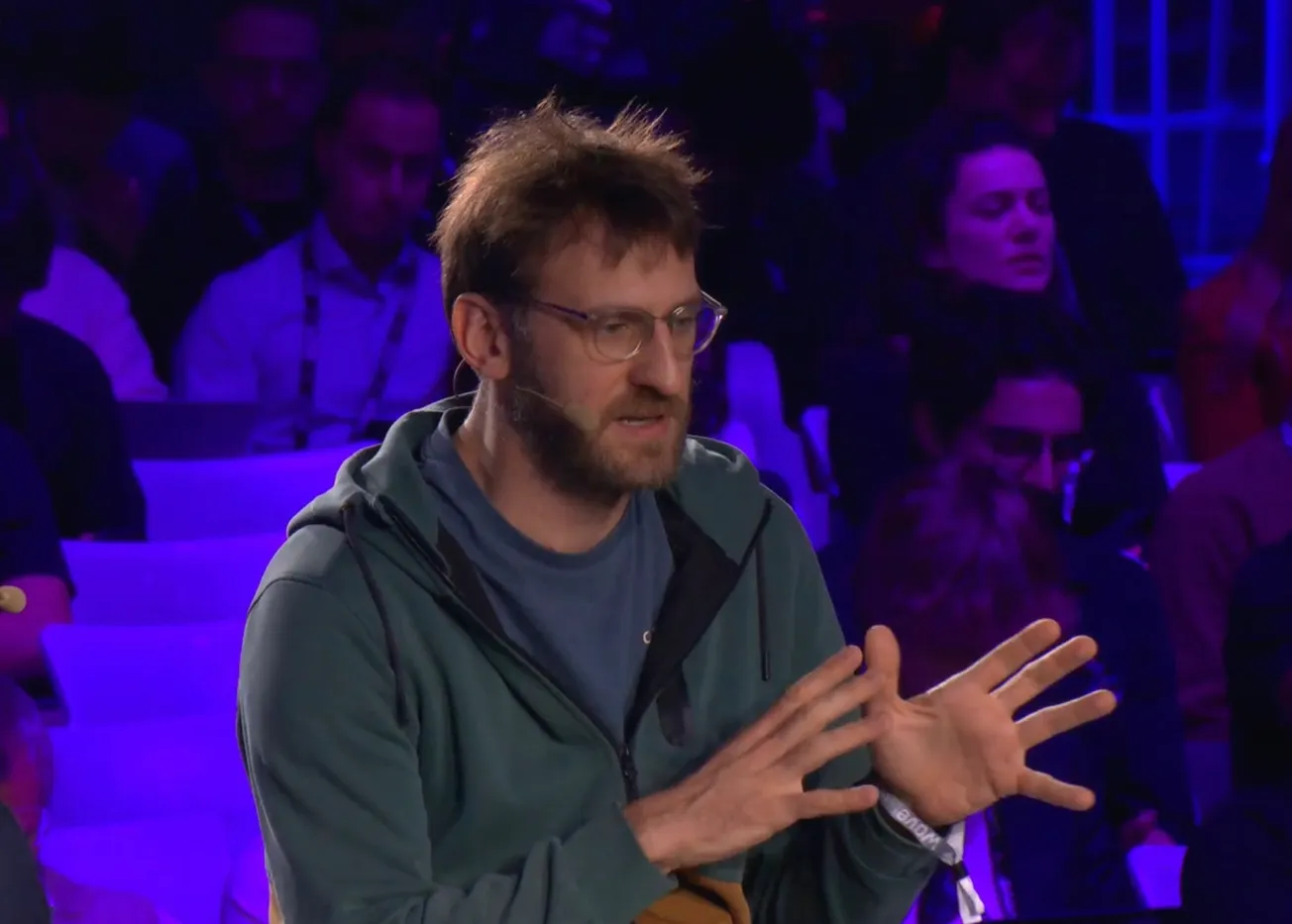
Roni Carta was 13 when he closed a book and decided what he wanted to be when he grew up. Not a doctor, not an engineer, not a footballer. He wanted to be Arsène Lupin, the fictional French gentleman thief who outsmarts everyone, except in a version of the world that didn't quite exist yet in his head.
"I can become that guy, but for computers," he remembers thinking.
That kid is now 24, runs a cybersecurity company called Depi, and has just closed a $5.9 million pre-seed round co-led by 20VC and Seedcamp, with participation from Purple, Kima Ventures, and the founders of Wiz, Hugging Face, and GitGuardian. He's also about to swap Grenoble for San Francisco, which he describes, with the enthusiasm of someone who hasn't yet paid Bay Area rent, as "a theme park for developers."
Depi was known until recently as Lupin & Holmes. The rebrand is recent and deliberate. Lupin & Holmes was the research lab; Depi is the product. There was also a smaller, more personal reason.
"[Lupin] was actually my nickname," Carta said. "I'm kind of glad that we're moving away from the company name, because people were talking about the company, and I got confused about that, and I was like, 'That's my nickname. Stop saying it's the company.'"
💸 Top Funding Deals 💸

📇 Company: Pivot
🏷️ Sectors: FinTech, SaaS, AI
🔍 Description: Pivot develops an AI-powered procurement operating system that automates sourcing, invoicing, payments, budgeting, expense management, and reporting for enterprise finance and procurement teams.
💻 Website: https://www.pivotapp.ai
📍 HQ City: Paris
🧗 Round: Series B
💰 Amount Raised: $40M
🏦 Investors: Forestay Capital, Notion Capital, Greyhound, Hedosophia, Visionaries Club, Emblem
👨💼👩💼 Founders: Marc-Antoine Lacroix, Romain Libeau, Estelle Giuly
🗞️ News: Pivot raised $40 million in Series B financing to accelerate development of its AI-driven procurement platform and expand further into enterprise accounts. Founded in 2023 by former executives from Qonto and Swile, the company uses agentic AI to automate procurement workflows, including sourcing, invoicing, payments, budgeting, spend management, and reporting within a single interface. Pivot says it already operates in more than 25 countries and counts clients such as DoorDash, Doctolib, Deezer, Pennylane, and Wolt, processing more than $3 billion in invoices annually. The company aims to modernize a procurement software market still dominated by legacy systems from the 1990s by replacing fragmented workflows, spreadsheets, and manual approvals with AI-powered automation and real-time financial visibility. | Maddyness
📇 Company: Dust
🏷️ Sectors: SaaS, AI
🔍 Description: Dust develops a collaborative AI operating system that enables organizations to deploy AI agents across teams and workflows, allowing humans and agents to work together in shared workspaces with unified context, governance, and enterprise integrations.
💻 Website: https://dust.tt
📍 HQ City: Paris
🧗 Round: Series B
💰 Amount Raised: $40M
🏦 Investors: Abstract, Sequoia, Snowflake Ventures, Datadog
👨💼👩💼 Founders: Stanislas Polu, Gabriel Hubert
🗞️ News: Dust announced a $40 million Series B round to accelerate development of its “multiplayer AI” platform, designed to coordinate work between humans and AI agents across organizations. The company says its platform is already used by more than 3,000 organizations globally, with customers including Clay, Profound, Persona, and Doctolib. Dust claims more than 300,000 AI agents have already been deployed through its system. The platform provides persistent shared workspaces, enterprise knowledge integration, observability, governance, and agent orchestration capabilities that allow teams to collaborate with AI agents in parallel rather than through isolated chatbot interactions. The funding will support product development and expansion as enterprises increasingly adopt AI-native operational workflows. | Dust
👋🏻 If you’re enjoying The French Tech Journal, support the project by forwarding it to friends and sharing it on your social networks. You can also comment on this post. And if you have ideas for stories, tips, or just want to harass us, shoot us an email: [email protected] / [email protected] 👋🏻