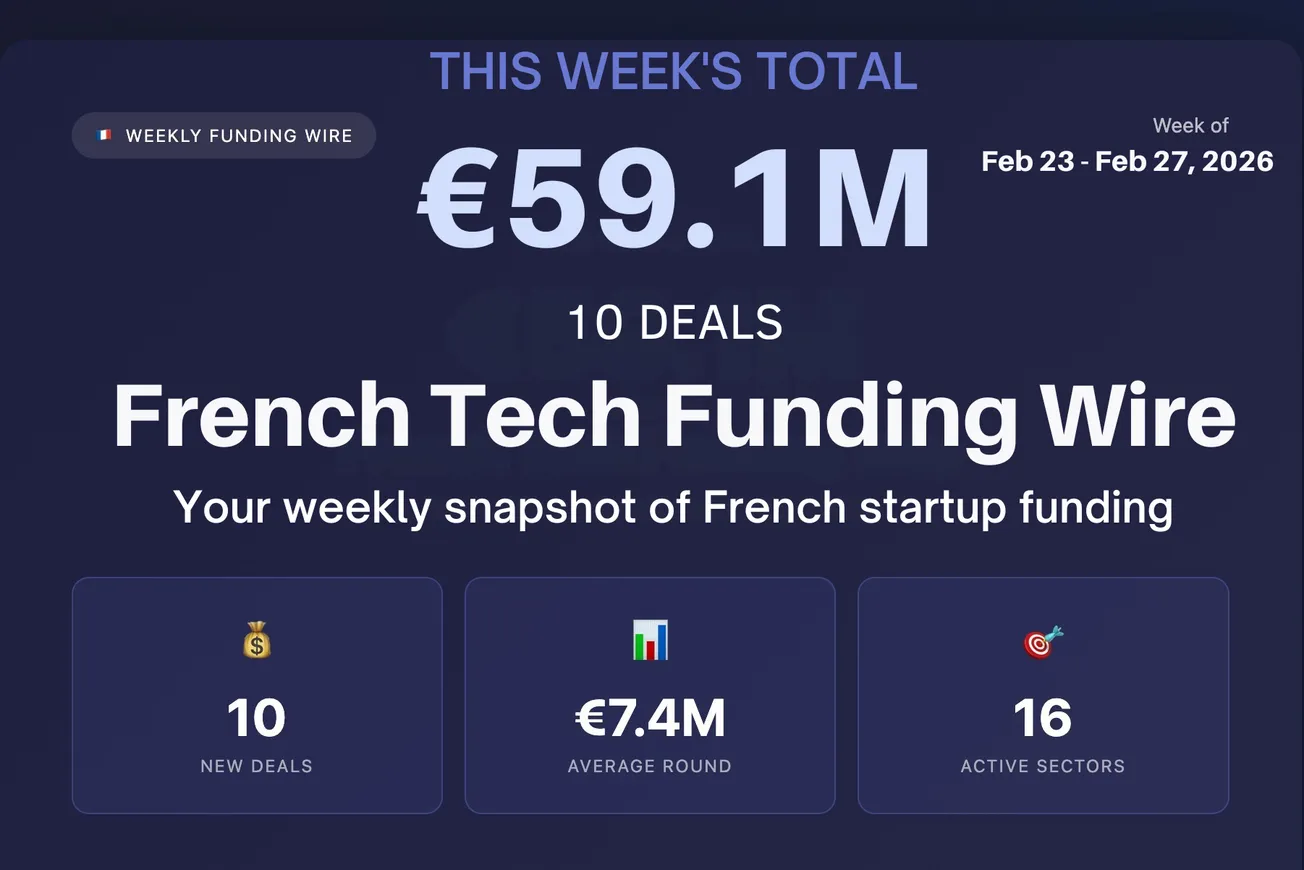
👋 Inside this week's edition:
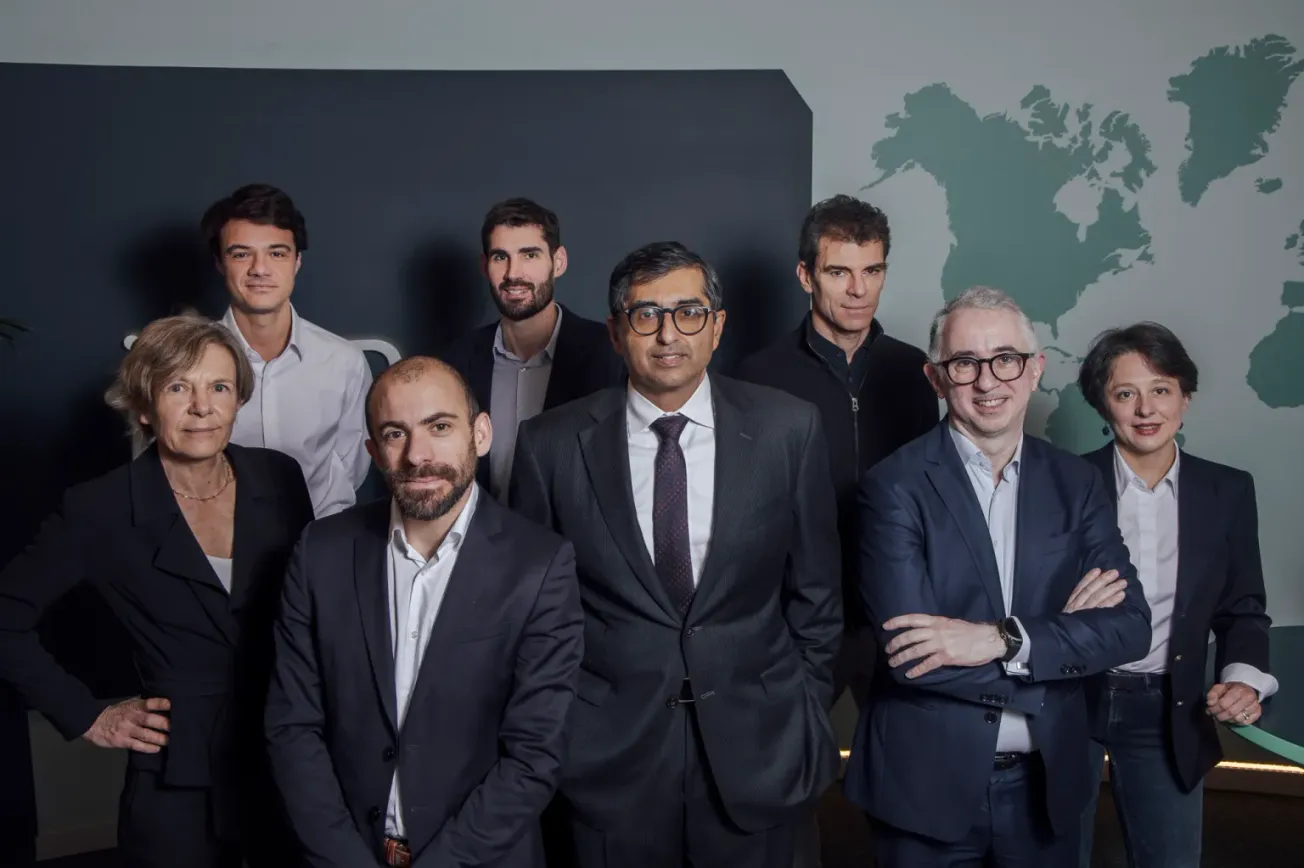
👀 Pasqal is betting big on public markets, announcing a $2B SPAC merger that would take the French quantum startup to Nasdaq. The deal brings over $600M in capital and underscores Bpifrance’s long-running role in building France’s deep-tech champions. We break it down.
Chris O'Brien + Helen O'Reilly-Durand
Want to reach an audience of more than 40,000 readers each month? The French Tech Journal is the leading English-language media platform covering France's dynamic tech ecosystem. With engaged readers across key global markets and consistently high engagement rates, our sponsorships provide unparalleled access to decision-makers in the French tech sector.
Tech Talk
😓😅 France’s entrepreneurs may still love the idea of being their own boss, but 2025 wasn't exactly a smooth ride. A new survey of 1,747 founders backed by Initiative France finds business owners broadly upbeat, with 88% saying they’re happy at work, even as cash flow headaches, admin overload, and mounting economic uncertainty pile up. Nearly two-thirds of entrepreneurs are already using AI tools like ChatGPT to handle tasks such as communications, admin work, and content creation, evidence that even small businesses are leaning into automation to save time. But the macro mood is far less optimistic: 81% worry about France’s public debt and deficit, and a solid 75% say they’re not exactly eager to foot the bill for fixing it. | Initiative France
🧘♀️🏦 Europe’s female founders are still raising money, just with fewer fireworks than across the Atlantic, according to a new report by Pitchbook. Venture activity in 2025 slowed across the continent, with both deal count and total funding slipping, largely because Europe simply didn’t produce the kind of blockbuster megadeals that dominate U.S. venture markets. Across the U.S., by contrast, female-founded startups pulled in a record $73.6 billion, fueled heavily by AI giants like Anthropic and Scale AI, a reminder that American venture still runs on the occasional monster round. Europe’s ecosystem looks steadier but smaller: valuations are rising, and most female-led startups still manage to raise follow-on rounds or exit after their first funding, suggesting resilience even in a cooling market. | Pitchbook
♻️✨ Dioxycle turns industrial fumes into fancy packaging. The Paris-based startup, founded in 2021, signed a multi-year deal with L’Oréal to supply polyethylene made from carbon-electrolysed ethylene. After a pilot last year, the founders, Sarah Lamaison and David Wakerley, are ready to scale their electrified chemistry while maintaining the quality required for cosmetics. The trick is turning CO/CO₂ from other factories into low-carbon plastic that performs like virgin petrochem. Backed by $37M from US investors, including Lowercarbon Capital and Breakthrough Energy Ventures, Dioxycle plans to replicate its one-square-meter pilot modules across industries that are hard to decarbonize. Basically, the startup is proving that sustainable chemistry can be sexy. 💅 | Les Echos
💻⚠️ Zero-day hits shift to private biz. Google’s Threat Intelligence Team reports that in 2025, half of all zero-day exploits targeted companies, not states. That's a first. 90 vulnerabilities were actively exploited, with network gear, cloud infra, and enterprise software prime targets. Mobile zero-days surged too (15 in 2025), while browser attacks fell. Surveillance firms and cybercriminals are now bigger players than traditional state hackers, and China-linked groups stay active with campaigns like BRICKSTORM, stealing code and IP. AI is set to turbocharge attacks in 2026, automating reconnaissance and exploit creation. But defenders are not idle, with AI agents scanning and patching vulnerabilities faster than ever. | Usine Digitale
💻⚠️ Speaking of cybersecurity...French storage company Scality is trying a concrete incentive to fight back: actual money. The firm has launched a $100,000 cyber-guarantee tied to its object-storage platform Artesca, pledging to pay customers cash if ransomware manages to encrypt or destroy supposedly immutable data stored on the system. No service credits, no discount vouchers for your next renewal, just a check, assuming an audit confirms the breach. The move is unusual in an industry where vendors typically hide behind fuzzy SLAs and carefully worded security guarantees. Scality is targeting SMEs and mid-sized companies, which are often excluded from enterprise-grade warranty programs unless they spend serious money. | ITRnews
💻⚠️ And speaking of cybersecurity...Paris’s adult education platform is leaking data. The City of Paris joins the ever-growing club of hacked public services. Names, birth dates, emails, addresses, and phone numbers of course-goers were exposed, though passwords and banking info are safe… for now. Authorities are investigating and have filed a complaint, but watch out for phishing attempts! Public services are a hot target, holding goldmines of sensitive data while running on old IT systems. EU cyber stats show nearly 40% of attacks hit public bodies, costing an average of $2.6M per breach. Meanwhile, initiatives like Visio aim to patch the gaps, but hackers aren’t slowing down anytime soon.| Usine Digitale
👩🔬📉 French deeptech is still a boys’ club. New data from the European Patent Office shows 10% of founders in French startups with patents, compared to 14% in teams with at least one female co-founder. The gap shrinks slightly in younger startups (<5 years old), but sectors like transport (5.9%), robotics (5.5%), and consumer electronics (4.4%) lag far behind chemistry, food, and health. Spain leads Europe with 19% female patent founders, thanks to smaller industrial giants and strong public research. The study flags a hard truth: women publish just as well as men, but their inventions are less often patented, making funding and scaling even tougher. So while Europe’s deeptech brains are diverse, the patent scoreboard is still overwhelmingly male.| Les Echos
🏆💡 Next Innov 2026 is open for business. Banque Populaire and Maddyness are back with their 9th edition of the startup & SME spotlight, dishing out €80K in prizes plus expert mentoring. New this year: Agir pour l’eau! award for water-focused innovators and the Croissance prize for growth-ready companies. Finalists will pitch to an A-list jury including Armand Thiberge (Brevo) and Tatiana Jama (SISTA) on June 11. Applications run until April 10. Startups and PMEs, this is your moment to shine, flex your innovation, and maybe snag a public vote coup de cœur! | Maddyness
📚🔥 Amazon out, drama contained. The Festival du Livre de Paris has ditched its partnership with Amazon after the French booksellers’ union threw a boycott tantrum over the Seattle giant’s 2026 spotlight. Amazon won’t appear at all this year (April 17–19 at the Grand Palais), even though it was there last year via Kindle & Audible. Peace restored, the festival can now focus on tens of thousands of book lovers without a retail Goliath looming over the stands.| Les Echos
SPAC To The Future: Pasqal Takes $2B Quantum Leap
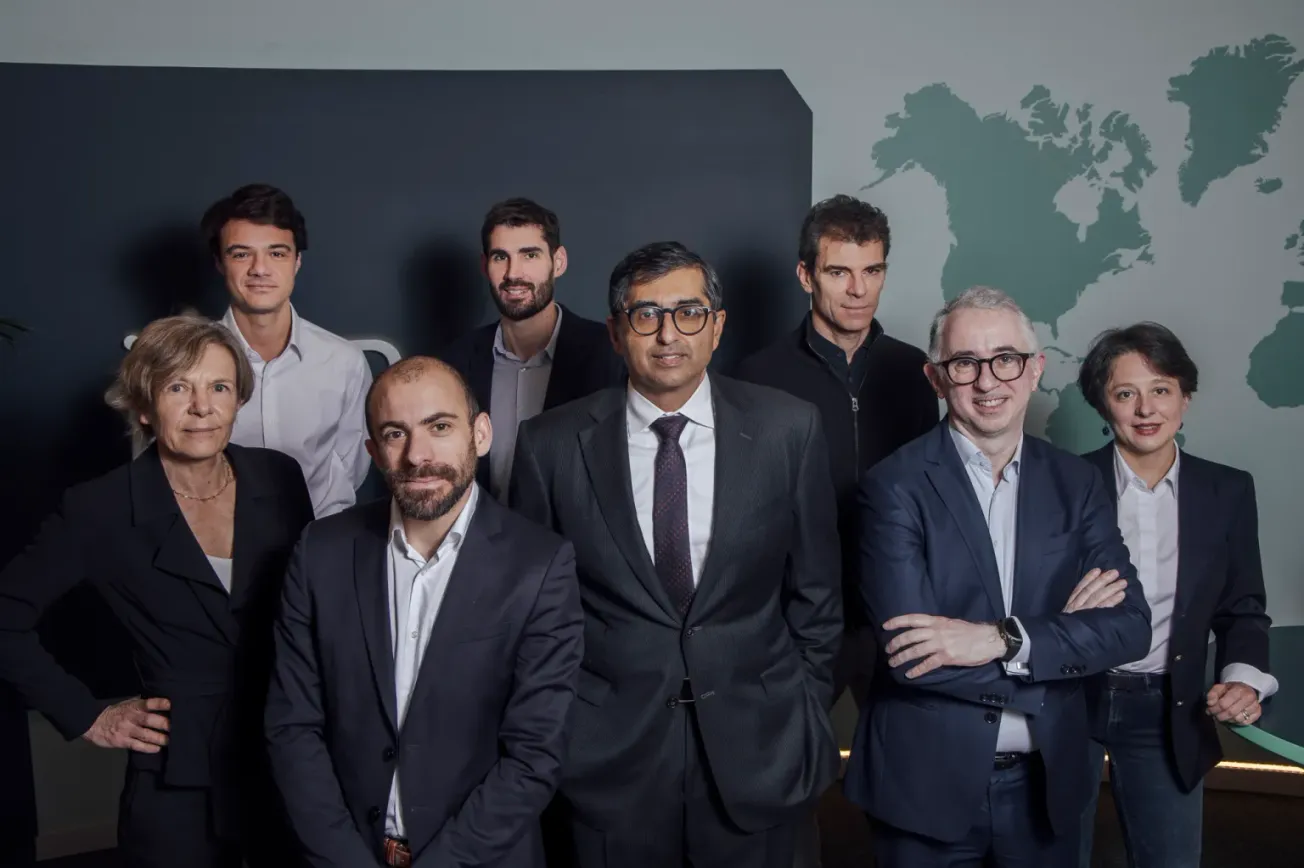
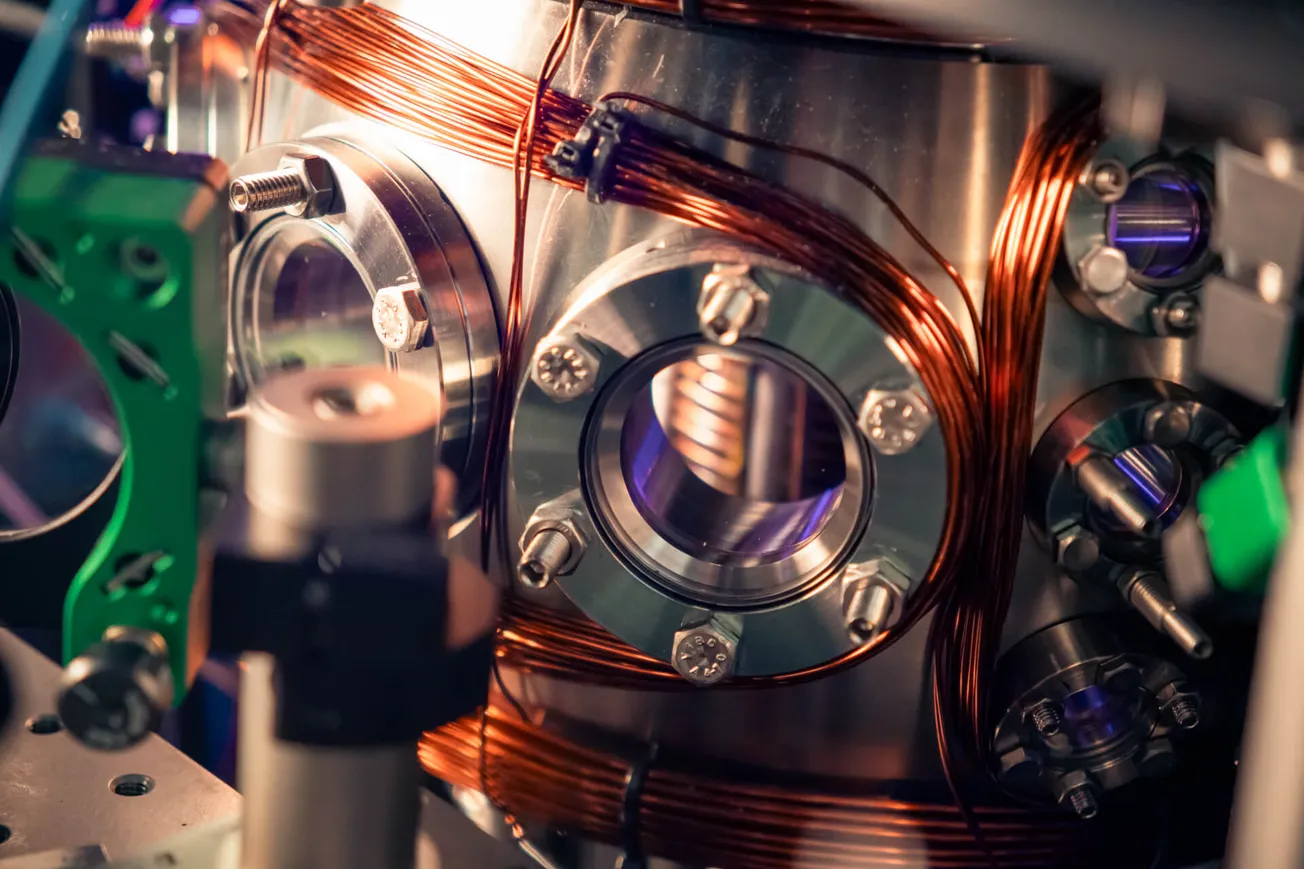
When I profiled quantum computing startup Pasqal three years ago, the company had just closed a €100 million Series B and employed about 100 people. Then CEO Georges-Olivier Reymond was full of praise for state bank Bpifrance, which had supported the company at virtually every stage of its journey, from a €60,000 emergence grant to hire its first employee to direct investment through its Large Venture Fund.
Now, Pasqal is making the biggest bet of its young life. The Paris-based company has announced that it has agreed to merge with Bleichroeder Acquisition Corp. II, a Nasdaq-listed SPAC, in a deal valued at $2 billion pre-money.
If all goes to plan, the transaction will close in the second half of 2026 and make Pasqal a publicly traded company on Nasdaq, with a dual listing on Euronext Paris to follow.
It is, by any measure, a landmark moment for the French deep tech ecosystem. And Bpifrance is right there in the middle of the deal, anchoring the convertible financing alongside new institutional investors.
💸 Top Funding Deals 💸
📇 Company: DeepIP
🏷️ Sectors: AI, LegalTech, Enterprise SaaS
🔍 Description: DeepIP is a Franco-American AI startup developing software that automates and augments the patent lifecycle for intellectual property professionals. A spin-off from Kili Technology, the platform uses artificial intelligence to assist with patent drafting, prosecution, and portfolio management, significantly reducing the time required for patent preparation and responses to patent office actions. The solution aims to integrate AI throughout the entire patent lifecycle, enabling companies to create stronger, more defensible patents while improving efficiency for IP teams.
💻 Website: DeepIP
📍 HQ City: Paris & New York
🧗 Round: Series B
💰 Amount Raised: €23M
🏦 Investors: Korelya Capital, Serena, Headline, Balderton Capital
👨💼👩💼 Founders: François-Xavier Leduc
🗞️ News: DeepIP has raised $25M in a Series B round led by Korelya Capital (the fund founded by Fleur Pellerin) and Serena, with participation from Headline and Balderton Capital. The round follows a $15M raise in March 2025, bringing total funding over the past year to $40M. The company will use the capital to accelerate international expansion and strengthen its AI platform across the patent lifecycle, with a strong focus on the U.S. market, where 80% of its customers are currently located. DeepIP now serves around 400 clients, including companies such as Dexcom and Philips, across 25 jurisdictions and has processed more than 40,000 patent files. The startup has grown rapidly from fewer than 10 employees to 45 within a year and plans to reach 100 employees by the end of 2026 as it pursues global leadership in AI-powered intellectual property management. | Maddyness
📇 Company: HELIUP
🏷️ Sectors: ClimateTech, Clean Energy, DeepTech, SolarTech, Industrial Tech
🔍 Description: HELIUP is a French deeptech company developing ultra-lightweight photovoltaic panels designed specifically for large rooftops with limited load-bearing capacity. A spin-off from the CEA, the company combines high-efficiency silicon cells with a proprietary lightweight encapsulation architecture that allows solar installations without structural reinforcement, reducing installation costs, timelines, and environmental impact. HELIUP targets a large but structurally underserved segment of the European building stock, particularly logistics, industrial, and commercial rooftops.
💻 Website: HELIUP
📍 HQ City: Le Bourget-du-Lac
🧗 Round: Growth
💰 Amount Raised: €16M
🏦 Investors: Supernova Invest (lead), MAIF Impact, Lita Gestion, C2AD, Starquest Capital, BNP Paribas Développement
👨💼👩💼 Founders: CEA spin-off (founding team not specified)
🗞️ News: HELIUP has raised €16M to accelerate European industrial scale-up and commercial expansion of its ultra-lightweight photovoltaic technology. The company operates a 100 MWc production facility in Le Cheylas (Isère), which has been operational since January 2025 and is supported by the EU Innovation Fund through the SHEEFT project. The funding will support the expansion of HELIUP’s manufacturing capacity, the growth of its European commercial teams, and the replication of its industrial model across new production units, aiming for a 10x increase in capacity by 2028. Positioned at the intersection of rooftop solar mandates, growing demand for energy self-consumption, and European industrial sovereignty, HELIUP aims to unlock rooftop solar deployment in previously unsuitable locations for conventional photovoltaic systems. | Les Echos
📇 Company: Metavonics
🏷️ Sectors: Aerospace, DefenseTech, Avionics, DeepTech, Embedded Systems
🔍 Description: Metavonics is a French deeptech startup developing modular avionics technologies for safety-critical embedded systems. Founded in 2021, the company designs standardized, certifiable electronic components, along with software tools, to simplify the development, integration, certification, and lifecycle management of avionics functions. Its modular architecture aims to improve the safety, flexibility, and performance of next-generation embedded systems used in aerospace and defense.
💻 Website: Metavonics
📍 HQ City: Paris
🧗 Round: Series A
💰 Amount Raised: €7.3M
🏦 Investors: Safran Corporate Ventures, TTTech
👨💼👩💼 Founders: Martial Montrichard, Mohamed Eladl, Ashley Tse
🗞️ News: Metavonics has raised €7.3M in a Series A round with participation from Safran Corporate Ventures and Austrian embedded systems specialist TTTech. Alongside the investment, the startup has signed a strategic partnership with Safran Electronics & Defense to accelerate the development and deployment of its modular avionics technology. The deal reflects Safran’s strategy to support innovative technologies improving the safety and performance of critical embedded systems in aerospace, while strengthening its position in next-generation avionics infrastructure. | Zonebourse
👋🏻 If you’re enjoying The French Tech Journal, support the project by forwarding it to friends and sharing it on your social networks. You can also comment on this post. And if you have ideas for stories, tips, or just want to harass us, shoot us an email: [email protected] / [email protected] 👋🏻