
👋 Inside this week's edition:
👀 The French tech ecosystem is brimming with talent, ideas, and ambition. But a stubborn procurement gap between startups and the corporates and government agencies that should be their biggest customers threatens to undermine the whole project. We examine a series of new reports that highlight the size of the problem and why it remains so persistent.
👀 If you thought payroll was a problem that had already been solved, well, think again. The 20-Something Co-Founders of Rivage just raised €2.6M to prove they can finally solve it. CEO Tancrède d'Hauteville explains why payroll still sucks and how AI can make it suck less.
Chris O'Brien + Helen O'Reilly-Durand
Tech Talk
💟🐱 You could be forgiven if you thought that February had been declared national "I ❤️ Mistral AI Month" in France. The local LLM heartthrob has been feeling the warm fuzzies from just about every corner after months of perpetually online types insisting the company was going to get squeezed to death between Silicon Valley giants like OpenAI and Chinese open-source alternatives like DeepSeek. Instead, it appears Mistral has defied these gloomy predictions and gone from promising European hopeful to full-blown revenue rocket.
In a Financial Times profile, the Paris-based start-up says its annualized revenue run rate is now north of $400 million, up from just $20 million a year ago. That's a 20-fold surge that would make even Silicon Valley blink. Founded in 2023 and valued at nearly €12 billion last year, Mistral is now aiming to cross $1 billion in annual recurring revenue by the end of 2026, powered by more than 100 large enterprise customers and a growing list of European governments.
The timing is not accidental. As geopolitical tensions rise and concerns about US tech dominance deepen, European boardrooms have suddenly rediscovered the word “sovereignty.” More than 80% of the EU’s digital infrastructure depends on foreign, mostly Yankee Doodle Dandy, providers. Mistral’s pitch is straightforward: European-built models, European-run infrastructure, European data residency. In other words, AI without the hyperscaler umbilical cord. That pitch has helped persuade institutions such as France's national research agency, CNRS, which this month rolled out a chatbot built on Mistral for its researchers, who are not allowed to use other tools such as Claude or ChatGPT for official purposes.
To back up that ambition, Mistral is investing €1.2 billion in a new AI data center in Sweden, its first major facility outside France. The site will deliver 23 megawatts of computing power and is expected to come online next year. CEO Arthur Mensch made the official announcement at the TechArena Conference in Sweden.
"By building a fully sovereign AI stack, we’re strengthening Europe’s strategic autonomy, competitiveness, and ability to serve industries, public institutions, and researchers at scale," Mensch wrote on LinkedIn.

Sweden’s appeal is relatively cheap and abundant low-carbon energy, an important detail when your product runs on power-hungry chips. The company says the facility could generate more than €2 billion in revenue over five years.
Mistral has already raised €1.7 billion, including backing from ASML, and insists it doesn’t need to rush into an IPO thanks to readily available debt financing. That financial flexibility, CEO Arthur Mensch argues, helps safeguard independence, an increasingly fashionable word in European tech circles.
About 60% of revenues now come from Europe, with the rest split between the US and Asia. Clients include ASML, TotalEnergies, HSBC, and several European governments. While OpenAI and Anthropic dominate headlines, Mistral is carving out a distinct role as Europe’s “sovereign AI” champion. The subtext is clear: in the race for artificial intelligence supremacy, Europe may not want to win—but it definitely doesn’t want to rent forever. | Financial Times, Les Echos
💸5️⃣ Elaia is back in the market with its fifth Digital Venture Fund, and it’s already locked in a €120 million first close to double down on Europe’s most ambitious tech founders. DV5 will write checks from €1 million to €15 million, backing B2B startups from pre-seed to Series B, with a clear bias toward deep, IP-heavy technologies, think AI, cybersecurity, techbio, and industrial innovation. The first bet is already in: Zurich-based Mimic Robotics, signaling the fund’s appetite for “physical AI” and foundational infrastructure plays. With heavyweight backers like Bpifrance, BNP Paribas, and MACSF on board, Elaia is making a familiar argument: Europe doesn’t just need more startups, it needs the kind that underpin entire industries and stick around long enough to matter. | EU Startups
🇮🇳⛰️ France is packing its AI bags for New Delhi. La French Tech Mission is bringing a 19-startup delegation to India’s AI Summit on February 19–20, led by its director Julie Huguet, with stops planned in Bangalore and Mumbai to drum up business. The lineup spans heavy hitters like BlaBlaCar and Pigment, rising AI players such as H Company and Harmattan AI, plus quantum, cybersecurity, space, biotech, and even agtech contenders. Paris wants a bigger slice of India’s booming tech market. | Maddyness
⚫ French business leaders can breathe a little easier, at least when it comes to their home addresses. A new decree published on August 25 now allows executives to mask their personal addresses on public documents like Kbis extracts, a long-awaited move that gained urgency after a string of kidnappings and attempted abductions, particularly in the crypto world. Since the rule took effect, around 40,000 anonymisation requests have been processed by commercial courts, with another 50,000 handled upstream by the INPI. The process takes about five days (assuming no paperwork hiccups), and early technical glitches have mostly been ironed out. That said, the data isn’t gone for good: authorities can still access it, and with personal information already flooding the dark web. | Les Echos
🎮💢 The French president apparently forgot that timeless saying: Hell hath no fury like a video gamer scorned. Emmanuel Macron stepped into the gaming crossfire, floating the idea of restricting violent video games in the wake of recent youth violence. In an interview with Brut, he argued that spending five or six hours a day “killing people” in games can normalize violence and potentially push vulnerable teens toward real-world loss of control, though he insisted games aren’t inherently bad. Instead, he’s calling for a scientific review, tasking France’s National Council on AI and Digital Technology to assess the impact of violent games and even conversational AI agents on children, with conclusions expected by early summer. The comments come as France also advances a ban on social media for under-15s, putting it at the center of a broader European push to curb minors’ digital habits. Predictably, gamers bristled, prompting Macron to clarify on X that he supports the industry, even as he questions what happens when screen time starts looking more like combat training: "What I announced on Brut, in response to that teacher who was shouting her anger, isn’t a ban on video games: it’s the launch of a scientific, collegial effort to face reality head-on. Calmly, lucidly, and with all stakeholders. It’s our responsibility to ask researchers, scientists, and clinicians to evaluate the impacts, untangle misconceptions, and inform the public debate." | Brut, Macron Twitter
👎 X, formerly known as the platform everyone still accidentally calls Twitter, is having a rough year in France. According to Médiamétrie, it lost 16% of its monthly visitors in 2025, dropping to 15.6 million, and in November, it hit its lowest audience levels since tracking began in 2017. Daily traffic is down even more sharply, off 21% to 4.2 million users, meaning 1.2 million people have quietly logged off. It’s still the undisputed heavyweight in micro-blogging, with Threads and Bluesky trailing far behind, but the dominance looks a little less imperial than it used to. Guess all the disinfo and deepfakes and child porn aren't winning hearts and minds, even if it's keeping French regulators and investors fully employed. Meanwhile, Reddit is staging a surprisingly strong French renaissance, jumping 72% in a year and muscling its way into the top 10, helped along by clever auto-translation and Google-friendly threads. X remains in the social media big leagues for now, but it’s suddenly within arm’s reach of LinkedIn, Pinterest, and even Discord, which is probably not the kind of competition it once worried about. | Le Figaro
France Has the Startups. Why Won't Its Large Corporates Buy From Them?
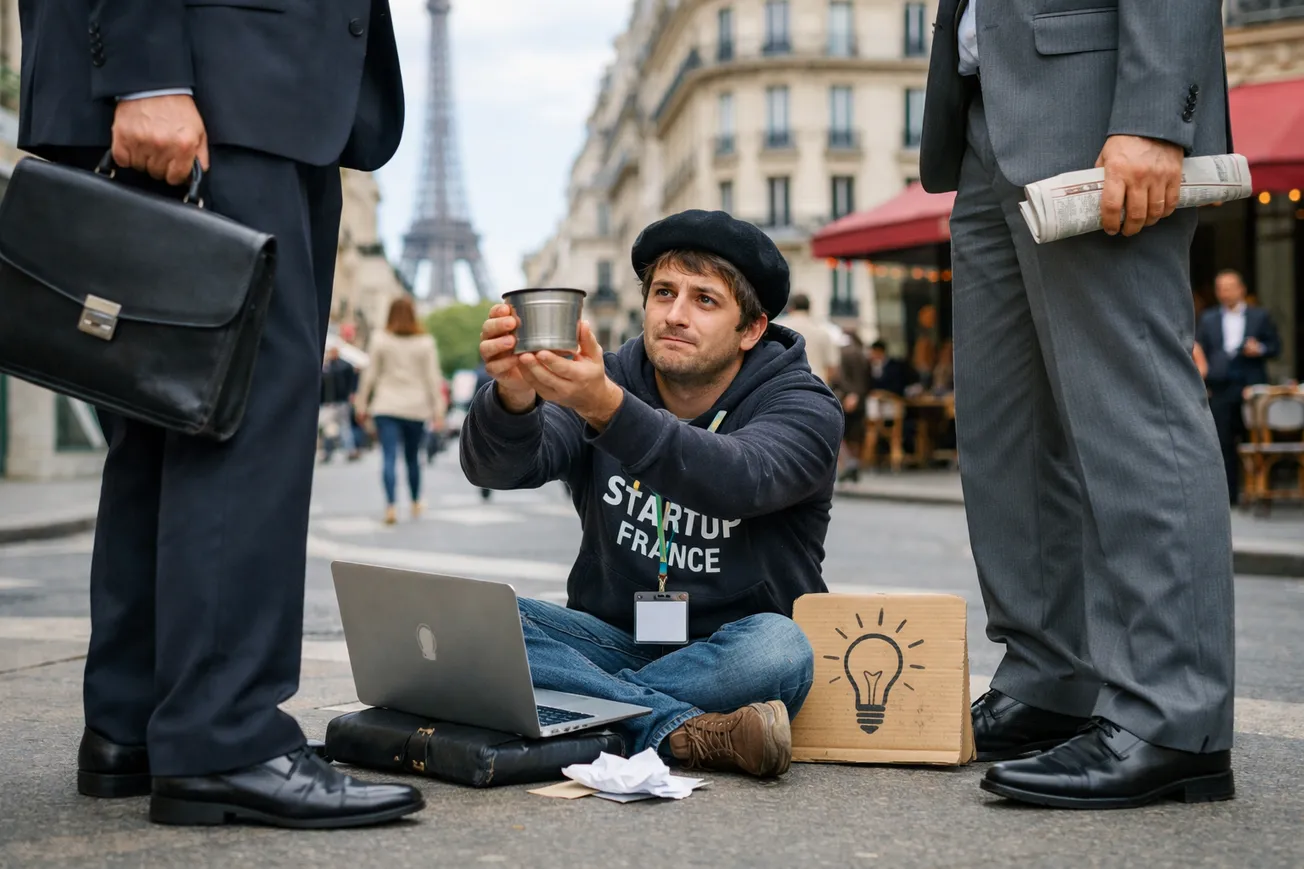
France likes to think of itself as a startup nation. And in many ways, over the past decade, it has become just that.
The country has built one of Europe's most vibrant innovation ecosystems, producing heavyweights like Mistral AI in artificial intelligence, Pigment in finance, and Exotec in industrial robotics. The talent is here. The ideas are here. The ambition is here.
What's missing? Big customers.
That's the blunt takeaway from a flurry of reports and events that landed in early February 2026, all circling the same uncomfortable truth: French and European startups are struggling to sell to large corporations and government agencies, the very institutions that should be their most natural buyers. And without those contracts, even the most brilliant startups risk remaining forever small, forever fragile, or worse, packing their bags for the United States.
Rivage's Founders Say French Payroll Is Broken. AI Can Fix It
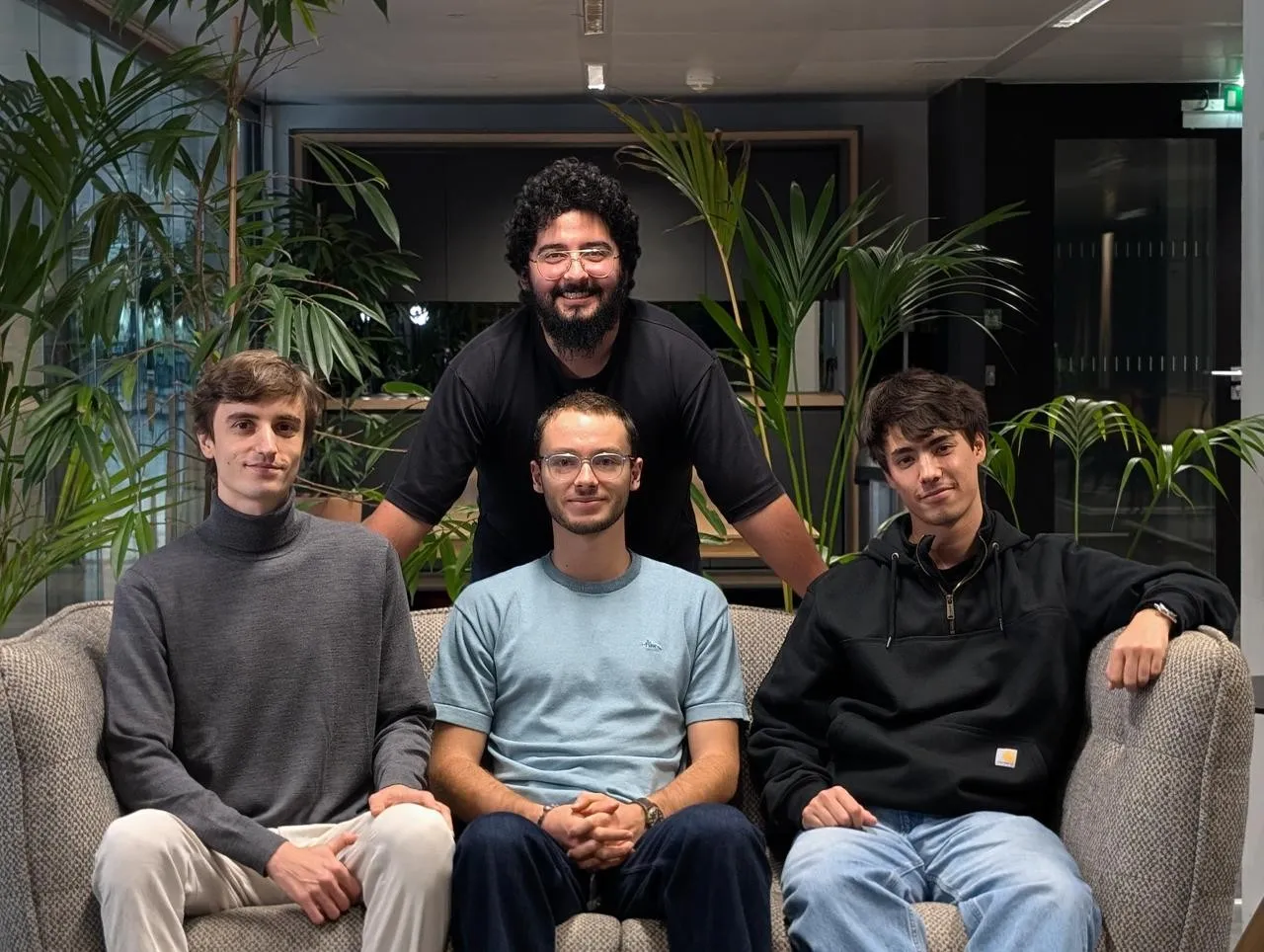
Payroll.
It's not exactly the kind of word that gets pulses racing in startup land. And when I first heard the pitch for Rivage, a Paris-based startup that just raised €2.6 million to build payroll software, I'll confess my initial reaction was something like: really? Haven't we solved this already?
After a decade of SaaS innovation, billions of euros poured into fintech, and the rise of unicorns like PayFit, you'd be forgiven for thinking that cutting paychecks in France is a problem that's been thoroughly cracked. But spend a few minutes talking to Tancrède d'Hauteville, the 20-something CEO of Rivage, and you start to realize the picture is far messier than it looks from the outside.
"Payroll managers spend six to seven hours a day on the software," d'Hauteville told me during a recent interview. "So if you can make a 10% difference on the software, in terms of productivity, you're going to change an entire profession, an entire sector."
💸 Top Funding Deals 💸
📇 Company: DentalMonitoring
🏷️ Sectors: HealthTech, AI & Machine Learning, Hardware
🔍 Description: DentalMonitoring develops AI-powered remote orthodontic monitoring solutions, operating as a software-as-a-medical-device (SaMD). Its platform enables orthodontists to supervise treatments remotely through AI-driven analysis of intraoral scans and patient data, improving clinical efficiency and patient experience. The company offers a suite of products, including DM Insights, ScanAssist, DM Engage, and ScanBox Pro, serving over 2 million patients globally.
💻 Website: DentalMonitoring
📍 HQ City: Paris
🧗 Round: Growth
💰 Amount Raised: €84M (approx. $100M, mix of equity and debt)
🏦 Investors: Lazard Elaia Capital, ISALT
👨💼👩💼 Founders: Philippe Salah
🗞️ News: DentalMonitoring has secured €84M ($100M) to accelerate international expansion and product innovation, reinforcing its position as a global leader in AI-powered orthodontic remote monitoring. The round, led by Lazard Elaia Capital with participation from ISALT, combines equity and debt financing and follows the company’s $150M raise in 2021 that propelled it to unicorn status. Active across Europe, the US, Australia, and Japan, DentalMonitoring plans to expand into Brazil, Turkey, Southeast Asia, and the Middle East. The funding will also support AI R&D through a newly launched software development center and deepen integrations across the orthodontic ecosystem, including manufacturers, practice management software providers, and scanning hardware companies. With a treatment-agnostic platform model and growing enterprise partnerships, DentalMonitoring aims to define a new global standard of care in digital orthodontics while exploring applications beyond dentistry. | EU Startups, Maddyness
📇 Company: Naboo
🏷️ Sectors: AI & Machine Learning, SaaS & Enterprise
🔍 Description: Naboo is an AI-powered procurement platform initially focused on corporate event management (MICE) and now expanding into broader “Class C” (tail spend) categories such as travel, fragmented services, and indirect procurement. Positioned as an AI-driven operating system for event and indirect spend management, Naboo centralizes sourcing, contracting, payments, compliance, and financial visibility for large enterprises.
💻 Website: Naboo
📍 HQ City: Paris
🧗 Round: Series B
💰 Amount Raised: €60M (≈ $70M)
🏦 Investors: Lightspeed Venture Partners, Notion Capital, ISAI, Ternel
👨💼👩💼 Founders: Maxime Eduardo, Antoine Servant, Lucien Bredin, Jean-Louis Villeminot
🗞️ News: Naboo has raised €60M in a Series B led by Lightspeed to expand beyond event management into AI-driven control of “Class C” indirect spending—an often fragmented and weakly structured category covering events, travel, and miscellaneous services. Founded in 2022, Naboo positions itself not as a traditional SaaS tool but as a “service-as-software” platform that combines AI agents, procurement workflows, payment infrastructure, and supplier consolidation into a unified operating system. The company reports €125.8M in business volume to date, 3x year-over-year growth over the past three years, 0% churn among enterprise clients, and contracts with a quarter of CAC 40 companies. International expansion is accelerating, with the UK now its largest market outside France and a new North American hub in New York following its launch in Montreal. The fresh capital will fund deeper AI integration across sourcing, contracting analysis, automated tender management, and real-time compliance workflows, alongside expansion into adjacent procurement categories beyond events. Naboo aims to surpass €1B in managed business volume within two years, positioning itself as a strategic financial control tower for enterprise indirect spend in an AI-native procurement landscape. | Maddyness, FrenchWeb, EU Startups
📇 Company: GitGuardian
🏷️ Sectors: Cybersecurity, AI & Machine Learning
🔍 Description: GitGuardian is a cybersecurity company specializing in the detection and remediation of exposed secrets (API keys, tokens, credentials, certificates) and the protection of non-human identities (NHIs) within codebases and cloud environments. Its platform monitors repositories and infrastructure to identify compromised secrets, alert developers and security teams, and orchestrate remediation to prevent lateral movement and data breaches.
💻 Website: GitGuardian
📍 HQ City: Paris
🧗 Round: Growth
💰 Amount Raised: $50M
🏦 Investors: Insight Partners, Quadrille Capital, Eurazeo, Sapphire, Balderton, Bpifrance
👨💼👩💼 Founders: Eric Fourrier
🗞️ News: GitGuardian has raised $50M in a growth round led by Insight Partners to scale its platform amid the rapid expansion of non-human identities driven by AI agents and cloud automation. The company, founded in 2017, has become a reference player in secrets security, with over 500,000 developers using its GitHub-integrated tools and enterprise clients including Snowflake, Orange, Deutsche Telekom, and ING. In 2025 alone, GitGuardian detected and remediated 350,000 exposed secrets—five times more than the previous year—highlighting the acceleration of threat vectors as attackers increasingly leverage AI. Generating 70% of its revenues in the US and reporting annual revenues between €30M and €50M, the company aims to deepen its presence in North America while expanding into APAC, Latin America, and the Middle East. The raise positions GitGuardian to compete more aggressively against well-funded US and Israeli cybersecurity players in a market where AI-driven attacks are reshaping the threat landscape. | Les Echos, Maddyness
👋🏻 If you’re enjoying The French Tech Journal, support the project by forwarding it to friends and sharing it on your social networks. You can also comment on this post. And if you have ideas for stories, tips, or just want to harass us, shoot us an email: [email protected] / [email protected] 👋🏻