
👋 Inside this week's edition:
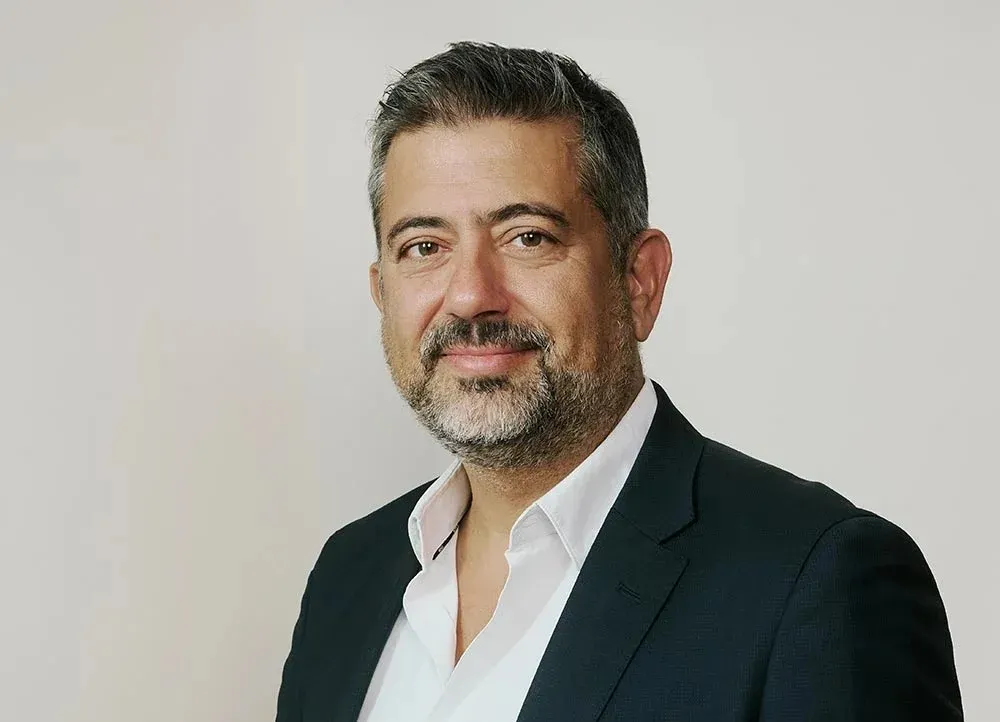
👀 With two new funds, a freshly launched joint venture with Lazard, and a billion euros under management, Elaia is betting that the future of venture capital looks nothing like the past. Elaia founder Xavier Lazarus explains this massive bet on the future of venture capital and entrepreneurship.
Chris O'Brien + Helen O'Reilly-Durand
Want to reach an audience of more than 40,000 readers each month? The French Tech Journal is the leading English-language media platform covering France's dynamic tech ecosystem. With engaged readers across key global markets and consistently high engagement rates, our sponsorships provide unparalleled access to decision-makers in the French tech sector.
Tech Talk
🏥 📈 While many European unicorns are quietly slipping below the billion-dollar mark, French health insurance startup Alan is doing the opposite. The company has raised €100 million and is now valued at €5 billion, up from €4.5 billion last year. Founded in 2016, Alan now serves 1 million users and generated €785 million in annual recurring revenue in 2025, a 53% jump in just one year. The company is also edging closer to profitability — at least in France — while continuing to expand across Belgium, Spain, and now Canada. Index Ventures, Greenoaks, and Shopify founder Tobi Lütke participated in the round. CEO Jean-Charles Samuelian-Werve says the fresh capital will fuel bigger investments in technology and AI, as the company pushes toward $1.16 billion in ARR by 2026. Profit can wait. For now, investors seem perfectly happy with the growth story. | TechCrunch
💸 🦄 A new French venture fund wants to prove that the next generation of startup founders doesn’t all come from the same Parisian playbook. Time4, an early-stage fund backed by daphni, Les Déterminés, Live for Good, and HEC Paris, has announced a €50 million first close, with a target of €100 million. The idea is simple: invest in founders from underrepresented backgrounds and overlooked regions, not just the usual tech hubs. Time4 plans to write €100K to €1M checks to 60 startups. Early bets already reflect that thesis, from industrial decarbonization startup Leviathan Dynamics to Wish One, a high-performance bike company based in rural Aveyron. In other words, the fund is betting that some of France’s most promising startups might be hiding far from the traditional venture capital radar. | Les Echos
📲 ⛔️ A team of ethical hackers at French crypto unicorn Ledger has uncovered a nasty security flaw that could affect roughly a quarter of Android smartphones worldwide. The vulnerability, discovered by Ledger’s internal “Donjon” security lab in Paris, allows attackers to compromise a phone in under a minute – even if it’s turned off. By plugging the device into a computer via USB, hackers could bypass Android’s secure boot process, retrieve encryption keys, and access sensitive data, including PIN codes, messages, photos, and even crypto wallet seed phrases. The flaw affects Android devices using MediaTek chips and Trustonic’s Trusted Execution Environment, a combination found in millions of phones globally. After discovering the issue, Ledger alerted MediaTek, which quietly released a security patch to manufacturers in January 2026 before the vulnerability was publicly disclosed in March. Ledger’s takeaway is blunt: smartphones were never designed to be digital vaults. The fix is in place, but users still need to install the latest security updates. Otherwise, their supposedly secure phone might be easier to crack than they think. | Maddyness
🧬 👨⚕️ Paris-based startup Waiv, spun out of French AI biotech darling Owkin, has raised $33 million to scale its AI-powered cancer diagnostics. The round was led by OTB Ventures and Alpha Intelligence Capital, with backing from Serena Data Ventures, Karista, and Sista Fund. Waiv’s technology analyzes microscopic tumor images using AI to identify biomarkers and help doctors match cancer patients with the most effective therapies. The company is led by Meriem Sefta, Owkin’s former Chief Diagnostic Officer, and began life as an internal project called Owkin DX before spinning out as an independent startup. Owkin remains a minority shareholder but is no longer involved in day-to-day operations. The move adds to what some observers are starting to call the “Owkin mafia,” a growing network of startups emerging from the company’s ecosystem, following the earlier launch of AI biotech spin-out Bioptimus. Waiv plans to use the new funding to expand adoption of its diagnostic tests and deepen partnerships with pharmaceutical giants like Merck and AstraZeneca, as it targets both the U.S. and European markets. | Maddyness, FrenchWeb, Sifted
🚗 ⚡️Renault isn’t backing away from electric cars. It’s just dialing down the hype a bit. At its latest strategy day, the French automaker said its European lineup will be fully electrified by 2030, but that now means a 50/50 mix of electric and hybrid vehicles, rather than the previously promised 100% EVs. The shift reflects a more pragmatic view of a market where many drivers still aren’t ready to go fully electric. Unlike some rivals that are reviving gasoline engines outright, Renault insists it’s still betting heavily on EVs. It just wants hybrids as a safety net while the transition plays out. The company also hinted at a futuristic twist on the factory floor. Renault plans to deploy 350 humanoid robots from French robotics firm Wandercraft in its manufacturing plants, potentially one of the largest industrial humanoid rollouts announced in Europe. | Numerama
🌱🚀 State investment bank Bpifrance has launched a new accelerator called Deeptech Seed, a four-month bootcamp designed to help early-stage deeptech startups prepare for their first venture capital round. The goal is to turn lab breakthroughs into companies that can actually raise money, ideally within nine months. The program combines coaching from experienced founders, fundraising workshops, and a demo day in front of 100 investors. In 2026, Bpifrance plans to support 75 startups through three cohorts. The first batch of 21 companies spans satellite computing, agritech, and geothermal modeling. | Bpifrance
🏭 🇫🇷 France’s industrial comeback is still inching forward...though just barely. According to Bpifrance’s latest Industry Observatory, 245 industrial sites opened in France in 2025, almost exactly offset by 244 closures, leaving the country with a razor-thin net gain of one factory. Not exactly a renaissance, but at least the lights aren’t going out. The real momentum is coming from startups, SMEs, and mid-size companies, which accounted for more than 80% of new sites and 203 factory openings. That's roughly double the number seen in 2022. Industrial startups alone opened 75 sites, more than twice as many as they shut down, underscoring their growing role in reshaping France’s manufacturing base. The sectors driving the action are the usual suspects: green industry, energy, electronics, and Industry 4.0, while more traditional sectors like consumer goods continue to shrink under global competition. Behind the scenes, France now counts 3,500 industrial startups, which raised €3.7 billion in 2025, representing 43% of all French Tech funding. | Bpifrance
😶🌫️ 💰 Europe wants its own cloud stack, so it’s putting money behind the idea. At Mobile World Congress 2026, the European Commission unveiled EURO-3C, a €75 million project to build the continent’s first large-scale federated Telco-Edge-Cloud infrastructure. The idea is to combine telecom networks, edge computing, and cloud services into one integrated platform — all built and operated in Europe — to reduce dependence on U.S. and other foreign tech providers. Backed by Horizon Europe and involving 87 companies and research organizations, the project is meant to power everything from AI and cybersecurity to future 6G networks. In Brussels’ language, it’s about innovation. In reality, it’s also about digital sovereignty — Europe trying to make sure the infrastructure behind tomorrow’s internet isn’t owned somewhere else. | European Commission
‼️ 🙅♀️ France’s tech sector still has a diversity problem, and it’s not getting better. The latest SheLeadsTech barometer finds that women make up less than 29% of tech workers in France, including just 11% of developers and 22% of AI and data specialists, with little progress in 2026. The report also points to an unexpected influence: the rollback of diversity programs in the United States, which is starting to ripple across European tech ecosystems as multinational companies quietly scale back visible commitments to parity. Where progress does exist, it’s largely driven by regulation rather than corporate enthusiasm. About 90% of companies now have policies on pay equity and harassment prevention, largely thanks to European directives and stricter legal obligations. In the AI era, the report argues, this imbalance is no longer just a social issue. It’s a strategic one. If the people building AI systems aren’t diverse, the technologies themselves risk embedding the same blind spots. In that sense, the authors warn, gender diversity in tech is quickly becoming a matter of technological sovereignty. | Le Monde Informatique
Elaia’s Full-Stack Gambit: How Xavier Lazarus Is Building a New Kind of European Tech Investor
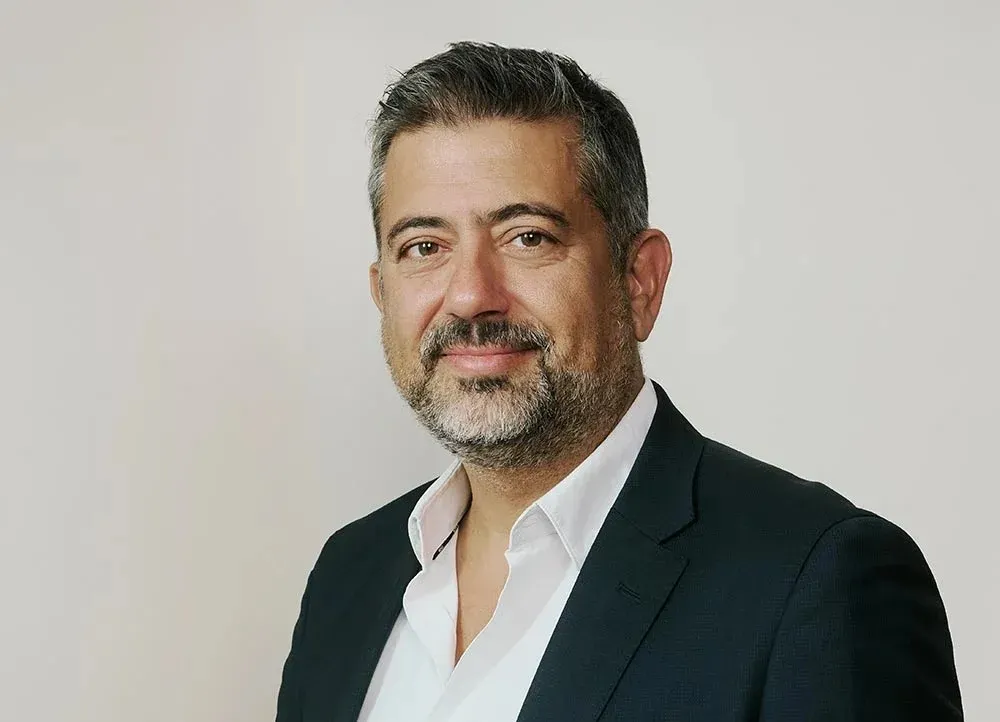
Xavier Lazarus has spent more than two decades betting on European tech founders. Now, at what he considers a pivotal inflection point for the continent’s startup ecosystem, he’s making perhaps his boldest bet yet: reimagining the very structure of how venture capital works in Europe.
In just a few weeks, the Paris-based VC firm Elaia, which Lazarus co-founded in 2002, has announced two significant fund closings. On February 11, Elaia revealed the first close of its fifth Digital Venture Fund (DV5) at €120 million, with ambitions to reach €300 million. Then, on March 12, the firm closed its third DeepTech Seed fund (DTS3) at €134 million, doubling the size of its previous deep-tech seed vehicles.
Taken together with the official launch of Lazard Elaia Capital (LEC), the joint venture between Elaia and the global financial powerhouse Lazard, the firm now manages more than €1 billion in assets.
Lazarus oversees both structures, which remain independent and yet complementary. The idea is that venture capital is evolving, and that Europe’s most transformative tech companies don’t follow predictable trajectories, so their investors shouldn’t be locked into rigid frameworks either. Between the two entities, LEC and Elaia now have a wide-ranging flexibility to explore creative ways to help startups scale.
“We are addressing a world that is changing every other week,” he said. “We can’t do that with a too static mind. Everything that works is kept, and everything that needs to be adapted is adapted. We are doing exactly what entrepreneurs are doing.”
💸 Top Funding Deals 💸
📇 Company: Qevlar AI
🏷️ Sectors: Cybersecurity, AI, Enterprise Software, Security Operations
🔍 Description: Qevlar AI is a French cybertech startup developing a platform of autonomous AI agents designed to support Security Operations Centers (SOCs). Its technology automates the investigation of cybersecurity alerts—enriching data, identifying patterns, and generating reports—to help security teams move from reactive incident response to proactive threat detection and prevention. By reducing investigation time per alert and surfacing deeper patterns in security data, Qevlar aims to act as an AI “copilot” for cybersecurity teams.
💻 Website: Qevlar AI
📍 HQ City: Paris
🧗 Round: Growth
💰 Amount Raised: $30M
🏦 Investors: Partech, Forgepoint Capital International (co-leads), EQT Ventures
👨💼👩💼 Founders: Ahmed Achchak, Hamza Sayah
🗞️ News: Qevlar AI has raised $30M just one year after its previous $14M round (April 2025), reinforcing strong investor interest at the intersection of AI and cybersecurity. The company’s platform of autonomous AI agents is designed to help SOC teams manage overwhelming alert volumes—often exceeding 4,000 alerts per day—by automating the full investigation workflow. Already used by enterprises such as Mercedes-Benz and Sodexo, as well as MSSPs including Atos and Orange Cyberdefense, Qevlar claims its technology reduces investigation time to roughly three minutes per alert, up to 10× faster than traditional workflows. The new funding will support further development of the platform and expansion of its AI-driven cyber “copilot” capabilities to help organizations strengthen their security posture. | EU Startups, Maddyness
📇 Company: Lemrock
🏷️ Sectors: AI, CommerceTech, RetailTech, DeepTech, Infrastructure
🔍 Description: Lemrock is a Paris-based deeptech startup building infrastructure for agentic commerce, enabling brands to sell directly within conversational AI environments such as ChatGPT, Claude, and Perplexity. Its middleware platform connects product catalogues, pricing, availability, and transaction systems to AI agents through a single integration point, allowing retailers to manage their presence, data, and transactions across conversational platforms.
💻 Website: Lemrock
📍 HQ City: Paris
🧗 Round: Seed
💰 Amount Raised: €6M
🏦 Investors: Galion.exe (lead), Michaël Benabou (Veepee), Gary Anssens (Alltricks / Decathlon), Frédéric Halley, Emmanuelle Brizay, Antoine Lizée (Alan)
👨💼👩💼 Founders: Roxane Laigle, Sasha Collin, Clément Nguyen
🗞️ News: Lemrock has raised €6M to accelerate the deployment of its agentic commerce infrastructure, enabling brands to sell directly through conversational AI platforms. The round was led by Galion.exe, with Criteo founder Jean-Baptiste Rudelle joining the board. Founded in 2025, the startup provides a middleware layer connecting product catalogues, AI agents, and transaction systems, allowing retailers to expose real-time pricing, availability, and purchase options within AI-driven conversations. Lemrock already partners with more than 60 brands across Europe and the U.S.—including Maisons du Monde, Cdiscount, Darty, DIM, Engie, and Lebara—and processes over 100 million interactions monthly. The company aims to address the emerging shift toward conversational commerce, where AI agents increasingly influence product discovery and purchasing decisions. | EU Startups
👋🏻 If you’re enjoying The French Tech Journal, support the project by forwarding it to friends and sharing it on your social networks. You can also comment on this post. And if you have ideas for stories, tips, or just want to harass us, shoot us an email: [email protected] / [email protected] 👋🏻