
👋 Inside this week's edition:
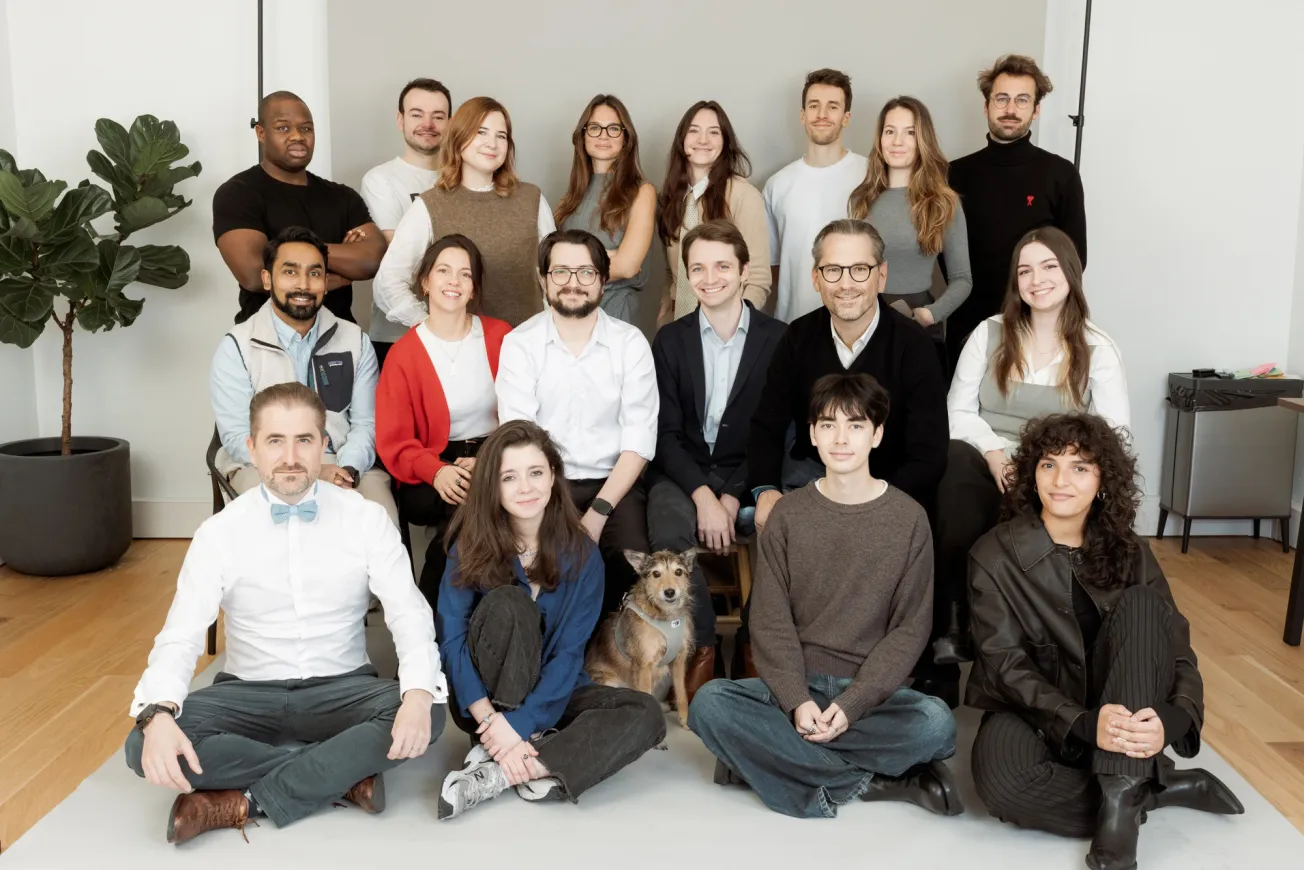
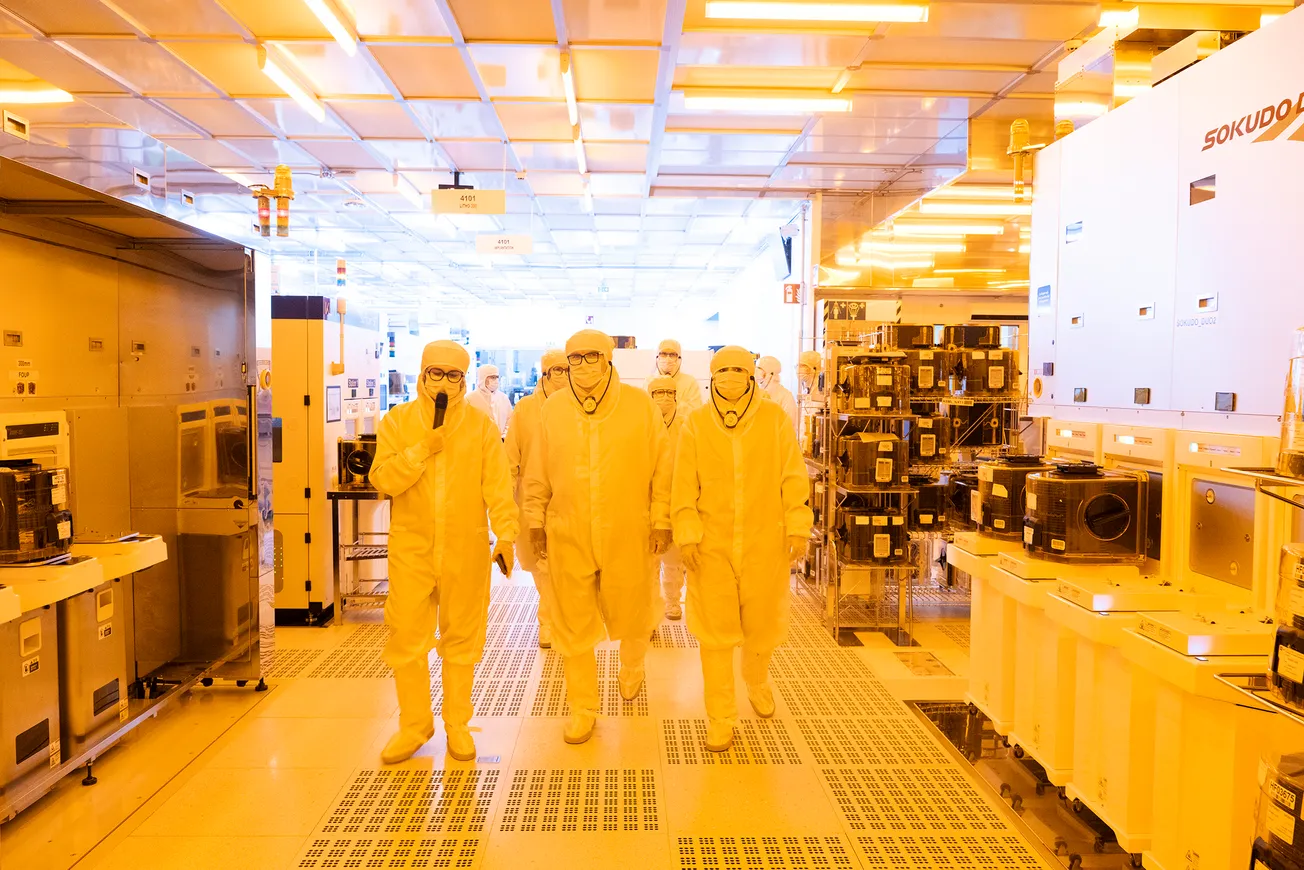
👀 Founded by Renan Devillieres in 2019, OSS Ventures is an industrial venture builder with HQs in Paris and Boston, and has launched 30 startups across 3,600+ sites. With a new €75M fund, it’s gearing up to build the next wave of AI industrial champions. Devillieres discusses his visions and the opportunities he sees to build giants in this overlooked sector.
Chris O'Brien + Helen O'Reilly-Durand
VivaTech 2026 Startup Challenges are now open! Apply to gain visibility, leads, growth acceleration and more. The perfect opportunity to get your startup in front of investors, corporate partners, and the global tech ecosystem. Get a chance to exhibit for free at Europe's biggest startup and tech event in Paris, 17–20 June 2026!
Tech Talk
⚛️💻 French quantum darling Pasqal is reportedly in talks to raise €200 million in a round that would value it north of $1 billion pre-money, according to Bloomberg. The Paris-based startup, co-founded by Nobel laureate Alain Aspect, builds neutral-atom quantum processors and the software to run them, pitching itself as a full-stack player in a field that’s still more promise than product. The timing is no coincidence: quantum funding is heating up fast, with Finland's IQM preparing a US SPAC, Multiverse Computing, and a shiny new €220 million fund from Quantonation. Pasqal, which has already raised €100 million from backers like Temasek and Bpifrance, is riding a wave of investor enthusiasm fueled by dreams of AI breakthroughs, drug discovery, and cryptographic muscle. The deal isn’t done yet, but in a market suddenly flush with quantum cash, it seems everyone wants a piece of the atom. | Bloomberg
⚛️🚧 Just a touch more modestly, C12, the Paris-based quantum upstart betting big on ultra-pure carbon nanotubes, just added 216 square meters to its in-house “Quantum Fab,” because apparently, the global quantum arms race waits for no one. The expansion tackles the bottlenecks that were slowing chip fabrication and ultra-cold testing, slashing cooling times from 24 hours to six and multiplying optical measurement capacity. In other words, fewer traffic jams between making qubits and actually seeing if they work. Backed by millions in French state funding and fresh capital, C12 says the souped-up facility will help it crank out its first sovereign quantum processor prototypes in the coming months. |
🪓🤯 Four years after a splashy $600 million raise at the height of the tech boom, French unicorn (Former-corn?) Contentsquare is tightening the screws, finalizing a 40-job PSE (plan de sauvegarde de l’emploi) as part of yet another restructuring, according to Maddyness. The cuts, launched in November and affecting support and some operational teams, mark the company’s third round of layoffs in three years, after trims in 2023 and 2024. Officially, it’s all about “refocusing on key priorities” and simplifying the org chart; unofficially, it’s the end of the hypergrowth hangover. Like many private scale-ups, Contentsquare isn’t publishing its numbers and isn’t profitable (at least not publicly), as investors now demand margins over momentum. Meanwhile, the company is doubling down on AI, snapping up Loris AI and touting generative features, betting that artificial intelligence will be less a buzzword and more a lifeline in a market that’s getting crowded fast. | Maddyness
🪓🤯 Meanwhile, Microsoft is pulling the plug on its Engineering Center in Issy-les-Moulineaux, putting around 100 jobs on the line as it moves to shut down the site in the coming months. The company says the decision is part of a broader effort to consolidate engineering teams into a handful of major international hubs, and France, awkwardly, didn’t make the cut, with Dublin emerging as Europe’s main base. Officially, consultations are still underway, and some employees may be redeployed internally, but the writing is clearly on the wall. The closure won’t affect Microsoft’s other French operations, the company insists, noting it’s still hiring locally, just not for this center. Founded in 2011 and refocused on AI in 2019, the site’s pivot to artificial intelligence ultimately wasn’t enough to survive Microsoft’s latest generative AI-era reshuffle. It's not fatal to the American giant's presence in France, but still surprising given the company's public boasting about its €4 bn in AI investment in the country. | L'Usine Digitale
😰😱 Here’s the French startup dream in 2026: total freedom, flexible hours… and a mild panic attack about cash flow. According to a new Qonto and Appinio study, 96% of French entrepreneurs chose this path willingly, mostly to pursue work-life balance and creative freedom, not to escape a pink slip. In fact, France ranks as one of Europe’s easiest places to start a business. So far, so good. But once the celebratory LinkedIn post is up, reality kicks in. Irregular income, customer hunting, and administrative red tape are draining morale, with nearly a third citing income instability as their top headache. The result is a very French paradox: fertile startup soil, but long-term survival feels like an endurance sport. The result is that one in four French entrepreneurs is considering crawling back to a salaried life by 2027, the highest rate in Europe. Not because they’ve fallen out of love with entrepreneurship, but because juggling personal finances, business cash flow, and paperwork is starting to feel less like freedom and more like a solo survival challenge. | La Tribune
💪💻 Ok, let's turn back to something worth cheering...Those wily foxes on the French government's Open Data team have just released their latest “let’s see what happens” experiment: datagouv is testing an MCP (Model Context Protocol) server to make public data easier to tap into via AI chatbots. Originally introduced by Anthropic in late 2024, MCP is pitched as a universal adapter that lets large language models call structured “tools” instead of relying on messy one-off integrations. For now, datagouv’s version is strictly read-only for searching datasets, pulling metadata, and querying resources, with any idea of editing or publishing data firmly parked behind a caution sign. The code is open source, the APIs are wired up, and the ambition is to explore more conversational access to public data, possibly even with sovereign models down the line. But the release prompted a robust debate: Is France the first government to release its own MCP MCP server for the agentic public accessibility of data? | Datagouv
🇫🇷🤳 For centuries, French diplomacy perfected the art of saying absolutely nothing. Now it’s firing off some of the sharpest clapbacks on X. Since launching the cheekily combative “French Response” account in September, Quai d’Orsay officials have traded polished communiqués for English-language zingers aimed at Elon Musk, MAGA influencers, and Russian propagandists alike that are getting the attention of global media such as the Wall Street Journal ("The Sickest Burns on the Internet Right Now Are Coming From French Bureaucrats"). When Musk cried “political attack” over a French probe into X, diplomats shot back with a not-so-subtle Epstein reference; when U.S. figures lectured France, they responded with memes, homicide stats, and the occasional colonialism joke at their own expense. The strategy, pushed by Foreign Minister Jean-Noël Barrot, is simple: fight meme wars with memes, not press releases, because showing up to social media spats with diplomatic wood tongue is like wearing a tux to happy hour. With tens of millions of monthly views, France’s bureaucrats have discovered that irony, lightly seasoned with self-deprecation, travels a lot faster than traditional statecraft. | WSJ
☢️🔌 France’s WEST tokamak just kept a superheated plasma stable for 1,337 seconds (a little over 22 minutes), quietly leapfrogging China’s recent record by about 25% and giving fusion researchers a well-earned bragging right. The feat, achieved with 2 megawatts of heating power, shows that scientists can sustain extreme conditions without the reactor’s inner walls giving up. WEST isn’t chasing net energy (not yet); this run was all about control, stability, and proving the machine can handle long pulses without melting down (literally). That matters because future fusion power plants will need to run steadily for hours, not flashy five-second bursts. With ITER rising nearby, WEST’s marathon plasma session is less about instant power and more about laying the gritty, tungsten-lined groundwork for reactors that might one day deliver it. | Earth.com
🇪🇺2️⃣8️⃣ Europe’s long-debated “28th regime” — a proposed single legal status for companies operating across the EU — is finally inching toward reality, with a draft set to drop on March 18. French Europe Minister Benjamin Haddad wants it open to all businesses, not just startups, arguing that endless debates over who qualifies as “innovative” would defeat the whole point: radical simplicity, possibly even with a symbolic €1 in starting capital. Paris is pushing for a regulation, not a directive, to avoid a patchwork of national interpretations that would turn a simplification drive into yet another bureaucratic maze. The effort is gaining Franco-German momentum amid growing pressure to boost competitiveness and cut red tape, though tax harmonization is firmly parked for another day. And if Haddad has his way, a European DARPA with big public money backing moonshot innovation in AI, quantum, defense, and greentech could be the next bold move on Brussels’ to-do list. | Les Echos
📈💸 France’s state investment arm, the Caisse des dépôts, wants to help usher 5 to 10 “French Tech” companies onto the stock market by 2030, as part of an €18 billion digital push dubbed Horizon Numérique 2030. The message from CEO Olivier Sichel is clear: Europe can’t just sit back while U.S. tech giants run the table — digital sovereignty is now a strategic necessity. Long-promised IPOs from French unicorns have often drifted toward Wall Street rather than Paris, but the CDC is betting it can help tip the balance and mint a few homegrown champions. The broader plan also aims to digitize local territories and everyday public services, while upgrading the CDC’s own tech stack — yes, including intranets that actually work. After years of talking about dragging the institution into the 21st century, the state’s financial heavyweight is finally putting serious money behind the mission. | Boursorama
🏁🥳 Mirakl has finally crossed the profitability finish line in 2025 — nearly 15 years after its launch — and, in a rare move for a French unicorn, it’s actually telling people about it. The marketplace software champion posted $218 million in annual recurring revenue, up 23%, with transaction volumes hitting $15 billion, while turning a profit at the group level for the first time (though the exact net income remains politely undisclosed). Beyond its core platform, Mirakl Ads is booming, and its new AI-powered products are multiplying, as the company pours 20% of its R&D into artificial intelligence. The big bet? “Agentic commerce,” led by its new Nexus solution, which aims to wire retailers directly into AI agents and autonomous shopping flows. In short, Mirakl doesn’t just want to power marketplaces anymore — it wants to be the operating system of e-commerce, with AI baked into everything. | Le Figaro
🏥🥼 Montpellier-based Quantum Surgical is making a transatlantic power move, snapping up NeuWave Medical, a Johnson & Johnson subsidiary, to bulk up its position in minimally invasive cancer robotics. The price tag remains under wraps, but the strategic intent is crystal clear: crack the U.S. market with NeuWave’s microwave ablation tech, already used in 70% of leading American cancer centers. The deal gives birth to a new Miami-based parent company, Precision IO Group, a 250-person outfit led by medtech veteran Kurt Azarbarzin, with ambitions of building a global heavyweight in robot-assisted tumor ablation. At the heart of it all is Quantum’s flagship robot, Epione, a precision-guided arm that has already treated more than 1,400 patients in Europe and the U.S. | Maddyness
A €75M Bet on AI Factories: How OSS Ventures Is Building the ‘Sequoia of Industrial SaaS’
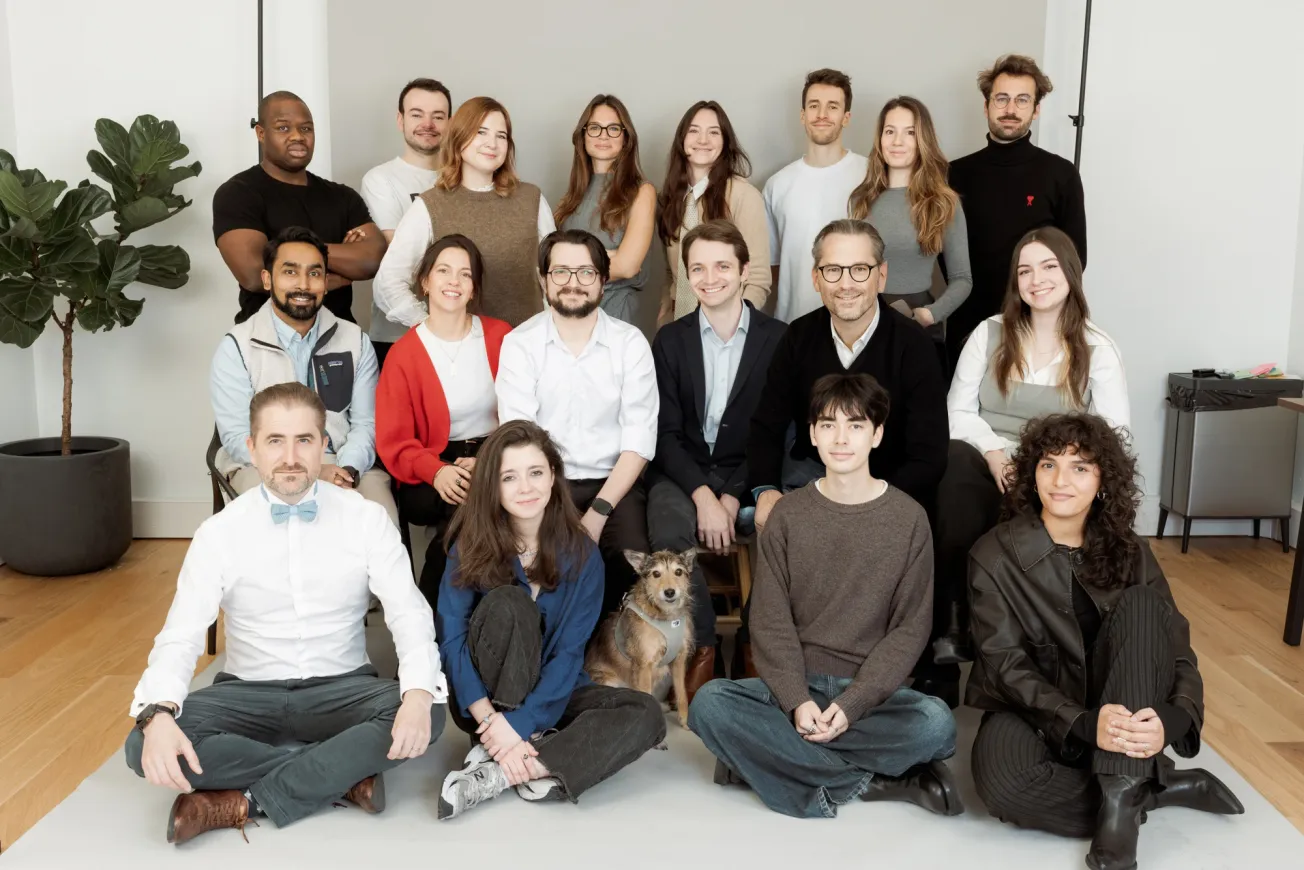
As AI reshapes the future of...well, everything, the industrial world is also undergoing a seismic transformation.
One of the actors at the forefront of that transformation is the industrial venture builder OSS Ventures. The Paris- and Boston-based venture studio, founded by Renan Devillieres, wants to become the reference point for industrial software startups on both sides of the Atlantic.
Behind the wheel is Renan Devillieres, a founder-turned-operator-turned-investor who has spent the last decade immersed in factories and tech companies. He's applying those lessons to OSS Ventures, a venture studio that builds industrial software for factories, or what the firm dubs "the places that change the world," by using AI, operational insight, and a frugal, practical approach to scaling.
I sat down with Devillieres to talk about its latest €75 million fund, what it means to build software born on the factory floor, why industrial SaaS deserves its own specialist approach, and how OSS Ventures is aiming to create the next generation of industrial champions in Europe and the U.S.
💸 Top Funding Deals 💸
📇 Company: Verley
🏷️ Sectors: FoodTech, AgTech, ClimateTech, DeepTech, Biotech
🔍 Description: Verley is a French food and nutrition ingredient company developing high-purity, functionalised whey proteins through precision fermentation. Founded in 2022, the company focuses on producing beta-lactoglobulin (BLG) designed to meet industrial performance standards across high-protein applications such as yoghurts and protein shots. By combining nutritional performance, industrial scalability, and sustainability, Verley aims to support food and beverage manufacturers in developing next-generation high-protein products while significantly reducing natural resource usage compared to conventional dairy production.
💻 Website: Verley
📍 HQ City: Lyon
🧗 Round: Series A
💰 Amount Raised: €32M
🏦 Investors: Alven, Blast, French Tech Seed (managed by Bpifrance), Sofinnova, Sparkfood, Captech, Founders Future + non-dilutive support from Bpifrance
👨💼👩💼 Founders: Stéphane Mac Millan, Hélène Briand
🗞️ News: Verley has secured an oversubscribed €32M Series A round four years after inception, positioning the company toward the upper end of European precision fermentation and functional protein ingredient financings in 2025/2026. The round will fund U.S. market entry, commercial deployment, early customer scale-up, expanded production capacity, and continued R&D to enhance performance, efficiency, and sustainability. Verley’s FermWhey portfolio leverages precision fermentation to deliver high-purity whey proteins with advanced solubility, emulsification, gelling properties, and optimised nutritional profiles. As global protein demand continues to grow—driven by mainstream high-protein consumption trends, demographic shifts, and the rapid expansion of GLP-1 treatments—Verley aims to alleviate pressure on the dairy industry by providing scalable, lower-impact alternatives integrated into existing food value chains. | EU Startups, Maddyness
📇 Company: Meelo
🏷️ Sectors: FinTech, RegTech, AI, Cybersecurity, RiskTech
🔍 Description: Meelo is a French fintech SaaS company specialising in digital onboarding security, fraud prevention, and risk intelligence. Founded in 2017, the company combines Open Banking, Open Data, and artificial intelligence technologies to detect identity, documentary, and financial fraud, assess solvency, and automate risk evaluation. Meelo’s platform aims to reduce fraud risk by 10 and associated costs by 4, while delivering transparent, explainable decisions for financial institutions. Certified B-Corp and structured as a mission-driven company, Meelo positions itself as a European leader in ethical AI-driven “risk & trust digital.”
💻 Website: Meelo
📍 HQ City: Marcq-en-Baroeul
🧗 Round: Growth / Strategic Investment
💰 Amount Raised: ~€14M
🏦 Investors: ISALT
👨💼👩💼 Founders: Laurent Kocinski
🗞️ News: ISALT, through its Fonds Stratégique des Transitions (FST), has taken a minority stake in Meelo with a €14M ticket and additional reinvestment capacity for future external growth operations. The investment will support team expansion across France and Europe, accelerated R&D—particularly in generative AI—and international development. Meelo serves more than 60 clients including BNP Paribas, Crédit Agricole, and Crédit Mutuel, and reports strong growth and profitability. Positioned in a market facing increasing identity and financial fraud risks, Meelo enables credit institutions, insurers, and lenders to automate real-time predictive risk analysis while maintaining smooth customer journeys. The deal marks the eighth investment of FST, an Article 8 SFDR-classified fund backed by Caisse des Dépôts and InvestEU, focused on supporting innovative French SMEs driving technological and societal transitions. | Finyear
📇 Company: baCta
🏷️ Sectors: Biotech, Synthetic Biology, ClimateTech, AI, Industrial Bio
🔍 Description: baCta is a Paris-based industrial biotech startup developing an AI-powered bioproduction platform that transforms microorganisms into programmable molecular factories. Its proprietary platform, baCtaForge, combines a Precision Biofoundry with a Genome-to-Factory AI model to engineer high-yield industrial strains faster and more cost-effectively.
💻 Website: baCta
📍 HQ City: Paris
🧗 Round: Seed
💰 Amount Raised: €7M
🏦 Investors: LocalGlobe, Daphni, OVNI Capital, business angels including founders of Phagos, Genomines, and Mistral AI
👨💼👩💼 Founders: Mathieu Nohet, Marie Rouquette
🗞️ News: baCta has raised €7M in a seed round led by LocalGlobe and Daphni to industrialise its AI-driven bioproduction platform and scale its first commercial molecule, astaxanthin. The funding will support the industrial-scale up of astaxanthin production, including pilot and commercial validation, through a strategic partnership with a French industrial player. It will also allow baCta to engineer additional high-value industrial ingredients. baCta aims to disrupt the €1B+ astaxanthin market, currently dominated by petrochemical synthesis or costly natural extraction from microalgae. Its proprietary yeast strain is designed as a drop-in replacement, offering synthetic-level unit economics with natural-grade quality. By leveraging synthetic biology, robotics, and generative AI, baCta explores genomic “dark matter” and regulatory pathways often overlooked in traditional strain engineering. The company projects reaching industrial scale by 2027, positioning itself as a next-generation player in the bioeconomy focused on replacing petrochemical supply chains with scalable biological production.
👋🏻 If you’re enjoying The French Tech Journal, support the project by forwarding it to friends and sharing it on your social networks. You can also comment on this post. And if you have ideas for stories, tips, or just want to harass us, shoot us an email: [email protected] / [email protected] 👋🏻