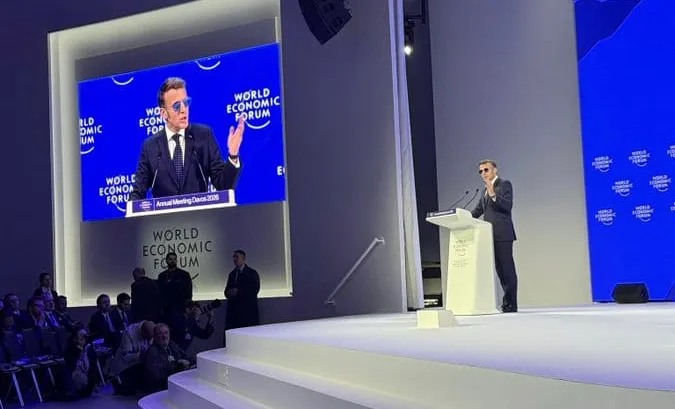
As the streets of Davos filled with the world's most powerful business and political leaders this week, France arrived with a message: Europe is ready to compete in the artificial intelligence race, and Paris intends to lead the charge.
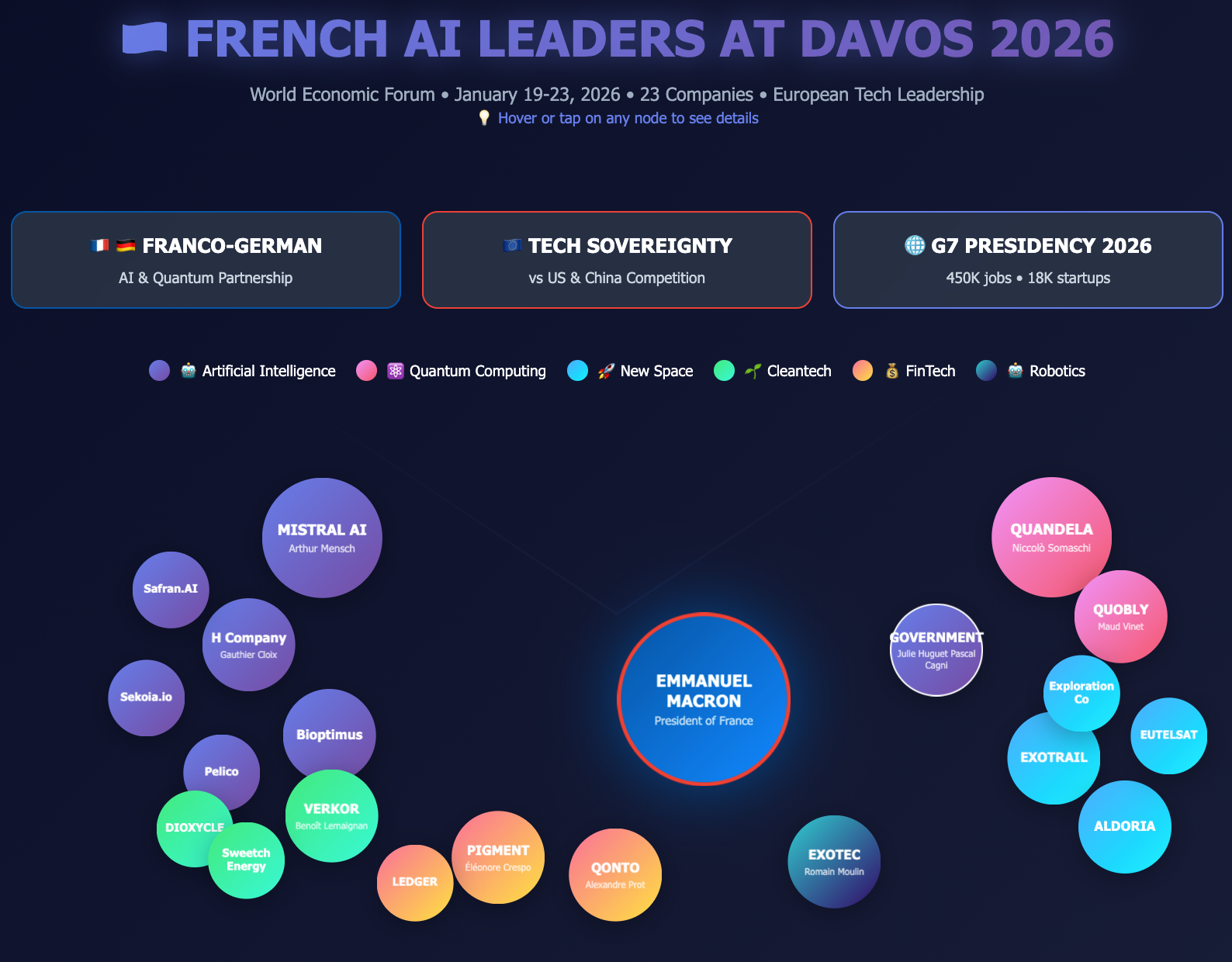
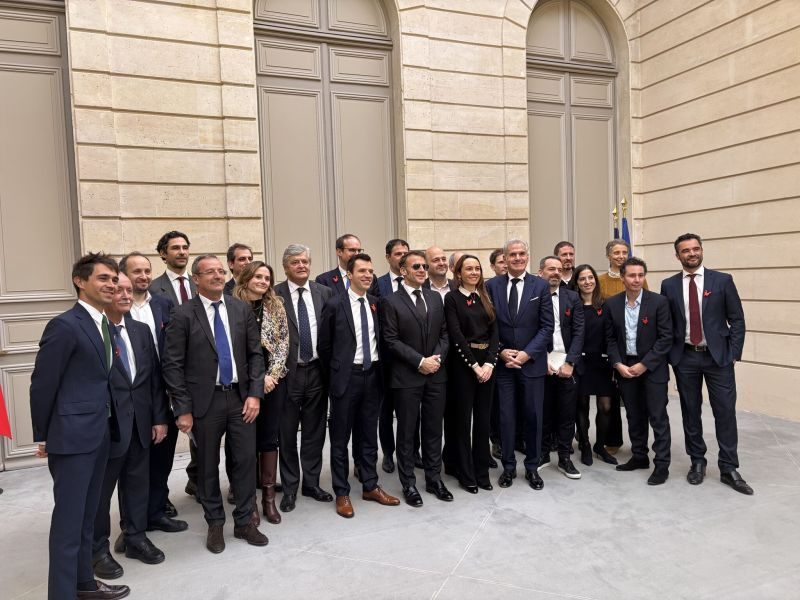
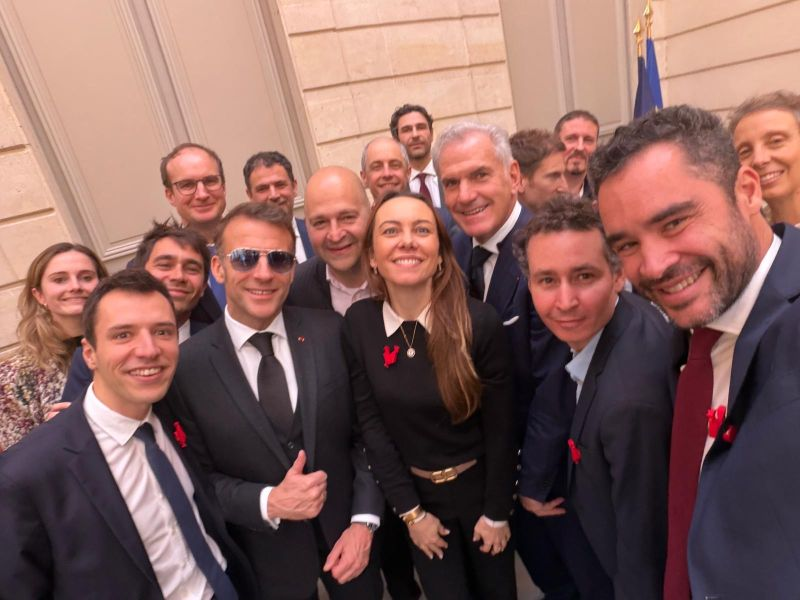
President Emmanuel Macron touched down at the 56th World Economic Forum on Tuesday, January 20, bringing with him one of the largest French technology delegations ever assembled for the annual gathering. The 23 companies tagging along spanned sectors such as AI, quantum computing, space technology, and cleantech.
The goal seemed to be to send a message that France is positioning itself as Europe's innovation powerhouse at a moment when the continent faces unprecedented pressure from American technological dominance and mounting geopolitical tensions.
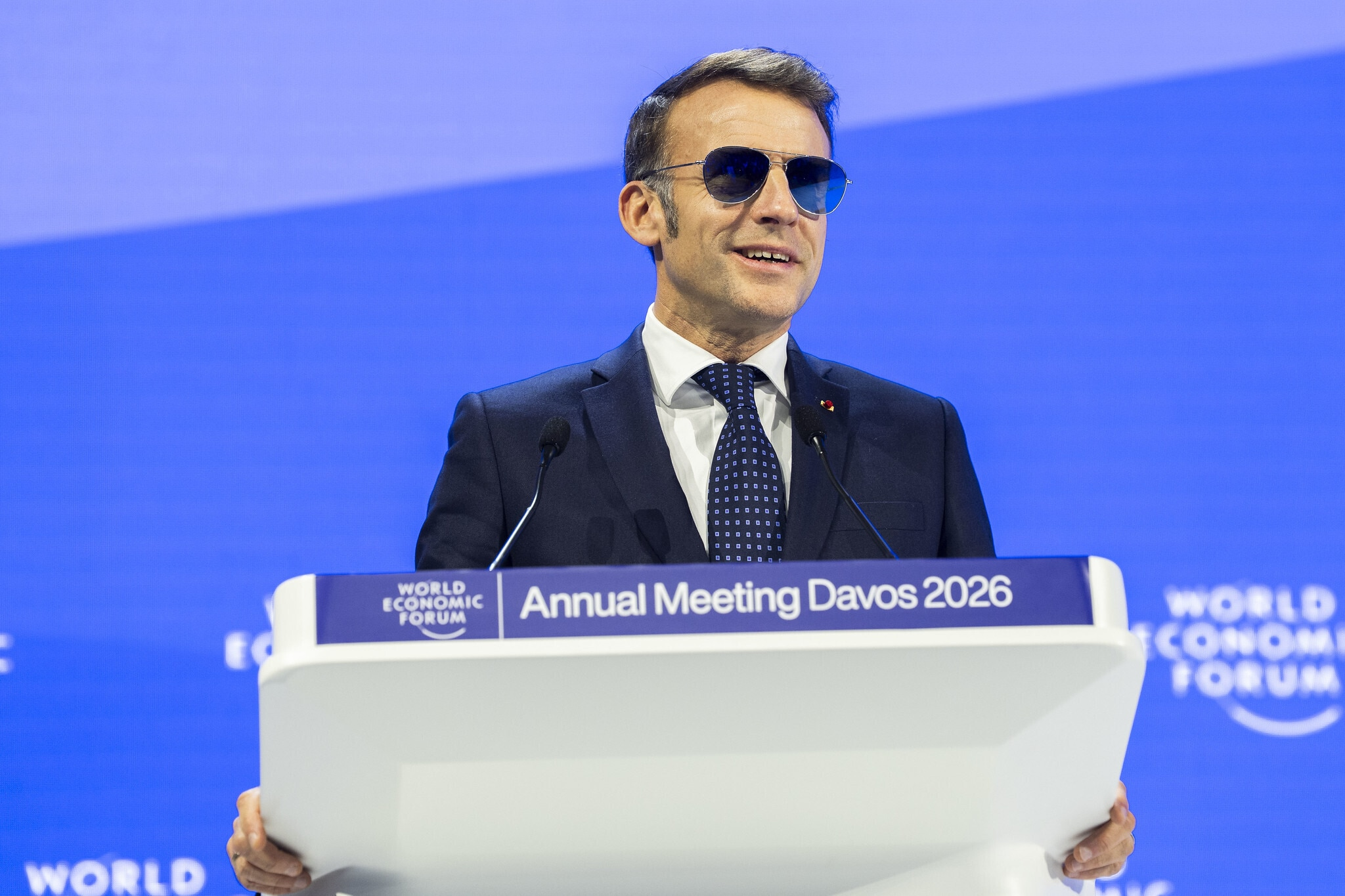
The timing couldn't be more charged, but Macron didn't ease into the topic. Sporting sunglasses as he spoke from the podium, he delivered a forceful defense of multilateralism.
"It's clear that we are reaching a time of instability, of imbalances, both from the security and defence point of view, and the economic point of view. It's as well a shift towards a world without rules," Macron said. "Where international law is trampled underfoot and where the only laws it seems to matter is that of the strongest. And imperial ambitions are resurfacing...This is, as well as a shift towards a world without effective collective governance and where multilateralism is weakened by powers that obstruct it or turn away from it, and rules are undermined."
Apparently, President Donald Trump's threat to levy 200% tariffs on French wines and champagne in retaliation for Macron's refusal to join his proposed "Peace Council" had not caused the French president to soften his tone. Instead, the European Parliament responded by suspending ratification of its trade agreement with the United States, signed just last July.
Against this backdrop of diplomatic fireworks, France's technology champions found themselves thrust onto the global stage.
The AI Contingent
Artificial intelligence dominated France's strategic showcase at Davos, with the delegation reading like a who's who of the country's most promising AI ventures.
H Company, specializing in agentic AI, sent co-founder Gauthier Cloix. Bioptimus, applying machine learning to biological sciences, represented the convergence of AI and life sciences. Safran.AI, the newly established AI subsidiary of aerospace and defense giant Safran, signaled France's commitment to integrating artificial intelligence across critical industrial sectors.
The cybersecurity-AI intersection was well represented through Riot Security and Sekoia.io, while Pigment and Qonto demonstrated the application of AI across enterprise software and fintech. Éléonore Crespo of Pigment and Alexandre Prot of Qonto both made the trip to the Swiss Alps.
 Chris O’Brien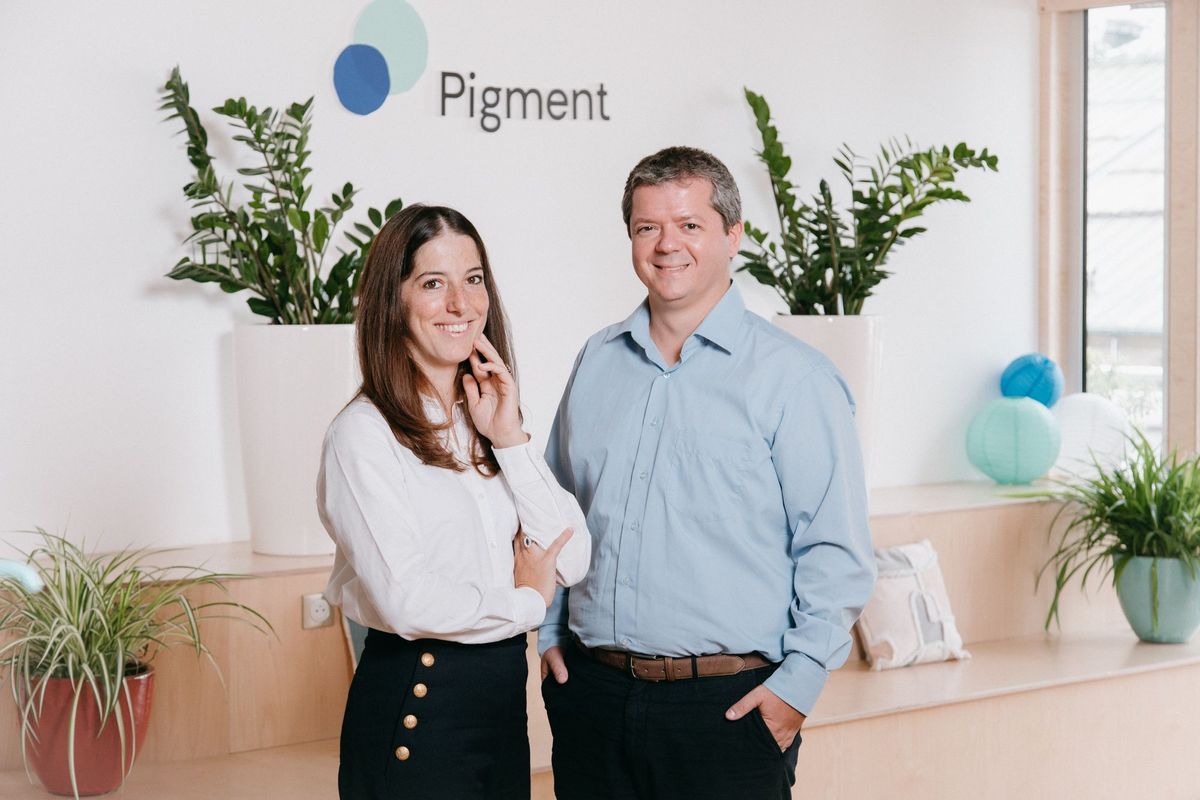
Perhaps the most closely watched French AI figure at Davos, however, arrived outside the official presidential delegation. Arthur Mensch, co-founder of Mistral AI, participated in a panel discussion on Europe's place in the global technology landscape alongside Belgian Prime Minister Bart De Wever, Lithuanian President Gitanas Nausėda, and Croatian Prime Minister Andrej Plenković.
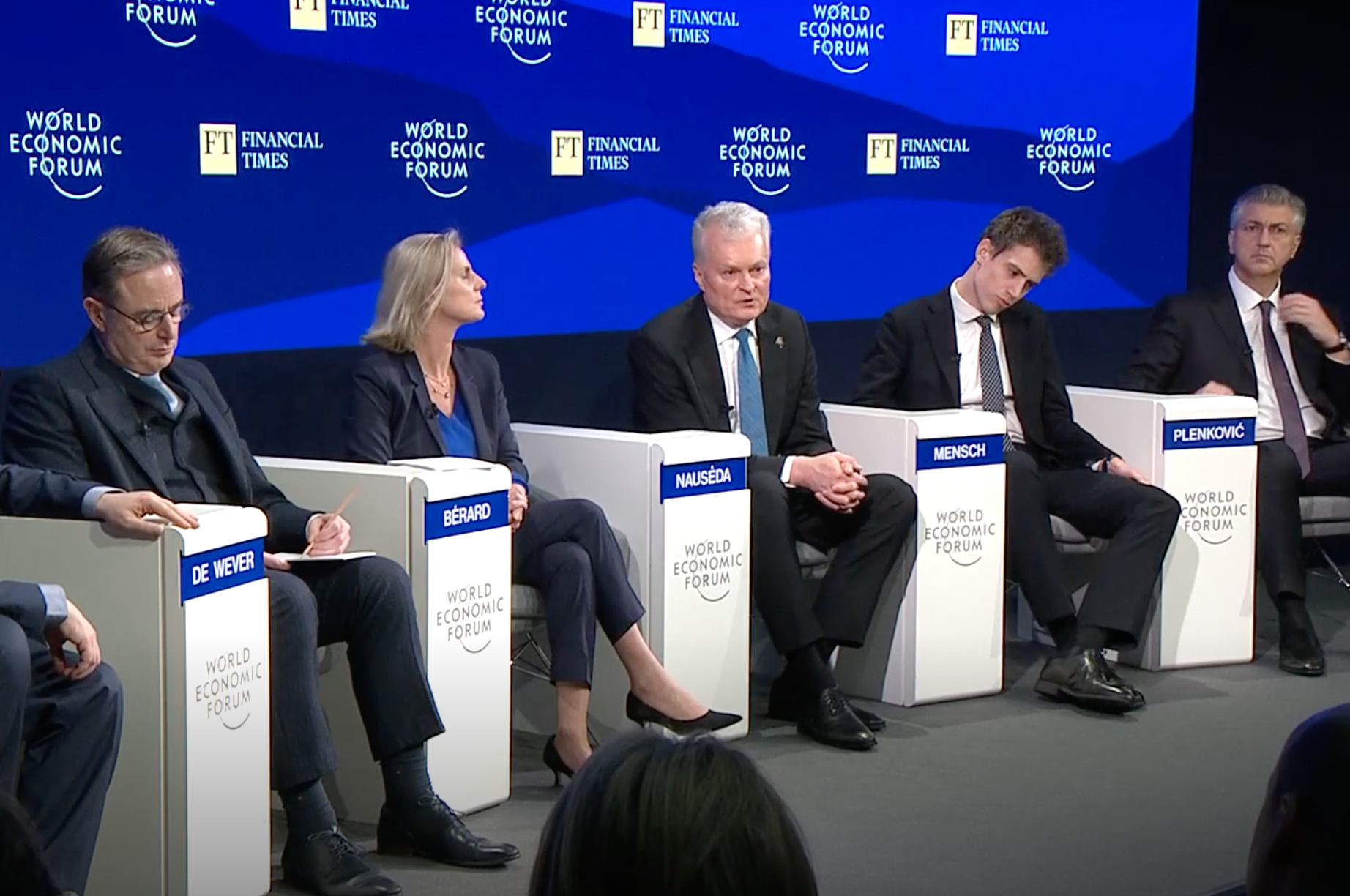
Mistral's presence carries particular weight. The company's meteoric rise from founding to decacorn status in under a year has positioned it as Europe's most credible challenger to American AI giants like OpenAI and Anthropic. Both of those giants had leaders in Davos: OpenAI's Sarah Friar and Anthropic's Dario Amodei.
A New European AI Hub
The centerpiece of France's AI roadshow was the official launch of the Centre Européen pour l'Excellence en IA (CAIE) in Paris. The center was announced one year ago, and is a partnership between the WEF and VivaTech.
The CAIE is designed as Europe’s answer to the question of how to lead in artificial intelligence without surrendering public trust. Anchored in Paris, the center’s mission is to turn Europe’s dense research base, vibrant startup scene, and policy capacity into a coordinated engine for AI innovation that delivers real economic and social value.
"We want to accelerate growth and innovation, while ensuring that AI is trustworthy, inclusive, human-centric, global, and multi-stakeholder," said Jeremy Jurgens, Managing Director, World Economic Forum. "Action requires all the parties to come together to make this happen. Europe has a strategic choice: to follow those global trajectories that have been set elsewhere, or to lead with its own vision, accelerating innovation, protecting strategic assets, and strengthening technological sovereignty."
During the 15-minute ceremony, the organizers didn't offer many additional details about its scope, functions, or funding. Maurice Lévy, the honorary president of Publicis and one of the founders of VivaTech, who championed the project, described it as
"Paris is the right place," he said. "Not only is France an open country, welcoming collaboration, but it is also home to some fantastic talents and great startups...We want to help build a sovereign AI able to attract the best people and give Europe the tools to compete globally and serve the interests of European countries, businesses, and people...We are determined to create an alternative to other approaches to AI. AI is far too important for the future of humanity, for the sovereignty of Europe, its competitiveness, and the development of its economy, education, culture, and the future of our children to stay still."
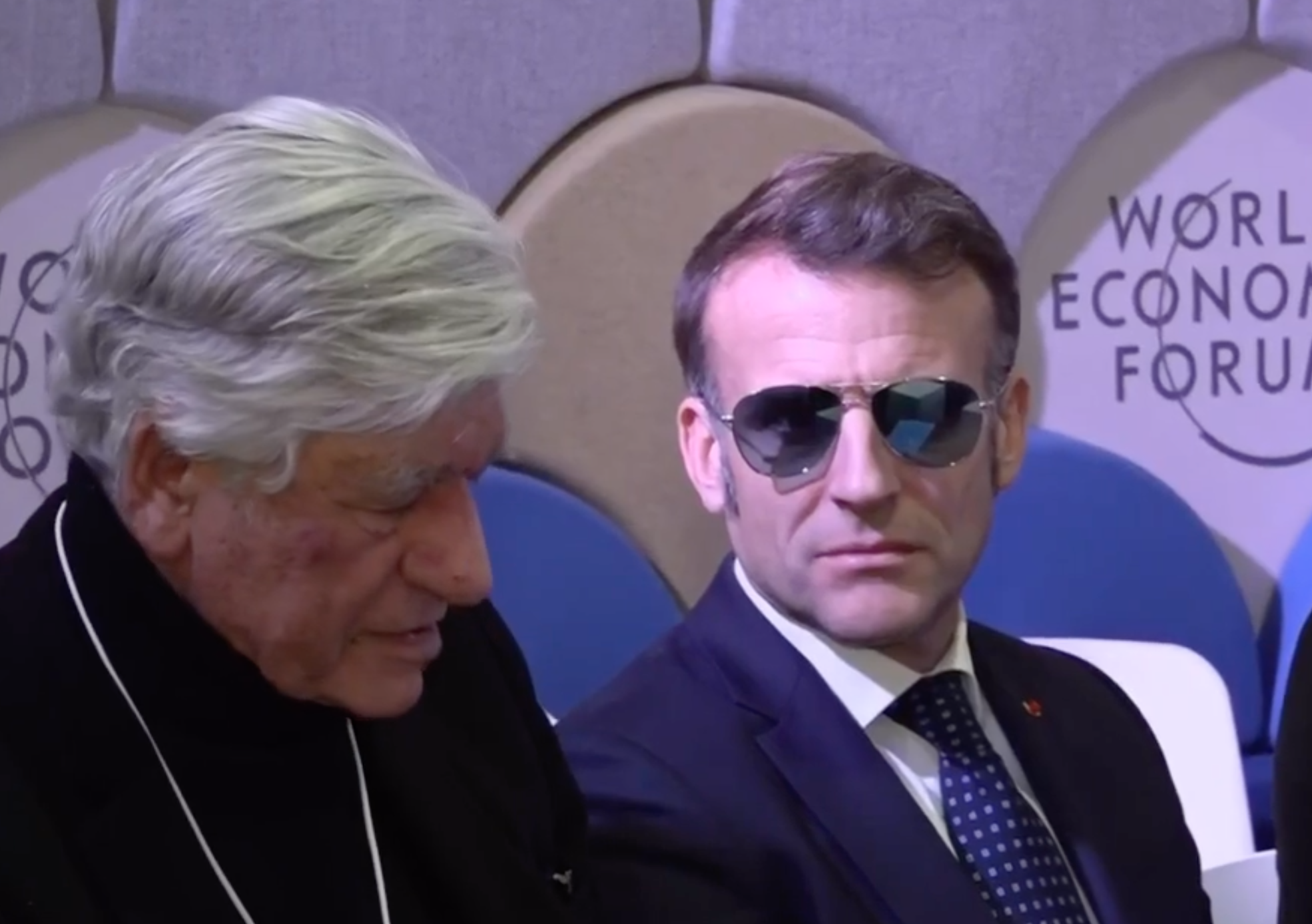
Macron, still wearing shades, praised the organizers for their work and echoed their desire to develop a European approach to AI.
It's being competitive. It's being innovative. But at the same time, it's making sure that this is a human and responsible AI, and this is exactly our perspective," Macron said. "This center, for me, will be an accelerator for all our initiatives and for what we are doing, by teaming up with the best experts in the world, by challenging our approaches, by making sure that we are at the right pace, at the right scale."
Beyond AI: Quantum and Space
France's Davos presence extended well beyond artificial intelligence.
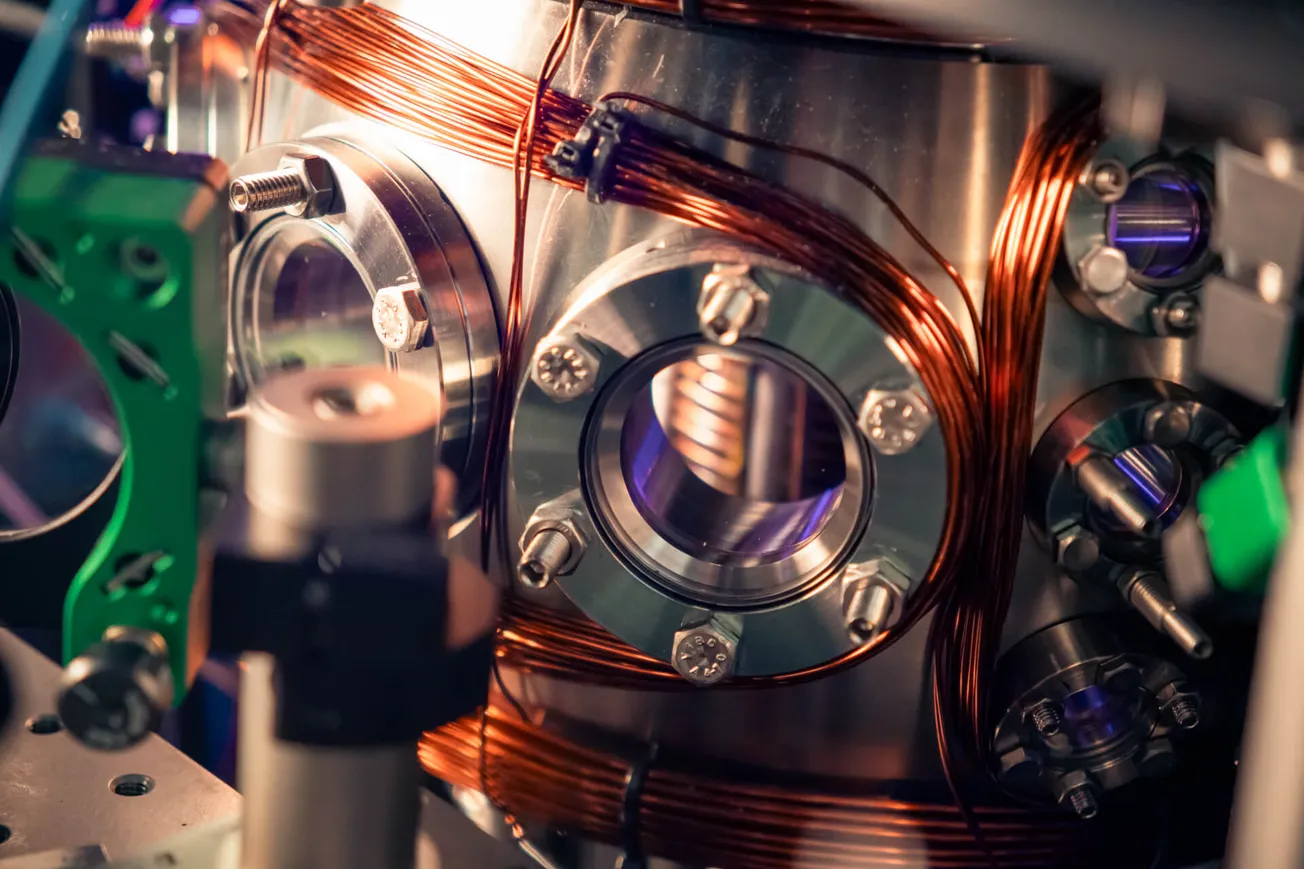
Quantum computing received prominent billing through Quandela, represented by Niccolò Somaschi, and Quobly, with CEO Maud Vinet in attendance. Both companies embody Franco-German cooperation objectives announced by Macron, positioning France and Germany as joint leaders in quantum technology development, a frontier increasingly recognized as essential for European competitive positioning against American and Chinese advances.
 Admin
Admin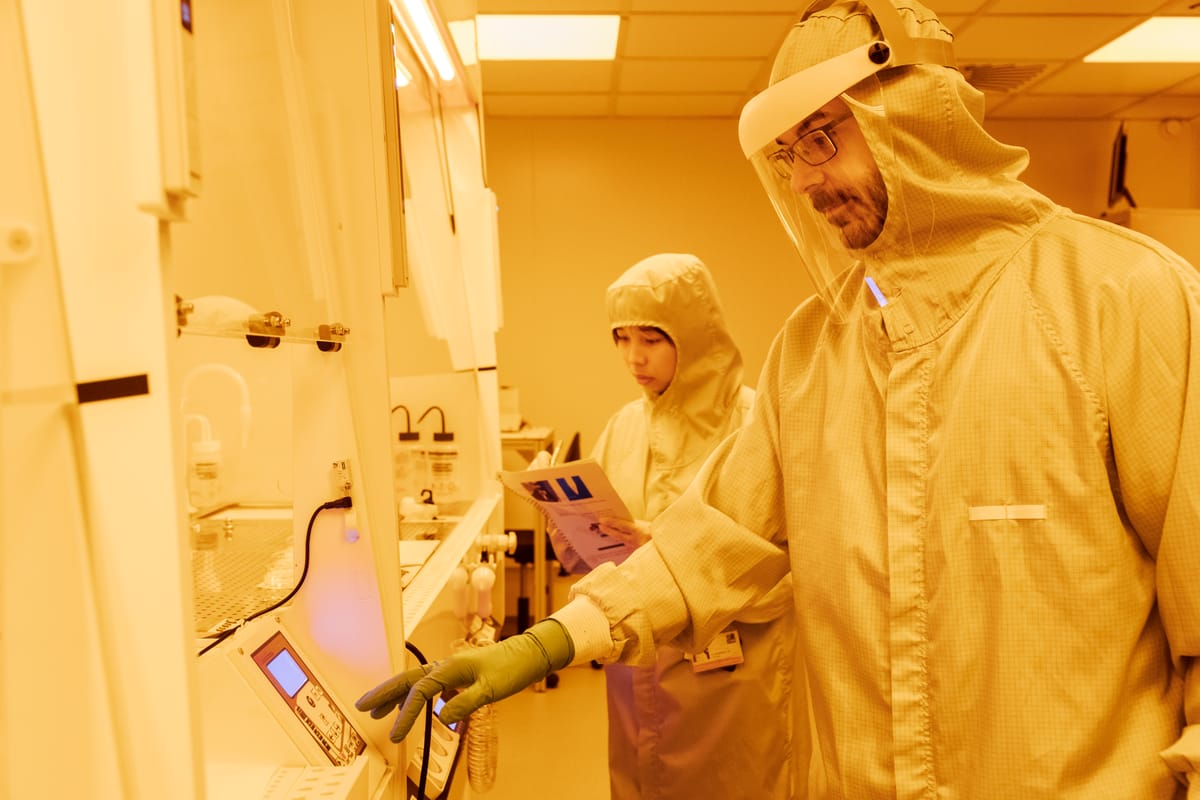
 Chris O’Brien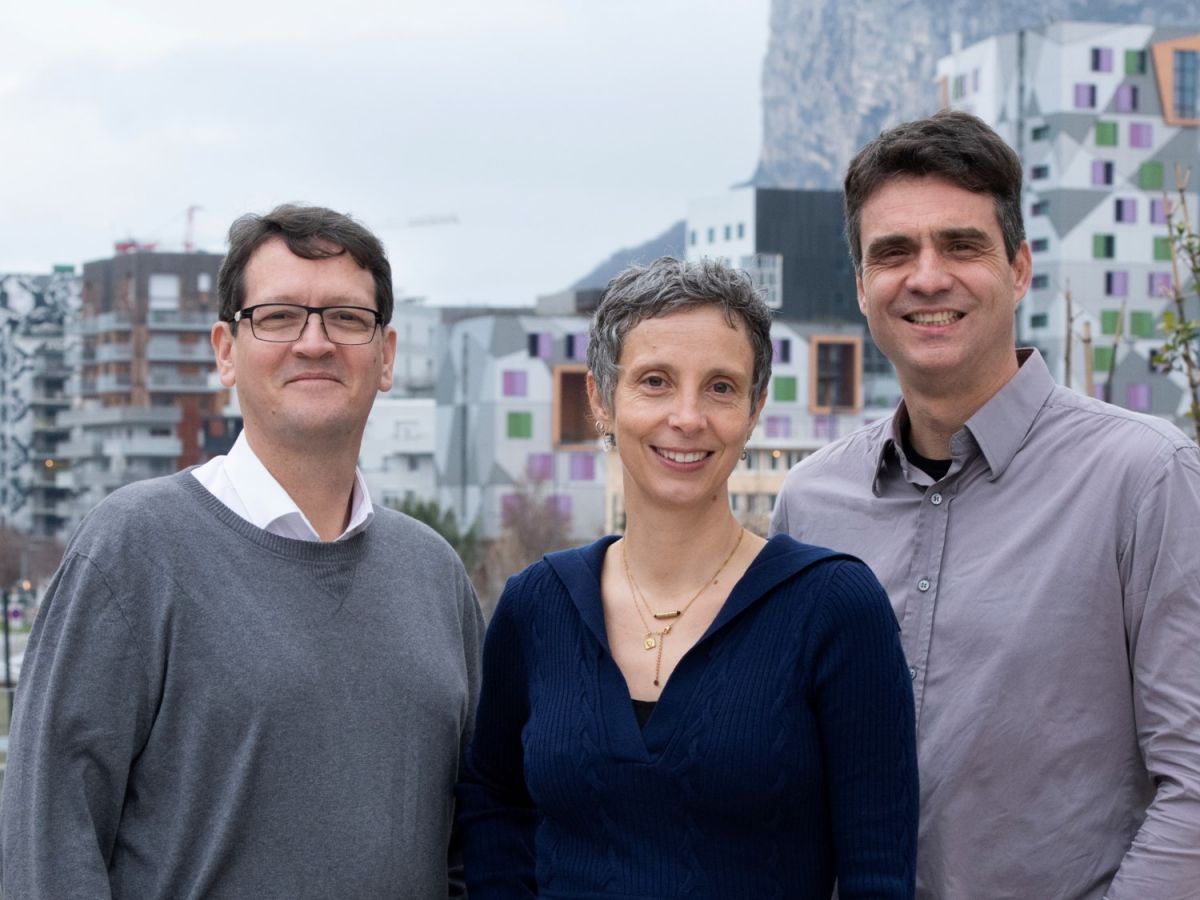
The space technology contingent included Exotrail, Aldoria, The Exploration Company, and satellite operator Eutelsat, representing France's ambitions in what organizers termed "new space and strategic autonomy."
Team France's Coordination
Pascal Cagni, France's Ambassador for International Investment and chairman of Business France, led the coordination effort for what he called "Team France." Business France organized three thematic lunches throughout the week: AI and deeptech on January 20, cleantech and green industry on January 21, and new space and strategic autonomy on January 22. A "Soirée France" gathering brought together approximately 120 business leaders, investors, and institutional figures.
Writing on LinkedIn, Cagni said, "As France prepares to assume the G7 Presidency, Davos will be a key moment to reaffirm our economic diplomacy priorities: strengthening Franco-German cooperation in AI & quantum, and reinforcing EU competitiveness. With the euro used by 350M citizens & 25% of global reserves, EU has the scale but must now act. France, Europe’s #1 FDI destination for the 6th consecutive year, intends to play a decisive role. Let us seize this moment to strengthen Europe’s voice on the international stage."
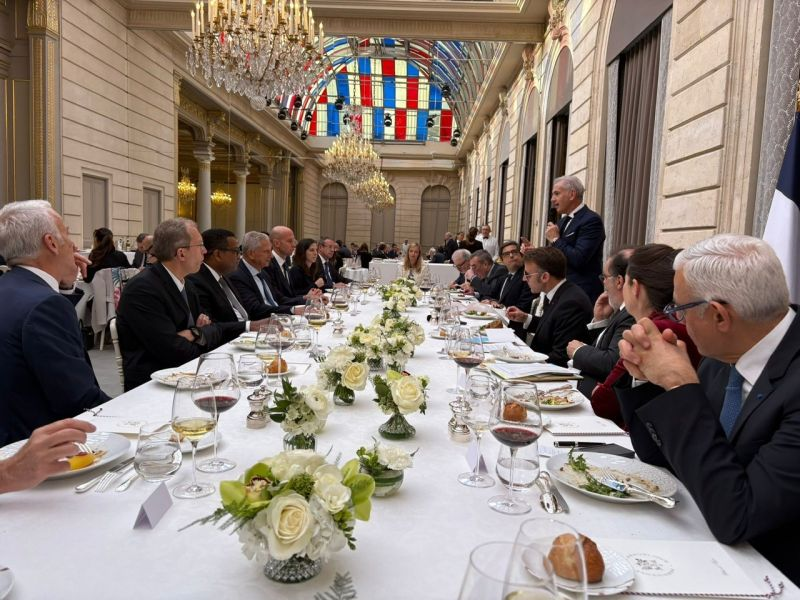
Julie Huguet, Director of the French Tech Mission, accompanied the startup delegation. The companies were directly invited by the Élysée, allowing them to access the Forum without paying the standard admission fees—typically estimated at tens of thousands of euros.
"The World Economic Forum is the place where decision-makers from around the world meet," Huguet noted on LinkedIn ahead of the gathering. "To forge partnerships, to sign contracts. In concrete terms."
The Competitive Context
France's technology showcase occurred against a backdrop of intensifying global AI competition.
The American delegation at Davos included an unprecedented concentration of AI leadership: Jensen Huang of NVIDIA, Satya Nadella of Microsoft, Demis Hassabis of Google DeepMind, and Alex Karp of Palantir, among others.
President Trump's planned address—scheduled for Wednesday—was expected to emphasize American technological and economic supremacy.
Meanwhile, China's DeepSeek has recently demonstrated competitive capabilities in generative AI, challenging what had been perceived as an American monopoly and adding urgency to European strategy discussions.
For France, the stakes extend beyond corporate positioning. As Cagni framed it, "As France prepares to assume the G7 Presidency, Davos will be a key moment to reaffirm our economic diplomacy priorities: strengthening Franco-German cooperation in AI and quantum, and reinforcing EU competitiveness."