
Late payments are one of those quietly accepted dysfunctions of European business. Everyone complains about them, yet few actors seem to address them.
Interestingly, late payments are simultaneously improving in Europe while worsening.
According to France’s payments observatory (l’observatoire des délais de paiement), a majority of SMEs and micro-enterprises now pay within the legal 60-day window. Yet around 30% of companies still pay late, and only half of large firms settle invoices on time. More strikingly, average delays climbed back to 13.6 days in late 2024, now above the European average (12.1 days in 2024).
Fewer offenders. Bigger delays.
That contradiction sits at the heart of a growing fintech opportunity - and it’s exactly where Paris-based startup Cleavr is positioning itself.
“It’s very heterogeneous,” says Baptiste Nassoy, co-founder and CEO of Cleavr. “You have companies that are more disciplined - but the ones who are late, are really late.”
Welcome to accounts receivable, the last operational casse tête AI hasn’t properly touched. Until now.
From Reminder Tools to “AI Coworker”
Founded in 2025 by Nassoy, Arthur Guérin, and Antoine Grenard, Cleavr has just raised €1 million from investors including Kima Ventures, Better Angle, and several fintech operators, among them Pennylane CFO Raphaël Nahum.
The startup’s pitch is relatively simple: automate the entire accounts receivable process, not just invoicing and first reminders.
“Today, around 20% of the collection process is automated,” explained Nassoy. “ But that’s the easy part - sending the first reminders. Everything else remains manual: replies, disputes, finding the right contact... finance teams spend the majority of their time dealing with those issues. ”
Cleavr claims to automate up to 80% of that workflow.
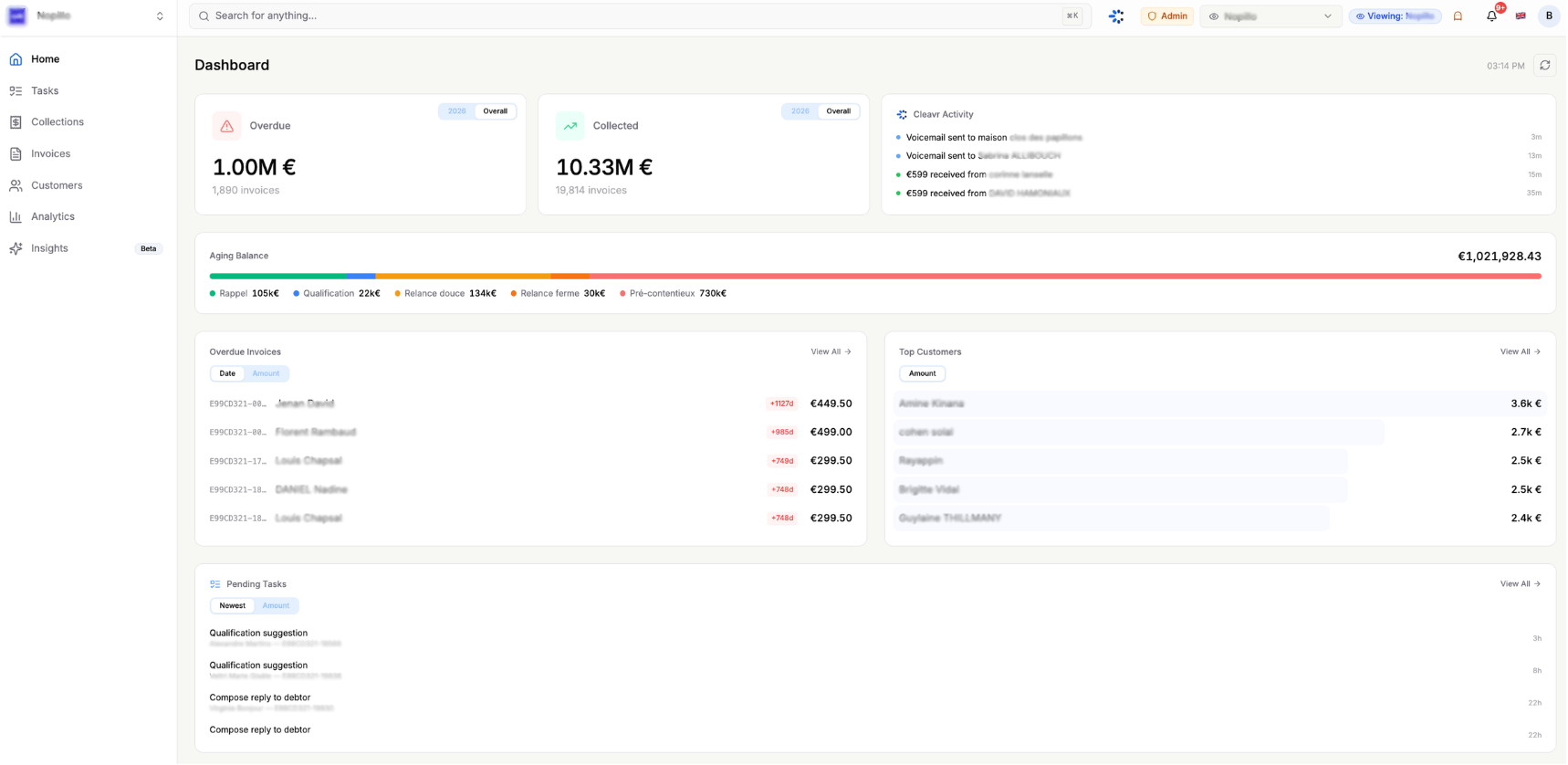
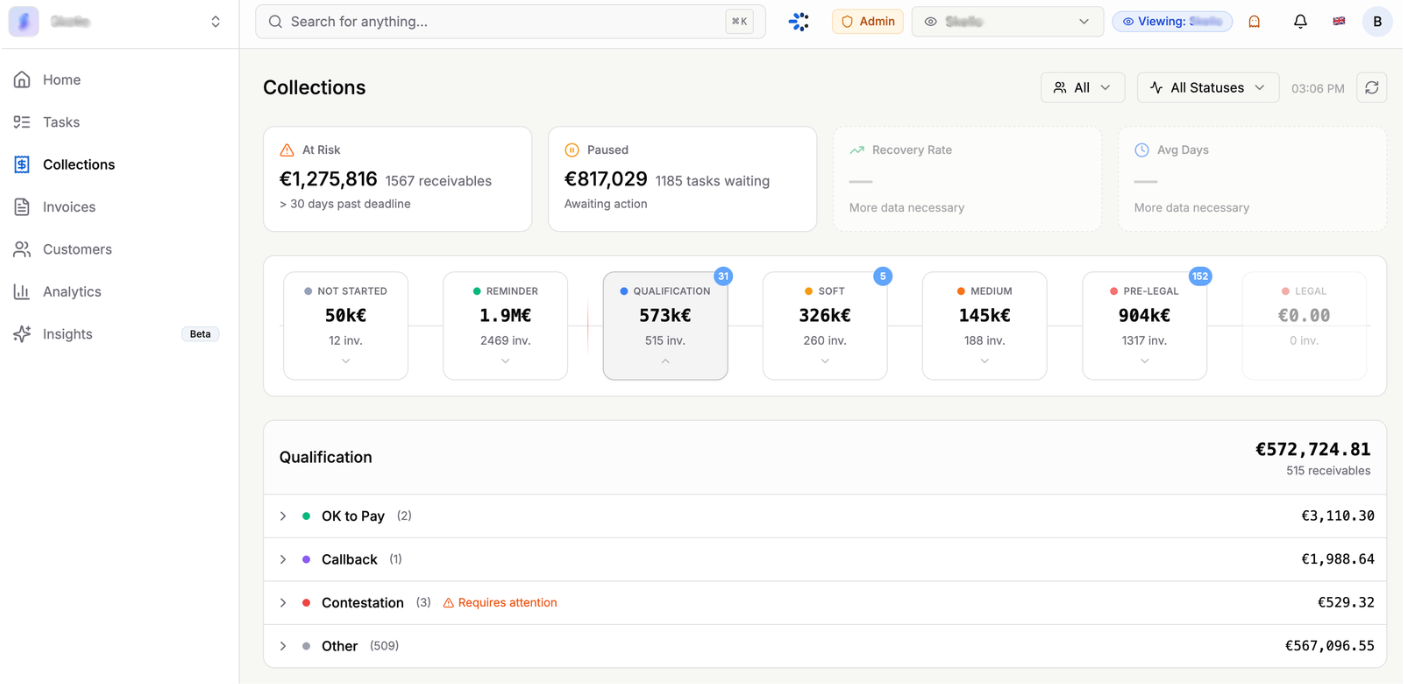
Its AI-driven platform connects to a company’s ERP, identifies overdue invoices, and automatically initiates follow-ups across multiple channels - email, SMS, phone - while handling responses and tracking payment commitments.
“The goal is to guarantee follow-up on 100% of invoices,” Nassoy said. “Not just the ones teams have time to chase.”
What the Tech Does
Technically, Cleavr’s AI platform builds on existing large language models, including those from OpenAI, Anthropic, and Mistral, which are then adapted to specific use cases.
“We’re not building a foundation model,” Nassoy explained. “We’re verticalising existing models for a very specific operational problem.”
That problem turns out to be messier than it sounds. A late payment is rarely just a missed deadline. It can involve:
- An invoice sent to the wrong person
- Internal approval bottlenecks
- Staff turnover on the client side
- Disputes or missing documentation
Cleavr’s system is designed to navigate that complexity.
“If the person doesn’t reply, our AI will scan the company’s organigramme to identify other relevant contacts,” said Nassoy. “We rebuild the organisation chart if needed - finance, manager, CFO - and continue the follow-up.”
Interestingly, the AI also adapts its communication strategies to the sector and country.
“In construction, for example, WhatsApp works better than email,” he noted.
The Human Question: Invisible, but Not Always
Interestingly, in many cases, debtors don’t realise they’re interacting with an AI.
Emails and messages are sent in the client company's name without explicit disclosure. On phone calls, however, Cleavr indicates that the caller is an AI agent.
For Nassoy, the priority is less about visibility than effectiveness and tone.
“Our main focus is preserving the client relationship,” he said. “Collection has a bad reputation. We want to make it more fluid, more professional.”
Pennylane Investor Raphaël Nahum frames it slightly differently: “Cleavr doesn’t just send reminders - it resolves the collection issue,” he said in a statement during the company’s fundraise. “That’s where traditional tools fail.”

A Structural Problem Across Europe
The startup is entering a large, under-optimised market.
According to an OpinionWay study for GoCardless, 94% of companies report losing money each month due to unpaid invoices, and 65% expect the situation to worsen by 2026. Some sectors are particularly exposed.
“Construction is structurally very late,” said Nassoy. “Large companies also tend to pay at the limit or after.”
Public-sector processes add another layer of complexity, often requiring suppliers to navigate dedicated platforms rather than direct communication. In that context, many delays are less about unwillingness to pay than operational friction.
“A lot of it is just forgotten invoices,” Nassoy explained. “Or invoices that are stuck somewhere internally.”
Early Results and Their Limits
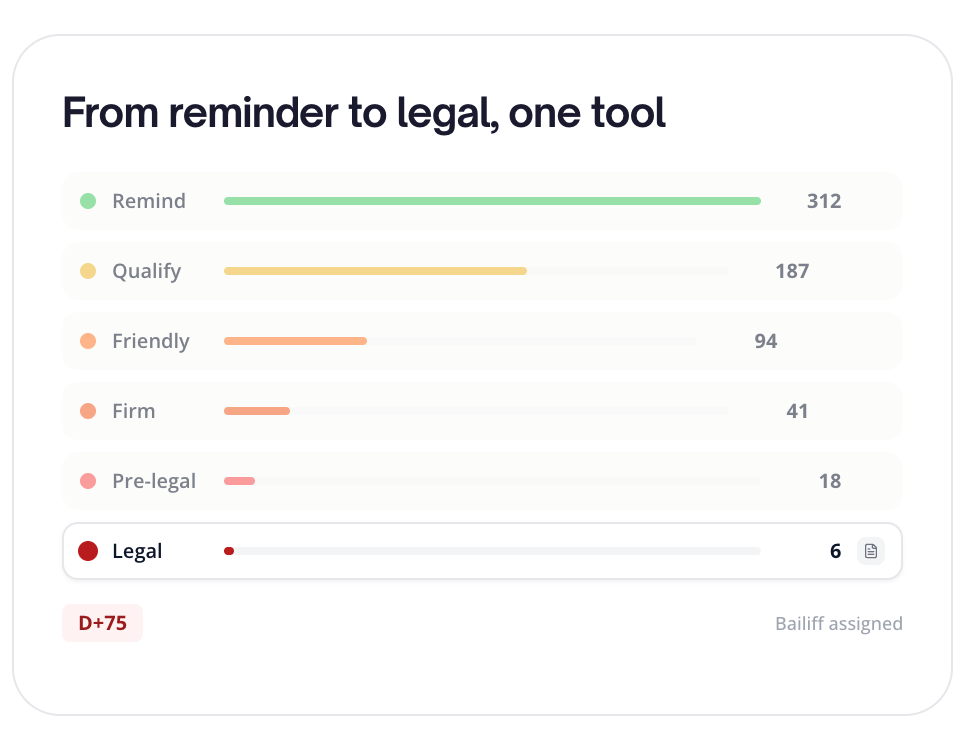
Cleavr operates on a SaaS model, with clients paying a monthly subscription fee. The platform integrates with external partners, including bailiffs and legal professionals, to handle escalations as needed.
These partners are activated once invoices pass a certain threshold, typically 60 days overdue. At that stage, cases can be transferred directly through the platform, allowing for continuity between automated follow-ups and formal recovery procedures. While Cleavr facilitates this handover, the legal process itself remains managed by certified third parties.
The company reports that its clients see a 30% to 40% reduction in payment delays, with Days Sales Outstanding (DSO) decreasing by 37% within weeks of deployment.
Cleavr currently serves around 50 clients, ranging from tech scaleups to organisations in sectors such as healthcare, construction, and public administration. Approximately 60% of its activity is B2B, with the remaining 40% in B2C.
Legal escalation remains relatively limited. “We usually involve legal partners after 60 days past due,” said Nassoy, “but that represents less than 3% of invoices.”
A Crowded but Expanding European Category
Cleavr is part of a broader wave of European startups targeting finance operations.
Recent funding rounds in the AI driven accounts receivable/ invoice processinsg space include the Swedish startup Paraglide (€4.2M), Donnerstag.ai (€4.3M) in Germany and the Stockholm/London payments infrastructure startup Mimo (€7.7M).
Back in Paris, Pennylane’s recent €175 million raise underscores the scale of investor interest in financial tooling. The accounting scale up and Cleavr recently announced a partnership, integrating Cleavr’s accounts receivable/ collection execution solution into its platform.
European from the get-go with clients across France, Germany, Spain, Italy and the UK, Cleavr is not prioritising the US market.
“The opportunity in Europe is already very large,” said Nassoy. “And the complexity - different languages, regulations - creates a barrier to entry.”
The platform already supports multiple languages and adapts to local legal frameworks - critical in a fragmented market where payment rules differ significantly between countries.
Germany still leans on formal letters. France has complex insolvency procedures. Each requires a different approach.
Cleavr plans to begin broader European expansion in 2026.

Fixing Process, Not Behaviour
Cleavr’s long-term ambition is ambitious: “to eliminate payment delays in Europe.”
That may sound optimistic. But it taps into a broader shift,, and its underlying thesis is grounded. Late payments, in Cleavr’s view, are not primarily a behavioural problem. They are a process problem.
As Nassoy puts it, and as the startup appears to be proving:
“If you follow up systematically, intelligently, and with the right timing, most invoices get paid.”