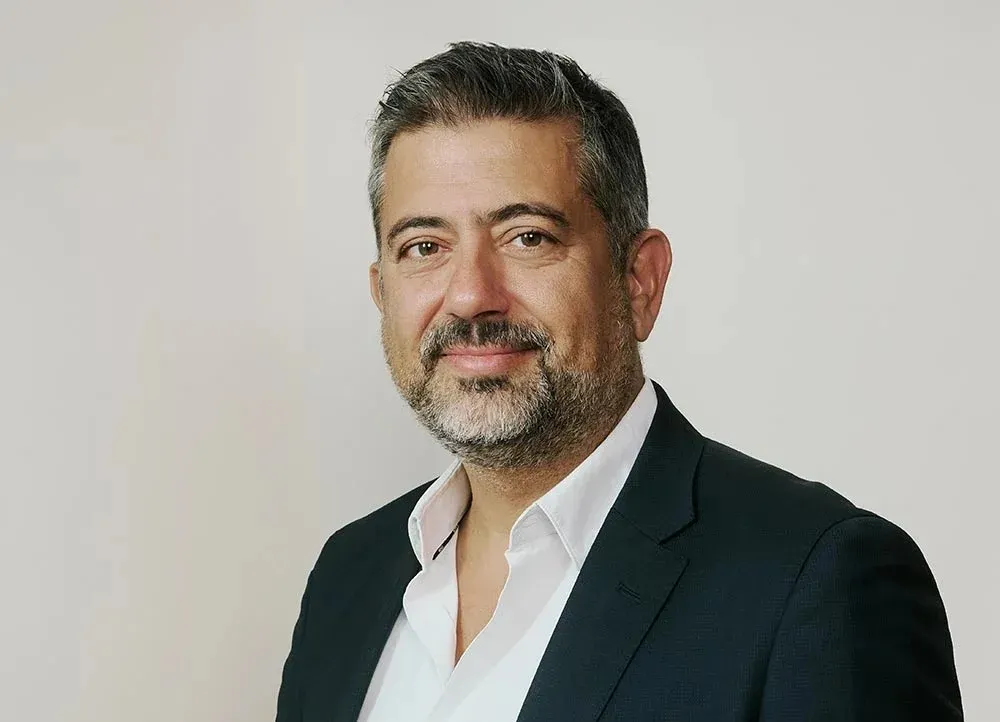
Xavier Lazarus has spent more than two decades betting on European tech founders. Now, at what he considers a pivotal inflection point for the continent’s startup ecosystem, he’s making perhaps his boldest bet yet: reimagining the very structure of how venture capital works in Europe.
In just a few weeks, the Paris-based VC firm Elaia, which Lazarus co-founded in 2002, has announced two significant fund closings. On February 11, Elaia revealed the first close of its fifth Digital Venture Fund (DV5) at €120 million, with ambitions to reach €300 million. Then, on March 12, the firm closed its third DeepTech Seed fund (DTS3) at €134 million, doubling the size of its previous deep-tech seed vehicles.
Taken together with the official launch of Lazard Elaia Capital (LEC), the joint venture between Elaia and the global financial powerhouse Lazard, the firm now manages more than €1 billion in assets.
Lazarus oversees both structures, which remain independent and yet complementary. The idea is that venture capital is evolving, and that Europe’s most transformative tech companies don’t follow predictable trajectories, so their investors shouldn’t be locked into rigid frameworks either. Between the two entities, LEC and Elaia now have a wide-ranging flexibility to explore creative ways to help startups scale.
“We are addressing a world that is changing every other week,” he said. “We can’t do that with a too static mind. Everything that works is kept, and everything that needs to be adapted is adapted. We are doing exactly what entrepreneurs are doing.”
A Partnership Built on Trust
The most consequential piece of the puzzle is Lazard Elaia Capital, the joint venture that pairs Elaia’s venture expertise with Lazard’s institutional heft and global distribution network.
LEC is now officially up and running, with a nine-person team in place, a defined strategy, and its first deal completed. The vehicle is designed to operate in the space between traditional venture capital and private equity, targeting established European software businesses that need flexible capital to navigate non-linear growth paths.
“We are slightly above one billion,” Lazarus said. “I would like to be closer to, if not at, one and a half billion” by the end of 2026.
On its website, LEC describes its philosophy with a tagline that doubles as a thesis statement: “Investing off-playbook, by design.”
The idea is that Europe’s most transformative tech companies don’t follow predictable trajectories, and their investors shouldn’t be locked into rigid frameworks either. A Series B company might need buyout-level capital. A bootstrapped scale-up might need venture-like agility. A regional champion might be born out of consolidation.
Lazarus is candid about the fact that the difficult market for tech investment has slowed LEC’s progress by a few quarters.
“Things are going as planned, with the only constraint of a very closed market for tech investment,” he said. “But in the current market, being even where we are is already a big success.”
The firms initially announced their intention to join forces in late 2023 and finalized the terms in April 2024. From there, Lazarus embarked on fundraising and building the new team over the next 18 months.
LEC had mostly been quiet until early February, when it announced its first official deal: it led a $100 million investment in DentalMonitoring, the Paris-based company that has become a global leader in AI-powered remote orthodontic monitoring.
Founded in 2014, DentalMonitoring reached operational profitability in 2025 and has built a customer base of more than 2 million patients, holds FDA and MDR certifications, and maintains a library of 2 billion dental images. The investment — made alongside ISALT's Fonds Stratégique des Transitions — will fuel the company's expansion into new markets, including Brazil, Turkey, Southeast Asia, and the Middle East. It's a deal that neatly illustrates LEC's thesis: a profitable, category-defining B2B software company with real technology depth and global scaling potential, exactly the kind of opportunity that falls between traditional venture and conventional buyout.
Meanwhile, where the Lazard partnership has also been paying dividends is in distribution and fundraising. Lazarus said that in 2025, Elaia’s overall fundraising grew by about 65 percent compared to 2024 when factoring in investors who came through the Lazard network. Without those Lazard-sourced commitments, growth was below 10 percent.
“Clearly, in a tough market, we made a very decent year,” he said.
Lazarus also emphasized that Lazard has been faithful to the terms of the partnership, leaving investment decisions and fund management entirely to the Elaia teams.
“It’s not because of contract or regulation,” he said. “It’s because they trust us. Their machine is prepared for listed equity funds or fixed income, and they have agreed that making decisions in our world is complex.”
In practice, Lazard functions as a sponsor, anchor investor, and distribution engine, while operational independence remains with Elaia’s partners. The collaboration extends to areas like compliance, cybersecurity, and ESG, where Lazard’s institutional infrastructure helps Elaia strengthen its own practices.
Two Funds, One Vision
The twin fund announcements reinforce Elaia’s strategy.
DV5, the digital venture fund, will back European B2B tech startups from pre-seed to Series B, deploying ticket sizes from €1 million to €15 million. Its first investments have gone to Mimic Robotics, a Zurich-based physical AI and robotics company spun out of the ETH ecosystem, and Linkup, a startup building real-time web search infrastructure for AI systems. Linkup raised a $10 million seed round in early 2025 led by Gradient, with participation from Elaia and a roster of prominent angel investors, including Datadog’s Olivier Pomel and Mistral’s Arthur Mensch.
DTS3, the deep tech seed fund, was developed in partnership with leading European research institutions, including PSL, INRIA, CNRS, the Barcelona Supercomputing Centre, and the Max Planck Foundation. Since its initial close of €60 million in March 2024, the fund has already invested in 11 portfolio companies across computing, life sciences, and industrial innovation.
Notable bets include Proxima Fusion, a Munich-based company working on stellarator-based fusion energy; GetVocal, a Paris-based startup building hybrid human-AI agents for enterprise customer experience; and Biophta, which is developing a topical ophthalmic insert to replace daily eye drops for chronic eye conditions.
The fund builds on a partnership model pioneered through the PSL Innovation Fund and Elaia Alpha II Fund, which produced notable outcomes, including Aqemia, Alice&Bob, and Mablink Bioscience, the latter acquired by Eli Lilly.
DTS3 will continue deploying capital throughout 2026 across three pillars: the future of computing (AI, cybersecurity, semiconductor and photonics, quantum), the future of industry (physical AI, robotics, materials, energy), and the future of life sciences (biotech, digital health, medical devices).
The Case for Full-Stack Investing
What makes the Elaia story particularly interesting right now is Lazarus’s broader thesis about the state of venture capital. He believes the industry is undergoing a more profound structural transformation than most people realize, one that goes well beyond the usual cyclical downturn.
His argument starts with a simple observation: traditional VC has become too rigid. “If an investor says, I’m a Series A investor, I write checks of two and a half million for 20 percent of the company, you have already set a valuation, defined a strategy, and said what kind of company you want to fund,” he said. “If that’s not the flavor of the month, you’re dead.”

Instead, Lazarus argues for what he calls a “full-stack” approach. Rather than letting financial structures dictate how companies are built, Elaia tries to start with the entrepreneur’s needs and work backward. “We don’t want finance to be dictating the rules of how companies are built,” he said. “Entrepreneurs, do your best in this market. We’ll find a way.”
He illustrated the point with the case of Brex, the US fintech company acquired by Capital One for $5 billion. By any measure, building a company worth $5 billion in less than a decade is a remarkable achievement. But Brex’s late-stage investors had poured roughly $1.4 billion into the company at valuations of $7 billion and $12 billion, meaning most of the money was lost. “This company is an equity failure while it’s a business success,” Lazarus said. “People in finance have to be realistic, and for that, you need to be flexible.”
This philosophy has practical implications across Elaia’s portfolio.
Lazarus described how the firm’s companies roughly sort into tiers: the top tier of superstars that will navigate any market cycle, and a larger group of solid companies that may not hit unicorn valuations but are profitable and well-positioned. For that second tier, the LEC team’s private equity mindset is particularly valuable, coaching founders to become what Lazarus called “cash machines” and opening up a wider range of exit options beyond the binary of M&A or IPO.
Last year alone, Elaia generated nearly €100 million in liquidity events, with 70 percent coming from PE-backed companies and half from secondaries that the firm initiated itself.
Navigating the AI Earthquake
Lazarus is clear-eyed about AI’s impact on the investment landscape. Elaia backs AI companies aggressively at the early stage, but Lazarus has no illusions about competing with the megafunds that fuel companies like OpenAI and Anthropic. “Competing with this kind of money is completely impossible at some point,” he said. “So this game is not our brand.”
Instead, Elaia looks for what Lazarus calls the “deep layers of AI”: the infrastructure, tooling, and domain-specific applications where European founders can build durable competitive advantages. Linkup’s real-time web search for AI systems is a good example of this thesis in action.
At the same time, the cross-pollination between the early-stage teams and LEC creates a strategic advantage. The venture team’s daily exposure to what’s happening in AI and the mindset of a new generation of founders helps LEC understand where disruption is heading, which informs its later-stage investment decisions. Meanwhile, the LEC team’s private equity discipline flows back to the venture side, making everyone more thoughtful about valuations, exit planning, and the mechanics of liquidity.
“The fact that we are seeing every day what’s happening in the mind of the new generation is clearly an advantage for understanding where to invest or what not to invest,” Lazarus said.
What’s Next
Lazarus expects 2026 to be a critical year for the platform. International roadshows are underway in the US and the Middle East, conducted in full partnership with Lazard, and the firm expects the majority of new investors to come through the Lazard network. Elaia plans to back 10 to 15 startups per year from DV5, working closely with innovation hubs like ETH Zurich and MIT and deepening its collaboration with the France 2030 initiative.
The firm’s portfolio already includes some of Europe’s most notable tech success stories: Criteo, Mirakl, Shift Technology, iBanFirst, Alice & Bob, Aqemia, and HarfangLab, among more than 100 companies. From offices in Paris, Barcelona, and Tel Aviv, and with the Lazard relationship extending its reach, Elaia is assembling the pieces of something that doesn’t look quite like anything else in European venture.
Lazarus acknowledges that his model is unusual, even counterintuitive. Mixing deep tech and digital, venture and private equity, biotech and B2B software on a single platform runs counter to the prevailing trend toward specialization. But he sees eclecticism as a feature, not a bug.
“We are addressing a world that is changing every other week,” he said. “We can’t do that with a too static mind. Everything that works is kept, and everything that needs to be adapted is adapted. We are doing exactly what entrepreneurs are doing.”