Skip to content

Clair Obscur: How France's Sandfall Interactive Made the World's Best Video Game of 2025

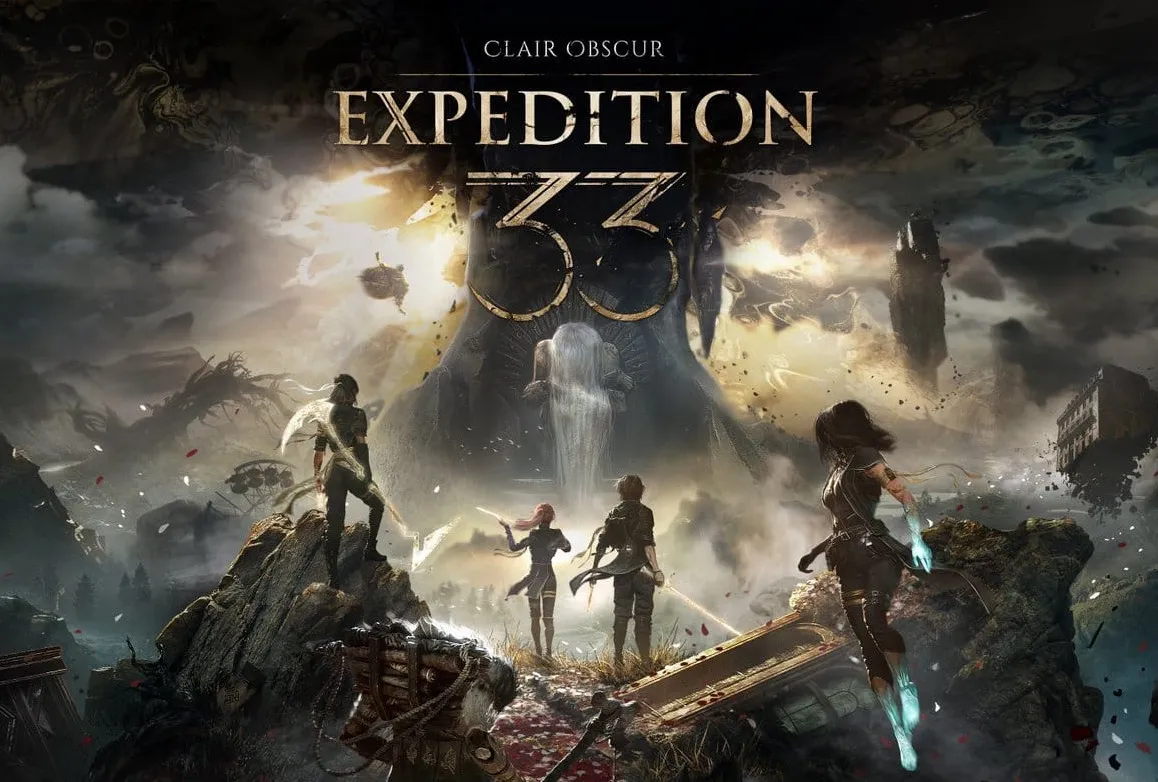
The Montpellier-based studio stunned the industry when Clair Obscur: Expedition 33 swept The Game Awards with a record nine wins. It is French tech's biggest global success of the year, proving that a small French studio can outperform the industry's biggest players.

When Guillaume Broche took the stage at The Game Awards in Los Angeles on December 11, 2025, he did something unusual for someone accepting the industry's most coveted prize. He thanked YouTube.

"I also want to acknowledge the unsung champions of our industry, the individuals creating YouTube tutorials on game development, because we were completely clueless about making a game before," Broche told the audience, his voice cracking with emotion.

It was a disarmingly honest moment from the founder of Sandfall Interactive, the Montpellier-based studio that had just made history. Their debut title, Clair Obscur: Expedition 33, won nine awards that night, shattering the previous record of seven held by The Last of Us: Part II. More significantly, it marked the first time a French game had ever won Game of the Year.

Since its release earlier this year, the game has become a global phenomenon. The soundtrack, a lush, ethereal symphonic composition, has become a worldwide hit. French politicians across the political spectrum have praised it relentlessly. And there is talk of a film adaptation.

The list of reasons the success is remarkable is long, starting with the studio's underdog status and extending to its focus on artistic creativity to deal with financial and technical constraints. But its triumph has created a particular wave of pride because almost every aspect of the game itself leans extremely hard into its Frenchness,, from the design, to the mood, to the music.

For the French tech ecosystem, it also demonstrated that creative ambition, institutional and state support, and cutting-edge technology could combine to produce world-class results, even from a team of just 30 people working primarily out of a Belle Époque mansion in southern France.

Ubisoft Burnout to Indie Prototype

The Sandfall story begins in 2019, when Broche was still working as an Associate Producer and Narrative Lead at Ubisoft. Like many talented developers trapped in the machinery of AAA game production, he harbored dreams of building something personal, a game that blended the narrative sophistication of Japanese RPGs with the mechanical responsiveness of action games.

He started experimenting with Unreal Engine in his spare time, creating a prototype called "We Lost" that featured the character naming conventions and reactive combat systems that would eventually define Expedition 33. Unreal Engine is the real-time 3D creation platform developed by Epic Games that increasingly powers high-end video games, but it’s also widely used for film & TV production, architecture, automotive design, simulations, and virtual reality.

The project was rough, but it contained the DNA of something special, according to an interview that Benjamin Dimanche, Marketing and Publishing Producer at Sandfall, gave to France's Centre National du Cinéma.

In October 2020, Broche made the leap. He left Ubisoft and founded Sandfall Interactive with two colleagues: Tom Guillermin, an experienced gameplay programmer who had shipped multiple AAA titles, and François Meurisse, who became the studio's COO and producer. The studio's name was inspired by "Sandfall," the title of Broche's first Unreal Engine project.

The three shared a conviction that smaller teams could produce ambitious games if they worked smarter and if they had access to the right tools.

What they lacked was money.

Guillaume Broche, Tom Guillermin, Nicholas Maxon-Framcombe, and François Meurisse accept the Game of the Year award for Clair Obscur: Expedition 33.

The French Safety Net

The early months proved brutal. Traditional game publishers were skeptical of a European version of a Japanese Role-Playing Game (JRPG) from an unknown studio. The genre was dominated by Japanese developers, and the conventional wisdom held that Western players wanted Western games.

Salvation came from France's cultural institutions. In late 2021, the French CNC—which funds films, television, and increasingly video games—provided pre-production funding alongside a tax rebate. The Occitanie Regional government contributed additional support. Epic Games later validated the project with a $50,000 MegaGrant.

This institutional backing proved transformative. It allowed Sandfall to build a vertical slice, a polished gameplay sample that demonstrated the game's potential.

The French support system worked exactly as intended: public funding de-risked early development, enabling a promising studio to reach the point where private capital would take over.

Now, Sandfall just needed to find a commercial publishing and distribution partner.

The Artistic Vision

The game's setting is a Belle Époque-inspired fantasy world called Lumière. It emerged from Broche's research into what would distinguish their RPG from Japanese competitors.

He drew inspiration from the Italian artistic movement of chiaroscuro (the technique of stark contrasts between light and darkness), originally associated with painters such as Caravaggio, but later embraced in France during the Baroque period (clair-obscur). Broche also drew from Alain Damasio's French fantasy novel La Horde du Contrevent (The Horde of Counterwind) and the anime Attack on Titan. The result was a world that felt distinctly French, yet universally resonant with each environment functioning as an animated painting, each character as a living sketch, Broche told the PlayStation news blog.

He ultimately selected the Belle Époque, the period of French history spanning roughly from 1870 to 1914, known for its artistic flourishing, optimism, and distinctive visual aesthetics, Broche added.

The game's central premise unfolds in the isolated island city of Lumière, a fantasy interpretation of Belle Époque Paris, where an entity known as the Paintress has imposed a recurring curse: every year, she inscribes a descending number upon a monolithic structure called the Monolith, and all inhabitants matching or exceeding that age instantaneously vanish in an event termed the "Gommage" (Erasure). The narrative follows Expedition 33, a desperate coalition of characters who have elected to spend their final year of life pursuing the destruction of the Paintress to break this cyclical catastrophe.

Team Structure and Production

Sandfall Interactive operated on a fundamentally different scale from conventional bit studios.

The core development team consisted of approximately 30 full-time employees, eventually expanding to 33 as production matured. This lean structure was complemented by strategic outsourcing: voice actors (including Jennifer English), composers, localization specialists, quality assurance firms (two dedicated teams), a motion capture studio, and Korean animators who contributed to character animation sequences.

The Sandfall motion capture team

The development distributed responsibilities across two primary locations: Montpellier housed the core production team, while a cinematic division based in Paris managed narrative presentation and animated sequences.

Despite departmental specialization in audio, character design, environment, and programming, the studio cultivated a deliberately multidisciplinary culture wherein many team members contributed across multiple disciplines. This approach reflected an "indie mindset" combined with access to cutting-edge technologies, fundamentally distinct from the siloed workflows of larger productions, Dimanche told the CNC.

In 2023, as production on what the company only referred to publicly as "Project W" ramped up, Sandfall relocated to a Belle Époque-era mansion near Montpellier's historic center, a setting that consciously reinforced the aesthetic identity they were building into their game.

La Manoir. Photo courtesy of Sandfall.

Quality Over Quantity

Sandfall adopted a philosophy that ran counter to industry trends.

The studio prioritized quality over quantity, consciously constraining the game to approximately 30 hours of content, "a sweet spot," co-founder Guillermin told Creative Bloq in an interview. The trend is for larger studios to chase live-service models and 100-hour open worlds to drive higher engagement and longer playing time.

But the approach has its risks as well.

The team had already been working on the game for several years when Epic Games released Unreal Engine 5 in 2022. The new version promised some revolutionary features that could potentially transform what small teams like Sandfall could do, especially when it came to lighting and the quality of detail.

The problem is that the team had already painstakingly crafted many elements to achieve the light-dark effects they wanted. And the tools they used didn't move seamlessly into Unreal Engine 5. So, they could stick with the familiar UE4, or they could rebuild significant portions of their work to leverage UE5's revolutionary features.

They chose the latter. "It was a game changer," Guillermin said in the interview.

Once they got past the hurdle of rebuilding existing elements, the new tools allowed them to dramatically accelerate and create at a higher quality, allowing a 30-person team to achieve visual fidelity that conventionally required hundreds of developers.

The only problem, Guillermin said, was whether players would expect that 100 hours of sustained gameplay at the quality of much bigger studios.

Even as the work progressed, Sandfall faced skepticism from the broader industry.

The initial presentation at Gamescom 2023 generated interest among players but failed to secure immediate publisher backing. This period of uncertainty underscores a fundamental challenge facing independent developers: the chicken-and-egg problem of needing validation to secure funding, yet requiring funding to demonstrate feasibility.

The breakthrough came in March 2023 from Kepler Interactive, a U.K. publisher with a track record in distinctive titles recognizing potential in Expedition 33 that larger publishers overlooked. Bandai Namco later agreed to handle distribution, providing both the publishing muscle and distribution infrastructure necessary for successful market penetration.

Launch Velocity

In the months leading up to the official launch in early 2025, the partners deployed a sophisticated distribution strategy that maximized market reach while leveraging emerging distribution mechanisms.

The hype around the game began when Expedition 33 was revealed during the Xbox Games Showcase in June 2024. The visuals and themes caused a stir in gaming communities, and word of mouth started to build. This was followed by a press tour of Europe, and then a special presentation with the Xbox team to key partners. After several years of working in isolation, the little French team was suddenly mixing with important critics and industry leaders.

Over the next several months, the partners built the viral hype machine through blog posts, interviews, teasers, and a big voice cast reveal that included Charlie Cox (Daredevil) and Andy Serkis (Golem, The Lord of the Rings). Kepler didn't spend much money on gaming influencers, but it didn't have to because organic social media discussion of the game in early 2025 was already soaring.

Indeed, the attention grew so fierce that in early 2025, Hollywood came calling. Before the game even launched, Story Kitchen secured film adaptation rights. Story Kitchen is the media production company co-founded by Sonic the Hedgehog film producer Dmitri M. Johnson and is responsible for Netflix's Tomb Raider animated series and Amazon Prime's live-action Tomb Raider.

On April 24, the game launched simultaneously across PlayStation 5, Xbox Series X|S, PC (via both Steam and Epic Games Store), and Xbox Game Pass 2025. The Day One inclusion on Game Pass represented a strategic gamble because subscription services traditionally risk cannibalizing direct purchase sales. However, in this case, it appears that the Game Pass integration amplified visibility and discovery, particularly among players unfamiliar with the studio, without substantially reducing direct purchases.

The sales figures even left many industry veterans stunned:

  • April 25, 2025 (1 day post-launch): 500,000 copies sold
  • April 27, 2025 (3 days post-launch): 1 million copies sold
  • May 6, 2025 (12 days post-launch): 2 million copies sold
  • May 27, 2025 (33 days post-launch, thematically perfect): 3.3 million copies sold (with many commenting on the symmetry).
  • October 7, 2025 (5+ months): 5 million copies sold
0:00
/1:22

Critics were equally effusive. The game achieved a 92/100 Metacritic score on PlayStation 5, with reviewers praising its "flawless hybrid combat system" and narrative quality rivaling "the very best this medium has ever offered."

The success transcended gaming circles.

In May 2025, President Emmanuel Macron publicly praised Sandfall on social media, describing the team as "a shining example of French audacity and creativity" and recognizing how the game "highlighted French-style boldness and creativity."

Musical Sensation

But it wasn't just the game that blew up. The score became a phenomenon in its own right.

The music behind the game took the same approach to craft and conviction. From the outset, the game set out to do something unfashionable: slow players down emotionally. In a medium often driven by bombast, its creators said they leaned into fragility, including melancholy themes, unresolved harmonies, and a sense of beauty always on the brink of loss.

As Dimanche explained to the CNC, Composer Lorien Testard went beyond scoring the game to helping write the story, using music as a narrative voice that breathes alongside the characters.

"Lorien was one of the earliest members to join the development team. He spent five years composing, writing, and performing the game's music, giving it a deeply unique and distinct sound," Dimanche said. "Far from being a guest contributor, Lorien was fully integrated into the team and played a key role in the artistic process. He had the time and creative space to experiment and explore different styles."

The result is a soundtrack that feels less like background accompaniment and more like a companion, grieving, hoping, and remembering with you.

That emotional ambition paid off spectacularly. Spanning 154 tracks and eight hours of music, it played a big role in helping the game become a cultural moment, not just a commercial hit. The Clair Obscur soundtrack climbed to number one on Billboard’s Classical and Classical Crossover charts, driven by more than 18 million streams since its April 24 release.

In addition to Testard, singers Alice Duport-Percier, Axelle Verner, Miki Martz, and the Orchestre Curieux have received considerable attention. After several sold-out shows in France this Fall, a European tour is planned for 2026.

The Game Awards 2025: Historic Sweep

The Game Awards 2025 ceremony, held December 11-12, 2025, witnessed Expedition 33 achieve an unprecedented record. The game received 13 nominations, which itself was a record-breaking number.

0:00
/3:48

Sandfall managed to endear itself to the international audience watching because not only did they bring the entire team to the awards, but they dressed in one of the most clichéd of French outfits possible: blue-and-white stripe mariner shirts and red berets. In the game, the team takes a playful attitude toward such French stereotypes, and decided to do the same at the awards.

Except, they found themselves getting up on stage. Again. And again. And again...

Clair Obscur won 9 awards, topping the previous record of 7 held by The Last of Us: Part II (2020).

  1. Game of the Year
  2. Best Narrative
  3. Best Game Direction
  4. Best Art Direction
  5. Best Score and Music
  6. Best Independent Game
  7. Best Debut Indie Game
  8. Best RPG
  9. Best Performance (awarded to voice actress Jennifer English)

This represented the first Game of the Year award ever granted to a French game, an achievement of profound cultural and economic significance for the French games industry.

The ceremony included a rousing performance of "Une vie à t'aimer" from the soundtrack, with Alice Duport-Percier and Victor Borba singing, and composer Testard joining them on guitar.

By the end of the evening, stepping on stage to receive the Game of the Year Award, Broche seemed overwhelmed and almost out of words.

"What a weird timeline for us," he said. Pointing to his outfit, he said, "This was supposed to be a joke. The beret...and now I have no idea what's happening."

After thanking the team and partners, he told the players listening on the global broadcast that Sandfall had a gift for them: a new update had just released.

"So, just thank you so much," he said. "You changed our lives. You changed the studio's life, and it's really wonderful. So thank you, and for those who come after you."

0:00
/0:44

Comments

Latest